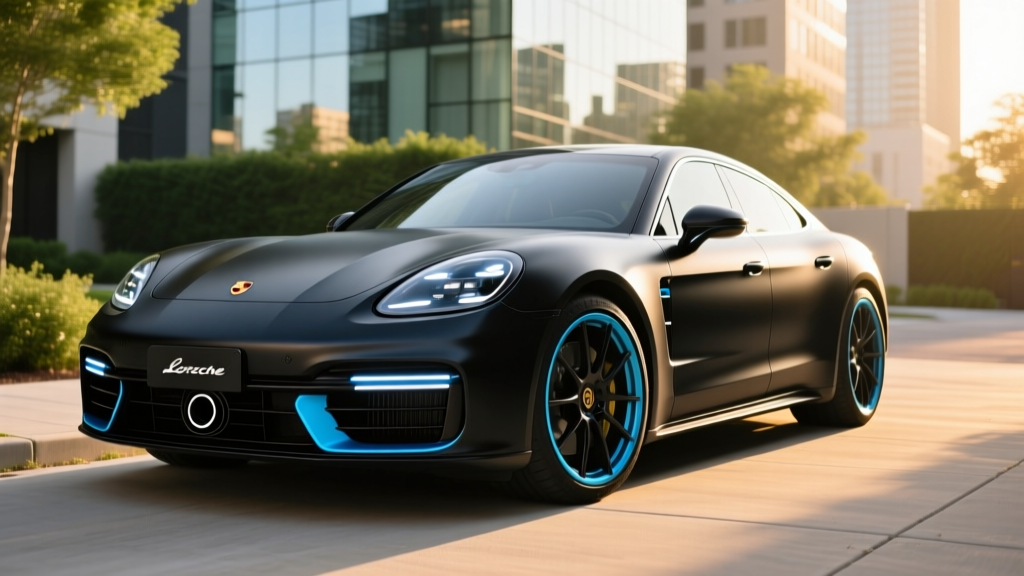
Searching for the Porsche Panamera Electric? Here's the critical fact first: as of early 2026, Porsche has not released a battery-electric Panamera. The current-generation Panamera (E-Hybrid PHEV trims included) remains a plug-in hybrid, while Porsche's full-electric luxury sedan is the Taycan. However, Porsche has confirmed that an electric successor to the Panamera is in development, expected to arrive for the 2027–2028 model year on the PPE (Premium Platform Electric) architecture shared with the electric Macan and upcoming Cayenne EV.
Quick Answer: What Should You Buy Today?
If you want an electric Porsche sedan now: The 2026 Taycan (EPA range up to 318 miles, starting ~$99,400) is the battery-electric equivalent.
If you want the Panamera nameplate with electrification: The 2026 Panamera E-Hybrid (PHEV, up to 54 miles electric-only range, starting ~$107,900) is your option.
If you can wait: The all-electric Panamera successor is anticipated for 2027–2028.
Current Landscape: Panamera E-Hybrid vs. Taycan EV
Understanding what Porsche actually sells today is essential before projecting what's coming. The Panamera lineup in 2026 includes the base Panamera, Panamera 4, and multiple E-Hybrid variants (Panamera 4 E-Hybrid, 4S E-Hybrid, and Turbo S E-Hybrid). These PHEVs pair a twin-turbo V6 with an electric motor and a 25.9 kWh battery pack (gross), delivering between 44 and 54 miles of EPA-rated electric-only driving depending on trim.
The Taycan, by contrast, is a dedicated BEV on the J1 performance platform with 800-volt architecture, offering trims from the base Taycan (402 hp, EPA 318 miles with Performance Battery Plus) to the Taycan Turbo GT (1,019 hp with Launch Control, EPA 269 miles).
| Spec | Panamera 4 E-Hybrid (PHEV) | Taycan 4S (BEV) |
|---|---|---|
| Powertrain | 2.9L TT V6 + electric motor | Dual-motor AWD BEV |
| Combined Output | 463 hp / 516 lb-ft | 590 hp (overboost) / 479 lb-ft |
| Battery | 25.9 kWh (gross), NMC | 105 kWh (gross), 97 kWh usable, NMC |
| Electric-Only Range | EPA 51 mi (est.) | N/A (full BEV) |
| Total EPA Range / MPGe | ~440 mi total; 49 MPGe (combined) | EPA 318 mi (Performance Battery Plus) |
| 0–60 mph | 4.1 seconds | 3.5 seconds |
| Max DC Fast Charge | N/A (AC charge only, 7.2 kW) | 320 kW peak (800V) |
| 10–80% DC Charge | N/A | ~18 minutes (peak conditions) |
| Starting MSRP | ~$112,300 | ~$107,400 |
| Federal Tax Credit (§30D) | Up to $7,500 (PHEV, subject to battery sourcing & income caps) | Up to $7,500 (subject to battery sourcing, MSRP cap, income limits) |
Sources: fueleconomy.gov, Porsche USA. Tax credit eligibility per IRS §30D — subject to MSRP caps ($55,000 sedans), buyer income limits ($150K single/$300K joint AGI), and critical-mineral/battery-component sourcing rules. Consult a tax professional.
The Upcoming Electric Panamera: What We Know (2027–2028)
Porsche CEO Oliver Blume confirmed in 2024 that a fully electric Panamera successor is part of the brand's roadmap, riding on the Volkswagen Group's PPE platform. This is the same 800-volt architecture underpinning the electric Macan and the next-generation electric Cayenne. Based on Porsche's stated engineering targets and what we've observed from PPE-based vehicles already in production, here are reasonable preliminary expectations (not confirmed specs):
- Platform: PPE (Premium Platform Electric), 800V architecture
- Battery: Likely 100–120 kWh usable capacity, NMC chemistry
- EPA Range: Targeted 350–400+ miles (Porsche has stated intent to exceed Taycan range figures)
- DC Fast Charging: Expected 350+ kW peak capability, 10–80% in approximately 15–18 minutes
- Performance: Dual-motor AWD standard on most trims; Turbo variants likely 700+ hp
- Body Style: Sport sedan / fastback, potentially longer wheelbase than Taycan for rear-seat comfort
- Pricing: Expected to start in the $100,000–$120,000 range, positioning between Taycan and the current Panamera Turbo trims
Real Ownership Costs: Panamera E-Hybrid vs. Taycan Today
For buyers deciding between the two electrified Porsches available now, total cost of ownership over five years reveals meaningful differences driven by fuel, maintenance, and depreciation patterns.
| Category | Panamera 4 E-Hybrid | Taycan 4S |
|---|---|---|
| Purchase Price (base MSRP) | $112,300 | $107,400 |
| Federal Tax Credit (est., if eligible) | -$7,500 | -$7,500 |
| Fuel/Energy (60,000 mi, 12K mi/yr) | $6,800 (gas + electricity) | $3,900 (electricity only) |
| Maintenance (5 yr) | $4,200 | $2,100 |
| Insurance (avg., 5 yr) | $18,500 | $19,800 |
| Est. Depreciation (5 yr) | $48,000 | $44,500 |
| Estimated 5-Year Total | ~$182,300 | ~$170,200 |
Assumptions: $3.50/gal premium fuel, $0.16/kWh average electricity (home charging), 70% electric-mode driving for PHEV. Insurance based on national averages for luxury performance sedans. Depreciation estimates from industry resale data. Actual costs vary significantly by region, driving habits, and charging access.
Home Charging Reality: What You Actually Need
Neither the Panamera E-Hybrid nor the Taycan is practical without reliable home or workplace charging. Here's the infrastructure reality for each:
Panamera E-Hybrid (PHEV): The 25.9 kWh battery charges at a maximum of 7.2 kW on Level 2 (240V). A full charge takes approximately 3.5–4 hours. A standard 120V household outlet (Level 1, ~1.4 kW) can replenish the battery overnight (~18 hours for full charge), which is adequate given the 51-mile electric range. Installation of a dedicated 240V/40A circuit with a Level 2 charger (such as the Porsche Mobile Charger Connect) typically costs $800–$2,500 including electrician labor and permitting, assuming your panel has capacity.
Taycan (BEV): The 97 kWh usable battery demands a proper Level 2 home charger for daily usability. At the Taycan's maximum AC rate of 19.2 kW (optional; standard is 11 kW), a full charge takes roughly 5.5 hours. On a more common 11.5 kW / 48A home charger, expect ~9 hours from empty to full — fine for overnight charging. Critical: Homes with 100A electrical panels may need a panel upgrade ($2,000–$5,000) before installing a 48A+ charger. Always have a licensed electrician evaluate your panel capacity before purchasing equipment.
For DC fast charging on road trips, the Taycan's 320 kW peak rate (on 800V chargers) is among the fastest in production. In real-world testing, the charge curve holds above 200 kW from 10–55% SoC before tapering, delivering roughly 175 miles of range in 15 minutes at Electrify America 350 kW stations. Above 80% SoC, charging slows dramatically to protect the battery — plan your stops around 10–80% cycles.
Cold Weather and Real-World Range: Honest Numbers
The Taycan's EPA-rated 318 miles (with Performance Battery Plus, rear-wheel-drive trim) is an impressive figure, but real-world conditions compress it meaningfully:
- Highway driving at 75 mph: Expect ~255–275 miles in moderate temperatures (60–80°F)
- Cold weather (20–35°F): Range drops 20–30%, yielding ~200–240 miles depending on cabin heat usage. The Taycan's standard heat pump mitigates some loss but cannot eliminate it.
- Combined mixed driving: Most owners report 270–295 miles in temperate conditions
For the Panamera E-Hybrid, the 51-mile electric-only range holds reasonably well in moderate weather but can drop to 35–40 miles in freezing conditions, at which point the gasoline engine engages more frequently. Once the battery is depleted, the Panamera operates as a conventional hybrid, returning approximately 22–25 mpg combined on premium fuel.
Decision Framework: Which Porsche Should You Buy?
Choose Based on Your Situation
Choose the Taycan (BEV) if:
- You have reliable home Level 2 charging (or can install it)
- Your daily driving is under 200 miles round-trip
- You want the lowest per-mile energy cost (~$0.05/mi on home electricity vs. ~$0.18/mi on premium gas)
- You prioritize acceleration and the EV driving experience (instant torque, one-pedal regen)
- You're willing to plan DC fast-charging stops on road trips exceeding ~250 miles
Choose the Panamera E-Hybrid (PHEV) if:
- You lack consistent home charging but can plug in occasionally
- You regularly drive 300+ miles in a single day (no charging-stop planning needed)
- You need the Panamera's larger rear seat and cargo area (executive sedan / Sport Turismo wagon)
- You want electric commuting (~50 mi) with gas-engine flexibility for longer trips
- You live in an area with sparse DC fast-charging infrastructure
Wait for the electric Panamera (2027–2028) if:
- You want full BEV operation with Panamera-class interior space and ride comfort
- You can delay your purchase 18–30 months
- You expect PPE-platform range to exceed the Taycan's 318-mile EPA figure
- Next-gen charging infrastructure (400+ kW chargers) matters to your road-trip plans
Common Misconceptions: Myths vs. Facts
| Myth | Fact |
|---|---|
| "The Panamera Electric is available to order now." | No. Porsche sells the Panamera as a PHEV only. The full BEV Panamera successor is expected for 2027–2028 model year. |
| "The Taycan qualifies for the full $7,500 federal tax credit for everyone." | Eligibility under IRS §30D requires the buyer's AGI to be under $150K (single) or $300K (joint), the vehicle MSRP to be under $55,000 for sedans (the Taycan exceeds this cap), and battery sourcing compliance. The Taycan does NOT currently qualify for the §30D new-vehicle credit due to its MSRP exceeding the $55,000 sedan cap. The Panamera E-Hybrid also exceeds the cap. Always verify at irs.gov. |
| "PHEVs don't need home charging — the gas engine covers everything." | Without regular plug-in charging, a PHEV operates as a heavy hybrid with worse fuel economy than its rated MPGe. The Panamera E-Hybrid returns only ~22 mpg on gas alone. To capture the economic benefit, you need to plug in daily. |
| "EV batteries need replacement every few years." | Porsche warranties the Taycan's high-voltage battery for 8 years/100,000 miles against capacity loss below 70%. Real-world degradation data from early Taycan owners shows ~5–8% capacity loss after 60,000 miles. Full replacement, if needed out of warranty, costs approximately $20,000–$30,000 — but this is rare within the first decade. |
| "The Taycan charges at 320 kW the entire session." | Peak 320 kW is sustained only in a narrow SoC window (roughly 10–35%) under ideal thermal conditions. The charge curve tapers progressively: ~250 kW at 50%, ~150 kW at 70%, ~50 kW above 85%. Average rate for a 10–80% session is approximately 200–220 kW. |
Frequently Asked Questions
Will the electric Panamera use NACS (Tesla) or CCS charging?
Porsche has committed to adopting the NACS (North American Charging Standard) connector on its future EVs, starting with models launched from 2025 onward. The electric Panamera successor is expected to ship with a native NACS port, granting access to Tesla Supercharger stations (now open to non-Tesla EVs via NACS) in addition to Electrify America and other networks. Current Taycan models use CCS1 but can charge at NACS stations with an adapter.
What does it cost to charge a Taycan at home vs. public DC fast chargers?
At the US average residential electricity rate of ~$0.16/kWh, fully charging the Taycan's 97 kWh usable battery at home costs approximately $15.50, yielding a cost per mile of roughly $0.05. At public DC fast chargers (Electrify America, EVgo), pricing typically ranges from $0.35–$0.55/kWh, putting a full charge at $34–$53, or about $0.11–$0.17 per mile. For comparison, the gas Panamera at 20 mpg combined on $3.80/gal premium costs roughly $0.19/mile.
Can I lease a Taycan and still get a tax benefit?
Yes — through a different mechanism. While the Taycan's MSRP exceeds the §30D new-vehicle credit cap for sedans ($55,000), leased EVs may qualify for the §45W commercial clean vehicle credit ($7,500), which leasing companies can pass through as a "lease cash" incentive or capitalized-cost reduction. Porsche Financial Services has historically offered lease cash on Taycan models when this credit is available. Confirm current lease incentives with your dealer and review the lease agreement for how the credit is applied. Consult a tax professional for your specific situation.
How does the Taycan's driving experience compare to the Panamera?
The Taycan delivers sharper acceleration response (no turbo lag, instant electric torque), a lower center of gravity (battery pack under the floor), and regenerative braking capable of up to 290 kW of energy recuperation — meaning one-pedal driving is possible in most conditions. The Panamera offers a more traditional luxury grand-touring feel with greater rear-seat headroom and cargo versatility (especially in Sport Turismo wagon form). Ride quality is comparable; both use adaptive air suspension. The Taycan is the driver's choice; the Panamera is the executive-chauffeur choice.
What should a first-time EV buyer know before purchasing a Taycan?
Three essentials: (1) Install a Level 2 home charger before delivery — budget $1,200–$3,500 for equipment and electrician work, and get a panel evaluation first. (2) Download the Porsche Charging Service app and Electrify America app; plan road trips around charger locations using tools like A Better Routeplanner. (3) Understand that your real-world range will be 10–25% below the EPA sticker depending on speed, temperature, and terrain. In winter, precondition the battery (via the car's navigation-routed preconditioning feature) before arriving at a DC fast charger to maximize charge speed.