Scout Motors vs Rivian: Two American EV Truck Builders, Two Very Different Bets
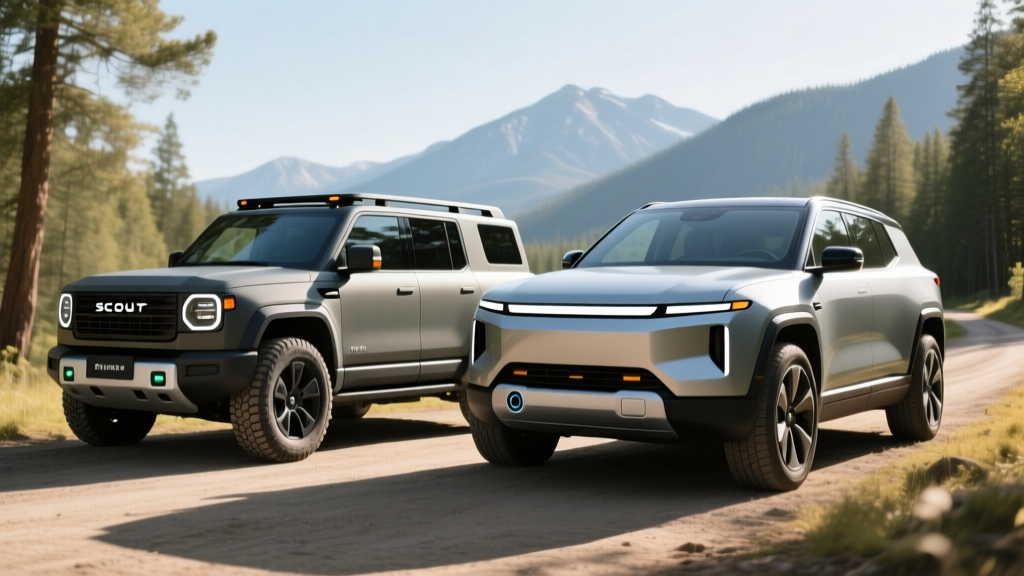
Rivian has spent five years proving that a startup can build compelling electric trucks and SUVs. Now Scout Motors — Volkswagen Group's revived International Harvester brand — is stepping into the ring with the Scout Traveler SUV and Scout Terra pickup, both targeting the same outdoorsy, body-on-frame buyer Rivian courts with the R1T and R1S. But Scout is taking a fundamentally different engineering path: a dedicated body-on-frame platform, a standard front bench seat, and a headline option — a range-extending gasoline engine that Rivian doesn't offer.
As of early 2026, the Scout Traveler and Terra remain in pre-production with reservations open and deliveries expected in late 2027 from Scout's new Blythewood, South Carolina factory. Rivian's R1 Dual-Motor and Tri-Motor lineups, meanwhile, are shipping and evolving with the Gen 2 platform update. That timing gap matters: Rivian buyers can drive home today; Scout buyers are placing a bet on specs that haven't been independently verified by the EPA.
This guide breaks down every confirmed number we have — and flags exactly where Scout's figures are preliminary versus Rivian's tested reality.
Spec Table: Scout Traveler, Scout Terra, Rivian R1S, and Rivian R1T at a Glance
| Spec | Scout Traveler (est.) | Scout Terra (est.) | Rivian R1S Dual-Motor | Rivian R1T Dual-Motor |
|---|---|---|---|---|
| Platform | Body-on-frame | Body-on-frame | Skateboard monocoque | Skateboard monocoque |
| EPA Range (BEV) | ~350 mi* | ~340 mi* | 352 mi (Max Pack) | 352 mi (Max Pack) |
| Range w/ Harvester REX | ~500 mi total* | ~500 mi total* | Not available | Not available |
| Battery Capacity | ~100–120 kWh (est.) | ~100–120 kWh (est.) | 149 kWh usable (Max) | 149 kWh usable (Max) |
| Battery Chemistry | NMC (est.) | NMC (est.) | NMC (Samsung 46mm cells) | NMC (Samsung 46mm cells) |
| Max DC Fast Charge | ~350 kW (claimed) | ~350 kW (claimed) | 220 kW peak | 220 kW peak |
| 10–80% DC Time | Not published | Not published | ~21 min (Max Pack) | ~21 min (Max Pack) |
| Level 2 Home Rate | ~11.5 kW (est.) | ~11.5 kW (est.) | 11.5 kW / 19 kW optional | 11.5 kW / 19 kW optional |
| Horsepower | Up to ~750 hp (est.) | Up to ~750 hp (est.) | 533 hp (Dual) / 850 hp (Tri) | 533 hp (Dual) / 850 hp (Tri) |
| 0–60 mph | ~3.5 sec (top trim est.) | ~3.5 sec (top trim est.) | 4.5 sec (Dual) / 2.9 sec (Tri) | 4.5 sec (Dual) / 2.9 sec (Tri) |
| Drivetrain | AWD (dual-motor std) | AWD (dual-motor std) | AWD / Tri-Motor AWD | AWD / Tri-Motor AWD |
| Towing Capacity | 10,000 lb (claimed) | 10,000 lb (claimed) | 7,700 lb (R1S) | 11,000 lb (R1T) |
| Base MSRP | ~$60,000 (claimed) | ~$60,000 (claimed) | $75,900 (Dual Standard) | $69,900 (Dual Standard) |
| Battery Warranty | 8 yr / 100,000 mi (est.) | 8 yr / 100,000 mi (est.) | 8 yr / 175,000 mi | 8 yr / 175,000 mi |
* Scout range and battery figures are manufacturer projections as of the October 2024 reveal event and subsequent 2025 updates. EPA certification is pending ahead of 2027 production.
Range and Battery: 350 Miles Electric, or 500 with the Range Extender
Scout has targeted a ~350-mile EPA-estimated range for the Traveler and slightly less for the Terra pickup (aerodynamic drag on an open bed costs efficiency). The exact battery capacity hasn't been finalized publicly, but the 800-volt architecture and claimed 350+ mile target point to a pack in the 100–120 kWh range, almost certainly NMC chemistry given the energy density required in a body-on-frame package.
The EPA sticker on a Scout will likely read ~350 miles for the Traveler. In practice, expect ~280–310 miles at sustained 70–75 mph highway speeds, and potentially ~220–260 miles in sub-freezing winter conditions where NMC packs lose 20–30% of usable capacity to cabin heating and internal resistance. Towing a 5,000-pound trailer will cut that roughly in half — physics, not a Scout flaw. Rivian R1T owners report similar towing realities (~160–180 miles at highway speed with a loaded camper).
The Harvester range extender — a small gasoline engine that acts as a generator rather than driving the wheels — is Scout's ace for road-trippers and rural buyers. It's projected to extend total range to ~500 miles, effectively eliminating range anxiety for long hauls and remote trail runs. Rivian offers nothing comparable; your R1T is purely battery-electric.
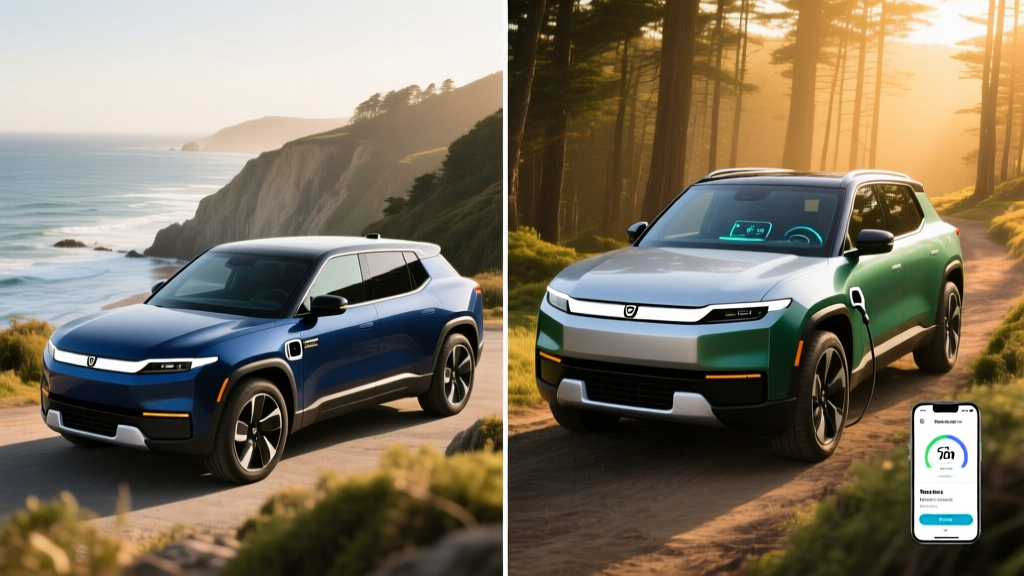
Rivian's Gen 2 R1T and R1S with the Max Pack (149 kWh usable, NMC) achieve an EPA-verified 352 miles — a number confirmed on fueleconomy.gov. Standard Pack models drop to ~270 miles. Rivian's real-world highway efficiency runs around 2.0–2.2 kWh/mile, meaning a Standard Pack yields roughly 220–240 highway miles before you need a charger.
Charging Speed: Scout's 800V Promise vs Rivian's Proven NACS Network
Scout's 800-volt architecture is designed for peak DC fast-charging rates up to ~350 kW, which would place it among the fastest-charging trucks on the market — rivaling the Hyundai Ioniq 5 and exceeding the Ford F-150 Lightning's ~150 kW ceiling. However, Scout has not published a 10–80% charge time, and peak kW is never sustained across the full curve. A 350 kW peak with a typical taper above 80% might yield a 10–80% time in the 18–25 minute range if the pack thermal management performs well — but that's speculation until independent testing.
| Charging Level | Scout Traveler/Terra (est.) | Rivian R1 Gen 2 (Max Pack) |
|---|---|---|
| Level 1 (120V / 12A) | ~1.4 kW / ~4 mi/hr | ~1.4 kW / ~3 mi/hr |
| Level 2 (240V / 48A) | ~11.5 kW / ~32 mi/hr | 11.5 kW / ~25 mi/hr |
| Level 2 (240V / 80A optional) | TBD | 19 kW / ~42 mi/hr |
| DC Fast Charge Peak | ~350 kW (claimed) | 220 kW peak |
| 10–80% DC Time | Not published | ~21 min |
| Connector | NACS (native) | NACS (native on Gen 2) |
Rivian's advantage isn't raw charge speed — it's the charging ecosystem. Gen 2 Rivians come with a native NACS port, granting access to Tesla Superchargers (now the largest DC fast-charging network in North America with over 25,000 stalls) plus Rivian's own Adventure Network at trailheads and destinations. Scout has confirmed NACS compatibility but hasn't detailed network partnerships beyond the general Electrify America relationship inherited from Volkswagen Group.
For home Level 2 charging, both vehicles will require a 240V / 60A circuit to achieve their maximum AC charge rates. Budget $800–$2,500 for a professional home charger installation depending on your panel capacity and run distance — and potentially $2,000–$5,000 more if your home needs a 200A service upgrade. Consult a licensed electrician for a site-specific quote.
Performance and Capability: Body-on-Frame Muscle Meets Skateboard Agility
Scout's dual-motor AWD setup targets up to ~750 horsepower in top trims, with a claimed 0–60 mph time around 3.5 seconds. That's ferocious for a body-on-frame truck, though it trails the Rivian Tri-Motor's absurd 850 hp / 2.9-second sprint. The dual-motor Rivian at 533 hp and 4.5 seconds is the closer comparison for base Scout trims.
Where Scout's body-on-frame design should shine is towing and payload. The claimed 10,000-pound tow rating matches the F-150 Lightning and edges past the R1S (7,700 lb), though the R1T achieves 11,000 lb. Scout's Terra pickup features a 5.5-foot bed with a powered tonneau and a multi-function tailgate, while the Traveler SUV offers a traditional two-row cabin with an available front bench seat — a deliberate nod to classic International Harvester utility.
Off-road, both platforms are serious. Rivian offers a quad-motor option with tank turns and ~14.9 inches of ground clearance in Max mode. Scout has teased a "Scout Motorsport" off-road package with locking differentials and high approach/departure angles, but specific ground clearance and breakover numbers haven't been published.
Pricing, Trims, and the §30D Federal Tax Credit Question
Scout has signaled a starting MSRP around $60,000 for both the Traveler and Terra — a number that, if it holds through production, would undercut the Rivian R1T's $69,900 base price significantly. However, Scout has also confirmed that higher trims (especially those with the Harvester range extender and top-tier battery) will push well above $70,000. Rivian's R1 line spans from ~$69,900 to over $100,000 for Tri-Motor Max configurations.
| Model | Base MSRP | As-Tested / Top Trim | §30D Credit Eligibility |
|---|---|---|---|
| Scout Traveler | ~$60,000 | $75,000+ (w/ REX) | Under $80K SUV cap — likely eligible if sourcing rules met |
| Scout Terra | ~$60,000 | $75,000+ (w/ REX) | Under $80K truck cap — likely eligible if sourcing rules met |
| Rivian R1S | $75,900 | $100,000+ | Eligible trims under $80K SUV cap; many exceed it |
| Rivian R1T | $69,900 | $95,000+ | Eligible trims under $80K truck cap; higher trims excluded |
The IRS §30D clean vehicle credit offers up to $7,500 — but eligibility is anything but automatic. Key requirements:
- MSRP caps: $80,000 for SUVs, vans, and pickups; $55,000 for sedans
- Buyer income caps: $150K single / $225K head of household / $300K joint (modified AGI)
- Battery sourcing: Increasingly strict critical mineral and battery component requirements (phasing up annually through 2029)
- Assembly: Final assembly must occur in North America
- Point-of-sale transfer: Eligible buyers can apply the credit at purchase, reducing the sale price directly
Both Scout (assembled in South Carolina) and Rivian (assembled in Normal, Illinois) meet the North American assembly requirement. Battery sourcing compliance depends on the specific cells and minerals in each model year — confirm eligibility on fueleconomy.gov at the time of purchase and consult a tax professional for your situation.
Tech, Interior, and Daily Usability
Scout is leaning hard into analog-digital duality: physical knobs and buttons for climate and off-road controls alongside a large central touchscreen. The available front bench seat is a standout — making the Traveler a genuine six-passenger SUV in an era of bucket-seat-only competitors. Cargo volume figures haven't been published, but the Traveler's boxy proportions and flat roofline suggest competitive space with the R1S's ~104 cu ft max cargo area (behind the first row).
Rivian's Gen 2 interior is a masterclass in thoughtful EV design: a 15.6-inch central display, a front trunk (frunk) with 11 cu ft of lockable storage, the Gear Tunnel on the R1T (a lockable 11.7 cu ft pass-through behind the rear seats), and over-the-air updates that have added features like enhanced highway assist and pet mode post-purchase. Rivian's Driver+ system is a Level 2 ADAS (not self-driving — you must remain engaged) with hands-on-wheel highway assist that competes with Ford BlueCruise and GM Super Cruise in capability, if not in hands-free marketing.
Scout's ADAS plans are less detailed. Expect a Level 2 highway assist system at launch given VW Group's existing capabilities with Travel Assist, but Scout hasn't confirmed hands-free operation or a specific brand name for its driver-assist suite.
Who Should Buy Scout, and Who Should Buy Rivian?
Choose Scout If...
- You need the Harvester range extender for remote overlanding or rural life without reliable charging
- You want a front bench seat for six-passenger seating
- Body-on-frame durability and a 10,000-lb tow rating are priorities
- You're comfortable reserving now and waiting until late 2027 for delivery
- A ~$60,000 starting price fits your budget better than Rivian's $70K+ entry
Choose Rivian If...
- You want to take delivery now, not in 2027
- Access to the Tesla Supercharger network (native NACS) matters for road trips
- You value proven OTA updates and a maturing service network
- The R1T's Gear Tunnel and frunk solve real cargo problems for you
- Tri-Motor performance (850 hp, 2.9 sec 0–60) is worth the premium
- You need a verified 8 yr / 175,000 mi battery warranty
Pros and Cons at a Glance
Pros — Scout Traveler/Terra
- Harvester range extender: ~500 mi total range eliminates range anxiety
- Body-on-frame construction for heavy towing and off-road abuse
- Available front bench seat (6-passenger SUV)
- Aggressive ~$60K starting MSRP undercuts Rivian
- NACS connector native for Supercharger access
- 800V architecture targeting ~350 kW peak DC charging
Cons — Scout Traveler/Terra
- Not yet in production — delivery expected late 2027
- All specs are preliminary; no EPA certification yet
- No service network or ownership track record
- ADAS and software details remain vague
- Battery warranty terms not confirmed
- Range extender adds weight, complexity, and gasoline dependency
Frequently Asked Questions
What is the real-world range of the Scout Traveler and Terra?
Scout targets ~350 miles EPA-estimated for the BEV Traveler and ~340 miles for the Terra. Real-world highway driving at 70+ mph will likely yield 280–310 miles; cold weather (below 32°F) could drop that to 220–260 miles. With the Harvester range extender, total range is projected at ~500 miles, combining battery and gasoline-generated electricity.
How fast do Scout vehicles charge at home and on the road?
Scout claims up to ~350 kW peak DC fast charging via its 800V architecture, though 10–80% times haven't been published. Home Level 2 charging is expected at ~11.5 kW (adding roughly 32 miles per hour of charging). A full home charge from empty would take approximately 9–11 hours depending on final battery capacity.
Does the Scout Traveler or Terra qualify for the $7,500 federal tax credit?
Likely yes for base trims, assuming the MSRP stays under the $80,000 cap for trucks/SUVs and the buyer meets income limits ($150K single / $300K joint). Final assembly in South Carolina satisfies the North American assembly requirement. Battery sourcing compliance will depend on the specific supply chain at time of production — verify on fueleconomy.gov before purchasing. Consult a tax professional for your individual eligibility.
Is Scout worth waiting for vs buying a Rivian R1T or R1S now?
If you need a vehicle in 2026, Rivian is the proven choice with a verified spec sheet, expanding service centers, and Supercharger access. If you can wait until late 2027 and the range extender or lower starting price is critical to your use case, Scout is worth a refundable reservation. The risk: startup production delays are common (Rivian itself faced them), and final specs may shift.
Can the Scout range extender drive the wheels directly?
No. The Harvester range extender is a series-hybrid system — the gasoline engine generates electricity to charge the battery or power the electric motors, but it never mechanically drives the wheels. The Scout Traveler and Terra are always electric-drive vehicles, even when the extender is running.
What is Rivian's battery warranty vs what Scout is expected to offer?
Rivian provides an 8-year / 175,000-mile battery and powertrain warranty — one of the most generous in the industry, exceeding the federal minimum of 8 yr / 100,000 mi. Scout hasn't confirmed its warranty terms, but the industry standard (and likely baseline) is 8 yr / 100,000 mi. Rivian's 175K-mile threshold is a meaningful advantage for high-mileage drivers.