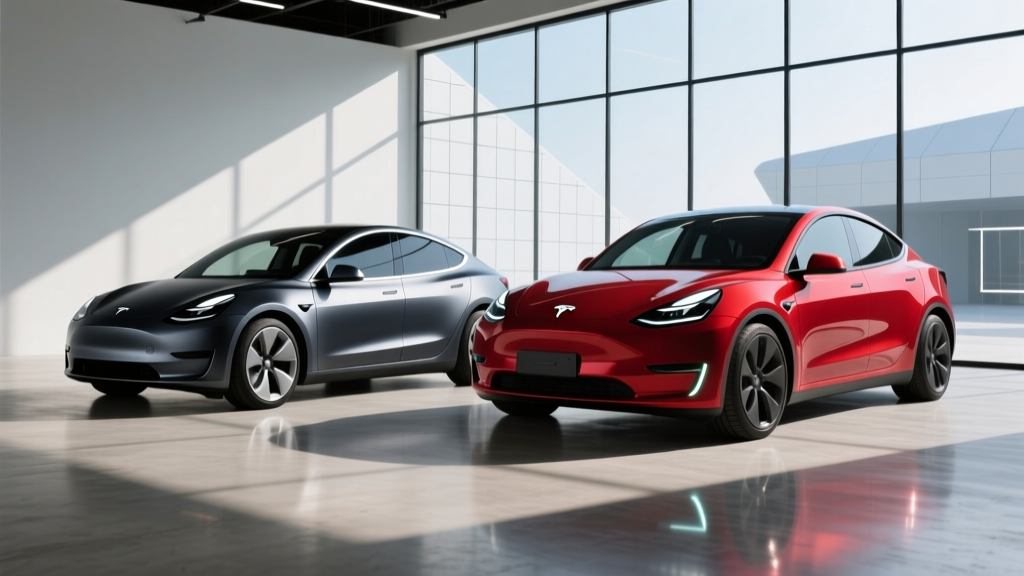
Tesla periodically rolls out promotional 0% APR financing on select models, and in early 2026, the automaker is offering Tesla 0 interest deals on the Model 3 Long Range and Model Y Long Range for qualified buyers. But a headline-grabbing rate only matters if the underlying vehicle — and the total cost of ownership — makes sense for your needs. This review breaks down the current 0% APR offer mechanics, pairs them with hard spec data on the vehicles eligible, and tells you whether financing at zero interest actually beats paying cash and claiming the federal tax credit.
How Tesla 0% APR Financing Works in 2026
Tesla's promotional financing is offered directly through Tesla Financial Services. As of Q1 2026, the 0% APR offer applies to new Model 3 Long Range and Model Y Long Range purchases (not leases) for well-qualified buyers — typically requiring a FICO score of 720 or above. Key terms to understand:
- Term length: 36, 48, or 60 months at 0% APR. Longer terms may carry a small rate bump (e.g., 1.99% at 72 months).
- Down payment: Tesla typically requires 10–20% down for the 0% tier. Putting less down may move you to a higher APR tier.
- No prepayment penalty: You can pay off early without fees.
- Cannot combine with lease offers: The 0% rate is for purchase financing only.
- Point-of-sale tax credit: If you qualify for the §30D federal credit, you can transfer it to Tesla at purchase, reducing the financed amount — meaning you borrow less and still pay zero interest on the remainder.
2026 Tesla Model 3 Long Range: Full Spec Breakdown
The Model 3 received its "Highland" refresh for the 2024 model year, and the 2026 version carries forward with minor software and trim updates. The Long Range AWD variant is the trim eligible for 0% financing.
| Spec | Value |
|---|---|
| Base MSRP | $47,740 (incl. destination) |
| EPA Range | 341 miles |
| Battery (usable) | ~75 kWh, NMC (LG M50 cells) |
| Drivetrain | Dual-motor AWD |
| Horsepower | ~384 hp combined |
| 0–60 mph | 4.2 seconds |
| Efficiency | 132 MPGe combined / 25 kWh/100mi |
| Max DC Fast Charge | 250 kW peak (CCS via NACS adapter or native NACS) |
| 10–80% DC Charge | ~25 minutes |
| Level 2 Home Charge | 11.5 kW (~44 mi/hr) |
| Cargo Volume | 23 cu ft (rear trunk + frunk) |
| Rear Legroom | 35.3 inches |
| Battery Warranty | 8 years / 120,000 miles (≥70% retention) |
| Basic Warranty | 4 years / 50,000 miles |
2026 Tesla Model Y Long Range: Full Spec Breakdown
The Model Y received its "Juniper" refresh for the 2025 model year, and the 2026 Long Range AWD is the family crossover eligible for the 0% APR program. It remains Tesla's best-selling vehicle globally.
| Spec | Value |
|---|---|
| Base MSRP | $50,740 (incl. destination) |
| EPA Range | 320 miles |
| Battery (usable) | ~75 kWh, NMC |
| Drivetrain | Dual-motor AWD |
| Horsepower | ~384 hp combined |
| 0–60 mph | 4.8 seconds |
| Efficiency | 122 MPGe combined / 27 kWh/100mi |
| Max DC Fast Charge | 250 kW peak |
| 10–80% DC Charge | ~27 minutes |
| Level 2 Home Charge | 11.5 kW (~37 mi/hr for Model Y) |
| Cargo Volume | 76 cu ft (rear seats folded) + 4.1 cu ft frunk |
| Rear Legroom | 40.5 inches (Juniper refresh) |
| Battery Warranty | 8 years / 120,000 miles (≥70% retention) |
| Towing Capacity | 3,500 lbs (with tow package) |
Charging Speed Deep Dive: What 250 kW Actually Means
Both the Model 3 and Model Y Long Range peak at 250 kW on a V3 (or newer V4) Tesla Supercharger. But peak rate is not sustained rate — understanding the charge curve is critical for trip planning.
| Charge Level | Power (kW) | Miles Added per Hour | Notes |
|---|---|---|---|
| Level 1 (120V) | ~1.4 kW | 3–5 mi/hr | Emergency trickle only |
| Level 2 (240V, 48A) | 11.5 kW | 37–44 mi/hr | Home Wall Connector; full charge overnight |
| DC Fast (V3 Supercharger) | 250 kW peak | ~1,000+ mi/hr at peak | 10–80% in ~25 min; tapers sharply above 80% |
| DC Fast (CCS station via adapter) | Up to 250 kW | Varies | Tesla includes NACS; CCS adapter available |
Charge curve reality: The 250 kW peak only holds from roughly 10–30% state of charge. From 30–60%, rates average around 150–170 kW. From 60–80%, expect 80–100 kW. Above 80%, charging slows dramatically to protect battery health — going from 80–100% can take as long as the 10–80% session. For road trips, charge to 80% and go; the last 20% is rarely worth the wait.
Preconditioning matters: Navigate to a Supercharger using the car's built-in navigation, and the battery will automatically precondition (warm up) to accept maximum charge rates on arrival. If you drive to a charger without preconditioning — especially in cold weather — peak rates may be cut in half for the first several minutes. See Tesla's official charging guide for details.
Pricing, Tax Credits, and the 0% APR Math
Here's where the financial decision gets interesting. The 2026 federal EV tax credit under IRS §30D offers up to $7,500, but eligibility depends on battery sourcing, critical minerals, buyer income, and MSRP caps. As of early 2026, the Model 3 Long Range and Model Y Long Range have partial or full credit eligibility depending on the specific battery pack sourcing at time of delivery — Tesla has shifted some production to US-sourced cells, but this changes periodically.
- ✅ MSRP cap: Sedans (Model 3) ≤ $55,000; SUVs/trucks/vans (Model Y) ≤ $80,000 — both qualify
- ⚠️ Income cap: Modified AGI ≤ $150K single / $300K joint filers
- ⚠️ Battery sourcing: Must meet critical mineral + battery component thresholds (varies by production batch — verify at purchase)
- ✅ Point-of-sale transfer: You can transfer the credit to Tesla at purchase, reducing the amount financed
- ⚠️ Final assembly: Must be assembled in North America (both are built in Fremont, CA or Austin, TX)
| Scenario | Model 3 LR | Model Y LR |
|---|---|---|
| Base MSRP (incl. destination) | $47,740 | $50,740 |
| With full $7,500 credit (POS transfer) | $40,240 | $43,240 |
| Monthly at 0% APR / 60 months (after credit) | $671/mo | $721/mo |
| Total interest paid over 60 months | $0 | $0 |
| Total out-of-pocket (60 months) | $40,240 | $43,240 |
The 0% vs. cash decision: If you qualify for the full $7,500 credit and take the point-of-sale transfer, financing the remainder at 0% APR is essentially free money. You pay the same total whether you finance or pay cash — but financing lets you keep your capital invested elsewhere. At 0%, there is no financial advantage to paying cash upfront unless you simply prefer no monthly obligation.
Tech, Driver Assistance, and Interior
Both vehicles run Tesla's current software stack on a 15.4-inch center touchscreen (Model 3) or 15.4-inch center plus optional rear screen (Model Y Juniper). Key tech highlights:
- Autopilot (standard): Lane centering + adaptive cruise control. This is SAE Level 2 — you must keep hands on the wheel and eyes on the road at all times. It is not self-driving.
- Full Self-Driving (Supervised): $8,000 add-on (or $99/month subscription as of 2026). Adds automatic lane changes, traffic light/stop sign recognition, and Navigate on Autopilot. Still SAE Level 2 — full driver supervision required. See NHTSA's guidance on automated driving for context on automation levels.
- Infotainment: Netflix, YouTube, Spotify, arcade games while parked. No Apple CarPlay or Android Auto — Tesla uses its proprietary system exclusively.
- Over-the-air updates: Regular feature additions and improvements delivered wirelessly.
- Sentry Mode / Dashcam: Built-in security camera recording when parked.
- Phone-as-key: No physical key fob included; your smartphone is the primary key.
Pros and Cons: The Honest Assessment
✅ Pros
- Class-leading efficiency (25–27 kWh/100mi)
- Supercharger network access — the most reliable DC network in North America
- 0% APR financing eliminates interest cost entirely
- Strong OTA update cadence keeps the car improving
- Model Y offers best-in-class cargo space (76 cu ft)
- Excellent safety ratings (IIHS Top Safety Pick+ for Model 3)
- Heat pump standard — better cold-weather efficiency
❌ Cons
- No Apple CarPlay / Android Auto — proprietary-only infotainment
- Rear visibility limited in Model 3 (no rear wiper; Model Y Juniper adds one)
- FSD (Supervised) is expensive and still requires full attention
- Build quality inconsistency — panel gaps still vary unit-to-unit
- Tax credit eligibility fluctuates with battery sourcing changes
- Insurance costs run 15–30% higher than comparable ICE vehicles
- Minimal physical controls — everything through the touchscreen
Who Should Buy (and Who Should Look Elsewhere)
Choose the Model 3 Long Range with 0% APR if: You're a commuter or couple who values efficiency, wants the lowest cost-per-mile in the EV segment, and has reliable home charging access. The 341-mile EPA range handles most daily driving with room to spare, and 0% financing on a ~$40K net price (after credit) is hard to beat.
Choose the Model Y Long Range with 0% APR if: You need family-friendly cargo and passenger space, tow occasionally (up to 3,500 lbs), and want crossover ride height. The Juniper refresh meaningfully improved rear-seat comfort. At $721/month (0% APR, after credit), it undercuts many gas-powered luxury SUVs on total cost.
Look elsewhere if: You need third-row seating (consider the Kia EV9 or Tesla Model X), you want Apple CarPlay integration, you lack home charging access and your area has sparse public infrastructure, or you want a true Level 4 autonomous experience (only available through Waymo robotaxi services in limited cities).
Competitor Comparison: Is 0% APR Enough?
Tesla's 0% APR offer is compelling, but competitors have strong alternatives worth cross-shopping:
| Vehicle | EPA Range | Base MSRP | Max DC Charge | Key Advantage |
|---|---|---|---|---|
| Tesla Model 3 LR | 341 mi | $47,740 | 250 kW | Efficiency + Supercharger network |
| Tesla Model Y LR | 320 mi | $50,740 | 250 kW | Cargo space + 0% financing |
| Hyundai Ioniq 6 SEL | 361 mi | $42,750 | 350 kW (800V) | Faster peak charging + CarPlay |
| BMW i4 eDrive40 | 307 mi | $57,900 | 205 kW | Build quality + CarPlay |
| Ford Mustang Mach-E ER AWD | 312 mi | $48,995 | 150 kW | Dealer service + CarPlay |
The Hyundai Ioniq 6 charges faster (800V architecture enables 350 kW peaks) and includes CarPlay, but lacks Supercharger access (though Hyundai now has NACS adapters). The BMW i4 wins on interior quality but costs $10K more. The 0% APR offer tips the value equation firmly in Tesla's favor for cost-conscious buyers who can live without CarPlay.
Frequently Asked Questions
What credit score do I need for Tesla 0% APR financing?
Tesla Financial Services typically requires a FICO score of 720 or above for the 0% APR tier. Buyers with scores between 680–719 may qualify for promotional rates of 1.99–3.99% depending on the current program. Exact thresholds vary and are not publicly published — you'll see your offered rate during the checkout process on Tesla.com.
Can I combine the 0% APR offer with the $7,500 federal tax credit?
Yes. If you qualify for the §30D credit based on income, MSRP caps, and battery sourcing requirements, you can transfer the credit to Tesla at the point of sale. This reduces the purchase price before financing, so you borrow less at 0% APR. Confirm eligibility with a tax professional and check current sourcing status on fueleconomy.gov.
Does the Tesla 0% interest offer apply to used Teslas?
No. The 0% APR promotional financing applies only to new vehicle purchases. Tesla's used vehicle inventory is typically financed at standard rates (5.99–8.99% depending on credit). However, used EVs may qualify for the separate §25E used clean vehicle credit of up to $4,000.
Is it better to lease or finance at 0% APR?
At 0% APR, purchasing is generally superior to leasing for most buyers. You build equity, face no mileage restrictions, and can claim the full §30D tax credit (lease credits go to the lessor, though some are passed through as reduced payments). Leasing only makes sense if you want to change vehicles every 2–3 years or if Tesla offers a specific lease incentive that undercuts the 0% purchase deal.
How much does it cost to charge a Model 3 or Model Y at home?
At the US average electricity rate of ~$0.17/kWh (EIA 2025 data), fully charging the ~75 kWh battery costs roughly $12.75. That equates to about $0.037–0.040 per mile — compared to $0.12–0.15 per mile for a comparable gas vehicle at $3.50/gallon. Annual fuel savings of $1,200–1,800 are typical for a 12,000-mile/year driver.
What is the real-world range of these Teslas in winter?
Expect a 20–30% range reduction in sustained sub-freezing temperatures. The Model 3 LR drops from 341 EPA miles to approximately 240–270 miles. The Model Y LR drops from 320 to approximately 220–255 miles. Preconditioning while plugged in, using seat heaters instead of cabin air heating, and maintaining moderate speeds can recover some of this loss.