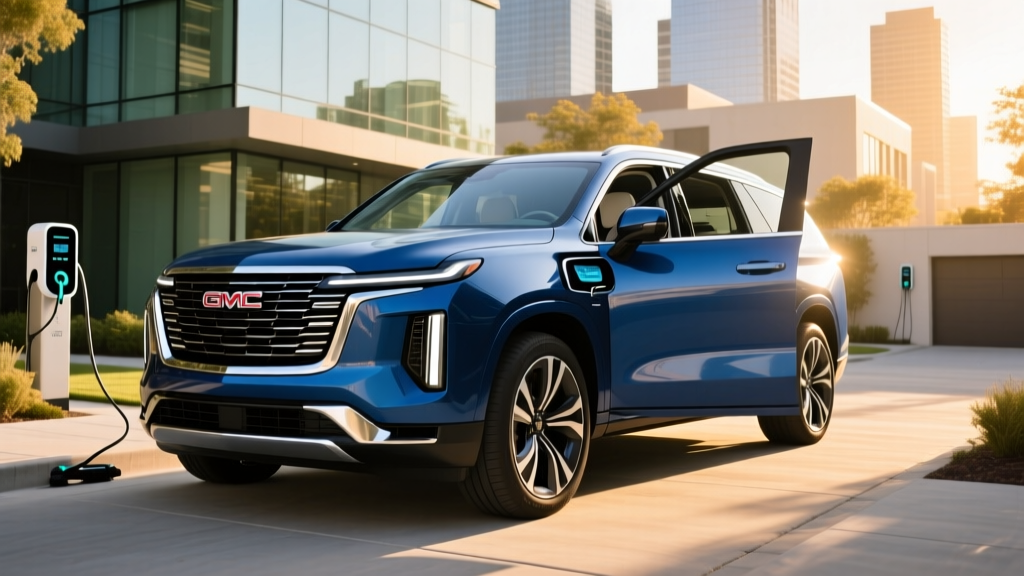
Quick Answer: The GMC Yukon EV (officially the Sierra EV-based three-row SUV on GM's BT1 platform) is announced for the 2026–2027 model year and is not yet available for purchase. Based on the GMC Sierra EV Denali Edition 1 that shares its Ultium architecture, expect an EPA-estimated range near 400+ miles, a battery capacity around 200+ kWh, DC fast charging up to 350 kW, and a starting MSRP likely between $85,000 and $100,000+ depending on trim. If you need a three-row electric SUV today, alternatives like the Rivian R1S, Kia EV9, or Cadillac Escalade IQ are already on sale. The gas Yukon starts around $62,000 — the electric version will carry a significant premium that home charging and lower per-mile energy costs can partially offset over time.
What the GMC Yukon Electric Is — and Isn't (Yet)
GM confirmed that an all-electric GMC Yukon is in development, riding on the same BT1 electric truck platform that underpins the GMC Sierra EV and Chevrolet Silverado EV. Unlike the Sierra EV, which is a pickup, the Yukon EV will be a full-size, three-row SUV — effectively the electric counterpart to the current internal-combustion Yukon and Yukon XL.
As of early 2026, GMC has not published final EPA range figures, official pricing, or a firm on-sale date. What follows is based on the Sierra EV's confirmed specifications, GM's public statements, and platform-level data from the Ultium battery family. All specs should be treated as preliminary until GMC releases official numbers.
For authoritative updates, monitor GMC's official site and fueleconomy.gov once EPA certification is complete.
Estimated Specs: Battery, Range, and Charging
The Sierra EV Denali Edition 1 uses a large Ultium battery pack with an EPA-estimated 440 miles of range and a usable capacity of approximately 200 kWh. The Yukon EV, being a heavier, less aerodynamic three-row SUV, will likely see a modest range reduction on the same pack.
| Specification | Estimated (Yukon EV) | Sierra EV Denali Ed. 1 (Reference) |
|---|---|---|
| Battery Chemistry | NMC (Nickel Manganese Cobalt) | NMC |
| Usable Capacity | ~200 kWh | ~200 kWh |
| EPA Range (est.) | 380–410 mi | 440 mi |
| Real-World Highway Range | ~300–340 mi | ~350 mi |
| Cold-Weather Range (20°F) | ~270–310 mi | ~310 mi |
| Peak DC Fast Charge | Up to 350 kW | 350 kW |
| 10–80% DC Charge Time | ~30–35 min (est.) | ~30 min |
| Level 2 Charge Rate | 19.2 kW (80A) | 19.2 kW |
| Level 2 Full Charge Time | ~10–11 hours | ~10.5 hours |
| 0–60 mph | ~4.5 sec (est. AWD) | ~4.5 sec |
| Horsepower | ~655 hp (dual motor) | 655 hp |
| Towing Capacity | ~9,000–10,000 lb (est.) | 10,000 lb |
| Connector | NACS (native Tesla port) | NACS |
Real-World Range Reality: The EPA sticker will likely read near 400 miles. Expect 300–340 miles on sustained highway driving at 70–75 mph, and 270–310 miles in sub-freezing temperatures. The Ultium platform includes a heat pump for cabin and battery thermal management, which helps mitigate cold-weather losses compared to older EV architectures — but a 20–25% reduction in freezing conditions is typical for any large EV.
Charging curve note: The 350 kW peak rate applies only between roughly 10–30% state of charge at a compatible V3/V4 DC fast charger. Above 50% SoC, the curve tapers significantly — expect ~150 kW at 60% and ~50 kW above 85%. This is why the 10–80% time is the meaningful metric, not the peak kW number alone.
How the Yukon EV Compares to the Gas Yukon
The current gas-powered GMC Yukon (5.3L V8, 10-speed automatic) delivers an EPA-estimated 16 city / 20 highway / 17 combined MPG. Over 15,000 miles per year, that translates to roughly 882 gallons of fuel. At $3.50/gallon (national average, early 2026), annual fuel cost is approximately $3,088.
| Metric | Gas Yukon (5.3L V8) | GMC Yukon EV (Est.) |
|---|---|---|
| EPA Efficiency | 17 MPG combined | ~62 MPGe combined (est.) |
| Energy Cost per Mile | ~$0.21 (gas at $3.50/gal) | ~$0.04–$0.06 (home L2 at $0.14/kWh) |
| Annual Fuel/Energy (15k mi) | ~$3,088 | ~$600–$900 |
| Annual Maintenance | ~$800–$1,200 | ~$200–$400 |
| Base MSRP (2025/2026) | ~$62,000 | ~$85,000–$100,000+ (est.) |
| Federal Tax Credit (§30D) | None | Up to $7,500 (if eligible) |
| 5-Year Energy + Maint. | ~$19,400–$21,400 | ~$4,000–$6,500 |
The Yukon EV will likely cost $23,000–$38,000 more upfront than the gas version. However, the annual energy and maintenance savings of roughly $2,700–$3,500 can close that gap over 7–10 years of ownership — faster if you have access to low-cost home electricity and drive above 15,000 miles per year.
Purchase Price, Tax Credits, and Total Cost Breakdown
Official pricing has not been released. Based on the Sierra EV Denali Edition 1 at $99,495 and the Chevrolet Silverado EV RST at $87,300, the Yukon EV will likely launch in a high-trim configuration first, with base pricing in the mid-$80,000s and fully loaded variants exceeding $105,000.
§30D Federal Tax Credit Eligibility (2026 rules — verify at irs.gov):
- MSRP must not exceed $80,000 for SUVs (the Yukon EV's base trim may qualify; higher trims likely will not)
- Buyer AGI limits: $300,000 (married filing jointly), $225,000 (head of household), $150,000 (single)
- Battery components and critical minerals must meet domestic-content and sourcing thresholds (phased in annually — check current-year requirements)
- Credit can be transferred to the dealer at point of sale for an instant price reduction
- The Yukon EV, assembled in the US on a domestic platform, is a strong candidate for partial or full credit — but final eligibility depends on battery sourcing certification at launch
| 5-Year Cost Category | Gas Yukon ($62k MSRP) | Yukon EV ($90k est. MSRP, $7.5k credit) |
|---|---|---|
| Purchase Price (after credit) | $62,000 | $82,500 |
| Energy/Fuel (15k mi/yr) | $15,440 | $3,750 |
| Maintenance | $5,000 | $1,500 |
| Insurance (est. avg) | $9,500 | $11,000 |
| Estimated Depreciation | $24,800 (40%) | $37,125 (45%) |
| Total 5-Year Cost | $116,740 | $135,875 |
| Cost per Mile | $1.56 | $1.81 |
Over five years, the gas Yukon still holds a total-cost advantage due to its lower purchase price and slower depreciation in dollar terms. The EV's per-mile energy savings are substantial, but they must overcome a $20,000+ purchase gap. At 10 years or 150,000 miles, the math begins to favor the EV — especially if gas prices rise or electricity rates remain stable.
Home Charging, Infrastructure, and Daily Ownership
A 200 kWh battery is one of the largest in any consumer EV. Charging it at home requires planning.
| Level | Power | Miles Added per Hour | Full Charge (0–100%) | Requirement |
|---|---|---|---|---|
| Level 1 (120V) | 1.4 kW | ~3–4 mi/hr | ~55+ hours | Standard outlet |
| Level 2 (240V, 48A) | 11.5 kW | ~30 mi/hr | ~17 hours | NEMA 14-50 or hardwired |
| Level 2 (240V, 80A) | 19.2 kW | ~50 mi/hr | ~10.5 hours | Hardwired, 100A circuit |
| DC Fast (350 kW) | 350 kW peak | ~700+ mi/hr (peak) | 10–80% in ~30 min | CCS/NACS public station |
Home charging reality: Level 1 (standard 120V outlet) is impractical for daily use on a 200 kWh battery — it adds only 3–4 miles of range per hour. A Level 2 installation is effectively mandatory for Yukon EV ownership.
| Item | Cost Range |
|---|---|
| Level 2 Charger (48A–80A, hardwired) | $500–$1,200 |
| Electrician Labor (240V circuit run) | $800–$2,500 |
| Permit & Inspection | $100–$400 |
| Electrical Panel Upgrade (if needed, 200A service) | $1,500–$3,500 |
| Total Estimated Install | $1,400–$7,600 |
If your home already has 200-amp electrical service and the panel is near your garage, expect the lower end. Older homes with 100-amp service will likely need a panel upgrade, pushing costs toward the high end. Always get a quote from a licensed electrician before purchasing a charger — the final spec depends on your home's wiring, panel capacity, and local code.
The Yukon EV's native NACS connector means it will have access to Tesla's Supercharger network (the largest in the US, with 25,000+ stalls) without an adapter, in addition to Electrify America, EVgo, and other networks that have adopted or added NACS cables.
Common Misconceptions — Myth vs. Fact
| Myth | Fact |
|---|---|
| "A 400-mile EV never needs to stop on road trips." | Real-world highway range at 75 mph is typically 75–85% of EPA. Plan stops at ~280–320 miles for comfort and battery buffer. |
| "EV batteries need replacing every few years." | GM's Ultium battery warranty covers 8 years / 100,000 miles with a minimum 70% capacity retention threshold. Degradation data from Bolt EV and Cadillac Lyriq owners shows ~5–8% loss over 5 years under normal use. |
| "The Yukon EV qualifies for the full $7,500 tax credit automatically." | Eligibility depends on MSRP (≤$80,000 for SUVs), buyer income, and battery sourcing. Higher trims may exceed the MSRP cap. Verify on irs.gov at time of purchase. |
| "I can charge on a regular outlet overnight." | Level 1 adds ~35 miles in 10 hours — barely enough for short commutes. A 200 kWh battery requires Level 2 for practical overnight charging. |
| "Towing won't affect range." | Towing a 7,000–9,000 lb trailer can reduce EV range by 40–55%. Expect ~170–220 real-world miles while towing near max capacity. |
Decision Framework: Should You Wait for the Yukon EV?
Wait for the GMC Yukon EV if:
- You want a full-size, three-row American SUV with 400-mile range and don't need to buy in the next 12 months
- You have home Level 2 charging access (or can install it) and drive 15,000+ miles per year, maximizing per-mile savings
- You need 9,000+ lb towing and want electric torque for trailer launches
- You prefer the GMC brand, Super Cruise integration, and Ultium platform support
Buy an available EV now if:
- You need a vehicle within 6 months — the Yukon EV has no firm on-sale date
- Your budget is under $75,000 — the Yukon EV will likely start above $85,000
- You lack home charging access and rely solely on public infrastructure in a charging-desert region
- You want proven long-term ownership data — the Yukon EV has none yet
Consider alternatives:
- Cadillac Escalade IQ — same BT1 platform, luxury three-row, on sale now, ~$130,000 starting
- Rivian R1S — three-row, 352-mile EPA range (Dual-Motor Max Pack), starts ~$79,900, available now
- Kia EV9 — three-row, 304-mile EPA range, starts ~$54,900, eligible for §30D credit
- GMC Yukon Hybrid (if available) — lower upfront cost, no charging needed, ~20–22 MPG combined
Frequently Asked Questions
When will the GMC Yukon EV be available to buy?
GM has confirmed an electric Yukon is in development but has not announced a specific on-sale date. Industry estimates point to late 2026 or 2027 as a 2027 model-year vehicle. Reservations are not yet open.
Will the Yukon EV have three rows of seating?
Yes. The Yukon EV is expected to carry over the three-row, seven-to-eight-passenger layout of the current gas Yukon, built on GM's BT1 skateboard platform which allows a flat floor and potentially more interior volume than the ICE version.
How much will it cost to charge a 200 kWh battery at home?
At the US average residential electricity rate of ~$0.16/kWh (early 2026), a full 0–100% charge costs approximately $32. A typical 10–80% daily charge would cost about $22. Compare that to ~$70–$85 to fill the gas Yukon's 24-gallon tank.
Can the Yukon EV tow a boat or travel trailer?
Estimated towing capacity is 9,000–10,000 lbs, matching the gas Yukon's max trailering package. However, towing significantly reduces range — plan for 40–55% range loss and more frequent charging stops on long hauls.
Will it use NACS or CCS for charging?
The Yukon EV will use the NACS (North American Charging Standard) connector natively, consistent with all new GM electric vehicles beginning in 2025. This provides direct access to Tesla Superchargers without an adapter.
Is the Yukon EV eligible for the $7,500 federal tax credit?
Potentially — but it depends on the trim's MSRP (must be ≤$80,000 for SUVs under §30D rules), your income, and battery component/critical-mineral sourcing at time of manufacture. Higher trims will likely exceed the MSRP cap. Check IRS clean vehicle credits for the latest rules before purchasing.
What battery warranty does GM offer?
GM's Ultium battery warranty covers 8 years or 100,000 miles (whichever comes first) against defects and capacity loss below 70% of original usable capacity. This is standard across GM's EV lineup and consistent with industry norms.