The Quick Answer on Temu Electric Jet Boats
Bottom line: Temu electric jet boats are low-cost, direct-from-China personal watercraft typically priced between $300 and $2,500. They are not automobiles, they do not qualify for the federal §30D EV tax credit, and they fall outside the regulatory safety framework that governs road-going EVs. If you're an EV shopper researching electrified transport, these watercraft carry real battery-safety and build-quality risks that differ fundamentally from buying a certified electric car or plug-in hybrid.
If you've been browsing Temu's marketplace and noticed listings for "electric jet boats," "electric surfboards," or "electric hydrofoil boards," you're not alone. Search interest in Temu electric jet boats has grown as buyers look for affordable electrified recreation. But as an EV-focused publication, we need to be direct: these products sit in a regulatory and safety gray zone that every electrified-vehicle buyer should understand before clicking "Add to Cart."
This guide breaks down what these watercraft actually are, the real costs and risks, how they compare to established electric marine brands, and what an EV-minded buyer should consider before spending money on any lithium-powered vehicle outside the certified auto market.
What Exactly Are Temu Electric Jet Boats?
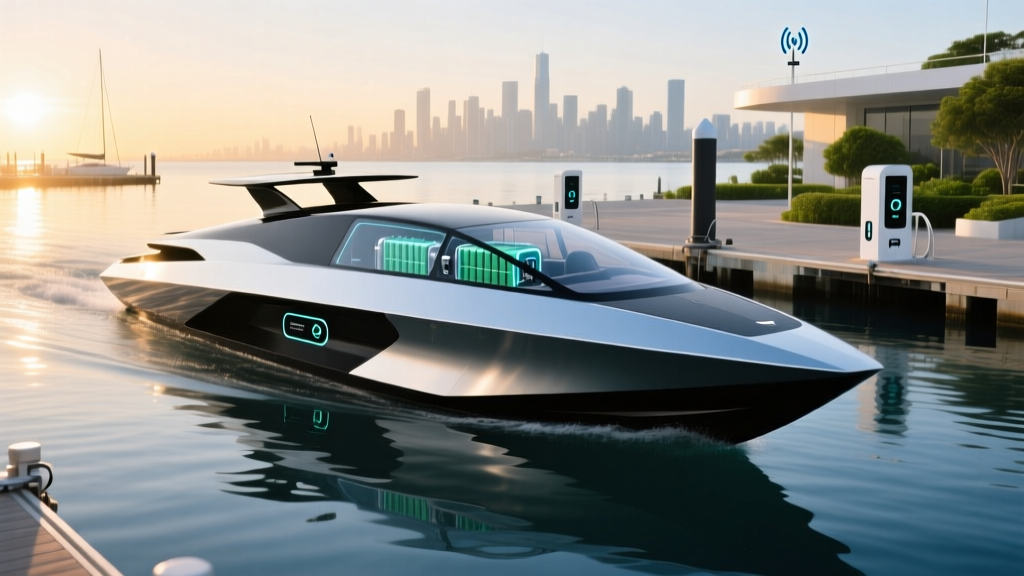
Temu is a marketplace connecting buyers with mostly Chinese manufacturers. The "electric jet boats" listed on the platform typically fall into three categories:
- Electric jet surfboards / e-foils: Stand-up or prone boards with an integrated electric jet pump. Prices: $500–$2,500.
- Small inflatable electric boats: 8–12 ft inflatable hulls with a bolt-on electric outboard motor. Prices: $300–$1,800.
- Electric hydrofoil boards: Carbon-fiber boards with a submerged foil and electric propeller. Prices: $1,200–$4,000+.
These are not to be confused with certified electric marine craft from established manufacturers like Candela (the Candela C-8, priced around $390,000) or electric outboards from brands like Torqeedo or Flux Marine. The Temu listings are overwhelmingly unbranded or white-label products with minimal documentation.
Typical Specs You'll See (and Why to Be Skeptical)
| Spec Claimed | Typical Listing | Reality Check |
|---|---|---|
| Battery capacity | "72V 40Ah" (≈2.9 kWh) | Often overstated; no independent verification |
| Range / runtime | "60 minutes" | Real-world: 20–35 min at moderate throttle |
| Top speed | "35 mph" | Often 18–25 mph in practice |
| Charge time | "3 hours" | Varies wildly; cheap chargers may take 5–8 hrs |
| Motor power | "12 kW" | Rarely sustained; peak vs. continuous unclear |
As any EV buyer knows, the gap between marketing claims and real-world performance matters. With road-going EVs, you have EPA range estimates, manufacturer warranty backing, and NHTSA oversight. With Temu watercraft, you have none of that.
Cost Breakdown: Temu Electric Jet Boat vs. Certified Alternatives
Let's put the actual ownership cost in perspective. The sticker price is only the start.
| Cost Factor | Temu E-Jet Board ($800–$2,000) | Established E-Foil ($8,000–$15,000) | Electric Outboard on Dinghy ($3,500–$7,000) |
|---|---|---|---|
| Purchase price | $800–$2,000 | $8,000–$15,000 | $3,500–$7,000 |
| Battery replacement (est.) | $200–$500 (unknown cells) | $1,500–$3,000 (name-brand) | $800–$2,000 |
| Warranty | None or unenforceable | 1–2 years manufacturer | 2–5 years |
| Safety certification | Typically none (no UL/CE) | CE/UL where applicable | USCG compliant |
| Insurance availability | Extremely limited | Available through marine insurers | Available |
| Resale value | Near zero | 40–60% after 2 years | 50–70% after 2 years |
| Estimated 3-year total cost | $1,000–$2,800 (incl. replacement) | $10,000–$18,000 | $4,500–$9,500 |
The Temu option looks cheap upfront, but the lack of warranty, questionable cell quality, and near-zero resale value mean your cost-per-hour on the water may actually be higher than a premium product that lasts years.
Battery Safety: The Real Risk EV Buyers Should Understand
If you've researched EV battery chemistry, you know the difference between LFP (lithium iron phosphate) and NMC (nickel manganese cobalt) cells. LFP is more thermally stable; NMC offers higher energy density but requires robust battery management.
Here's the problem with Temu electric jet boats: you rarely know which chemistry is inside, and the battery management system (BMS) quality is unverified.
Why This Matters on Water
- Water + lithium = serious hazard. A compromised battery pack submerged in water can short-circuit, vent toxic gases, or ignite. Unlike a car battery pack sealed in a structural enclosure, these boards have minimal ingress protection.
- No thermal runaway protection. Certified EVs use firewalls, venting systems, and cell-to-cell barriers. A $1,200 Temu e-foil has none of this.
- Charging safety. The included chargers often lack overcharge protection, temperature monitoring, or UL certification. Charging an unknown lithium pack indoors or in a garage is a genuine fire risk.
- No recall mechanism. If a defect is discovered, there is no NHTSA-equivalent to mandate a recall or notify owners.
For context, the National Highway Traffic Safety Administration oversees EV battery safety on roads. The U.S. Coast Guard covers some marine vessel standards, but personal electric watercraft from overseas direct-market sellers largely fall between regulatory cracks.
How Does This Compare to Buying an EV for the Road?
If you're on autoedgeview.com, you're likely weighing an electric car, truck, or SUV. Here's how the purchase calculus differs:
| Factor | Road-Going EV (e.g., 2026 Tesla Model Y, Hyundai Ioniq 5) | Temu Electric Jet Boat |
|---|---|---|
| EPA / independent testing | Yes — verified range, efficiency, emissions | None |
| Federal tax credit (§30D) | Up to $7,500 (income, MSRP, sourcing rules apply — see IRS.gov) | Not eligible — not a motor vehicle |
| Battery warranty | 8 years / 100,000 mi (federally mandated minimum) | None or 30-day seller return |
| Safety crash/defect oversight | NHTSA, IIHS | None |
| Charging infrastructure | NACS / CCS networks, home Level 2 | Proprietary charger included; no standard |
| Insurance | Widely available | Rarely insurable |
| Real-world range data | Extensive (EPA + owner community) | Anecdotal YouTube reviews at best |
The takeaway: the protections and data transparency you get when buying a road-going EV simply don't exist for these watercraft. That's not a reason to never buy one — but it is a reason to go in with eyes wide open.
Common Misconceptions About Temu Electric Jet Boats
| Myth | Fact |
|---|---|
| "They qualify for the EV tax credit." | No. The §30D credit applies to qualified plug-in electric motor vehicles for road use. Watercraft are excluded. See current rules at IRS.gov. |
| "It's just like buying a cheap EV." | Road EVs undergo EPA testing, NHTSA safety oversight, and come with 8-year battery warranties. These watercraft have none of that. |
| "The battery will last for years." | Unknown cells with no BMS data can degrade rapidly, especially if stored at full charge or exposed to heat. Expect 1–3 seasons of use, not 8+ years. |
| "If it breaks, I can get it fixed." | There is no service network. Replacement parts (especially batteries and motors) may not be available or compatible. |
| "Temu's return policy protects me." | Temu's return window is typically 90 days. After that, you're on your own with an overseas seller. |
Decision Framework: Should You Buy One?
Choose a Temu electric jet boat if:
- You want a low-cost toy for occasional calm-water use and accept it may last only 1–2 seasons.
- You're comfortable with zero warranty, no safety certification, and no resale value.
- You can safely charge and store a lithium battery pack outdoors or in a fire-resistant area.
- You understand that if it fails, the total loss is your purchase price plus any shipping/customs fees.
Choose a certified electric watercraft or spend your budget on a road-going EV instead if:
- You want verified safety standards, a warranty, and the ability to insure your purchase.
- You plan to use it frequently and need reliable battery longevity.
- You want to take advantage of the federal §30D tax credit (up to $7,500 for eligible road vehicles, subject to income caps, MSRP limits, and battery-sourcing rules).
- You value resale value and a service network.
- You're a first-time EV buyer and want to build confidence with a well-supported product before experimenting.
What First-Time EV Buyers Should Prioritize
If you're new to electric vehicles and researching Temu electric jet boats because you're excited about electrification, here's practical advice: start with a certified EV for daily driving. The infrastructure, warranty, safety oversight, and cost savings (fuel and maintenance) are proven. A 2026 Hyundai Ioniq 5 starts around $42,000, qualifies for partial or full federal credit depending on trim and your income, and gives you 300+ miles of EPA range with DC fast charging at up to 240 kW (10–80% in roughly 18 minutes). That's a verified, warrantied, insurable entry into electrification.
Once you've experienced EV ownership and understand battery care (avoiding 100% storage, preconditioning for fast charging, monitoring State of Health), you'll be better equipped to evaluate the risks of uncertified electric products.
Real-World Ownership Considerations
Even if you decide a Temu electric jet boat fits your risk tolerance, plan for these practical realities:
- Charging at home: These units typically use standard 120V outlets, but the chargers are uncertified. Never charge an unknown lithium pack unattended, overnight, or near flammable materials.
- Climate impact: Just like road EVs, lithium batteries lose capacity in cold weather. If you're in a northern climate, expect significantly reduced runtime below 50°F, and never charge a cold lithium battery below freezing (this causes lithium plating and permanent damage).
- Storage: Store at roughly 50–60% State of Charge in a cool, dry place. Full-charge storage accelerates degradation — the same principle that applies to your EV's traction battery.
- Transport: Lithium batteries over 100 Wh are restricted on commercial flights. These packs are often 2,000–4,000 Wh, meaning you cannot fly with them and must ship via ground freight if moving.
- Waterway regulations: Some lakes and reservoirs restrict motorized watercraft. Check local rules before assuming you can ride anywhere.
Frequently Asked Questions
Can I get a federal EV tax credit for a Temu electric jet boat?
No. The §30D Clean Vehicle Credit applies only to qualified plug-in electric motor vehicles intended for road use. Watercraft, off-road vehicles, and recreational toys do not qualify. Current eligibility rules — including income caps ($150K single / $300K joint), MSRP limits ($55K cars / $80K SUVs and trucks), and battery-sourcing requirements — are published at IRS.gov.
Are Temu electric jet boats safe?
There is no independent safety verification. The battery cells, BMS, motor controller, and charger typically lack UL, CE, or any third-party certification. Lithium battery fires on or near water are extremely dangerous and difficult to extinguish. Compare this to a road-going EV, which must meet FMVSS battery safety standards and undergo NHTSA oversight.
How long does the battery last on a Temu electric jet boat?
Expect 20–35 minutes of real-world runtime per charge, not the 60+ minutes some listings claim. Battery lifespan is typically 200–500 charge cycles before significant degradation, translating to roughly 1–3 seasons of moderate use. Replacement batteries may cost $200–$500 but are often proprietary and difficult to source.
Should I buy a Temu electric jet boat or save for a real EV?
If your goal is to reduce transportation costs and emissions, a certified EV or PHEV delivers measurable, warrantied savings. A Temu watercraft is a recreational toy with high uncertainty. If your budget allows only one electrified purchase, a road-going EV provides daily utility, tax incentives, and proven reliability.
What's the difference between kW and kWh on these watercraft?
This matters everywhere in electrification. kW (kilowatts) is power — how fast the motor can draw energy (like horsepower). kWh (kilowatt-hours) is energy capacity — how much the battery holds (like a gas tank size). A listing claiming "12 kW motor" and "2.9 kWh battery" means you could theoretically drain the battery in about 15 minutes at full power. Real-world runtime at partial throttle will be longer, but this is why the math often doesn't match the marketing.