The Quick Answer: Is the All Electric Lexus SUV Worth It?
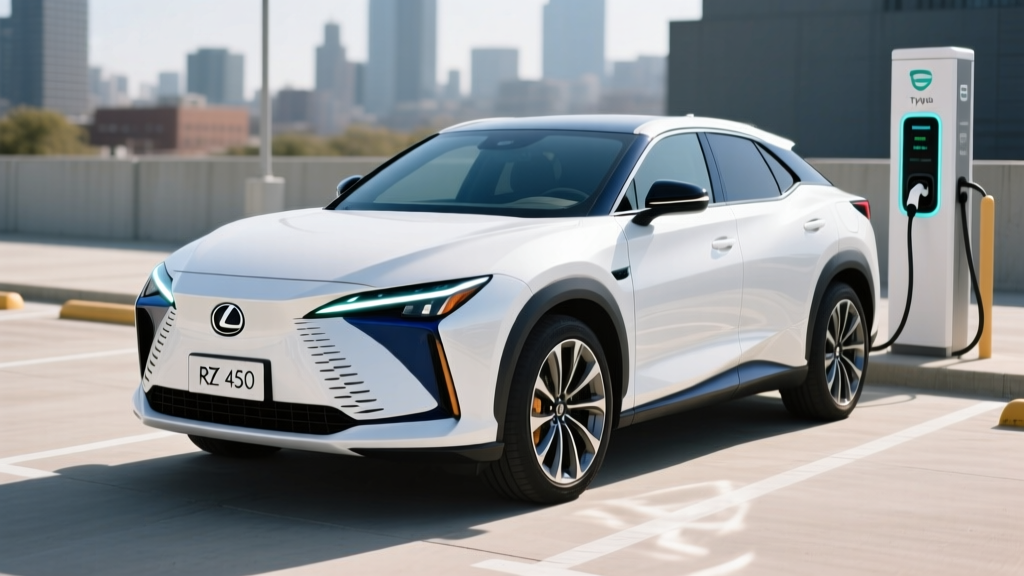
The only all electric Lexus SUV currently on sale is the Lexus RZ 450e, a compact luxury crossover built on Toyota's dedicated e-TNGA EV platform. For the 2026 model year, it delivers an EPA-estimated 220 miles of range (FWD) or 196 miles (AWD), a 71.4 kWh usable NMC battery, and DC fast charging that peaks around 150 kW (10–80% in roughly 30 minutes). Pricing starts near $55,000 before destination, and it currently does not qualify for the full $7,500 federal §30D tax credit due to battery-sourcing requirements. It's best suited for luxury buyers with home charging access, commutes under 150 miles round-trip, and a second vehicle or hybrid option for long road trips. If range beyond 250 miles and fast-charging speed are non-negotiable, competitors like the BMW iX, Genesis GV60, or Tesla Model Y Long Range outperform it on paper and in practice.
The 2026 Lexus RZ 450e: Core Specs at a Glance
Lexus entered the battery-electric market cautiously with the RZ, prioritizing ride refinement and build quality over range-chasing. That philosophy shows in the numbers. Here's what you're actually buying:
| Specification | RZ 450e FWD (Premium) | RZ 450e AWD (Luxury) |
|---|---|---|
| EPA Range | 220 miles | 196 miles |
| Battery (Usable) | 71.4 kWh, NMC lithium-ion | |
| Motor Output | 201 hp (front motor) | 308 hp (dual motor) |
| 0–60 mph | ~7.4 sec | ~5.0 sec |
| Peak DC Fast Charge | ~150 kW (CCS1) | |
| 10–80% DC Charge Time | ~30 minutes (optimal conditions) | |
| Level 2 Charge Rate | ~11 kW (7.2 hours, 0–100%) | |
| MPGe (Combined) | 115 MPGe | 102 MPGe |
| Base MSRP (approx.) | $55,000 | $59,500 |
| Battery Warranty | 8 years / 100,000 miles | |
| Federal §30D Credit | Likely ineligible (verify at IRS.gov) | |
Real-World Range Reality: The EPA sticker says 220 miles for FWD, but expect 175–195 miles on sustained highway driving at 70+ mph, and as low as 150–165 miles in freezing temperatures (below 30°F) due to cabin heating demands and reduced battery efficiency. The RZ lacks a heat pump in earlier model years — confirm whether 2026 trims include one, as this significantly affects cold-weather efficiency. Plan trips assuming ~170 usable miles between charges to maintain a safety buffer.
RZ 450e vs. Gas Lexus NX vs. NX Plug-In Hybrid: Cost and Efficiency Compared
Lexus buyers often cross-shop the RZ against the gas NX 350 and the plug-in hybrid NX 450h+. The differences in fueling cost, maintenance, and daily usability are substantial.
| Metric | RZ 450e (EV) | NX 450h+ (PHEV) | NX 350 (Gas) |
|---|---|---|---|
| EPA Combined Efficiency | 102–115 MPGe | 84 MPGe (EV) / 36 MPG (gas) | 25 MPG |
| Electric-Only Range | 196–220 mi | 37 mi | N/A |
| Cost per Mile (fuel/electricity)* | ~$0.04 | ~$0.05 (EV) / ~$0.14 (gas) | ~$0.14 |
| Annual "Fuel" Cost (12k mi) | ~$480 | ~$600–$1,200 | ~$1,680 |
| Estimated Annual Maintenance | ~$300 | ~$600 | ~$750 |
| Starting MSRP | ~$55,000 | ~$59,500 | ~$43,000 |
*Based on $0.14/kWh national average home electricity and $3.50/gal gasoline. Actual costs vary by utility rate and region. Source: fueleconomy.gov
The takeaway: Over five years and 60,000 miles, the RZ saves roughly $5,000–$7,000 in fuel and maintenance compared to the gas NX 350. However, the NX 350's lower sticker price (~$12,000 less) means the RZ only breaks even on total cost of ownership around year 8–9 unless you qualify for state or utility rebates. The NX 450h+ PHEV offers the best compromise if you lack reliable home charging — you get 37 miles electric for daily commutes and a gas engine for road trips without range compromise.
Charging the RZ 450e: What You'll Actually Experience
Charging speed is one of the RZ's most debated shortcomings. At a peak of ~150 kW, it trails rivals like the Hyundai Ioniq 5 (peak 240 kW) and the Genesis GV60 (peak 350 kW on 800V architecture). Here's what each charging level delivers in practice:
| Charging Level | Power (kW) | Miles Added per Hour | Best Use Case |
|---|---|---|---|
| Level 1 (120V outlet) | ~1.4 kW | ~4–5 miles | Emergency / overnight trickle |
| Level 2 (240V home) | ~11 kW | ~32–36 miles | Daily home charging |
| DC Fast Charge (CCS1) | Up to ~150 kW | ~150–180 miles in 30 min | Road trips, public stations |
Charging curve reality: The RZ hits its 150 kW peak only between roughly 10–30% state of charge. Above 50%, the rate tapers to ~80 kW, and above 80% it drops sharply to ~30 kW to protect the NMC cells. This means a 10–80% session takes about 30 minutes at a properly rated Electrify America or EVgo station, but a 20–90% session can stretch past 50 minutes. Always precondition the battery (via the Lexus app's charge-scheduling feature) before arriving at a DC fast charger — cold batteries charge significantly slower.
Connector note: The RZ 450e uses the CCS1 connector, not the Tesla NACS plug. As of 2026, Lexus has not announced a native NACS port for the RZ. You can use Tesla Superchargers with a CCS-to-NACS adapter (sold separately, ~$200–$250), but charging speed may be limited by adapter compatibility. Confirm adapter support on the Lexus owner portal before relying on Superchargers for road trips.
Real Ownership Costs: 5-Year Breakdown
Sticker price is only the beginning. Here's a realistic five-year total cost of ownership for the RZ 450e AWD Premium, assuming 12,000 miles/year, home charging at $0.14/kWh, and no federal tax credit:
| Cost Category | RZ 450e AWD | NX 350 Gas (AWD) |
|---|---|---|
| Purchase Price (MSRP) | $59,500 | $46,000 |
| Federal Tax Credit (§30D) | $0 (likely ineligible) | $0 |
| Home Charger Install (Level 2) | $1,200–$2,500 | $0 |
| 5-Year Fuel / Electricity | $2,400 | $8,400 |
| 5-Year Maintenance | $1,500 | $3,750 |
| 5-Year Insurance (est.) | $9,500 | $7,500 |
| Estimated 5-Year Depreciation | $24,000 | $18,000 |
| Total 5-Year Cost | ~$98,100 | ~$83,650 |
Key insight: The RZ costs roughly $14,000–$15,000 more over five years than the gas NX 350, primarily due to higher purchase price, steeper depreciation (EV luxury segment depreciation is aggressive), and elevated insurance premiums. The fuel and maintenance savings (~$8,250 combined) don't fully offset these costs. The RZ makes financial sense if you: (1) qualify for a state EV rebate ($2,000–$5,000 in states like California, Colorado, or Massachusetts), (2) have cheap utility rates below $0.10/kWh, or (3) value the driving refinement and silence enough to absorb the premium. Check current state incentives at afdc.energy.gov.
Common Misconceptions About the All Electric Lexus SUV
| Myth | Fact |
|---|---|
| "The RZ qualifies for the $7,500 federal tax credit." | As of 2026, the RZ 450e is assembled in Japan and uses battery components that likely fail §30D critical-mineral and sourcing requirements. Always verify at IRS.gov before purchasing. Point-of-sale transfer is only available if the vehicle qualifies. |
| "220 miles of range is enough for road trips." | On the highway at 75 mph, expect ~180 real miles. In winter, that drops to ~155. You'll need a DC fast charger every 2–2.5 hours on long trips, adding 30–45 minutes per stop. Plan accordingly. |
| "I can charge it at any Tesla Supercharger." | The RZ uses CCS1, not NACS. You need a third-party adapter for Supercharger access, and not all adapter-station combinations support full charging speeds. Rely on Electrify America, EVgo, or ChargePoint CCS stations for native compatibility. |
| "EVs need no maintenance." | The RZ still requires cabin air filter replacement, brake fluid checks, tire rotation (EVs wear tires faster due to weight and instant torque), windshield washer fluid, and 12V auxiliary battery monitoring. Budget ~$300/year. |
| "The battery will need expensive replacement." | Lexus warranties the traction battery for 8 years/100,000 miles against degradation below 70% capacity. NMC batteries in liquid-cooled systems like the RZ's typically retain 85–90% capacity at 100,000 miles based on industry data. Replacement is rarely needed within normal ownership periods. |
Decision Framework: Is the RZ 450e the Right All Electric Lexus SUV for You?
Choose the Lexus RZ 450e if:
- You have Level 2 home charging (240V garage or driveway) and can charge overnight daily
- Your daily commute is under 80 miles round-trip, leaving range margin
- You value Lexus build quality, dealer service experience, and a quiet, refined cabin over maximum range or fastest charging
- You own or can borrow a second vehicle (gas or hybrid) for road trips exceeding 250 miles
- You live in a mild climate where cold-weather range loss is minimal (Southern or coastal states)
Look elsewhere (BMW iX, Tesla Model Y, Genesis GV60, or Lexus NX 450h+ PHEV) if:
- You need 300+ miles of range for frequent road trips without frequent stops
- You rely exclusively on public DC fast charging (no home charging access) — the RZ's 150 kW peak and 30-minute 10–80% time will frustrate you compared to 800V competitors
- You live in a cold climate (Upper Midwest, Northeast, Mountain states) where winter range drops below 160 miles
- The $7,500 federal tax credit is essential to your budget — the RZ likely won't qualify, but a US-assembled Tesla Model Y or Ford Mustang Mach-E might
- You want a third row or larger cargo area — the RZ is strictly a compact two-row crossover
Frequently Asked Questions
Does Lexus make any other all-electric SUV besides the RZ?
As of the 2026 model year, the RZ 450e is the only fully electric Lexus SUV sold in the United States. Lexus has announced plans for additional battery-electric models in the coming years, including a larger three-row EV SUV, but no production vehicle is currently available. The UX 300e was sold in limited markets but was discontinued in the US.
Can I install a Level 2 charger at home for the RZ 450e?
Yes, provided your electrical panel has capacity. A Level 2 home charger (like the ChargePoint Home Flex or Emporia V2) requires a 240V circuit — typically a NEMA 14-50 outlet or hardwired connection. Installation costs range from $800 to $2,500 depending on panel proximity and whether a panel upgrade (to 200A) is needed. Always hire a licensed electrician and pull a local permit.
How does the RZ 450e handle in snow and cold weather?
The AWD model provides competent traction in light snow, aided by Lexus's electronic all-wheel-drive system. However, cold weather (below 30°F) reduces range by 20–30% due to battery chemistry limitations and cabin heating energy draw. Preconditioning the cabin and battery while plugged in mitigates this, but plan for ~155–165 miles of real range in freezing conditions.
Is the Lexus RZ 450e a good first EV?
It can be, but with caveats. The RZ offers a familiar luxury-crossover experience with minimal learning curve — no complex drive modes or one-pedal-driving aggression. However, its relatively short range and moderate charging speed mean a first-time EV buyer should carefully assess their driving patterns. If you regularly drive more than 150 miles in a day or lack home charging, a longer-range EV like the Tesla Model Y Long Range (330+ miles EPA) or a plug-in hybrid like the NX 450h+ may be a more forgiving first electrified vehicle.
What happens if the RZ battery degrades significantly?
Lexus covers the high-voltage traction battery for 8 years or 100,000 miles (whichever comes first) against capacity loss below 70% of original. If the battery falls below that threshold within the warranty period, Lexus will repair or replace it at no cost. Out-of-warranty replacement costs are estimated at $12,000–$18,000 based on comparable Toyota/Lexus hybrid battery replacements, though full EV battery replacements remain rare in practice given current degradation data.