Quick Verdict: The Affordable Long-Range Crossover Gets Sporty
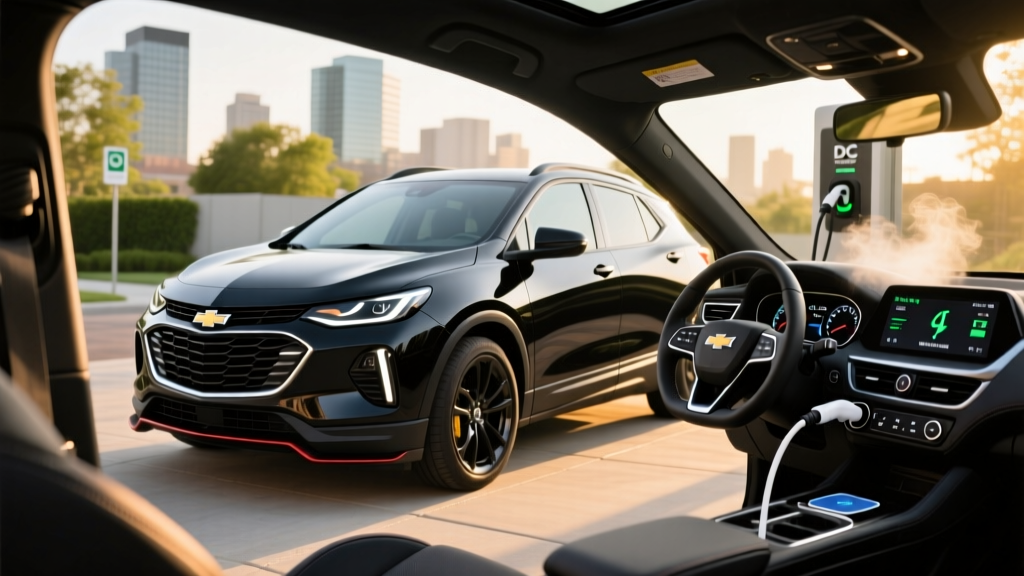
The 2025 Chevrolet Equinox EV RS is the range-topping sport trim of GM's most accessible long-range electric crossover. Built on the Ultium platform, it delivers an EPA-estimated 319 miles of range (RS AWD), a 17.7-inch infotainment display, and genuine daily-driver practicality — all before the $7,500 federal tax credit potentially drops the effective price into the mid-$30,000s. The RS adds blacked-out styling, 21-inch wheels, and a sport-tuned suspension over the LT trim, but the core value proposition remains the same: over 300 miles of range for thousands less than a Tesla Model Y or Hyundai Ioniq 5.
After spending time with the Equinox EV platform across multiple trims, the RS impresses as a commuter-first family hauler that doesn't pretend to be a performance EV. Its 213 hp single-motor or 288 hp dual-motor powertrain prioritizes efficiency over thrills, and its 170 kW peak DC charging rate is adequate but not class-leading. For buyers who need real-world range, spacious cargo capacity, and a tax-credit-eligible price, the Equinox EV RS makes a compelling case — with caveats around charging speed and highway efficiency that we'll break down below.
Range, Battery & Efficiency: 319 Miles on Paper, What About Reality?
Real-World Expectation: ~260–285 miles highway (70-75 mph), ~215–245 miles in cold weather (below 32°F). City and mixed driving with regenerative braking closely tracks the EPA number.
Battery: ~85 kWh usable capacity, NMC (nickel manganese cobalt) chemistry, Ultium platform
The Equinox EV RS uses GM's Ultium battery architecture with an NMC lithium-ion pack providing approximately 85 kWh of usable energy. Unlike some competitors that have shifted to LFP (lithium iron phosphate) chemistry for lower cost and longer cycle life, GM has stuck with NMC for its higher energy density — which is how Chevy squeezes over 300 miles into a crossover at this price point.
The FWD RS achieves 319 miles EPA thanks to its single rear-mounted motor and lower rolling resistance. The AWD variant, which adds a front motor for a combined 288 hp, drops to 297 miles EPA. Both figures are competitive with the segment: the Hyundai Ioniq 5 (Long Range RWD) posts 303 miles, while the Tesla Model Y Long Range AWD manages 320 miles on a larger battery.
Real-world reconciliation: In mixed suburban and highway driving at moderate temperatures (55–75°F), expect the FWD RS to deliver 270–290 miles before needing a charge. Sustained 75 mph highway travel reduces that to roughly 255–275 miles, as aerodynamic drag disproportionately impacts efficiency at speed. Cold weather (below freezing) can knock 20–30% off range, particularly on short trips where the cabin heater cycles frequently. The Equinox EV does include a heat pump on higher trims, which helps mitigate winter losses compared to resistive heating, but buyers in northern climates should budget for a realistic 220–250 miles in deep winter.
| Specification | RS FWD | RS AWD |
|---|---|---|
| EPA Range | 319 miles | 297 miles |
| Battery (usable) | ~85 kWh NMC | ~85 kWh NMC |
| Motor / Drivetrain | Single rear motor, RWD | Dual motor, AWD |
| Horsepower | 213 hp | 288 hp |
| Torque | 236 lb-ft | 355 lb-ft |
| 0–60 mph | ~8.3 sec | ~6.2 sec |
| Max DC Fast Charge | 170 kW | 170 kW |
| Level 2 Charge Rate | 11.5 kW (AC) | 11.5 kW (AC) |
| EPA Efficiency (combined) | ~114 MPGe / 30 kWh/100mi | ~105 MPGe / 32 kWh/100mi |
| Cargo Volume (rear seats up/down) | 26.4 / 57.2 cu ft | 26.4 / 57.2 cu ft |
| Base MSRP | $43,400 | $46,300 |
| Battery/Powertrain Warranty | 8 yr / 100,000 mi | 8 yr / 100,000 mi |
Efficiency context: The FWD RS returns approximately 30 kWh per 100 miles combined (roughly 114 MPGe per fueleconomy.gov), which is respectable for a 4,300+ lb crossover but trails the more aerodynamic Hyundai Ioniq 5 (26 kWh/100mi). The AWD version dips to about 105 MPGe. At the national average electricity rate of ~$0.17/kWh, that translates to roughly $5.10 per 100 miles of driving — dramatically cheaper than a 28 MPG gas crossover at $3.50/gallon ($12.50 per 100 miles).
Charging Speed: 170 kW Peak, but Watch the Curve
The Equinox EV RS supports a maximum DC fast-charge rate of 170 kW via its CCS connector (with GM's transition to NACS beginning for the 2025 model year, some vehicles may ship with a NACS port or include a CCS-to-NACS adapter for Tesla Supercharger access — confirm with your dealer). On a capable 350 kW charger, the RS can add approximately 70 miles of range in 10 minutes under ideal conditions.
| Charging Level | Power | Speed / Time |
|---|---|---|
| Level 1 (120V household) | ~1.4 kW | ~3–4 miles per hour |
| Level 2 (240V home/public) | 11.5 kW max | ~34 miles per hour; full charge ~8.5 hrs |
| DC Fast Charge (peak) | 170 kW | 10–80% in ~42 minutes |
| DC Fast (10 min add) | — | ~70 miles (ideal, preconditioned) |
Charging curve reality check: The 170 kW figure is a peak, not a sustained rate. In practice, the Equinox EV hits its maximum charge rate between approximately 10–30% state of charge (SoC), then progressively tapers. From 50–80%, expect rates closer to 80–110 kW. This means the 10–80% session takes roughly 40–45 minutes on a 150+ kW station — competitive with the Ford Mustang Mach-E but noticeably slower than the Hyundai Ioniq 5's 800V architecture (10–80% in ~18 minutes at up to 238 kW).
For home charging, the 11.5 kW onboard AC charger is a strong point. On a 48-amp Level 2 wallbox (the most common home installation), you'll recover roughly 34 miles of range per hour, meaning a depleted battery fully recharges overnight in about 8.5 hours. This is more than adequate for daily use — most owners will plug in each evening and wake up to a full battery. Budget $500–$1,500 for a quality Level 2 home charger installation (equipment plus licensed electrician, depending on panel capacity and run length).
Preconditioning note: The Equinox EV supports battery preconditioning when you set a DC fast-charger as your navigation destination. This warms the battery to optimal temperature before arrival, improving charge speed — especially important in cold weather. Always use nav-to-charger for the fastest sessions.
Performance & Driving Dynamics
The RS AWD's dual-motor setup produces 288 hp and 355 lb-ft of torque, delivering a 0–60 mph time of approximately 6.2 seconds. The FWD single-motor variant, with 213 hp and 236 lb-ft, takes roughly 8.3 seconds. Neither figure will embarrass you in traffic, but the Equinox EV RS is tuned for comfort and efficiency rather than sportback aggression. The "RS" badge adds sport-tuned suspension damping, unique steering calibration, and 21-inch wheels, but the fundamental character remains that of a composed, quiet family crossover.
Ride quality is a highlight. The Ultium platform's low center of gravity (battery pack mounted under the floor) gives the Equinox EV planted handling with minimal body roll. The RS's 21-inch wheels do transmit more road imperfections than the LT's 19-inch options, so buyers in areas with rough pavement may want to test-drive both. Regenerative braking offers multiple levels selectable via steering-wheel paddles, and one-pedal driving mode is available for stop-and-go commuting — though it doesn't bring the vehicle to a complete hold at very low speeds like some competitors.
Towing capacity is rated at 1,500 lbs with the available towing package — sufficient for a small utility trailer or a pair of dirt bikes, but not for a camper. This is a segment-typical limitation; the Tesla Model Y is rated for 3,500 lbs if towing matters to you.
Interior, Tech & Cargo: Practicality First
The Equinox EV RS cabin is dominated by a 17.7-inch diagonal infotainment touchscreen running Google Built-In (Google Maps, Google Assistant, Google Play Store). A separate 11-inch digital driver display sits behind the steering wheel. The interface is responsive, the Google Maps navigation integrates charging stops with battery preconditioning, and wireless Apple CarPlay and Android Auto are both supported. Physical climate controls are minimal — most functions route through the touchscreen, which some drivers find distracting.
Cargo space: 26.4 cubic feet behind the rear seats, expanding to 57.2 cubic feet with the rear seats folded. That's competitive with the gas Equinox and adequate for family duty — two suitcases, a stroller, and grocery runs fit without fuss. However, it trails the Tesla Model Y (30.2 / 76.2 cu ft) and Hyundai Ioniq 5 (27.2 / 59.3 cu ft) in maximum volume. There is no front trunk (frunk) on the Equinox EV — the space under the hood houses power electronics.
Passenger space: Front legroom measures 41.3 inches; rear legroom is 37.8 inches. Headroom is generous thanks to the flat floor and tall roofline. The rear seat comfortably fits two adults on long trips, and the flat floor (no transmission tunnel hump) makes the middle position usable for a child seat or a third passenger on shorter drives.
Driver assistance: Every Equinox EV comes with Chevy's Super Cruise-compatible hardware, though Super Cruise (GM's hands-off, eyes-on Level 2 highway driving system) requires a subscription after the initial trial period. The standard Chevy Safety Assist suite includes automatic emergency braking, forward collision alert, lane keep assist, following distance indicator, and IntelliBeam auto high beams. Note: Super Cruise is an SAE Level 2 system — the driver must remain attentive and eyes on the road at all times. It is not self-driving.
Pricing, Trims & Federal Tax Credit Eligibility
| Trim | Drivetrain | Base MSRP | Est. After §30D Credit* |
|---|---|---|---|
| LT (base) | FWD | $34,900 | $27,400 |
| LT | AWD | $37,900 | $30,400 |
| RS | FWD | $43,400 | $35,900 |
| RS | AWD | $46,300 | $38,800 |
| Launch Edition (RS-based) | AWD | $43,900 | $36,400 |
*Tax credit estimates assume full $7,500 §30D eligibility. Actual credit depends on buyer income, vehicle MSRP caps, and battery-component/critical-mineral sourcing requirements. Always verify current rules at IRS.gov and consult a tax professional.
Federal tax credit eligibility (§30D): The 2025 Equinox EV is assembled in North America (Spring Hill, Tennessee), which satisfies the final-assembly requirement. However, the full $7,500 credit is split into two $3,750 halves — one for battery-component sourcing and one for critical-minerals sourcing — and the exact amount available can shift as GM's supply chain evolves and IRS guidance updates. Key buyer requirements include:
- MSRP cap: SUVs/crossovers must have an MSRP at or below $80,000 (all Equinox EV trims qualify)
- Buyer income cap: Modified AGI must not exceed $150,000 (single), $225,000 (head of household), or $300,000 (joint)
- Point-of-sale transfer: As of 2024+, you can transfer the credit to the dealer at purchase for an immediate price reduction — no need to wait for tax filing
- Battery sourcing: Varies by production batch; confirm with your dealer which credit amount ($3,750 or $7,500) applies to your specific VIN
Destination charge adds approximately $1,395 to all trims. Options on the RS (like the active safety package, panoramic sunroof, or premium audio) can push an AWD RS to $50,000+ before credits. Our recommendation: the RS FWD at $43,400 offers the best range-per-dollar ratio and keeps the as-tested price manageable.
Pros, Cons & Who Should Buy
Pros
- 319-mile EPA range (FWD) at a sub-$44K MSRP — best value-to-range in the segment
- Spacious cabin with flat floor, comfortable rear seating
- Google Built-In infotainment is fast and well-integrated
- Super Cruise availability for hands-free highway driving
- Strong home Level 2 charging rate (11.5 kW, ~34 mi/hr)
- Federal tax credit eligible — potentially $35,900 effective price for RS FWD
- Heat pump on higher trims aids cold-weather efficiency
Cons
- 170 kW peak DC charging is slower than Hyundai/Kia's 800V rivals (42 min vs 18 min, 10–80%)
- No frunk — lost opportunity for extra storage
- Cargo volume (57.2 cu ft max) trails Model Y and Ioniq 5
- 21-inch RS wheels firm up the ride on rough roads
- Towing limited to 1,500 lbs
- Minimal physical controls — heavy touchscreen reliance
- AWD range drops to 297 miles
Who the Equinox EV RS Is For
Choose the Equinox EV RS if: You prioritize range-per-dollar, commute 30–60 miles daily with home charging, want a comfortable family crossover with modern tech, and value the federal tax credit. The FWD RS is the sweet spot for maximum range and lowest price.
Look elsewhere if: You take frequent 300+ mile road trips (the 42-minute charge sessions add up vs. Ioniq 5's 18 minutes), need maximum cargo volume (Model Y), want sporty acceleration (Tesla Model Y Performance), or need more than 1,500 lbs of towing.
How It Stacks Up Against Key Competitors
| Spec | Equinox EV RS AWD | Tesla Model Y LR AWD | Hyundai Ioniq 5 AWD |
|---|---|---|---|
| EPA Range | 297 mi | 320 mi | 290 mi |
| Battery | ~85 kWh NMC | ~78 kWh | 77.4 kWh |
| Peak DC Charge | 170 kW | 250 kW | 238 kW (800V) |
| 10–80% Time | ~42 min | ~30 min | ~18 min |
| 0–60 mph | ~6.2 sec | ~5.0 sec | ~5.1 sec |
| Cargo (max) | 57.2 cu ft | 76.2 cu ft | 59.3 cu ft |
| Base MSRP | $46,300 | $48,990 | $50,100 |
| Tax Credit (§30D) | Up to $7,500 | Up to $7,500 | Up to $7,500 |
The Equinox EV RS wins on price. After the federal tax credit, the RS AWD can land near $38,800 — roughly $5,000–$7,000 less than a similarly equipped Model Y or Ioniq 5 after their respective credits. That gap is meaningful for budget-conscious buyers.
Where it loses ground is DC fast charging. On road trips, the Ioniq 5's 800V architecture cuts charge stops nearly in half, and the Model Y benefits from the mature Tesla Supercharger network (though GM's NACS adoption is closing that gap). If you road-trip more than 4–5 times a year, the faster-charging competitors save real time. If you charge at home 90% of the time and road-trip occasionally, the Equinox EV's slower charging is a manageable trade-off for the lower purchase price.
Warranty & Long-Term Ownership
Chevrolet covers the Equinox EV's battery and powertrain for 8 years or 100,000 miles (whichever comes first), with a capacity-retention threshold of 60% — meaning if the battery degrades below 60% of original capacity within the warranty period, GM will repair or replace it. The bumper-to-bumper warranty runs 3 years / 36,000 miles.
NMC batteries in the Ultium platform have shown promising early degradation data across GM's EV lineup, with typical losses of 5–8% over the first 50,000 miles based on owner reports. The active thermal management system (liquid cooling and heating) helps maintain long-term health. For buyers planning to keep the vehicle 8+ years, the warranty provides meaningful protection, though replacement costs outside of warranty for an 85 kWh NMC pack would likely range from $12,000–$18,000 based on current industry pricing.
Frequently Asked Questions
What is the real-world range of the 2025 Chevrolet Equinox EV RS?
The EPA rates the FWD RS at 319 miles and the AWD RS at 297 miles. In real-world mixed driving at moderate temperatures, expect 270–290 miles (FWD) or 255–275 miles (AWD). Highway-only driving at 75 mph reduces range by roughly 10–15%, and cold weather (below freezing) can cut range by 20–30%, especially on short trips.
How fast does the Equinox EV RS charge at home and on the road?
At home on a 240V Level 2 charger, the 11.5 kW onboard charger delivers ~34 miles of range per hour, with a full charge taking about 8.5 hours. On a DC fast charger, it peaks at 170 kW and charges from 10–80% in approximately 42 minutes. That's slower than rivals with 800V systems but sufficient for most daily and road-trip needs if you plan stops.
How much does the 2025 Equinox EV RS cost after tax credits?
The RS FWD starts at $43,400 and the RS AWD at $46,300 (plus ~$1,395 destination). If you qualify for the full $7,500 federal §30D credit (based on income, MSRP, and battery-sourcing rules), the effective prices drop to roughly $35,900 (FWD) and $38,800 (AWD). Verify eligibility at IRS.gov and with your dealer, as credit amounts can vary by VIN and production date.
Does the 2025 Equinox EV qualify for the federal EV tax credit?
Yes — the Equinox EV is assembled in Spring Hill, Tennessee, meeting the North American final-assembly requirement. It falls well under the $80,000 SUV MSRP cap. The full $7,500 credit depends on battery-component and critical-mineral sourcing (which can vary by production batch), and buyer income must not exceed IRS thresholds ($150K single / $300K joint). The credit can be transferred to the dealer at point of sale for an immediate price reduction. Consult IRS.gov or a tax professional for your specific situation.
Is the Equinox EV RS worth buying vs. the Tesla Model Y or Hyundai Ioniq 5?
If price is your top priority and you charge mostly at home, the Equinox EV RS offers the best value — thousands less than competitors after the tax credit, with over 300 miles of range (FWD). If you road-trip frequently and need the fastest possible charging, the Ioniq 5's 18-minute 10–80% time or the Model Y's Supercharger network access may justify the higher price. For families who want maximum cargo space, the Model Y's 76 cu ft is hard to beat.
Does the Equinox EV RS have Super Cruise?
Super Cruise hardware is standard, but the feature itself typically requires a subscription after an initial trial period. Super Cruise is an SAE Level 2 hands-off, eyes-on driver-assistance system available on mapped divided highways. It is not autonomous driving — you must remain attentive and ready to take over at all times.
What is the battery warranty on the 2025 Equinox EV?
Chevrolet provides an 8-year / 100,000-mile battery and powertrain warranty with a 60% capacity-retention threshold. The bumper-to-bumper warranty is 3 years / 36,000 miles.