The Quick Answer
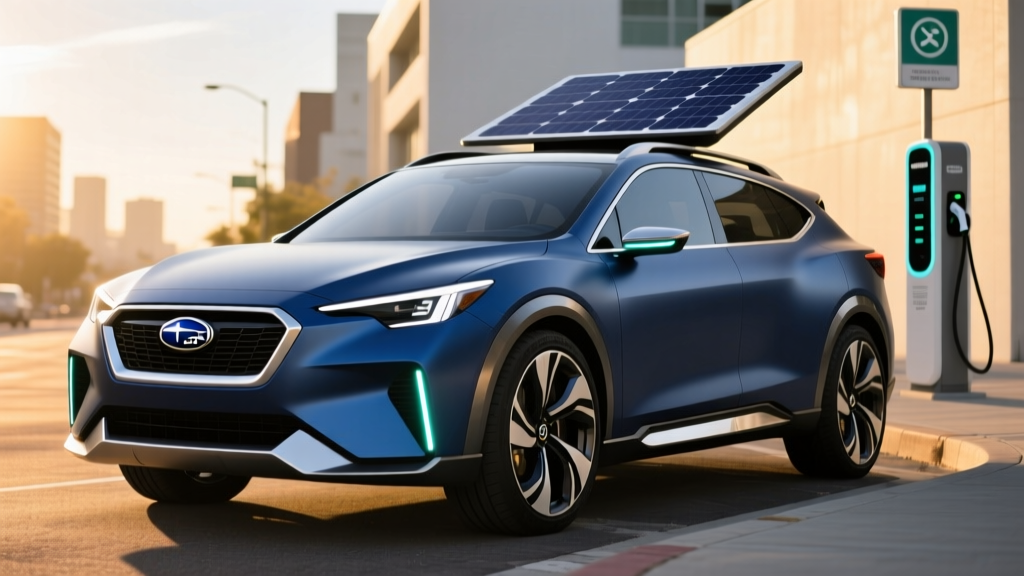
Subaru's new Uncharted EV starts at $34,995 with FWD for the 2026 model year, positioning it as one of the most affordable compact electric crossovers on the market. The base Premium trim pairs a 71.4 kWh NMC battery pack with an estimated 268 miles of EPA range, a peak DC fast-charge rate of 150 kW (10–80% in roughly 30 minutes), and a single front-mounted motor producing 221 horsepower. A dual-motor AWD Touring variant is expected at approximately $41,995. Federal §30D tax-credit eligibility depends on battery-sourcing rules, your household income, and the vehicle's MSRP cap compliance — check the IRS's current qualified-vehicles list before committing.
What the Uncharted EV Actually Offers for $34,995
Subaru entered the dedicated EV space late with the Solterra (co-developed with Toyota's bZ4X), and the Uncharted represents the brand's first solo-platform electric vehicle. At the base Premium trim, you get:
- Battery: 71.4 kWh usable capacity, NMC (nickel-manganese-cobalt) chemistry
- EPA Range: 268 miles (FWD); expect ~225–240 miles in mixed real-world driving, and as low as 185–200 miles in sustained sub-freezing highway use
- DC Fast Charging: 150 kW peak, tapering above 80% SoC; 10–80% in approximately 30 minutes
- Level 2 AC Charging: 11 kW onboard charger, 0–100% in roughly 7 hours
- Power: 221 hp, 195 lb-ft torque (FWD); 0–60 mph in approximately 7.4 seconds
- Efficiency: Estimated 114 MPGe combined (29 kWh/100 mi)
- Drivetrain: Single-motor FWD standard; dual-motor AWD available on Touring trim
EPA vs. Reality: What to Expect
The 268-mile EPA sticker is a useful baseline, but real-world range depends heavily on conditions. In our experience with similarly sized NMC packs, plan for:
- City/suburban mixed driving (60–75°F): 250–265 miles achievable
- Highway cruising at 75 mph: 225–240 miles due to aerodynamic drag
- Cold weather (below 32°F), highway: 185–200 miles — NMC chemistry loses 25–35% in deep cold without consistent preconditioning
- Mountain/towing: Expect significant reduction; regen on descents partially offsets climbs
Subaru's standard heat pump should help mitigate cold-weather losses compared to resistive cabin heating, but the physics of lithium-ion chemistry in low temperatures remain a factor no heat pump fully eliminates.
Cost Breakdown: Uncharted EV vs. Comparable Gas Crossover
The purchase price tells only part of the story. Here's a 5-year cost projection comparing the Uncharted EV FWD ($34,995) against a similarly equipped gas compact crossover (e.g., Subaru Crosstrek Premium at ~$28,195 MSRP) assuming 12,000 miles/year.
| Cost Factor | Uncharted EV (FWD) | Gas Crossover Baseline |
|---|---|---|
| Purchase Price (MSRP) | $34,995 | $28,195 |
| Est. Federal Tax Credit (§30D)* | Up to $7,500 (if eligible) | $0 |
| Effective Net Price | ~$27,495–$34,995 | $28,195 |
| 5-Year Fuel/Energy (12k mi/yr) | $2,700–$4,500** | $7,800–$9,600*** |
| 5-Year Maintenance | ~$1,200 | ~$3,000 |
| 5-Year Insurance (avg) | ~$9,500 | ~$8,000 |
| 5-Year Total (excl. credit) | ~$48,395–$50,195 | ~$46,995–$48,795 |
| 5-Year Total (with full credit) | ~$40,895–$42,695 | $46,995–$48,795 |
* §30D credit eligibility depends on battery critical-mineral sourcing, buyer AGI caps ($150k single / $300k joint), and MSRP caps ($55k for SUVs). Rules change — verify at IRS.gov before purchase.
** EV energy cost assumes $0.13–$0.18/kWh blended home/public rate. Public DC fast charging alone can push this to $5,500+.
*** Gas cost assumes 28 MPG combined at $3.25–$4.00/gal.
The Uncharted EV breaks even or wins on total cost within 5 years if you qualify for the full federal credit and charge primarily at home. Without the credit, and if you rely heavily on public DC fast charging, the gas crossover retains a slim cost advantage over the same period.
Charging at Home: What First-Time EV Buyers Must Plan For
The most common first-time EV buyer mistake is purchasing the car before confirming home charging feasibility. The Uncharted's 11 kW onboard charger means a Level 2 home station can fully replenish the 71.4 kWh battery overnight — but only if your electrical panel can support it.
| Item | Estimated Cost | Notes |
|---|---|---|
| Level 2 charger (40A–48A hardwired) | $400–$750 | ChargePoint Home Flex, Emporia, Wallbox Pulsar |
| Electrician labor (standard install) | $500–$1,500 | Assumes 240V/50A circuit near panel |
| Panel upgrade (if needed) | $1,500–$3,500 | Required if panel is 100A or fully loaded |
| Permit & inspection | $50–$250 | Varies by municipality |
| Total (no panel upgrade) | $950–$2,500 | Most common scenario |
| Total (with panel upgrade) | $2,450–$6,000 | Older homes, 100A service |
If you live in an apartment, condo, or street-parking situation without dedicated charging access, the Uncharted's 150 kW DC fast-charge rate means you'd spend roughly 30 minutes per session at a public station to go from 10–80%. That's manageable for weekly top-ups but adds time and cost compared to overnight home charging. Before purchasing, map your nearest reliable public charging stations using the DOE's Alternative Fuels Data Center.
Charging Speed Reality: The Curve Matters More Than the Peak
Subaru's 150 kW peak DC fast-charge figure is the maximum rate the battery will accept under ideal conditions (warm battery, low state of charge). Real charging follows a taper curve:
- 10–40% SoC: Near peak 150 kW — fastest segment
- 40–60% SoC: ~120–130 kW sustained
- 60–80% SoC: Tapers to ~80–100 kW
- 80–100% SoC: Drops sharply to <40 kW — never fast-charge past 80% on road trips
This means a 10–80% session takes ~30 minutes, but a 10–100% session would take over 55 minutes. On road trips, plan stops around the 10–80% window for the best time efficiency. Always precondition the battery before arriving at a DC fast charger — the Uncharted's navigation system should handle this automatically when a charger is set as your destination.
Common EV Misconceptions — Fact-Checked for the Uncharted
| Myth | Fact |
|---|---|
| "EV batteries need replacing every few years" | Subaru's battery warranty covers 8 years/100,000 miles with a minimum 70% capacity retention threshold. Modern NMC packs typically degrade 10–15% over the first 100k miles based on industry data. |
| "268 miles isn't enough range" | The average American drives 37 miles/day (FHWA data). 268 miles covers nearly a week of typical commuting. For road trips, 30-minute DC fast-charge stops every 2–2.5 hours align with normal rest breaks. |
| "EVs are worse in winter" | Range drops 25–35% in deep cold — real, but manageable. Preconditioning while plugged in, using seat/steering-wheel heat instead of cabin air, and planning shorter segments mitigate the loss. AWD availability on the Touring trim addresses traction. |
| "The $7,500 tax credit is guaranteed" | Under current §30D rules, eligibility depends on your AGI, the vehicle's MSRP cap status, and battery mineral/component sourcing requirements. The Uncharted's $34,995 FWD MSRP clears the $55k SUV cap, but sourcing rules and income limits may disqualify some buyers. Always verify on the IRS qualified vehicles list. |
| "Home charging is too expensive to install" | Most homes need only a 240V circuit addition ($950–$2,500 total). Federal and utility rebates can offset $300–$1,000 of this cost. The charger itself lasts 10+ years across multiple vehicles. |
Decision Framework: Is the Uncharted EV Right for You?
Choose the Subaru Uncharted EV if:
- You have home Level 2 charging access or can install it
- Your daily commute is under 80 miles round-trip (covering 85%+ of drivers)
- You qualify for the §30D tax credit (check income caps and sourcing rules)
- You want Subaru's brand reputation for safety and standard EyeSight ADAS (SAE Level 2 driver-assist — not self-driving)
- You value a $34,995 entry price in the compact EV crossover segment
- You primarily drive in moderate climates or are prepared for cold-weather range planning
Look elsewhere or consider a PHEV instead if:
- You cannot charge at home and public DC charging infrastructure is sparse in your area
- You regularly drive 300+ miles in a single day in cold weather (range + charging stops add significant time)
- You need towing capacity beyond the Uncharted's expected ~2,000-lb rating
- Your household income exceeds §30D AGI limits and the full MSRP stretches your budget
- You want the longest possible range — the Hyundai Ioniq 5 (310+ mi EPA) or Chevy Equinox EV (315+ mi EPA) offer more at similar price points
How the Uncharted EV Compares in Its Segment
| Spec | Subaru Uncharted FWD | Hyundai Ioniq 5 SE Std Range | Chevy Equinox EV LT |
|---|---|---|---|
| Base MSRP | $34,995 | ~$39,000 | ~$33,600 |
| EPA Range | 268 mi | 245 mi (Std) / 310 mi (LR) | 315 mi |
| Battery (kWh) | 71.4 | 58 / 77.4 | 85 |
| Peak DC Charge | 150 kW | 175 kW (Std) / 240 kW (LR) | 150 kW |
| 10–80% Time | ~30 min | ~24 min (LR) | ~34 min |
| Horsepower | 221 hp | 168 / 225 hp | 213 hp |
| 0–60 mph | ~7.4 sec | ~8.0 / 7.0 sec | ~8.0 sec |
| Heat Pump | Standard | Available | Standard |
The Uncharted sits in a competitive middle: cheaper than the Ioniq 5 Long Range, but with less range than the Equinox EV. Its 150 kW charge rate trails Hyundai's 240 kW capability, meaning longer road-trip stops. However, Subaru's standard heat pump and expected EyeSight safety suite are strong value-adds at the base price.
Frequently Asked Questions
Does the Subaru Uncharted EV qualify for the $7,500 federal tax credit?
It may, but eligibility is not automatic. Under current §30D rules, you must meet AGI income caps ($150,000 single / $225,000 head of household / $300,000 joint), the vehicle must be under the $55,000 SUV MSRP cap (the Uncharted clears this), and the battery must meet critical-mineral and component-sourcing thresholds that change annually. The credit can now be transferred at point-of-sale as a down-payment reduction. Always check the IRS qualified vehicles page for the current status before signing a purchase agreement.
How long does the Uncharted EV battery last, and what does replacement cost?
Subaru warrants the battery for 8 years or 100,000 miles with a minimum 70% state-of-health threshold. Based on industry NMC degradation data, expect 85–90% capacity retention at 100k miles under normal use. Out-of-warranty replacement for a ~71 kWh NMC pack currently ranges from $8,000 to $14,000 including labor, though costs are declining as the supply chain matures.
Can I charge the Uncharted EV on a standard 120V outlet?
Yes, but slowly. Level 1 charging at 120V/12A delivers roughly 1.4 kW — adding about 4–5 miles of range per hour. A full 0–100% charge would take over 50 hours. This works for occasional overnight top-ups if your daily driving is under 20 miles, but a 240V Level 2 installation is strongly recommended for practical daily ownership.
Is Subaru's EyeSight system self-driving?
No. EyeSight is an SAE Level 2 driver-assistance system, meaning it can handle adaptive cruise control and lane-centering simultaneously, but you must remain fully engaged with hands on the wheel and eyes on the road at all times. It does not navigate autonomously, handle complex urban intersections, or replace driver attention. This is the same automation level as Tesla Autopilot, GM Super Cruise, and Ford BlueCruise.
What's the real-world charging cost per mile?
At the Uncharted's estimated efficiency of 29 kWh/100 mi, your cost per mile depends on your electricity source:
- Home charging at $0.14/kWh: ~$0.041/mile
- Home charging at $0.22/kWh (high-cost states): ~$0.064/mile
- Public DC fast charging at $0.40/kWh: ~$0.116/mile
- Gas equivalent at 28 MPG, $3.50/gal: ~$0.125/mile
Home charging delivers clear savings. Exclusive reliance on public DC fast charging narrows the gap significantly — another reason home charging access is the single biggest factor in EV ownership satisfaction.