The Alternating Current Motor That Started It All
When Nikola Tesla patented his alternating current (AC) induction motor in 1888, he laid the groundwork for a technology that now propels millions of electric vehicles worldwide. The same electromagnetic principles Tesla demonstrated in his New York laboratory—rotating magnetic fields, polyphase current, and slip-based torque generation—remain central to EV powertrains in 2026. Yet not every modern EV uses a pure AC induction motor. The industry has bifurcated between AC induction and permanent magnet synchronous motors (PMSM), each with distinct trade-offs in efficiency, cost, and performance.
This article traces the lineage from Tesla's original AC motor to the drivetrains in today's best-selling EVs, examines which models still rely on AC induction technology, and provides the exact specs buyers need to evaluate motor type as a purchase factor.
How Tesla's AC Induction Motor Works in an EV
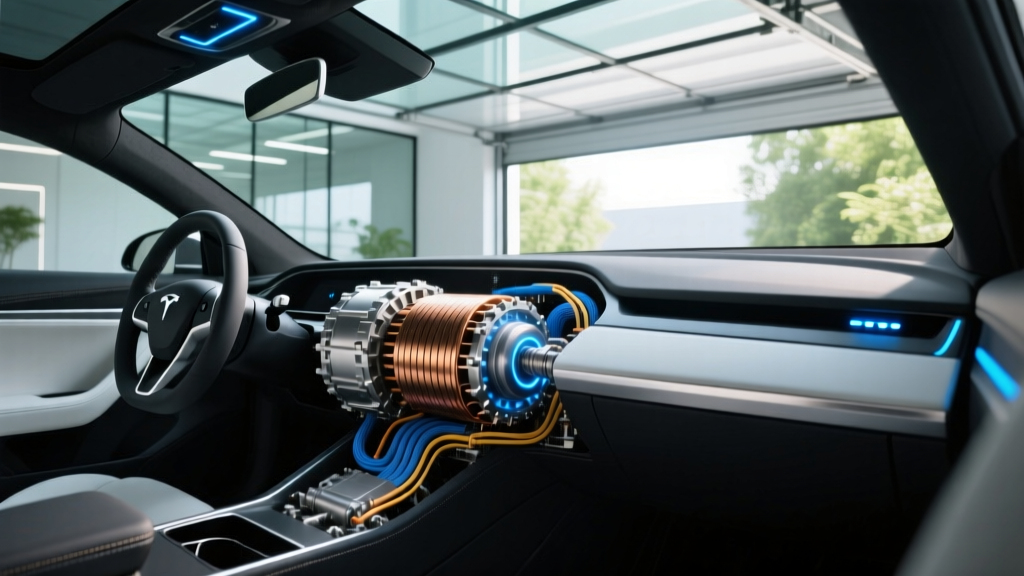
An AC induction motor generates torque through electromagnetic induction—no physical electrical connection to the rotor is required. Alternating current flows through stator windings, creating a rotating magnetic field. This field induces current in the rotor (typically an aluminum or copper squirrel-cage design), which in turn creates its own magnetic field that chases the stator field, producing rotation.
The key advantage for EV applications: no permanent magnets required. This eliminates dependence on rare-earth elements like neodymium and dysprosium, which are subject to supply-chain volatility and geopolitical risk. The trade-off is slightly lower peak efficiency compared to permanent magnet designs, particularly at low-load, steady-state cruising conditions.
In modern EV implementations, an inverter converts DC battery power into three-phase AC current, precisely controlling frequency and amplitude to manage speed and torque. This electronic control gives AC induction motors their characteristic broad, flat torque curve—maximum thrust from near-zero RPM without the cogging torque sometimes felt in PMSM designs at low speeds.
| Attribute | AC Induction Motor | Permanent Magnet (PMSM) |
|---|---|---|
| Rare-earth dependency | None | Neodymium/dysprosium required |
| Peak efficiency | ~92-94% | ~95-97% |
| Low-load efficiency | Lower (slip losses) | Higher |
| Regen braking capability | Strong (field can be actively controlled) | Strong |
| Cost (motor only) | Lower | Higher (magnet cost) |
| Weight | Slightly heavier | More compact |
| Fail-safe behavior | No back-EMF when de-energized (safer) | Generates voltage when spinning (requires management) |
| Common 2026 applications | Tesla Model S/X front motor, some commercial EVs | Tesla Model 3/Y rear, Hyundai, Ford, GM, most others |
Which 2026 EVs Still Use AC Induction Motors?
Tesla's original Roadster and early Model S variants used AC induction motors exclusively, a deliberate homage to the company's namesake. In 2026, Tesla employs a dual-motor strategy in its all-wheel-drive vehicles: a permanent magnet synchronous motor on the rear axle for efficiency, paired with an AC induction motor on the front axle. This configuration appears in the Model S, Model X, and AWD versions of the Model 3 and Model Y.
The front AC induction motor can be completely de-energized during light-load cruising, eliminating drag losses—a technique Tesla calls "torque sleep." When de-energized, an AC induction motor produces zero cogging torque (unlike a permanent magnet motor, which always generates some magnetic resistance when spinning). This makes it ideal as a secondary motor in dual-motor setups.
Other manufacturers using AC induction motors in specific positions include select Rivian configurations (front axle in certain model years) and several European commercial EV platforms. However, the industry trend has shifted heavily toward permanent magnet motors, particularly with the adoption of hairpin-winding stator designs that improve power density.
Real-World Performance: 2026 Tesla Model S Dual Motor
To ground this discussion in concrete ownership data, let's examine the 2026 Tesla Model S Dual Motor—the most prominent production vehicle still leveraging Nikola Tesla's alternating current motor technology on one of its axles.
EPA estimated range: 402 miles (Long Range, 19" wheels). Real-world expectation: ~320-350 miles at sustained 75 mph highway speeds; ~260-300 miles in cold weather (below 32°F) due to battery resistance and cabin heating load. The AC induction front motor's ability to disconnect during light-load cruising contributes to the Model S achieving one of the highest EPA range figures in production.
| Specification | Value |
|---|---|
| EPA Range | 402 miles (19" wheels) |
| Battery Capacity | ~100 kWh usable (NMC chemistry) |
| Motor Configuration | Dual motor: PMSM rear + AC induction front |
| Horsepower | 670 hp (combined) |
| 0-60 mph | 3.1 seconds |
| Drivetrain | AWD |
| Efficiency | 120 MPGe combined / 28 kWh/100mi |
| Max DC Fast Charge | 250 kW (V3 Supercharger) |
| 10-80% DC Charge Time | ~27 minutes |
| Level 2 Home Charging | 11.5 kW (~34 miles/hr) |
| Cargo Volume | 28 cu ft (rear) + 5.3 cu ft (frunk) |
| Rear Legroom | 35.4 inches |
| Battery/Powertrain Warranty | 8 years / 150,000 miles (70% capacity retention) |
| Base MSRP | $79,990 |
Charging Performance and Infrastructure
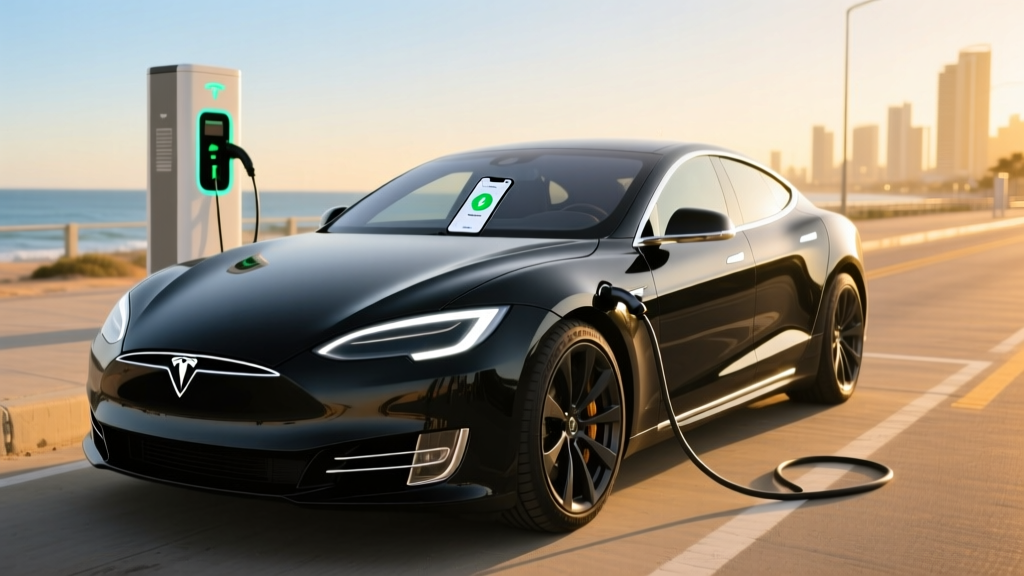
The 2026 Model S charges at up to 250 kW on Tesla's V3 Supercharger network, adding approximately 200 miles of range in 15 minutes under optimal conditions. The charge curve tapers significantly above 60% state of charge, which is why the 10-80% benchmark takes roughly 27 minutes while 10-100% extends past 55 minutes. Preconditioning the battery by navigating to a Supercharger in the vehicle's navigation system is essential to achieve peak charge rates—arriving at a charger with a cold battery can double your charge time.
| Charging Level | Power (kW) | Rate (miles/hr) | Typical Use Case |
|---|---|---|---|
| Level 1 (120V household) | ~1.4 kW | ~4 mi/hr | Emergency/overnight trickle |
| Level 2 (240V, 48A Wall Connector) | 11.5 kW | ~34 mi/hr | Daily home charging |
| DC Fast Charge (V3 Supercharger) | Peak 250 kW | ~800 mi/hr (peak) | Road trips, rapid top-ups |
| DC Fast Charge (CCS adapter, Electrify America) | Up to ~150 kW | ~500 mi/hr (peak) | Non-Tesla network access |
For home Level 2 charging, Tesla's Wall Connector on a 60-amp circuit delivers 11.5 kW, recovering a full battery in roughly 9 hours. Most owners charge from 20-80% overnight, which takes about 5 hours and is gentler on the NMC battery chemistry long-term. The U.S. Department of Energy recommends regular Level 2 charging over frequent DC fast charging to minimize degradation.
Pricing, Tax Credits, and Ownership Economics
The 2026 Model S Long Range starts at $79,990 before destination fees. The Plaid trim (triple-motor, 1,020 hp) starts at $94,990. At these prices, federal tax credit eligibility requires careful attention to IRS §30D rules.
| Trim | Base MSRP | §30D Federal Credit | Effective Price |
|---|---|---|---|
| Long Range (Dual Motor) | $79,990 | Up to $7,500 (if eligible) | ~$72,490 |
| Plaid (Tri-Motor) | $94,990 | Up to $7,500 (if eligible) | ~$87,490 |
§30D Eligibility Requirements (2026): The Model S qualifies under the sedan MSRP cap of $55,000—wait, it doesn't. The Model S exceeds the $55,000 MSRP cap for sedans. However, Tesla classifies the Model S as a SUV for tax credit purposes (based on interior volume classification), which carries a higher $80,000 MSRP cap. The Long Range trim at $79,990 clears this threshold; the Plaid at $94,990 does not. Buyers must also meet income caps ($150,000 single / $300,000 married filing jointly) and the vehicle must satisfy critical mineral and battery component sourcing requirements, which shift annually. The credit is available as a point-of-sale transfer to the dealer, reducing the purchase price directly. Always verify current eligibility at IRS.gov and consult a tax professional before relying on credit assumptions.
Standout Technology and Notable Drawbacks
- AC induction front motor enables true torque-sleep efficiency in cruise—no magnetic drag when disengaged
- 402-mile EPA range among the highest of any production EV
- 250 kW peak DC charging with extensive Supercharger network access
- 8-year/150,000-mile battery warranty (longer than the industry-standard 100,000 miles)
- Over-the-air updates continue to refine motor control algorithms years after purchase
- No rare-earth magnets in the front motor—supply-chain resilience
- $79,990 starting price limits accessibility; Plaid exceeds tax credit MSRP cap
- NMC battery chemistry degrades faster than LFP if regularly charged to 100%
- Yoke steering (standard) requires adaptation; conventional wheel is a delete option
- Panel gaps and interior material quality lag behind competitors at this price point (BMW i7, Mercedes EQS)
- AC induction motor is slightly less efficient at low-load conditions vs. all-PMSM competitors
- Rear seat legroom (35.4") is modest for a $80K+ luxury sedan
On the technology front, the Model S runs Tesla's latest infotainment system on a 17-inch center touchscreen with AMD Ryzen processing, supporting Tesla's FSD (Supervised) driver-assistance suite. Important clarification: FSD remains an SAE Level 2 system requiring continuous driver engagement—it is not autonomous driving. The system excels at highway lane-keeping and navigation-assisted lane changes but cannot handle unmapped construction zones, adverse weather, or complex urban scenarios without immediate human takeover.
Who Should Buy This EV?
- You want maximum range without moving to a larger, heavier SUV platform
- You take frequent road trips and value Supercharger network reliability
- You appreciate the engineering elegance of a dual-chemistry motor strategy
- Your household income is below the §30D cap and you can capture the credit on the Long Range trim
- Interior luxury and build quality are top priorities at this price
- You need executive-level rear-seat comfort (the i7 offers 40+ inches of rear legroom)
- You prefer a conventional steering wheel as standard
The AC induction motor's role in the Model S is not nostalgia—it's an engineering decision driven by efficiency optimization in dual-motor configurations. For daily commuters covering 40-80 miles round-trip, the efficiency gains from torque-sleep translate directly to fewer charging sessions per month. For road-trippers, the combination of 402 miles EPA range and 250 kW charging means stops every 3+ hours with only 20-25 minutes of downtime—competitive with gas-car travel patterns.
Frequently Asked Questions
What is the real-world range of the 2026 Tesla Model S?
The EPA rates the 2026 Model S Long Range at 402 miles. In real-world highway driving at 75 mph, expect 320-350 miles. In cold weather (below freezing), range drops to approximately 260-300 miles due to increased battery internal resistance and energy consumed by the heat pump and seat heaters. City driving with frequent regenerative braking opportunities can actually exceed the EPA estimate, with some owners reporting 410-430 miles in stop-and-go traffic at moderate temperatures.
How fast does the Model S charge at home and on the road?
At home on a Level 2 Tesla Wall Connector (240V, 48 amps), the Model S charges at 11.5 kW, adding approximately 34 miles of range per hour—a full charge takes about 9 hours. On DC fast chargers, the peak rate is 250 kW at V3 Superchargers, achieving a 10-80% charge in roughly 27 minutes. Using a CCS adapter at non-Tesla networks like Electrify America, expect peak rates around 150 kW, extending the 10-80% time to approximately 38-42 minutes.
Does the 2026 Model S qualify for the federal EV tax credit?
The Model S Long Range ($79,990 MSRP) qualifies under the SUV MSRP cap of $80,000, making it potentially eligible for up to $7,500 under IRS §30D. The Plaid trim ($94,990) exceeds the cap and does not qualify. Eligibility also depends on buyer income (≤$150K single / ≤$300K married filing jointly) and the vehicle meeting critical mineral and battery component sourcing thresholds, which tighten annually. The credit can be transferred to the dealer at point of sale. Verify current rules at IRS.gov before purchasing.
Is the Model S worth buying vs. competitors like the Lucid Air or BMW i7?
The Model S wins on range (402 vs. Lucid Air Pure's ~410 miles, BMW i7's ~318 miles), Supercharger network access, and continuous OTA improvement. The Lucid Air matches or exceeds range with superior efficiency (kWh/100mi) and a more luxurious interior. The BMW i7 offers dramatically better rear-seat comfort and build quality but sacrifices ~80 miles of range. If the Supercharger ecosystem and software experience matter most, the Model S remains compelling. If interior refinement and ride comfort are paramount, the i7 or Lucid Air are stronger choices.
Why does Tesla still use an AC induction motor instead of all permanent magnets?
Two reasons: supply-chain independence and operational efficiency. AC induction motors require no rare-earth magnets, insulating Tesla from neodymium price spikes and sourcing restrictions. Operationally, an AC induction motor can be completely de-energized when not needed (torque sleep), producing zero drag—something a permanent magnet motor cannot do because its magnets always generate a magnetic field. In a dual-motor AWD setup, this means the front motor adds no efficiency penalty during light-load, single-motor cruising.
How long will the Model S battery last?
Tesla warranties the Model S battery for 8 years or 150,000 miles, whichever comes first, guaranteeing at least 70% capacity retention. Real-world data from high-mileage owners and third-party tracking suggests NMC batteries in Tesla vehicles typically retain 85-90% capacity at 100,000 miles when charged primarily on Level 2 and kept between 20-80% state of charge. Full battery replacement outside warranty, if ever needed, is estimated at $15,000-$22,000 depending on labor and pack availability.
The Legacy Continues
Nikola Tesla's alternating current motor, conceived in the 1880s, remains a viable, strategically valuable powertrain component in 2026's most advanced electric vehicles. Its elimination of rare-earth dependency and its unique de-energization capability in dual-motor configurations ensure it hasn't been fully displaced by permanent magnet alternatives. For buyers evaluating the Model S or any dual-motor EV, understanding which motor type sits on which axle—and why—is one more data point in making an informed electrified purchase.