Introduction: The Electric Trailblazer
When Subaru announced its first dedicated electric vehicle, the automotive world asked a critical question: Could an EV truly inherit the rugged, dirt-slinging DNA that made the Outback and Forester legendary? The result of a joint venture with Toyota, the Subaru Solterra is built on the e-Subaru Global Platform, sharing its underpinnings with the Toyota bZ4X. However, Subaru engineers were tasked with ensuring this EV could handle the wilderness just as capably as its internal combustion predecessors. In this comprehensive review, we put the Solterra to the test, evaluating its off-road hardware, real-world battery range, and charging logistics, while providing expert best practices for owners looking to venture off the pavement.
Off-Road Capability: Does It Earn the Subaru Badge?
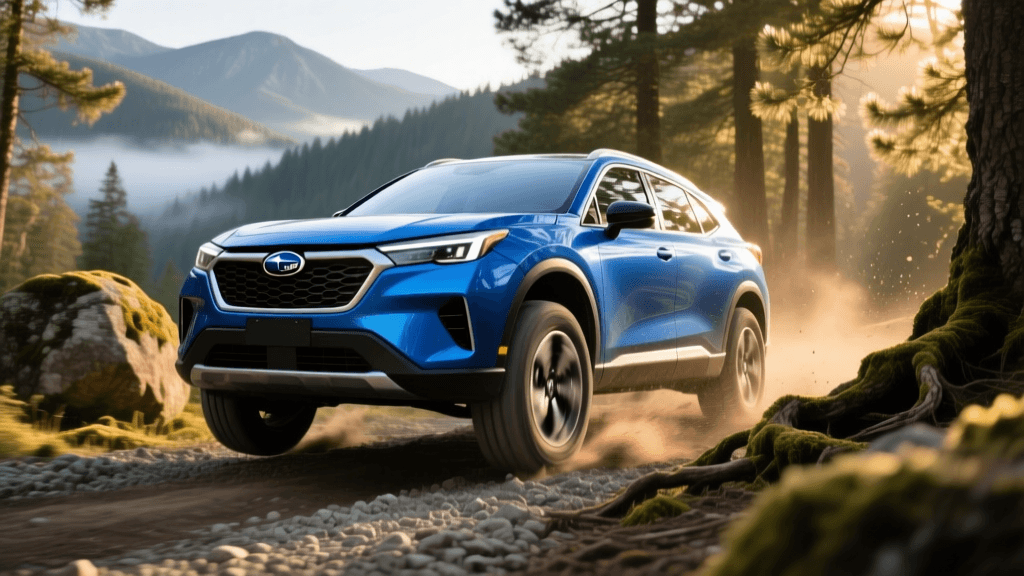
Subaru's reputation is built on symmetrical all-wheel drive and generous ground clearance. The Solterra maintains this legacy by offering a robust 8.3 inches of ground clearance. While slightly less than the Outback's 8.7 inches, the Solterra's heavy battery pack is mounted low in the chassis, giving it an exceptionally low center of gravity. This translates to remarkable stability on side-slopes and uneven terrain, reducing the rollover risk that plagues taller, top-heavy SUVs.
X-MODE and Grip Control
The Solterra features Subaru's renowned X-MODE, which has been specifically recalibrated for electric power delivery. In internal combustion vehicles, managing low-speed crawl requires careful brake and throttle modulation to avoid spinning tires. In the Solterra, the instant torque of the electric motors is managed by the vehicle's computer to provide millisecond-by-millisecond traction adjustments. According to Subaru's official capability specifications, the dual-motor AWD system can independently vector torque to the wheels with the most grip, effectively acting as a virtual locking differential. Furthermore, the Grip Control feature acts as an off-road cruise control, allowing the driver to set a low crawling speed (between 1 and 6 mph) while the vehicle manages the throttle and brakes over rocks and ruts.
The Tire Dilemma: All-Season vs. All-Terrain
Out of the factory, the Solterra is equipped with Bridgestone Ecopia H/L 422 Plus all-season tires. These are optimized for low rolling resistance and highway efficiency, making them adequate for light dirt roads and snowy suburban streets. However, for serious off-roading, expert reviewers at Car and Driver's comprehensive Solterra hub note that the stock tires will quickly become the limiting factor on sharp rocks or deep mud. Upgrading to a dedicated all-terrain tire, such as the Falken Wildpeak A/T Trail, will drastically improve trail confidence and puncture resistance, though owners must be prepared for a trade-off in overall range.
Real-World Range Testing: The Highway and The Trail
Range anxiety is the primary concern for any EV owner, and the Solterra's 71.4 kWh battery pack (with roughly 64 kWh usable) yields an EPA-estimated range between 222 and 228 miles, depending on the trim level and wheel size. While this falls short of the 300+ mile benchmarks set by some competitors, it is generally sufficient for weekend warrior excursions if planned correctly. To understand how the Solterra performs outside the laboratory, we analyzed real-world testing data compiled by Edmunds' expert review and range testing.
Efficiency Metrics Breakdown
Driving an EV off-road drastically alters energy consumption. Climbing steep grades requires massive amounts of energy, while descending offers a unique opportunity to recapture it. Below is a structured comparison of the Solterra's efficiency across different environments:
| Metric | EPA Estimate | Real-World Highway (70 mph) | Real-World Off-Road (Trail) |
|---|---|---|---|
| Total Range (Miles) | 222 - 228 | 195 - 205 | 110 - 130 |
| Efficiency (mi/kWh) | 3.1 - 3.2 | 2.7 - 2.9 | 1.5 - 1.8 |
| Energy Used per 1,000 ft Elevation Gain | N/A | N/A | ~3.5 kWh |
| Regen Recapture on 1,000 ft Descent | N/A | N/A | ~1.8 kWh |
As the table illustrates, off-roading effectively cuts the Solterra's range in half compared to its EPA estimate. However, the regenerative braking system is highly effective on downhill trail sections, allowing drivers to reclaim roughly 40% to 50% of the energy expended on the climb, provided they use the steering wheel paddles to maximize regenerative capture rather than relying solely on the friction brakes.
Charging Speeds and Trailhead Logistics
When your off-road adventure depletes the battery, charging speed becomes paramount. The Solterra supports DC fast charging at a peak rate of 150 kW. While this is not class-leading—competitors like the Hyundai Ioniq 5 can peak above 230 kW—it is adequate for road trips. In optimal conditions, the Solterra can charge from 10% to 80% in approximately 56 minutes. However, charging speeds are highly sensitive to battery temperature. If you arrive at a trailhead charger with a cold battery, the vehicle's software will restrict the charge rate to protect the cells, potentially extending that 10-80% session well past an hour.
Expert Best Practices for Solterra Owners
To maximize both the trail-reading capability and the battery efficiency of your Subaru Solterra, follow these expert best practices:
- Master the Regenerative Braking Paddles: The Solterra features steering wheel-mounted paddles that adjust the level of regenerative braking. When descending steep fire roads or mountain passes, click the paddles to the highest regen setting. This will slow the vehicle down without using the friction brakes, keeping you in control while feeding valuable electrons back into the battery pack.
- Strategic X-MODE Usage: X-MODE is incredible for rock crawling and deep snow, but it limits top speed and alters throttle response. Turn X-MODE off when transitioning between trailheads on paved or well-graded dirt roads to restore normal driving dynamics and slightly improve energy efficiency.
- Cold Weather Preconditioning: If you are heading to a DC fast charger after a day of winter off-roading, use the vehicle's navigation system to route to the charger. This triggers the battery preconditioning protocol, warming the cells to ensure you hit that 150 kW peak charging speed upon arrival.
- Tire Pressure Management: When airing down your tires for better traction over washboards and rocks, remember that lower tire pressure increases rolling resistance, which will further drain your battery. Always carry a portable 12V air compressor to reinflate your tires to the factory-recommended PSI before hitting the highway for the drive home.
- Plan with CCS in Mind: The Solterra uses the CCS charging standard. Before embarking on a remote trail, use apps like PlugShare to verify that CCS-compatible chargers are operational near your exit point. Always plan to leave the trail with at least 20% more battery than you think you need to reach the nearest reliable charger.
Final Verdict
The Subaru Solterra is not a hardcore rock crawler, nor is it a long-distance highway cruiser with 350 miles of range. Instead, it occupies a highly specific, highly valuable niche: it is the ultimate electric vehicle for the weekend outdoor enthusiast. Its 8.3 inches of ground clearance, sophisticated X-MODE, and stable battery placement make it genuinely capable on moderate off-road trails, forest service roads, and snowy mountain passes. While owners must be mindful of the real-world range penalties associated with off-roading and aerodynamic drag, proper route planning and mastery of the regenerative braking system make the Solterra a highly rewarding companion for those who refuse to let a lack of tailpipe emissions keep them out of the woods.