The Kia EV9: A Data-Driven Approach to the Three-Row Family EV
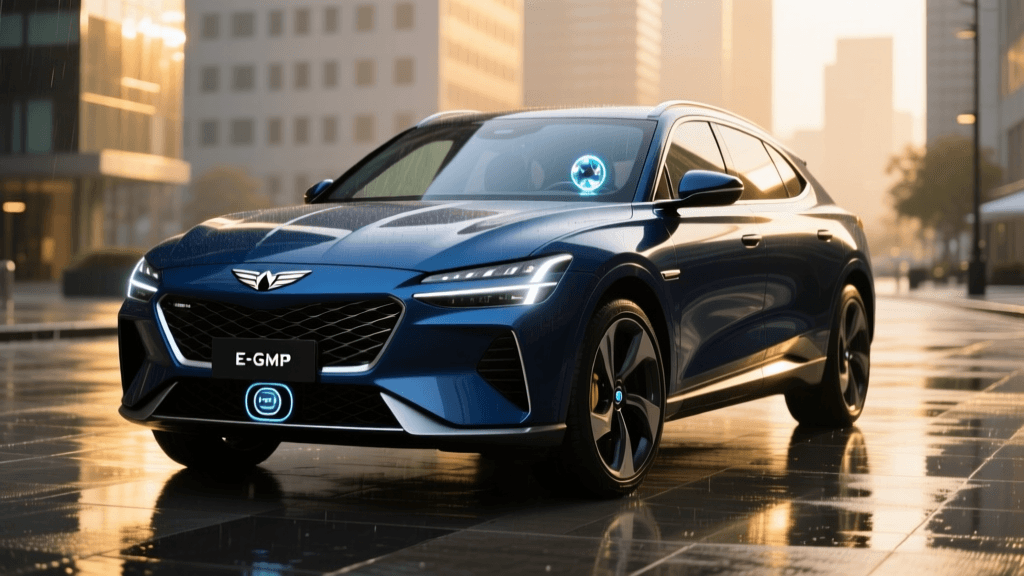
For years, families requiring three rows of seating faced a stark compromise when transitioning to electric vehicles. The market was largely dominated by mid-size crossovers that lacked the necessary interior volume, or ultra-luxury options that pushed well past the six-figure mark. Enter the Kia EV9, a dedicated three-row electric SUV built on the E-GMP (Electric Global Modular Platform) that promises to bridge the gap between mainstream affordability and flagship utility. But how does it actually perform when subjected to the rigors of family life, road trips, and daily commuting?
In this comprehensive, data-driven review, we move beyond subjective impressions to analyze the hard metrics that matter most to family buyers. We will examine real-world range degradation, third-row dimensional usability, 800-volt charging curves, and a five-year total cost of ownership (TCO) projection. By leveraging empirical data, we aim to determine if the EV9 truly stands as the benchmark for the modern electric family hauler.
Range, Efficiency, and Powertrain Data
The Kia EV9 is offered with two primary battery configurations: a 76.1 kWh standard-range pack (exclusive to the rear-wheel-drive Light trim) and a 99.8 kWh extended-range pack available across the Wind, Land, and GT-Line trims. According to extensive testing data compiled by Car and Driver, the EPA-estimated range figures tell only part of the story, as real-world highway efficiency fluctuates based on aerodynamics, wheel size, and drivetrain configuration.
The boxy, upright styling of the EV9, while maximizing interior headroom, inherently increases the coefficient of drag. Consequently, highway range at 75 mph tends to fall slightly short of EPA estimates, a common trait among large, three-row electric SUVs. However, the inclusion of a standard heat pump on higher trims significantly mitigates range loss during cold-weather operation, preserving up to 15% more range in freezing temperatures compared to competitors utilizing traditional PTC heaters.
| Trim Level | Drivetrain | Battery Capacity | EPA Est. Range | MSRP (Approx.) |
|---|---|---|---|---|
| Light | RWD | 76.1 kWh | 230 miles | $54,900 |
| Wind | RWD | 99.8 kWh | 304 miles | $59,900 |
| Land | AWD | 99.8 kWh | 282 miles | $63,900 |
| GT-Line | AWD | 99.8 kWh | 270 miles | $73,900 |
Third-Row Usability and Cargo Metrics
The defining characteristic of any three-row SUV is its ability to comfortably transport passengers in the rearmost seats. The EV9 boasts a wheelbase of 122.0 inches, which is notably longer than the internal combustion Kia Telluride. This stretched wheelbase translates directly into interior volume. The third row offers 32.0 inches of legroom and 37.8 inches of headroom. While adults over six feet tall may find their knees pressed against the second-row seatbacks on longer journeys, children and teenagers will find the space more than adequate for cross-country road trips.
From a cargo perspective, the data is highly competitive. Behind the third row, the EV9 provides 20.2 cubic feet of storage, which is sufficient for three or four standard carry-on suitcases or a week's worth of groceries for a family of six. Folding the third row flat yields 43.5 cubic feet, and folding both rear rows opens up a cavernous 81.7 cubic feet. Furthermore, the EV9 features a front trunk (frunk). Rear-wheel-drive models offer a practical 4.5 cubic feet of frunk space—ideal for storing charging cables or wet gear—while all-wheel-drive models are reduced to 1.8 cubic feet due to the placement of the front electric motor.
800-Volt Charging Architecture: Real-World Speeds
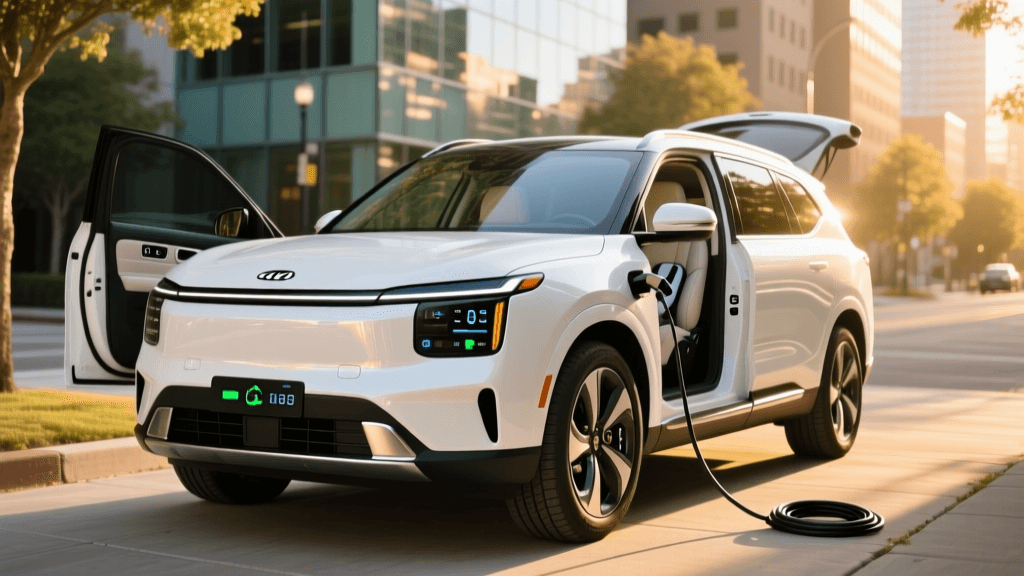
Perhaps the most compelling data point for the EV9 is its utilization of an 800-volt electrical architecture, a feature rarely found outside of luxury marques like Porsche and Lucid. As detailed in MotorTrend's first drive review, this high-voltage system allows the EV9 to accept DC fast-charging rates of up to 236 kW. When connected to a 350-kW CCS charger, the 99.8 kWh battery can theoretically charge from 10% to 80% in approximately 20 minutes.
To contextualize this data, a traditional 400-volt architecture SUV of similar size typically peaks around 150 kW and takes 35 to 45 minutes to achieve the same 10-80% state of charge. The EV9's charging curve is remarkably flat, sustaining peak charging speeds well past the 50% state-of-charge mark before gradually tapering off. For families taking multi-state road trips, this 15-to-20-minute reduction in charging downtime per stop is a transformative metric, effectively aligning EV charging breaks with standard rest-stop routines for food and restroom visits.
Additionally, the EV9 features Vehicle-to-Load (V2L) capability. By utilizing an adapter, the SUV can output up to 3.68 kW of continuous 120V power. This is enough to simultaneously run a portable air conditioner, a microwave, and multiple laptops during a campsite stay, or serve as a critical backup power source for essential home appliances during a grid outage.
Total Cost of Ownership (TCO) Breakdown
While the initial MSRP of the EV9 represents a premium over its internal combustion sibling, the Telluride, the long-term financial data paints a different picture. Utilizing historical depreciation models and current energy costs analyzed by Edmunds, we can project the five-year TCO for the EV9 Land AWD trim compared to a similarly equipped Telluride SX-Prestige.
- Fuel/Energy Costs: Assuming 15,000 miles driven annually, the EV9 consumes roughly 5,250 kWh per year (at an average efficiency of 350 Wh/mile). At the national average residential electricity rate of $0.16 per kWh, annual 'fuel' costs are approximately $840. The Telluride, averaging 21 MPG combined at $3.50 per gallon, costs roughly $2,500 annually in gasoline. This yields a $1,660 annual energy savings for the EV9.
- Maintenance: The EV9 eliminates the need for oil changes, transmission fluid flushes, and spark plug replacements. Furthermore, regenerative braking significantly extends the life of brake pads. Over five years, estimated maintenance savings exceed $2,200 compared to the ICE Telluride.
- Tax Incentives: Depending on the buyer's tax liability and the vehicle's final assembly location (which recently moved to West Point, Georgia, qualifying it for the $7,500 Federal EV Tax Credit), the effective purchase price of the EV9 can be drastically reduced, immediately closing the gap with ICE alternatives.
When factoring in the energy savings, reduced maintenance schedule, and federal incentives, the EV9 achieves cost parity with a fully loaded gas-powered three-row SUV within the first 36 to 48 months of ownership, after which it becomes the definitively cheaper vehicle to operate.
Final Verdict: The Benchmark for Family EVs
The data clearly indicates that the Kia EV9 is not merely a transitional vehicle, but a foundational shift in the three-row SUV segment. While its highway range at 75 mph requires careful route planning on ultra-long hauls, the 800-volt charging architecture drastically minimizes the penalty of those stops. The third-row dimensions, while best suited for children, offer genuine utility, and the cargo metrics ensure that family logistics are never compromised. When viewed through the lens of total cost of ownership, charging speed, and interior packaging, the Kia EV9 emerges as the most data-backed, rational choice for families ready to electrify their daily drives and cross-country adventures alike.