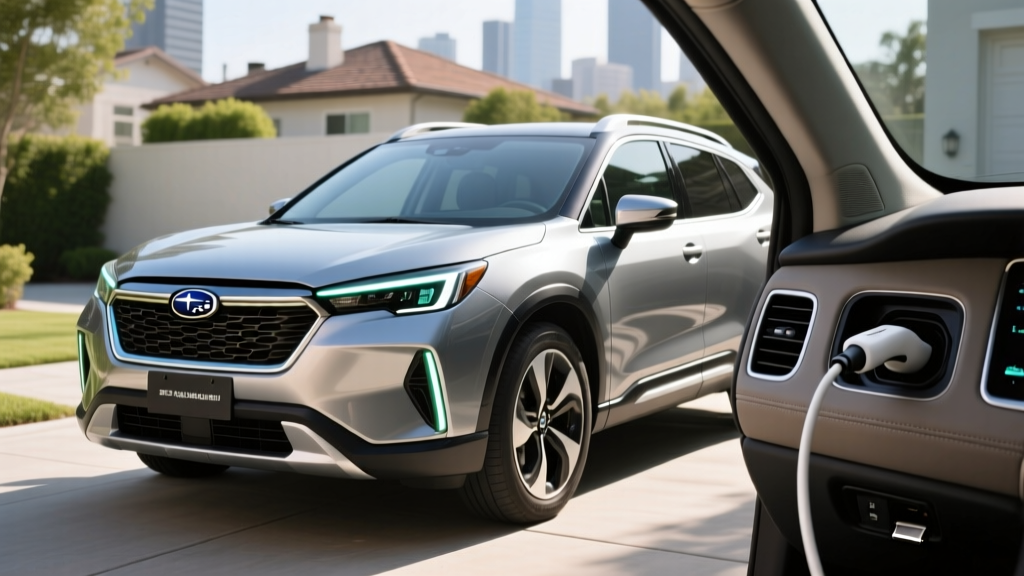
The Subaru Solterra has always been a polarizing entry in the compact electric SUV segment. Built on the shared e-TNGA platform with the Toyota bZ4X, it promises Subaru's legendary all-wheel-drive capability in an electric package. But with an EPA range that trails key rivals and charging speeds that are merely adequate, the financial math matters more than ever. For many buyers, a Solterra lease is the smartest path into Subaru's electric ecosystem — shielding you from steep EV depreciation while keeping monthly payments competitive. Here's everything you need to know about the 2026 Solterra before signing on the dotted line.
2026 Subaru Solterra: Core Specs at a Glance
| Specification | 2026 Subaru Solterra |
|---|---|
| EPA Range | 227 miles (Touring/XT); up to 228 mi (Premium) |
| Battery Capacity | 72.8 kWh (usable ~68 kWh), NMC lithium-ion |
| Drivetrain | Dual-motor AWD (standard on all trims) |
| Horsepower | 215 hp (combined) |
| Torque | 248 lb-ft |
| 0–60 mph | 6.5 seconds |
| Max DC Fast Charge | 150 kW peak |
| 10–80% DC Charge Time | ~35 minutes |
| Level 2 Home Charge Rate | ~6.6 kW (approx. 20–22 miles/hr) |
| EPA Efficiency | 104 MPGe combined / 32 kWh/100 mi |
| Cargo Volume | 23.8 cu ft (rear seats up); 56.9 cu ft (folded) |
| Base MSRP | $38,495 (Premium trim, before incentives) |
| Battery Warranty | 8 years / 100,000 miles |
Real-World Range: What the EPA Sticker Doesn't Tell You
Real-World Expectation: Plan for roughly 190–210 miles on mixed highway driving at 70–75 mph. In cold weather (below 30°F), expect a further 15–25% reduction, bringing usable range down to approximately 155–175 miles before you'll want to find a charger.
Why it matters for leasing: If your daily commute is under 60 miles round-trip with home charging, the Solterra's range is perfectly adequate. If you regularly drive 200+ miles between charges or live in a cold climate, you'll feel the limitation on road trips.
The Solterra's range sits at the lower end of the compact electric SUV class. The Hyundai Ioniq 5 delivers up to 318 miles EPA, the Tesla Model Y Long Range hits 320 miles, and even the closely related Toyota bZ4X manages 252 miles in its FWD configuration. Subaru's standard dual-motor AWD system adds weight and drivetrain losses that reduce efficiency compared to single-motor rivals.
According to EPA data on fueleconomy.gov, the Solterra's combined efficiency of 104 MPGe translates to roughly 32 kWh consumed per 100 miles of driving. That's respectable but not class-leading. The larger practical concern is highway range: at sustained 75 mph speeds, EVs consume significantly more energy than in city driving where regenerative braking recaptures kinetic energy. On a 70°F day with mixed driving, owners consistently report 200–215 miles before reaching 10% State of Charge (SoC).
Charging Speed: Adequate but Not Class-Leading
| Charging Level | Power | Speed / Time | Best For |
|---|---|---|---|
| Level 1 (120V household) | ~1.4 kW | ~4 miles per hour | Overnight trickle / emergency top-up |
| Level 2 (240V home) | 6.6 kW | ~20–22 miles per hour | Daily home charging (full charge in ~10 hrs) |
| DC Fast Charge | 150 kW peak | 10–80% in ~35 min | Road trips and public charging |
The Solterra's 150 kW peak DC fast-charging rate is the vehicle's most debated specification. Here's the nuance most spec sheets omit: peak rate is not sustained rate. The Solterra hits 150 kW only briefly at a low State of Charge (typically 10–20% SoC) on a compatible charger, then tapers progressively. The average charging rate across a 10–80% session is closer to 85–100 kW, which is why the full session takes approximately 35 minutes.
Compare this to the Hyundai Ioniq 5, which peaks at 240 kW on its 800-volt architecture and completes a 10–80% charge in roughly 18 minutes. The Tesla Model Y peaks around 250 kW and charges 10–80% in about 20–25 minutes. For road-trippers who fast-charge multiple times on a long drive, those 15–20 extra minutes per stop add up.
For daily use, the 6.6 kW Level 2 onboard charger is the number that matters most. With a home Level 2 station (240V, 32-amp circuit minimum), you'll recover roughly 20–22 miles of range per hour. A full charge from empty takes about 10 hours — easily achievable overnight. If your daily driving is under 80 miles, a nightly plug-in keeps the battery comfortably topped off without ever needing public charging.
Cold-weather charging note: The Solterra does include battery preconditioning when you navigate to a DC fast charger via the built-in navigation. This warms the battery to optimal temperature for faster charging. However, preconditioning is less aggressive than Tesla's system, so in sub-freezing temperatures, expect 10–80% charge times to stretch to 45–55 minutes unless the battery has been preconditioned for at least 20–30 minutes prior to arrival.
Pricing, Lease Deals, and Federal Tax Credit Eligibility
The 2026 Subaru Solterra is offered in three trims, all with standard dual-motor AWD:
| Trim | MSRP | Est. Lease (36 mo)* | Federal Credit Eligible? |
|---|---|---|---|
| Premium | $38,495 | $299–$399/mo | Yes — up to $7,500 (§30D) |
| Limited | $41,995 | $349–$449/mo | Yes — up to $7,500 (§30D) |
| Touring | $45,495 | $399–$499/mo | Yes — up to $7,500 (§30D) |
*Lease estimates vary by region, credit score, money factor, and dealer. Subaru frequently offers aggressive lease cash incentives on the Solterra — check subaru.com for current national offers.
Why Leasing the Solterra Often Beats Buying
There's a compelling financial argument for leasing the Solterra rather than purchasing outright:
- Lease loophole on the tax credit: Under IRS rules, the §30D federal tax credit has strict buyer income caps ($150K single / $300K joint), MSRP limits ($80K for SUVs), and battery-sourcing requirements. However, when you lease, the lessor (the financing company) claims the $7,500 commercial clean vehicle credit under §45W and typically passes it to you as a capitalized-cost reduction — effectively lowering your monthly payment. This means even buyers who don't qualify for the purchase credit due to income limits or sourcing rules can benefit from the full $7,500 through a lease.
- Depreciation protection: EVs have experienced steeper-than-average depreciation in recent years. A 2023 Solterra that stickered near $45,000 was trading for $22,000–$26,000 on the used market by early 2025. Leasing transfers that depreciation risk to the lessor.
- Subaru lease cash: Subaru has consistently offered $5,000–$7,500 in lease cash incentives on the Solterra to move inventory, stacking on top of the passed-through credit. Combined, these can reduce effective lease costs dramatically.
§30D Federal Tax Credit Requirements (If Purchasing)
If you choose to purchase rather than lease, here are the current IRS §30D requirements you must satisfy, per IRS.gov:
- Income caps: Modified AGI ≤ $150,000 (single), $225,000 (head of household), or $300,000 (married filing jointly)
- MSRP cap: Vehicle MSRP must not exceed $80,000 for SUVs (all Solterra trims qualify)
- Battery sourcing: Critical minerals and battery components must meet phased-in domestic/free-trade-partner sourcing percentages — Subaru has worked to comply, but verify current-year eligibility on the IRS qualified vehicles list before signing
- Point-of-sale transfer: You can transfer the credit to the dealer at purchase for an immediate price reduction, or claim it on your tax return
- VIN registration: The dealer must report the VIN to the IRS at time of sale
Always confirm eligibility with a tax professional — rules are subject to legislative change.
Performance, Driving Dynamics, and Off-Road Capability
With 215 horsepower and 248 lb-ft of torque from its dual electric motors, the Solterra delivers a 0–60 mph time of approximately 6.5 seconds. That's brisk enough for confident highway merging but trails the Hyundai Ioniq 5 AWD (5.2 seconds) and Tesla Model Y Long Range (4.8 seconds). The Solterra prioritizes capability over outright speed.
Where the Solterra differentiates itself is off-pavement. Subaru includes the X-MODE system with Snow/Dirt and Deep Snow/Mud settings, along with 8.3 inches of ground clearance — best in its EV class. Grip Control (low-speed traction management) and Hill Descent Control come standard. No, it won't tackle Moab, but for snow-covered driveways, forest service roads, and gravel trails to the trailhead, the Solterra is genuinely more capable than any rival in this segment.
The steering is well-weighted, body roll is controlled, and the low center of gravity (battery pack mounted under the floor) keeps the Solterra planted through corners. The ride quality leans firm, which some drivers appreciate for feedback and others find harsh on rough pavement. Road noise is noticeable at highway speeds — a common Subaru trait that carries over from their ICE lineup.
Interior, Cargo, and Technology
The Solterra's cabin is functional and well-assembled but not luxurious. Soft-touch materials cover the upper dash and door panels, while harder plastics appear on lower surfaces. The driving position is commanding with excellent outward visibility — a Subaru hallmark.
Passenger space: Front legroom measures 40.2 inches; rear legroom is 35.7 inches. Two adults ride comfortably in back, though the center position is compromised by a floor hump (housing wiring, not a driveshaft). Headroom is generous thanks to the flat floor and raised roofline.
Cargo: 23.8 cubic feet behind the rear seats and 56.9 cubic feet with the 60/40 split rear seats folded. There's no front trunk (frunk) — the space under the hood houses HVAC and power electronics. A hands-free power liftgate is standard on Limited and Touring trims.
Infotainment: A 12.3-inch touchscreen (on Limited and Touring; 8-inch on Premium) runs Subaru's latest Starlink system with wireless Apple CarPlay and Android Auto, built-in navigation, and cloud-connected services. The system is responsive and logically laid out, though it lacks the polish of Hyundai's or Tesla's interfaces. Physical knobs for volume and climate temperature are a welcome ergonomic choice.
Driver assistance: Subaru's EyeSight suite is standard across all trims and includes adaptive cruise control with lane centering, pre-collision braking, lane departure warning, and blind-spot detection. This is an SAE Level 2 driver-assistance system — you must keep your hands on the wheel and eyes on the road at all times. It is not autonomous driving. EyeSight is competent for highway cruising but doesn't offer the hands-free capability of GM's Super Cruise or Ford's BlueCruise on mapped highways.
Who Should Lease the Solterra — and Who Shouldn't
Lease the Solterra if:
- You need AWD for snow, ice, or light off-road use and want an EV
- Your daily commute is under 80 miles round-trip with home charging
- You value Subaru's safety reputation, build quality, and dealer network
- You want to access the $7,500 tax credit via the lease loophole regardless of income
- You plan to trade up in 3 years and don't want to absorb EV depreciation
Look elsewhere if:
- You regularly road-trip 300+ miles and need fast DC charging
- You need 300+ miles of range for your daily routine
- You prioritize cutting-edge infotainment or hands-free driving features
- You need three rows of seating or maximum cargo volume
Solterra vs. Key Competitors
| Spec | Subaru Solterra | Hyundai Ioniq 5 AWD | Tesla Model Y LR | Toyota bZ4X AWD |
|---|---|---|---|---|
| EPA Range | 227 mi | 290 mi | 320 mi | 228 mi |
| Battery | 72.8 kWh NMC | 77.4 kWh NMC | ~75 kWh NMC | 72.8 kWh NMC |
| DC Fast Charge | 150 kW | 240 kW (800V) | ~250 kW | 150 kW |
| 10–80% Time | ~35 min | ~18 min | ~22 min | ~35 min |
| 0–60 mph | 6.5 sec | 5.2 sec | 4.8 sec | 6.5 sec |
| AWD Standard? | Yes | No (optional) | Yes (LR AWD) | No (optional) |
| Base MSRP (AWD) | $38,495 | ~$50,100 | ~$48,990 | ~$43,090 |
The Solterra's closest competitor is actually its platform twin, the Toyota bZ4X. They share the same battery, motors, and architecture, but Subaru tunes the suspension for slightly more compliance and includes X-MODE as standard. The Ioniq 5 and Model Y are objectively superior in range and charging speed but cost significantly more in their AWD configurations. On a lease with Subaru's aggressive incentives, the Solterra can undercut rivals by $100–$200/month.
Pros and Cons
Pros
- Standard dual-motor AWD on every trim — no upcharge
- Best-in-class ground clearance (8.3 in) and genuine off-road capability
- Aggressive lease incentives often make it the most affordable AWD EV to lease
- Strong EyeSight safety suite standard across all trims
- Physical climate and volume knobs — no touchscreen-only frustration
- Lease loophole enables $7,500 credit regardless of buyer income
- Subaru dealer network and brand loyalty/trust
Cons
- EPA range of 227 miles trails rivals by 60–90+ miles
- 150 kW peak DC charging is slow for the class; 35-minute 10–80% sessions
- No front trunk (frunk) for additional storage
- Firm ride quality and noticeable road noise at highway speeds
- Infotainment system is functional but dated compared to competitors
- No hands-free driving feature (EyeSight requires hands on wheel)
- Steep depreciation makes purchasing risky vs. leasing
Frequently Asked Questions
What is the real-world range of the Subaru Solterra?
The EPA rates the 2026 Solterra at 227–228 miles depending on trim. In real-world mixed driving at highway speeds, expect 190–215 miles. In cold weather below 30°F, range drops to approximately 155–175 miles. For daily commuting under 60 miles with home charging, this is more than sufficient.
How fast does the Solterra charge at home and on the road?
At home on a Level 2 (240V) charger, the Solterra charges at 6.6 kW, adding about 20–22 miles of range per hour. A full overnight charge takes roughly 10 hours. On DC fast chargers, it peaks at 150 kW and charges from 10–80% in approximately 35 minutes — adequate but slower than rivals like the Ioniq 5 (18 min) or Model Y (22 min).
How much does a Solterra lease cost after incentives?
With Subaru's frequent $5,000–$7,500 lease cash offers plus the $7,500 federal credit passed through the lease, effective monthly payments for the Premium trim have been reported as low as $199–$299/month with $2,000–$3,000 due at signing on a 36-month lease. Exact terms vary by region, credit tier, and current offers. Check subaru.com and local dealers for current numbers.
Does the Solterra qualify for the $7,500 federal EV tax credit?
When purchased, the Solterra qualifies for up to $7,500 under IRS §30D, provided you meet income caps ($150K single / $300K joint), the vehicle's MSRP is under $80,000 (all trims qualify), and battery-sourcing requirements are met. When leased, the lessor claims the commercial credit under §45W and typically passes the full $7,500 to you as a cap-cost reduction — with no income or sourcing restrictions on the lessee. Verify current eligibility on the IRS Clean Vehicle Credit page.
Is the Subaru Solterra worth leasing vs. competitors?
If you need AWD, drive primarily in inclement weather, and your commute fits within 200 miles, the Solterra is one of the best-value EV leases available thanks to stacked incentives. If range and fast charging are your top priorities, the Hyundai Ioniq 5 or Tesla Model Y are superior vehicles — but typically cost $100–$200 more per month on a comparable lease.
What's the battery warranty on the Solterra?
Subaru covers the Solterra's high-voltage battery for 8 years or 100,000 miles (whichever comes first) against defects and excessive capacity loss. Subaru defines excessive loss as dropping below approximately 70% of original capacity. This matches the industry standard for EV battery warranties and provides good peace of mind through a typical lease term and beyond.
Can I tow with the Solterra?
The 2026 Solterra is not rated for towing. Subaru does not provide a towing capacity rating, and the owner's manual advises against towing a trailer. If you need an EV with towing capability, consider the Ford Mustang Mach-E (up to 1,500 lbs with the right equipment) or the Rivian R2 (when available).
The Verdict: A Smart Lease for the Right Driver
The 2026 Subaru Solterra is not the longest-range or fastest-charging EV in its class, and it doesn't pretend to be. What it is: a competent, comfortable, all-weather-capable electric SUV that Subaru loyalists will find immediately familiar, priced aggressively through lease incentives that make it one of the most affordable AWD EVs to drive off the lot.
If your lifestyle aligns with the Solterra's strengths — moderate daily mileage, home charging access, snow-belt living, and a preference for Subaru's safety-first engineering — a lease is the financially savvy way to access it. You sidestep the depreciation risk that has plagued Solterra buyers, capture the full $7,500 tax credit through the lease structure, and pay a monthly rate that often undercuts gas-powered competitors.
Just go in with eyes open about the 227-mile EPA range and 35-minute fast-charge sessions. For road trips beyond 200 miles, you'll need to plan charging stops. For everything else, the Solterra delivers exactly what Subaru drivers have always wanted — just without the fuel bill.