Quick Answer: Is a Volvo EV Right for You?
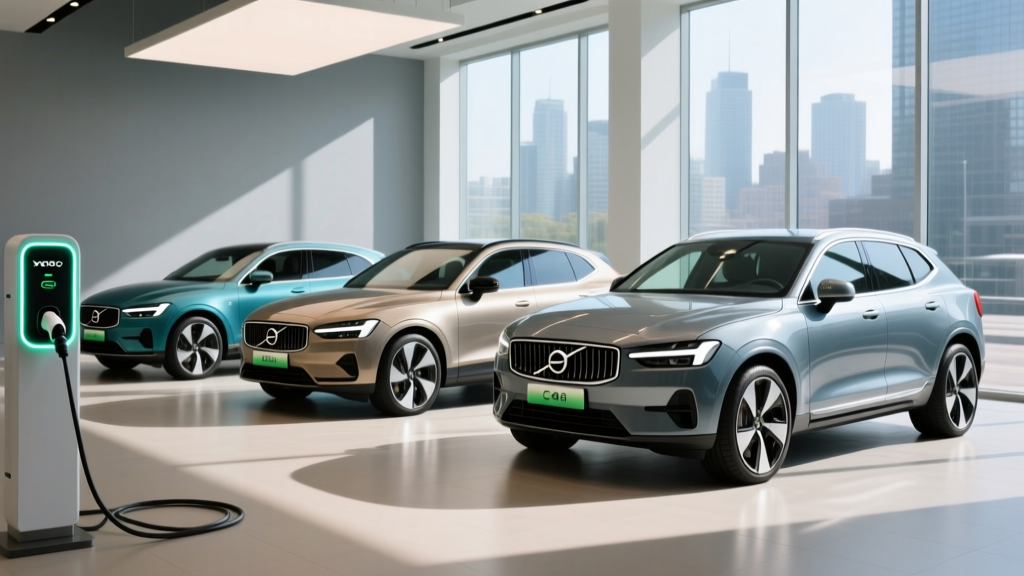
Volvo's 2026 electric lineup spans three models: the compact EX30 (starting ~$36,350, 265 mi EPA range), the mid-size EX40 (starting ~$54,850, 293 mi EPA range), and the flagship three-row EX90 (starting ~$78,590, 300+ mi EPA range). All three use NMC battery chemistry, support DC fast charging at 150–250 kW peak, and feature Google built-in infotainment. The strongest value play is the EX30 for urban commuters; the EX90 suits families who need three rows and 300+ miles. Federal §30D tax credit eligibility varies by model, battery sourcing, and buyer income — the EX30 currently qualifies for partial credit, while the EX90's eligibility depends on the specific trim and critical-mineral sourcing compliance. Check the latest IRS §30D guidance before purchasing.
The 2026 Volvo EV Lineup at a Glance
Volvo has committed to full electrification, and its 2026 portfolio reflects that shift. Here is a side-by-side spec comparison of every Volvo EV currently on sale in the US market:
| Spec | EX30 (Single Motor) | EX40 (Twin Motor AWD) | EX90 (Twin Motor AWD) |
|---|---|---|---|
| Base MSRP | $36,350 | $54,850 | $78,590 |
| EPA Range | 265 mi | 293 mi | 300 mi (est.) |
| Battery (usable) | 66 kWh (NMC) | 78 kWh (NMC) | 107 kWh (NMC) |
| Peak DC Fast Charge | 153 kW | 200 kW | 250 kW |
| 10–80% DC Charge | ~26 min | ~28 min | ~30 min |
| Level 2 (240V) Rate | 11 kW | 11 kW | 11 kW |
| Horsepower | 272 hp | 402 hp | 496 hp |
| 0–60 mph | 5.1 sec | 4.5 sec | 4.7 sec |
| MPGe (combined) | 104 MPGe | 95 MPGe | 88 MPGe (est.) |
| Cargo Volume | 11.2 cu ft (+frunk 2.5) | 18.0 cu ft (+frunk 1.5) | 12.9 cu ft (behind 3rd row) |
| Battery Warranty | 8 yr / 100,000 mi | 8 yr / 100,000 mi | 8 yr / 100,000 mi |
Real-World Range vs. EPA Sticker
EPA estimates assume mixed driving at moderate temperatures. In real-world conditions:
- Highway (70–80 mph): Expect 10–15% range reduction. The EX40 Twin Motor delivers roughly 250–260 miles on a long interstate drive.
- Cold weather (below 30°F): NMC batteries lose 15–30% range without preconditioning. The EX30 could drop to ~190–210 miles in freezing conditions. All Volvo EVs include a heat pump and battery preconditioning, which mitigates — but does not eliminate — cold-weather loss.
- DC fast charging taper: Peak kW is sustained only between roughly 10–50% SoC. Above 80%, charge speed drops dramatically. Plan road-trip stops at 10–80%, not 0–100%.
Sources: fueleconomy.gov, Volvo Cars USA specifications.
Volvo EV vs. Gas and Hybrid: The Cost Comparison
Let's compare the EX40 Twin Motor against a similarly equipped gas-powered Volvo XC60 B5 AWD and the XC60 T8 plug-in hybrid (PHEV) over 5 years / 75,000 miles. This gives a concrete picture of where EVs save money and where they don't.
| Cost Factor | EX40 Twin Motor (EV) | XC60 B5 AWD (Gas) | XC60 T8 PHEV |
|---|---|---|---|
| Base MSRP | $54,850 | $47,050 | $57,350 |
| Est. Federal Tax Credit | Up to $7,500* | $0 | Up to $7,500* |
| Effective Purchase Price | ~$47,350 | $47,050 | ~$49,850 |
| Fuel/Energy (5 yr) | $3,750 (home L2, $0.14/kWh avg) | $9,375 (25 MPG avg, $3.50/gal) | $5,600 (mixed EV+gas) |
| Maintenance (5 yr) | $1,500 (no oil, fewer brakes) | $3,800 (oil, filters, brakes) | $3,200 |
| Insurance (5 yr avg) | $11,500 | $9,500 | $10,200 |
| Est. 5-Year Total | ~$64,100 | ~$69,725 | ~$68,850 |
*Federal §30D credit eligibility depends on MSRP caps ($80,000 for SUVs), buyer income limits ($300K MFJ / $150K single), and battery critical-mineral sourcing rules. Verify current eligibility at irs.gov. Point-of-sale transfer is available for 2026 purchases.
Key takeaway: The EX40's higher insurance premiums partially offset fuel and maintenance savings. Over five years, the EV still comes out ahead by roughly $5,600 compared to the gas XC60 — but only if you charge primarily at home. Public DC fast charging at $0.40–$0.60/kWh erodes the fuel-cost advantage significantly.
Real-World Ownership: What First-Time Volvo EV Buyers Must Know
Home Charging Is Non-Negotiable for Most Owners
Volvo EVs charge at 11 kW on Level 2 (240V). A full overnight charge adds the entire battery in 6–10 hours depending on the model. Here's what installation typically costs:
| Item | Cost Range |
|---|---|
| Level 2 charger (hardware) | $350–$700 |
| Electrician labor (50-amp circuit, 240V) | $800–$2,000 |
| Permit & inspection | $100–$300 |
| Electrical panel upgrade (if needed, 100A→200A) | $1,500–$3,500 |
| Total (no panel upgrade) | $1,250–$3,000 |
| Total (with panel upgrade) | $2,750–$6,500 |
If you live in an apartment or lack dedicated parking, rely on public Level 2 and DC fast charging. Volvo's Google Built-in navigation includes real-time charger availability via integrated apps, but public charging reliability remains inconsistent — PlugShare user reviews are essential trip-planning tools.
NMC Battery Chemistry: What It Means for Longevity
All three Volvo EVs use NMC (nickel manganese cobalt) lithium-ion cells. NMC offers higher energy density than LFP (lithium iron phosphate), which is why Volvo achieves 265–300 miles in relatively compact battery packs. The trade-off:
- Degradation: NMC cells typically lose 10–15% capacity over 8 years / 100,000 miles under normal use. Volvo's warranty guarantees 70% capacity retention at 8 years.
- Charging habits: Daily charging to 100% accelerates NMC degradation. Set your charge limit to 80–90% for daily driving; save 100% for road trips.
- Replacement cost: Out-of-warranty NMC battery packs currently cost $12,000–$20,000 depending on the model. This is a long-tail risk worth factoring into 10+ year ownership plans.
Charging Speed on Road Trips
The EX90's 250 kW peak charge rate sounds impressive, but sustained throughput matters more. In practice:
- 10–50% SoC: Near-peak rates (200–250 kW on the EX90)
- 50–80% SoC: Tapering to 80–120 kW
- 80–100% SoC: Trickle charge, 20–40 kW — not worth waiting for on a road trip
Preconditioning the battery (automatic when you navigate to a DC fast charger in Google Maps) is critical. Without preconditioning, cold-soaked batteries may charge at 50% or less of peak rate for the first 10–15 minutes.
Federal Tax Credits and Incentives for Volvo EVs
The §30D Clean Vehicle Credit offers up to $7,500 for new EV purchases, but eligibility is a moving target. Here's the 2026 checklist:
- MSRP cap: SUVs/vans/pickups must be ≤$80,000; sedans ≤$55,000. All three Volvo EVs fall under the SUV cap at base trim, but high-option EX90 trims may exceed it.
- Buyer income cap: Modified AGI ≤$300,000 (married filing jointly), ≤$225,000 (head of household), ≤$150,000 (single).
- Battery sourcing: Increasing percentages of critical minerals and battery components must be sourced from the US or FTA partners. This requirement tightens annually — a model that qualifies in 2025 may lose eligibility in 2026.
- Point-of-sale transfer: You can transfer the credit to the dealer at purchase, reducing your out-of-pocket cost immediately rather than waiting for a tax refund.
- FEOC restriction: Vehicles with battery components from a "foreign entity of concern" (primarily Chinese manufacturers) are disqualified.
As of early 2026, the EX30 qualifies for a partial credit ($3,750) due to partial critical-mineral compliance, while the EX40 and EX90 may qualify for the full $7,500 depending on build date and sourcing certification. Always confirm with your dealer and cross-reference the fueleconomy.gov tax credit lookup.
Common Misconceptions About Volvo EVs
| Myth | Fact |
|---|---|
| "Volvo EVs can't handle cold weather" | All models include a heat pump and battery preconditioning. Expect 15–25% range loss below 30°F — significant but manageable. The EX90's 107 kWh battery provides a large buffer. |
| "Charging takes too long" | A 10–80% DC fast charge takes 26–30 minutes. Home Level 2 charging overnight (6–10 hours) means you start every morning with a full battery — faster than any gas station trip for daily use. |
| "The battery will need replacing in 5 years" | NMC batteries in modern thermal-managed Volvos degrade ~1–2% per year. At 8 years, expect ~85–90% capacity retention, well above the 70% warranty floor. |
| "Volvo's Pilot Assist is self-driving" | Pilot Assist is an SAE Level 2 driver-assistance system. It handles steering, acceleration, and braking on marked highways but requires continuous driver supervision. It is not autonomous. |
| "EVs cost more to insure" | Generally true — Volvo EV premiums run 15–25% higher than equivalent gas models due to higher repair costs and parts pricing. Shop quotes from EV-friendly insurers before buying. |
Decision Framework: Which Volvo EV Fits Your Life?
Choose the EX30 if:
- You commute under 40 miles round-trip and charge at home
- You want the lowest entry price and smallest footprint for city driving
- You don't regularly carry more than one passenger or haul cargo
- Budget target: ~$36,000–$42,000
Choose the EX40 if:
- You need AWD for snow or rain and want a comfortable mid-size SUV
- You take 2–4 road trips per year and need ~290 miles of range
- You value the 402 hp Twin Motor for confident highway merging
- Budget target: ~$55,000–$62,000
Choose the EX90 if:
- You need three rows for family or carpool duty
- You want the maximum range buffer (107 kWh battery) for towing or long hauls
- You want Volvo's most advanced safety suite, including LiDAR-equipped Pilot Assist
- Budget target: ~$79,000–$86,000 (watch the $80K MSRP cap for tax credit eligibility on upper trims)
Skip Volvo EVs and consider a PHEV if:
- You lack reliable home or workplace charging
- You frequently drive 400+ miles in remote areas with sparse DC fast-charger coverage
- You want electric-only commuting but gas flexibility for long trips — the XC60 T8 Recharge (35 mi electric-only, 56 MPGe) may be a better bridge
Frequently Asked Questions
What is the real-world range of Volvo electric vehicles?
EPA estimates are 265 mi (EX30), 293 mi (EX40), and ~300 mi (EX90). In real-world highway driving at 75 mph, expect 10–15% less. In freezing weather without preconditioning, expect 20–30% less. For the EX40, that means roughly 250 miles on a summer road trip and 200–220 miles in a Midwest winter.
Do Volvo EVs qualify for the $7,500 federal tax credit?
Eligibility varies by model, build date, and your income. The EX40 and EX90 at base trims are strong candidates for the full $7,500 under §30D, while the EX30 may qualify for $3,750 (partial critical-mineral compliance). Buyer income must be under $300K (MFJ) or $150K (single). Verify on irs.gov and confirm with your dealer at purchase.
How long does it take to charge a Volvo EV at home?
On a Level 2 (240V, 48-amp) home charger delivering 11 kW: the EX30 charges fully in about 6 hours, the EX40 in about 7 hours, and the EX90 in about 10 hours. All three easily replenish overnight. On a standard 120V outlet (Level 1), expect 3–5 miles of range per hour — sufficient only for very low-mileage drivers.
Is Volvo's Pilot Assist the same as Tesla's Full Self-Driving?
No. Both are SAE Level 2 systems requiring active driver supervision. Volvo's Pilot Assist provides adaptive cruise and lane-centering on highways. The EX90 adds LiDAR for enhanced object detection, but it does not enable hands-off or eyes-off driving. Volvo has not marketed the system as "self-driving" — and neither should anyone else.
What happens if the battery degrades significantly?
Volvo warrants its traction batteries for 8 years or 100,000 miles with a minimum 70% capacity retention threshold. If your battery drops below 70% within that window, Volvo will repair or replace it at no cost. Real-world data from similar NMC packs suggests most owners will see 85–90% retention at the 8-year mark under normal charging habits (daily limit set to 80–90%).
Can I tow with a Volvo electric vehicle?
The EX90 is rated for up to 5,000 lbs towing. The EX40 is rated for 3,500 lbs. The EX30 is rated for 2,000 lbs. Towing reduces range by 30–50% depending on trailer weight and aerodynamics — plan charging stops accordingly.