The Quick Answer on Subaru EV Cars
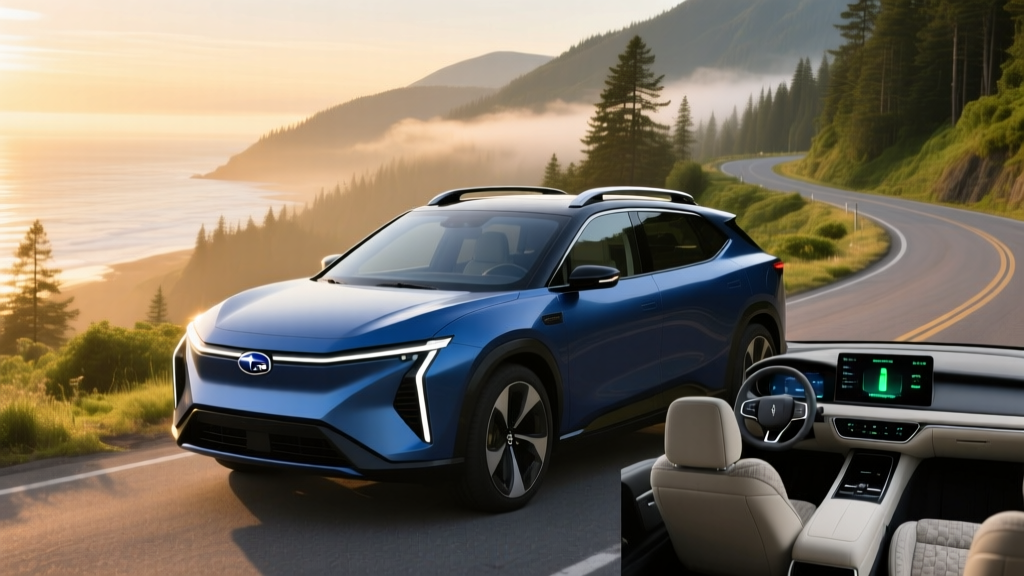
As of 2026, Subaru sells one battery-electric vehicle in the U.S.: the Solterra, a compact electric SUV co-developed with Toyota (which sells it as the bZ4X). The 2026 Solterra delivers an EPA-estimated 227 miles of range on its 86 kWh (72.8 kWh usable) NMC battery, peaks at ~100 kW DC fast charging (10–80% in roughly 35 minutes), and starts at $39,995. It comes standard with all-wheel drive and Subaru's EyeSight driver-assist suite. If you need a rugged, AWD electric crossover for moderate commutes and have home charging access, it's a solid pick. If you need 300+ miles of range or ultra-fast road-trip charging, competitors like the Hyundai Ioniq 5 or Tesla Model Y may serve you better.
Subaru's EV Lineup: Just the Solterra for Now
Subaru has been deliberate — some would say slow — in its electric transition. The Solterra remains the brand's only fully electric offering heading into the 2026 model year. Subaru has announced a next-generation EV lineup built on a new dedicated platform (separate from the Toyota-shared e-TNGA architecture), but those models remain in the announced/preliminary stage with no firm U.S. on-sale dates or confirmed specs.
For buyers specifically searching for Subaru EV cars today, the decision starts and ends with the Solterra. Here's what you're working with:
| Spec | 2026 Subaru Solterra (AWD) |
|---|---|
| EPA Range | 227 miles (Premium trim w/ 20" wheels: ~222 mi) |
| Battery (Usable / Gross) | 72.8 kWh usable / ~86 kWh gross, NMC chemistry |
| Motor Output | 215 hp / 248 lb-ft torque (dual motor AWD) |
| 0–60 mph | ~6.5 seconds |
| DC Fast Charge Peak | ~100 kW (10–80% in ~35 min) |
| Level 2 AC Charge | 6.6 kW onboard charger (~11 hrs 0–100%) |
| MPGe (Combined) | 104 MPGe |
| Base MSRP | $39,995 (destination included) |
| Battery Warranty | 8 years / 100,000 miles (capacity retention ≥70%) |
| Driver Assist | EyeSight (SAE Level 2 — driver must remain engaged) |
Source: EPA fueleconomy.gov, Subaru of America specifications.
Real-World Range: What 227 EPA Miles Actually Means
The EPA sticker is a starting point, not a guarantee. In real-world ownership, Solterra range varies significantly based on conditions:
Range Expectations by Scenario
- Mild weather, city/suburban driving (55 mph avg): 220–235 miles — you can approach or slightly exceed the EPA number thanks to regenerative braking in stop-and-go traffic.
- Highway driving (70–75 mph sustained): 180–200 miles. The Solterra's boxy SUV shape and AWD drivetrain create drag and energy draw that hurt efficiency at speed.
- Cold weather (below 32°F) with cabin heat: 150–180 miles. NMC batteries lose 20–30% of usable capacity in freezing temperatures, and the Solterra's heat pump helps but doesn't eliminate the penalty.
- Cold weather + highway + mountain terrain: 130–160 miles. This worst-case scenario is critical for ski-trip planning in Subaru's core buyer demographic.
The Solterra's 227-mile EPA figure trails key competitors. The Hyundai Ioniq 5 (AWD, Long Range) achieves 290 miles EPA, the Tesla Model Y Long Range AWD hits 308 miles, and the Ford Mustang Mach-E (Extended Range AWD) reaches approximately 290 miles. For daily commutes under 60 miles round-trip, 227 miles is more than adequate. For frequent 200+ mile road trips, the gap matters — especially when you factor in the Solterra's modest DC charging speed.
Charging Speed: The Solterra's Biggest Limitation
Subaru EV cars charge at a pace that reflects the platform's 2022-era engineering. The Solterra peaks at roughly 100 kW on DC fast chargers, which is functional but uncompetitive. Here's what that means in practice:
| Charging Level | Power | Miles Added per Hour | Time (10–80%) |
|---|---|---|---|
| Level 1 (120V household) | ~1.2 kW | ~4 mi/hr | N/A (days for full charge) |
| Level 2 (240V home/public) | 6.6 kW (max) | ~22 mi/hr | ~8.5 hours |
| DC Fast Charge (public) | ~100 kW peak | ~200+ mi/hr (peak) | ~35 minutes |
Key ownership realities around charging:
- Peak ≠ sustained: The Solterra hits ~100 kW only in a narrow state-of-charge window (roughly 10–30% SoC). Above 50%, the charge curve tapers significantly, dropping to 60 kW and eventually below 40 kW past 80%. The 10–80% time of ~35 minutes reflects this taper.
- Preconditioning matters: The Solterra can precondition its battery for faster charging when you navigate to a DC fast charger in the infotainment system. Skip this step in cold weather and your peak charge rate may drop to 50–60 kW.
- Home charging is the sweet spot: With a Level 2 home charger (240V, 32A or 48A circuit), you'll wake up to a full battery every morning. At 6.6 kW, an overnight 8-hour session adds roughly 175 miles — enough to refill from near-empty in a single night.
- Connector: The Solterra uses the CCS1 connector for DC fast charging. Subaru has not yet announced a transition to NACS (Tesla's connector), meaning you'll rely on Electrify America, EVgo, ChargePoint, and other CCS networks — or use a Tesla Supercharger adapter if Subaru provides one for the model year.
Solterra vs Gas: Real Cost Comparison
Subaru buyers often cross-shop the Outback or Forester. Here's how the Solterra stacks up against a comparably equipped 2026 Subaru Outback Premium AWD (2.5L, ~29 MPG combined) over 5 years and 75,000 miles:
| Cost Category | Solterra (EV) | Outback (Gas AWD) |
|---|---|---|
| Base MSRP | $39,995 | $34,995 |
| Estimated Federal Tax Credit (§30D) | Up to $7,500 (see eligibility below) | $0 |
| Effective Purchase Price | ~$32,495 | $34,995 |
| Fuel / Energy (75,000 mi) | $2,400–$3,600 (home charging at $0.14/kWh avg) | $8,600 (at $3.40/gal, 29 MPG) |
| Maintenance (5 yr) | ~$1,200 (tire rotation, cabin filter, fluid checks) | ~$3,800 (oil changes, filters, brakes, spark plugs) |
| Insurance (5 yr avg) | ~$9,500 | ~$7,800 |
| 5-Year Total Cost | ~$45,595–$46,795 | ~$55,195 |
Insurance estimates based on national averages; EV premiums typically run 15–25% higher than comparable gas vehicles. Fuel costs based on EPA efficiency data and U.S. average electricity/gas prices. Actual costs vary by state and driving pattern.
Key Takeaways from the Cost Breakdown
- The tax credit is the great equalizer. If you qualify for the full §30D credit, the Solterra's effective price undercuts the Outback — before factoring in fuel savings.
- Energy savings are massive but not free. Home charging at residential electricity rates saves $5,000–$6,000 over 5 years. Public DC fast charging exclusively (at $0.35–$0.50/kWh) narrows that gap considerably.
- Insurance costs more. Budget an extra $250–$350/year for EV insurance premiums, which reflect higher repair costs and battery replacement risk.
- Maintenance is genuinely lower. No oil changes, no transmission fluid, regenerative braking extends pad life. Expect to pay for tire rotations, cabin air filters, and wiper fluid — that's about it.
Federal Tax Credit: Do You Qualify?
The Solterra may be eligible for the §30D Clean Vehicle Credit of up to $7,500, but eligibility is not automatic. The IRS enforces multiple requirements that change based on battery sourcing rules updated annually:
- MSRP cap: The Solterra (as an SUV) must have an MSRP at or below $80,000. All current trims qualify.
- Buyer income cap: Adjusted gross income must not exceed $150,000 (single), $225,000 (head of household), or $300,000 (joint filers).
- Battery sourcing: The vehicle must meet critical minerals and battery component requirements that tighten each year. For 2026, verify current compliance on fueleconomy.gov or the IRS clean vehicle credit page before purchasing.
- Point-of-sale transfer: You can transfer the credit to the dealer at purchase to reduce your out-of-pocket cost immediately, rather than waiting to claim it on your tax return.
- New vs. used: The §30D credit applies to new vehicles. A separate used-EV credit (up to $4,000) applies to qualifying pre-owned EVs priced under $25,000 — though 2026 Solterra models won't appear on the used market at that price point yet.
Tax credit rules are subject to change. Always verify current eligibility at irs.gov and consult a tax professional before making a purchase decision based on credit assumptions.
Common Misconceptions About Subaru EV Cars
| Myth | Fact |
|---|---|
| "Subaru has multiple EVs to choose from." | The Solterra is Subaru's only BEV as of 2026. The Crosstrek Hybrid (PHEV) was discontinued. Future models are announced but not yet on sale. |
| "AWD means the range won't suffer." | Dual-motor AWD draws more energy than single-motor FWD or RWD competitors. The Solterra's 104 MPGe combined trails the Ioniq 5 RWD (132 MPGe) and Model Y RWD. |
| "The battery will need expensive replacement soon." | Subaru warranties the battery for 8 years/100,000 miles with ≥70% capacity retention. Industry data shows NMC batteries typically retain 85–90% capacity after 100,000 miles with normal use. Full replacement (rarely needed) costs approximately $12,000–$18,000. |
| "I can road-trip just like a gas car." | With 227 miles of range and ~35-minute 10–80% charges, road trips require planning. Expect a charging stop every 160–180 highway miles, adding 30–40 minutes each time. |
| "It charges at Tesla Supercharger speeds." | The Solterra peaks at ~100 kW. Tesla Model Y charges at up to 250 kW on V3 Superchargers. Hyundai Ioniq 5 peaks at ~240 kW on 350 kW chargers. The Solterra is meaningfully slower. |
Who Should (and Shouldn't) Buy the Solterra
Decision Framework: Is the Solterra Right for You?
Buy the Solterra if:
- You have reliable home Level 2 charging (garage or driveway with 240V access) — this eliminates range anxiety for daily driving.
- Your daily commute is under 80 miles round-trip, leaving ample range buffer.
- You need standard AWD for snow, rain, or light off-road conditions (Subaru's X-Mode with 8.3 inches of ground clearance is genuinely capable for an EV crossover).
- You qualify for the §30D federal tax credit, bringing the effective price below $33,000.
- You value Subaru's safety reputation (EyeSight standard, top IIHS ratings) and brand loyalty.
Look elsewhere if:
- You cannot charge at home and would rely entirely on public charging — the Solterra's 100 kW peak rate makes frequent DC charging frustrating.
- You regularly drive 200+ miles between stops on road trips — competitors with 290–330 miles of range require fewer stops and shorter charge times.
- You need maximum cargo space — the Solterra offers 23.8 cu ft behind the rear seats (no frunk), less than the Model Y (30.2 cu ft + frunk) or Ioniq 5 (27.2 cu ft).
- You want the latest EV tech — the Solterra's infotainment, charge scheduling, and app features lag behind Tesla, Hyundai, and Rivian in polish and functionality.
First-Time EV Buyer Checklist
If the Solterra would be your first electric vehicle, work through these practical steps before signing:
- Audit your home electrical panel. A Level 2 charger requires a 240V circuit (NEMA 14-50 outlet or hardwired). Installation costs range from $500–$2,500 depending on panel capacity and distance from the panel to your parking spot. Older homes may need a panel upgrade ($1,500–$3,000+). Get a quote from a licensed electrician before committing.
- Map your actual driving patterns. Track your weekly mileage for two weeks. If 95% of your driving falls within 150 miles/day, the Solterra's real-world range covers it with margin.
- Research your local public charging. Use PlugShare or the DOE's Alternative Fuels Station locator to identify DC fast chargers along your common routes. If your area is a charging desert, an EV may not be practical yet.
- Get an insurance quote before buying. EV insurance premiums vary wildly by carrier. Some insurers offer EV-specific discounts; others charge 20%+ more. Don't assume your current rate will transfer.
- Understand the tax credit timeline. If you transfer the §30D credit at the point of sale, the dealer handles the paperwork. If you claim it on your tax return, you'll need IRS Form 8936 and should retain the vehicle's battery sourcing documentation.
Frequently Asked Questions
Does Subaru make any other electric cars besides the Solterra?
Not as of the 2026 model year. The Solterra is Subaru's only battery-electric vehicle available in the U.S. Subaru has announced plans for additional EVs on a new dedicated platform, but these remain in development with no confirmed U.S. launch dates or specifications. The previously available Crosstrek Hybrid (a plug-in hybrid) has been discontinued.
How much does it cost to charge a Solterra at home?
At the U.S. average residential electricity rate of approximately $0.16/kWh, fully charging the Solterra's 72.8 kWh usable battery from empty costs about $11.65. In practice, most owners charge partially — a 50% top-up costs roughly $5.80. Over a year of 12,000 miles of driving, expect to spend $480–$650 on home electricity, compared to roughly $1,400 in gasoline for an equivalent AWD gas SUV.
Is the Subaru Solterra good in cold weather?
The Solterra comes with standard AWD, a heat pump for cabin heating, and battery preconditioning — all of which help in cold climates. However, expect 20–30% range loss in sustained below-freezing temperatures. A 227-mile EPA range becomes roughly 160–180 miles in winter. For ski trips and mountain driving, plan charging stops conservatively and precondition the battery before fast-charging.
Can I use Tesla Superchargers with the Solterra?
The Solterra uses the CCS1 connector natively. Tesla has begun opening select Supercharger stations to non-Tesla EVs via the Magic Dock adapter (built into the Supercharger) or via a third-party NACS-to-CCS adapter. Availability varies by location. Check the Tesla app or PlugShare for CCS-compatible Supercharger stations near you. Subaru has not announced a native NACS port for the current-generation Solterra.
How long will the Solterra battery last?
Subaru warranties the high-voltage battery for 8 years or 100,000 miles (whichever comes first) against capacity loss below 70%. Industry-wide data from similar NMC batteries in vehicles like the Hyundai Ioniq 5 and Kia EV6 suggests typical degradation of 10–15% over 100,000 miles with normal charging habits. To maximize longevity: avoid routinely charging to 100% (set a daily limit of 80%), minimize frequent DC fast charging, and use preconditioning in extreme temperatures.
How does the Solterra compare to the Toyota bZ4X?
The Solterra and bZ4X share the same e-TNGA platform, battery, and powertrain. The key differences: Subaru tunes the AWD system with X-Mode for better off-road/snow capability, includes more standard driver-assist features, and prices slightly higher. The bZ4X offers a FWD option with marginally better range (~252 mi EPA). Mechanically and electronically, they're near-identical. Choose based on brand preference, dealer proximity, and whether you value Subaru's AWD tuning.
Specifications reflect 2026 model year data available at time of publication. Always verify current pricing, tax credit eligibility, and specifications with your local Subaru dealer and fueleconomy.gov. Tax credit information is based on current IRS §30D rules and is subject to legislative change.