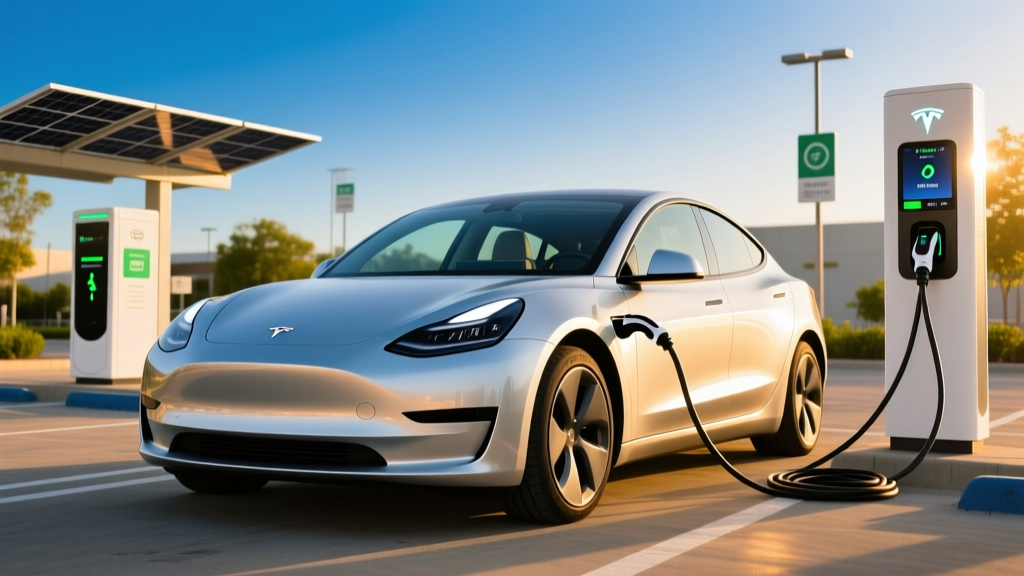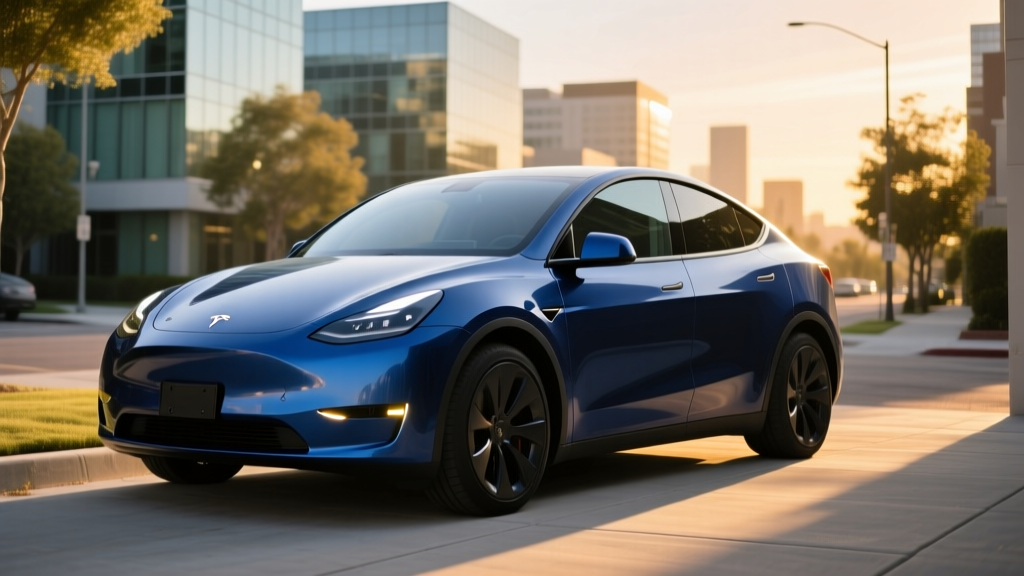
If you've been searching for reasons to schedule a test drive of a Tesla, the 2026 Model Y is likely the vehicle pulling you into a showroom. It remains the best-selling electric vehicle in the United States and one of the best-selling cars of any kind globally. But popularity alone doesn't make it the right EV for your garage. Before you hand over your driver's license at the nearest Tesla store, here's the data-driven breakdown of what you'll actually be living with — range, charging speed, real ownership costs, and where the Model Y falls short against a rapidly closing field of competitors.
2026 Tesla Model Y at a Glance: Core Specifications
| Attribute | Specification |
|---|---|
| EPA Estimated Range | 320 miles (Long Range AWD) |
| Usable Battery Capacity | ~75 kWh (NMC chemistry) |
| Peak DC Fast Charge Rate | 250 kW (Supercharger V3/V4) |
| 10–80% DC Fast Charge Time | ~25 minutes |
| Level 2 Home Charging (11.5 kW / 48A) | ~37 miles per hour of charging |
| 0–60 mph | 4.8 seconds (Long Range AWD) |
| Horsepower | 384 hp (dual-motor AWD) |
| Drivetrain | Dual-motor all-wheel drive |
| EPA Efficiency | 111 MPGe combined / 28 kWh per 100 mi |
| Cargo Volume (behind 2nd row) | 30.2 cu ft (up to 72.1 cu ft folded) |
| Rear Legroom | 38.4 inches |
| Battery & Drive Unit Warranty | 8 years / 120,000 miles |
| Base MSRP (Long Range AWD) | $44,990 (before incentives) |
Tesla also offers a Model Y Rear-Wheel Drive starting at approximately $39,990 with an EPA range of around 295 miles and a smaller LFP (lithium iron phosphate) battery pack. The LFP chemistry trades some energy density and cold-weather performance for a longer cycle life and the ability to routinely charge to 100% without degradation concerns. For this review, we're focusing on the Long Range AWD — the variant most buyers consider when they schedule a test drive of a Tesla for family use or road trips.
Real-World Range: What the EPA Sticker Doesn't Tell You
Tesla's efficiency remains a class strength. At roughly 28 kWh per 100 miles, the Model Y extracts more miles per kilowatt-hour than most competing electric crossovers, including the Ford Mustang Mach-E and Hyundai IONIQ 5. This efficiency advantage matters on road trips, where every kWh counts between Supercharger stops.
One nuance worth understanding: Tesla's trip planner in the navigation system is conservative. It typically predicts arrival at Superchargers with less State of Charge (SoC) than you'll actually have, which builds in a useful buffer. However, if you're driving into headwinds, climbing elevation, or towing (the Model Y is rated for 3,500 lbs), plan for 15–25% less range than the computer suggests.
Charging Speed and Infrastructure: The Supercharger Advantage
| Charging Level | Power (kW) | Speed (miles/hr) | Typical Use Case |
|---|---|---|---|
| Level 1 (120V household outlet) | ~1.4 kW | ~4–5 mi/hr | Emergency / trickle top-off |
| Level 2 (240V, 48A Wall Connector) | 11.5 kW | ~37 mi/hr | Daily home charging |
| Level 2 (240V, 32A Mobile Connector) | 7.7 kW | ~25 mi/hr | Home charging (NEMA 14-50) |
| DC Fast Charge (Supercharger V3/V4) | Up to 250 kW | Up to ~1,000 mi/hr (peak) | Road trips, rapid top-ups |
The Model Y's peak DC fast-charging rate of 250 kW on Tesla's V3 and V4 Superchargers delivers a 10–80% charge in approximately 25 minutes. That's competitive but no longer class-leading — the Hyundai IONIQ 5 and Kia EV6, built on 800V architectures, can hit 10–80% in roughly 18 minutes at 350 kW chargers. Tesla's 400V architecture limits peak charge rate, though the vast Supercharger network's reliability largely compensates.
Here's a critical detail about the charging curve: the Model Y sustains peak power (above 200 kW) only up to roughly 40–50% SoC, then tapers progressively. Charging from 80–100% on DC fast charge is painfully slow — plan your road-trip stops to charge to 80% and move on rather than waiting for a full battery.
For home charging, Tesla's Wall Connector at 48 amps (11.5 kW on a 60-amp circuit) adds roughly 37 miles of range per hour — enough to fully replenish the battery overnight. Installation typically requires a licensed electrician and a dedicated 60-amp breaker. If your home electrical panel is at capacity, a panel upgrade could add $1,500–$3,000 to your installation cost.
With the industry-wide adoption of the North American Charging Standard (NACS), which Tesla pioneered, the Model Y now has access to a growing number of non-Tesla chargers without adapters, and competing EVs are gaining Supercharger access. The moat is narrowing, but as of 2026, Tesla's integrated charging experience — plug in, walk away, billing is automatic — remains the least-friction public charging experience available.
Performance, Ride, and Daily Drivability
The dual-motor Long Range AWD Model Y delivers 384 horsepower and a 4.8-second 0–60 mph time. That's genuinely quick for a family crossover and merges onto highways with authority. The instant torque delivery makes it feel faster than the numbers suggest in city driving. The Performance variant drops the 0–60 to approximately 3.5 seconds if you're willing to sacrifice some range.
Ride quality has improved with the "Juniper" refresh introduced in 2025, with revised suspension tuning and additional sound-deadening. The cabin is noticeably quieter at highway speeds than pre-refresh models. That said, the Model Y's ride remains firmer than comfort-oriented competitors like the Hyundai IONIQ 5 or the Chevrolet Equinox EV. If your daily commute involves broken pavement, schedule a test drive on a route that includes rough roads — you'll want to feel the ride before committing.
Regenerative braking in the Model Y is aggressive in "Hold" mode, enabling one-pedal driving in most city conditions. Tesla removed the driver-selectable regen level in recent model years, so the experience is non-negotiable. Most owners adapt within a week, but it's worth experiencing on your test drive.
Interior, Technology, and Driver Assistance
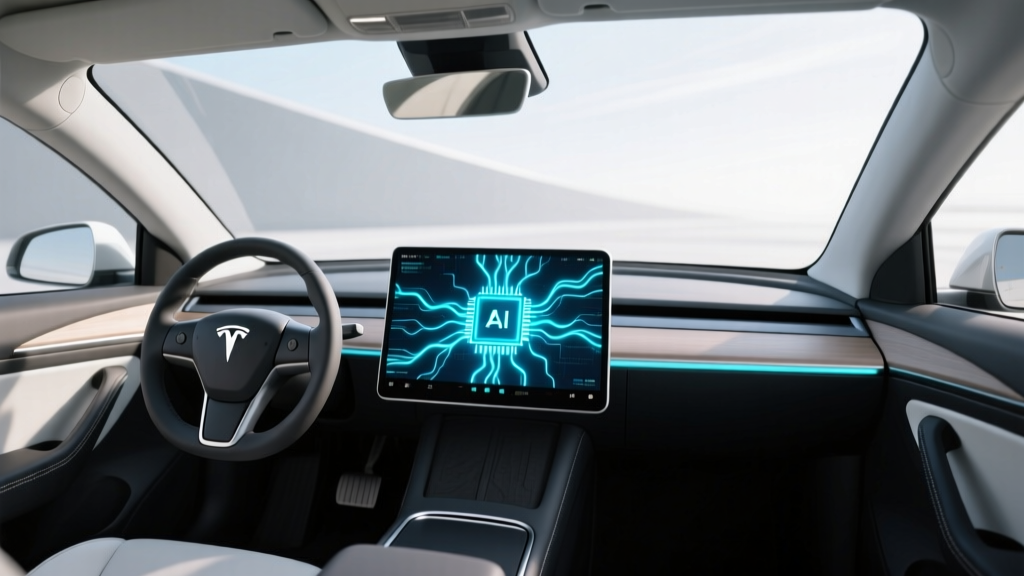
The Model Y's interior is minimalist by design — a 15.4-inch touchscreen handles virtually all vehicle functions, from climate control to mirror adjustment. The Juniper refresh added a rear touchscreen for passengers, ambient lighting, and ventilated front seats. Build quality has improved meaningfully over earlier production years, though panel-gap variability still surfaces in owner forums.
Autopilot and Full Self-Driving (Supervised): Every Model Y comes standard with basic Autopilot (traffic-aware cruise control and lane centering). The optional FSD (Supervised) package, currently priced around $8,000 as a one-time purchase or $99/month, adds automated lane changes, city-street navigation, and traffic-light recognition.
The infotainment system is responsive and feature-rich — Netflix and YouTube streaming while parked, a built-in web browser, and over-the-air (OTA) software updates that periodically add features. However, the absence of Apple CarPlay and Android Auto remains a dealbreaker for some buyers. If you rely on those ecosystems for navigation or messaging, this will be a daily friction point.
Pricing, Tax Credits, and Total Ownership Cost
| Trim | Base MSRP | Est. Price After §30D Credit* |
|---|---|---|
| Model Y RWD | $39,990 | ~$32,490 |
| Model Y Long Range AWD | $44,990 | ~$37,490 |
| Model Y Performance | $48,990 | ~$41,490 |
*Tax credit estimates assume full §30D eligibility. Actual credit amount varies.
Federal tax credit eligibility under IRS §30D is the most consequential pricing variable for the Model Y in 2026. The Long Range AWD qualifies for up to $7,500 in federal tax credits, but eligibility is not automatic — it depends on several requirements:
- MSRP Cap: SUVs/crossovers must have an MSRP at or below $80,000. All Model Y trims clear this threshold.
- Buyer Income Cap: Modified adjusted gross income (MAGI) must not exceed $150,000 (single), $225,000 (head of household), or $300,000 (joint filing).
- Battery Sourcing Requirements: A percentage of critical minerals and battery components must be sourced from the U.S. or free-trade-agreement countries. Tesla's shifting supply chain means eligibility can change mid-year — always verify on fueleconomy.gov before purchasing.
- Point-of-Sale Transfer: As of 2024, the credit can be transferred to the dealer at purchase, reducing your out-of-pocket cost immediately rather than waiting for tax filing. Tesla participates in this program.
Consult a tax professional to confirm your personal eligibility. State and local incentives may stack on top — check the Alternative Fuels Data Center for your area.
On total cost of ownership, the Model Y benefits from lower fueling costs (electricity at ~$0.13/kWh nationally vs. gasoline at ~$3.50/gallon), fewer maintenance requirements (no oil changes, minimal brake wear thanks to regen), and competitive insurance rates that have normalized as the fleet has grown. Depreciation has been more volatile — Tesla's frequent price adjustments have impacted resale values, though the Model Y still holds value comparably to premium ICE crossovers over a 5-year horizon.
Model Y vs. the Competition: Is It Still the Default Choice?
The competitive landscape has shifted dramatically. Here's how the Model Y stacks up against key rivals in 2026:
| Spec | Tesla Model Y LR AWD | Hyundai IONIQ 5 Limited AWD | Ford Mustang Mach-E Extended Range AWD |
|---|---|---|---|
| EPA Range | 320 mi | 290 mi | 305 mi |
| Peak DC Charge | 250 kW | 350 kW (800V) | 150 kW |
| 10–80% DC Time | ~25 min | ~18 min | ~38 min |
| 0–60 mph | 4.8 sec | 5.1 sec | 5.1 sec |
| Cargo (behind 2nd row) | 30.2 cu ft | 27.2 cu ft | 29.7 cu ft |
| Base MSRP (AWD) | $44,990 | $52,600 | $48,995 |
The Model Y's combination of range, cargo space, and price remains difficult to beat on paper. The IONIQ 5 charges faster and offers a more distinctive design and Apple CarPlay/Android Auto. The Mach-E delivers a more traditional driving feel and Ford dealer service access. But for pure range-per-dollar and charging-network convenience, the Model Y still leads.
Pros and Cons: The Honest Scorecard
Pros
- Class-leading EPA range (320 mi) and efficiency (111 MPGe)
- Supercharger network reliability — best public charging experience
- Spacious cargo area (30.2 cu ft) with usable front trunk (frunk)
- OTA updates continuously add features post-purchase
- Strong performance (4.8s 0–60) with dual-motor AWD
- Federal tax credit eligibility reduces effective price significantly
Cons
- No Apple CarPlay or Android Auto — touchscreen-only interface
- FSD (Supervised) is expensive and still requires full driver attention
- Firmer ride than comfort-oriented competitors
- DC fast-charge speed (250 kW) lags 800V rivals (350 kW)
- Service center wait times can be lengthy in high-volume markets
- Resale value uncertainty due to Tesla's pricing volatility
Who Should Schedule a Tesla Test Drive — and Who Shouldn't
Schedule a test drive of the Tesla Model Y if: You want maximum range per dollar, rely on road-trip charging infrastructure, prefer a minimalist tech-forward cabin, and can charge at home with a Level 2 setup. It's an excellent fit for commuters with a 40–80 mile round trip, small families needing cargo flexibility, and buyers who value software-driven features and OTA improvements.
Consider alternatives if: You need Apple CarPlay/Android Auto, prioritize ride comfort over sportiness, want the fastest possible DC charging (look at IONIQ 5/EV6), live in an area with limited Tesla Service Center access, or prefer a traditional dealership purchase and service experience.
Frequently Asked Questions
What is the real-world range of the 2026 Tesla Model Y?
The EPA rates the Long Range AWD at 320 miles. Real-world highway driving at 70–75 mph typically yields 260–285 miles. In cold weather (below 32°F), expect 220–240 miles due to reduced battery efficiency and cabin heating demand. The RWD model with its LFP battery may see slightly larger cold-weather percentage losses.
How fast does the Model Y charge at home and on the road?
At home on a 48-amp Level 2 Tesla Wall Connector (11.5 kW), the Model Y gains roughly 37 miles of range per hour — a full charge takes about 8–9 hours. On a Tesla V3/V4 Supercharger, peak rate is 250 kW, and a 10–80% charge takes approximately 25 minutes. Charging above 80% slows dramatically due to the battery management system tapering current to protect cell health.
Does the 2026 Tesla Model Y qualify for the $7,500 federal EV tax credit?
Yes — the Model Y qualifies for up to $7,500 under IRS §30D, provided you meet income caps ($150K single / $300K joint), the vehicle MSRP is under $80,000 (all trims qualify), and battery-sourcing requirements are met at the time of purchase. The credit can be applied at point of sale, reducing your purchase price immediately. Always verify current eligibility on fueleconomy.gov and consult a tax professional, as sourcing rules can shift.
How much does the Model Y cost after incentives?
The Long Range AWD starts at $44,990. With the full $7,500 federal credit applied at purchase, the effective price drops to approximately $37,490. State incentives (where available) can reduce this further. Adding FSD (Supervised) at $8,000 or premium interior colors and larger wheels can push the as-tested price above $55,000 before credits.
Is the Model Y worth buying over the Hyundai IONIQ 5 or Ford Mach-E?
It depends on your priorities. The Model Y wins on range (320 vs. 290–305 mi), cargo space, and Supercharger network convenience. The IONIQ 5 charges faster (18 vs. 25 min, 10–80%), offers Apple CarPlay/Android Auto, and has a more distinctive design. The Mach-E provides a more conventional driving feel and Ford dealer service. For road-trippers and efficiency-maximizers, the Model Y still edges the competition. For design-conscious buyers or CarPlay loyalists, the IONIQ 5 is a compelling alternative.
What should I focus on during my Tesla test drive?
Pay attention to ride firmness on rough pavement, the touchscreen-only interface (try adjusting climate and mirrors while driving), regenerative braking intensity in Hold mode, and visibility from the driver's seat. If possible, test drive on both highway and city streets. Ask the advisor to demonstrate Autopilot on a divided road so you can experience the Level 2 system's capabilities and its limitations firsthand.