The Rolls-Royce Spectre Electric Coupe in 60 Seconds
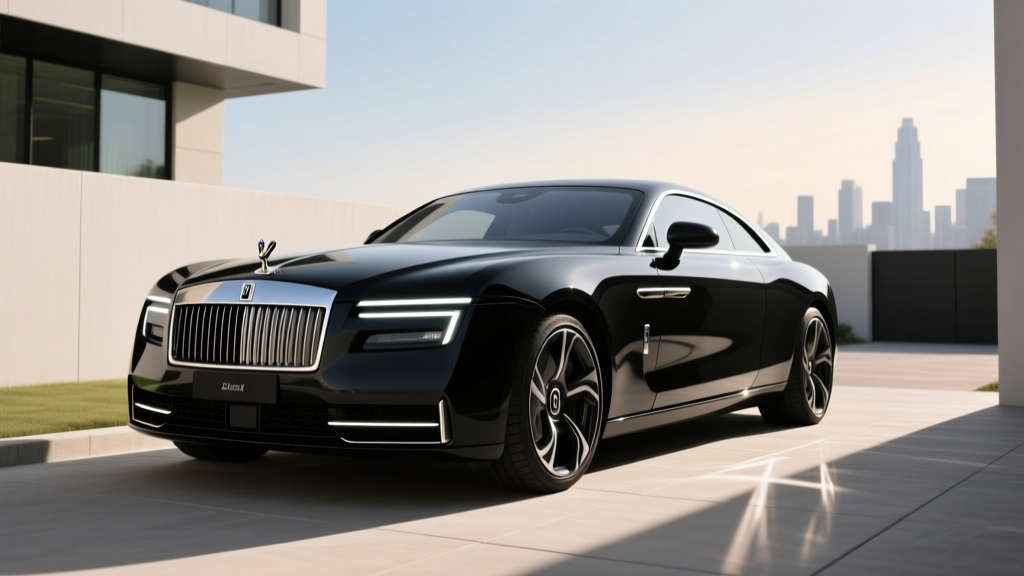
Bottom line: The 2026 Rolls-Royce Spectre is a $420,000+ ultra-luxury electric grand coupe with an EPA-estimated 260 miles of range, a 102 kWh (usable ~100 kWh) NMC battery, and DC fast charging that peaks around 195 kW (10–80% in roughly 34 minutes). It qualifies for zero federal EV tax credits due to its MSRP and buyer income profile. Compared to a gas Rolls-Royce Wraith (discontinued but representative of the segment), the Spectre costs roughly 60–70% less to "fuel" per mile on home Level 2 charging, but its insurance, purchase price, and depreciation remain firmly in ultra-luxury territory. This is a car for buyers who already have home charging, who drive primarily in metro and highway-corridor environments, and who value silent, effortless torque over track dynamics.
Specs That Matter: Range, Battery, Charging, and Performance
| Specification | 2026 Rolls-Royce Spectre |
|---|---|
| EPA Range (est.) | 260 miles |
| Real-World Highway Range | ~210–230 miles (70 mph, mild weather) |
| Cold-Weather Range (20°F) | ~175–195 miles |
| Battery (Usable) | ~100 kWh, NMC chemistry |
| Peak DC Fast Charge Rate | 195 kW |
| 10–80% DC Charge Time | ~34 minutes |
| Level 2 Charge Rate | ~11 kW (approx. 9 hours 0–100%) |
| Drivetrain | Dual-motor AWD |
| Horsepower / Torque | 577 hp / 664 lb-ft |
| 0–60 mph | 4.4 seconds |
| MPGe (Combined) | 73 MPGe |
| EPA Efficiency | ~46 kWh/100mi |
| Base MSRP | ~$420,000 (before bespoke options) |
| Battery Warranty | 8 years / unlimited miles |
| Federal §30D Tax Credit | Not eligible (MSRP & sourcing) |
The Spectre's 260-mile EPA figure sounds modest next to a Tesla Model S Long Range (402 miles), but context matters: this is a 6,500-pound luxury coupe, not an efficiency benchmark. Expect real-world highway range to drop to 210–230 miles at sustained 70+ mph speeds, and further to 175–195 miles in cold weather due to cabin heating demands and battery impedance rise. Rolls-Royce's thermal management system includes a heat pump, which mitigates some cold-weather loss compared to resistive heating, but physics is physics for a vehicle this heavy.
Real-World Range Reality: EPA 260 mi → expect ~210–230 mi on highway trips in mild weather, ~175–195 mi in freezing conditions. The 195 kW peak charge rate is not sustained: above 60% SoC, the curve tapers significantly, meaning the final 20% can add 10–12 minutes to your stop. Plan road-trip charging for 10–80% sessions to minimize time at the charger.
Spectre vs. Gas Rolls-Royce: What Does Electrification Actually Cost?
The Spectre replaces the spiritual role of the Wraith (V12, discontinued 2023) and the Phantom Coupe. Here's how the economics compare against a representative late-model V12 Rolls-Royce grand tourer running premium fuel:
| Category | Spectre (BEV) | Gas V12 Rolls-Royce (e.g., Wraith) |
|---|---|---|
| Purchase Price | ~$420,000+ | ~$340,000–$400,000 (pre-discontinuation MSRP) |
| Fuel/Energy Cost per Mile | $0.06–$0.08 (home L2, $0.16/kWh avg) | $0.28–$0.35 (premium, 14 mpg combined) |
| Annual Energy Cost (12,000 mi) | $720–$960 | $3,360–$4,200 |
| Annual Maintenance (est.) | $800–$1,200 | $2,500–$4,000 |
| Annual Insurance | $8,000–$14,000 | $7,000–$12,000 |
| 5-Year Energy + Maint. | $7,600–$10,800 | $29,300–$41,000 |
| Federal EV Tax Credit | $0 (MSRP cap exceeded) | N/A |
The Spectre saves roughly $20,000–$30,000 over five years in energy and maintenance alone — but that saving is almost trivial relative to the purchase price and expected depreciation. This is not a car you buy for total-cost-of-ownership optimization. The real value proposition is the driving experience: silent, vibration-free, instant torque from standstill, and the ability to "refuel" at home overnight rather than visiting a gas station.
Real-World Ownership: Charging, Climate, and Daily Use
Home Charging Is Non-Negotiable
At 11 kW on Level 2, a full charge from 10% to 100% takes roughly 9 hours. That's perfectly adequate for overnight replenishment — you'll wake up to 260 miles every morning if you plug in upon returning home. However, this assumes you have a dedicated 48-amp (or higher) Level 2 charger on a 60-amp circuit. Installation costs for a home Level 2 setup range from $1,200 to $3,500 depending on panel capacity and conduit run. If your home has a 200-amp panel with spare capacity, expect the lower end. If you need a panel upgrade to 400 amps, costs can exceed $5,000.
Relying solely on public DC fast charging is technically possible but impractical for a daily-driver Spectre. At 195 kW peak, a 10–80% session takes about 34 minutes — fine for road trips, tedious for routine use. Public charging costs ($0.35–$0.55/kWh at networks like Electrify America) would push your per-mile energy cost to $0.16–$0.25, erasing much of the fuel-cost advantage versus gas.
Climate and Driving Patterns
The Spectre's 6,500-pound mass and NMC battery mean cold-weather range loss is significant — expect a 25–35% reduction in sub-freezing conditions. Buyers in northern climates (Chicago, Boston, Minneapolis) should plan around ~180 miles of usable winter range. Preconditioning the battery while plugged in mitigates this somewhat and also preserves fast-charge speeds in cold weather.
For road trips, the Spectre's real-world 210–230 mile highway range means charging stops every 2.5–3 hours at 75 mph. On well-served corridors (I-95, I-5, I-80 with Tesla Supercharger access via NACS adapter or Electrify America CCS stations), this is manageable. In charging deserts — rural stretches of the Mountain West, parts of the Dakotas — trip planning becomes critical, and you may need to detour 20–40 miles for a reliable DC station.
| Charging Level | Power (kW) | Miles Added per Hour | Typical Use Case |
|---|---|---|---|
| Level 1 (120V) | ~1.4 kW | ~3 mi/hr | Emergency/trickle only |
| Level 2 (240V, 48A) | ~11 kW | ~24 mi/hr | Daily home charging |
| DC Fast (peak) | 195 kW | ~150 mi in 10 min | Road trips, 10–80% sessions |
Cost Breakdown: What the Spectre Actually Costs to Own
| Cost Category | Year 1 | Year 2 | Year 3 | Year 4 | Year 5 | 5-Year Total |
|---|---|---|---|---|---|---|
| Purchase (base + avg. options) | $450,000 | — | — | — | — | $450,000 |
| Home L2 Install (one-time) | $2,500 | — | — | — | — | $2,500 |
| Energy (12,000 mi/yr, home) | $840 | $840 | $840 | $840 | $840 | $4,200 |
| Insurance | $11,000 | $10,500 | $10,000 | $9,500 | $9,000 | $50,000 |
| Maintenance | $900 | $900 | $1,100 | $1,100 | $1,200 | $5,200 |
| Tires (est. replacement yr 4) | — | — | — | $2,800 | — | $2,800 |
| Depreciation (est. 55% over 5yr) | — | — | — | — | — | $247,500 |
| Total 5-Year Cost | ~$762,200 | |||||
Depreciation dominates this picture, as it does with all ultra-luxury vehicles. The Spectre's operating costs (energy + maintenance) are remarkably low for a Rolls-Royce — under $2,000/year — but insurance is steep due to the vehicle's value, repair costs for bespoke bodywork, and limited collision-repair networks qualified for Rolls-Royce aluminum spaceframe construction.
Common Misconceptions About the Spectre
| Myth | Fact |
|---|---|
| "It gets $7,500 in federal tax credits." | It does not. The §30D credit has an MSRP cap of $55,000 for sedans/coupes. The Spectre at $420,000+ is ineligible regardless of buyer income or battery sourcing. See IRS §30D rules. |
| "260 miles of range isn't enough for a luxury car." | For daily driving with home charging, 260 miles covers 99%+ of trips. The median American drives 37 miles/day (FHWA data). Road trips require planning, but this is true of any EV. |
| "Electric means it drives like a Tesla." | The Spectre prioritizes waftability, not performance. Its 4.4-second 0–60 is quick but not sports-car territory. The character is silent, serene, and heavy — a magic-carpet ride with electric smoothness that even a V12 cannot match. |
| "The battery will need replacing soon." | NMC batteries in premium thermal-management systems typically retain 85–90% capacity after 100,000 miles. Rolls-Royce warranties the battery for 8 years/unlimited miles with a capacity-retention threshold (typically 70%). |
| "I can charge it anywhere." | The Spectre uses the CCS1 connector natively (with NACS adapter availability growing via BMW Group's agreement with Tesla Supercharger access). CHAdeMO stations are largely irrelevant. Public charging reliability remains inconsistent — plan ahead. |
Decision Framework: Should You Buy the Spectre?
Buy the Rolls-Royce Spectre if:
- You have reliable home Level 2 charging (garage or dedicated driveway outlet).
- Your daily driving is under 150 miles and you take road trips fewer than 10 times per year.
- You value silent, effortless propulsion and the bespoke Rolls-Royce experience over performance metrics.
- You're upgrading from a gas Rolls-Royce or Bentley and want the smoothest powertrain available — electric torque delivery is fundamentally smoother than any automatic transmission.
- You accept that depreciation, not fuel savings, will be your largest ownership cost.
Consider an alternative if:
- You lack home charging and would rely entirely on public infrastructure. The Spectre's 34-minute charge stops become a significant lifestyle friction.
- You frequently drive in extreme cold with trips exceeding 180 miles. Winter range drops make this stressful without robust charging infrastructure on your route.
- You want the longest-range luxury EV. The Lucid Air Grand Touring offers 516 EPA miles at a fraction of the price, or the Mercedes EQS 450+ delivers 352 miles with comparable luxury (if not comparable bespoke craftsmanship).
- You're buying primarily for financial efficiency. No $420,000 vehicle is financially efficient, but a well-optioned BMW i7 or Mercedes EQS delivers 80% of the luxury EV experience at 30% of the price.
What First-Time EV Buyers in the Ultra-Luxury Segment Should Know
If the Spectre is your first EV, understand these fundamentals:
- kW vs. kWh: The battery stores ~100 kWh of energy (like a gas tank's gallons). The charger delivers power in kW (like a fuel pump's flow rate). A 195 kW charger fills the battery faster than an 11 kW home charger, but the battery's size (kWh) determines how far you can drive.
- Charge curve taper: The Spectre will not charge at 195 kW for the entire session. Like all lithium-ion batteries, charge speed peaks at low State of Charge (SoC) and tapers above 60–70% to protect battery health. This is why 10–80% times are the industry standard metric — the final 20% is painfully slow on any EV.
- Preconditioning matters: If you navigate to a DC fast charger using the car's built-in navigation, the Spectre will precondition (warm) the battery en route, enabling faster charging upon arrival. Arriving at a cold charger with a cold battery can double your charge time in winter.
- Regenerative braking: The Spectre offers adjustable regen, but Rolls-Royce tunes it for a gentle, coasting feel rather than aggressive one-pedal driving. You'll still use the brake pedal regularly — this is intentional, matching the brand's "effortless" character.
- Insurance is higher: EV insurance premiums run 15–25% above equivalent gas cars due to battery replacement costs and specialized repair requirements. For a $450,000 vehicle, this translates to $1,500–$3,000 extra per year versus a gas Rolls-Royce. Get quotes before purchasing.
Frequently Asked Questions
Does the Rolls-Royce Spectre qualify for any EV tax credits?
No. The federal §30D clean vehicle credit has an MSRP cap of $55,000 for coupes and sedans, plus buyer income limits and battery-sourcing requirements. The Spectre at $420,000+ exceeds the MSRP cap by a wide margin and is categorically ineligible. Some states offer luxury-EV incentives, but these are rare and typically small relative to the purchase price. Consult a tax professional for your specific situation.
How long does it take to charge the Spectre at home?
On a Level 2 home charger (240V, 48 amps, ~11 kW), a full charge from near-empty to 100% takes approximately 9 hours. Most owners plug in overnight and wake to a full battery every morning. Level 1 (standard 120V outlet) adds only about 3 miles of range per hour and is not practical as a primary charging method for a 100 kWh battery.
What is the real-world range on the highway?
Expect 210–230 miles at sustained highway speeds (70–75 mph) in mild weather (50–80°F). In cold weather (below 32°F), range drops to approximately 175–195 miles due to battery impedance and cabin heating demands. The EPA's 260-mile estimate reflects a mixed city/highway cycle; highway-only driving is always less efficient in an EV due to the lack of regenerative braking opportunities.
How does the Spectre compare to the BMW i7 or Mercedes EQS?
The BMW i7 xDrive60 (~$120,000, 318 EPA miles) and Mercedes EQS 450+ (~$105,000, 352 EPA miles) offer longer range, faster charging, and dramatically lower prices. They lack the Spectre's bespoke craftsmanship, coach doors, and brand prestige. The Spectre competes on exclusivity and experience, not efficiency metrics. If range and value are priorities, the i7 and EQS are objectively superior EVs. If you're buying a Rolls-Royce, those aren't your priorities — and that's fine.
Will the Spectre's battery need replacement during ownership?
Unlikely under normal ownership. Rolls-Royce warranties the high-voltage battery for 8 years with unlimited miles, guaranteeing a minimum capacity retention (typically 70%). Real-world data from similar BMW Group NMC batteries (the Spectre shares architecture with BMW's EV platform) shows 85–92% capacity retention at 100,000 miles with proper thermal management. A full battery replacement, if ever needed, would likely cost $25,000–$40,000 based on current luxury-EV battery pricing, but this is a worst-case scenario most owners will never face.