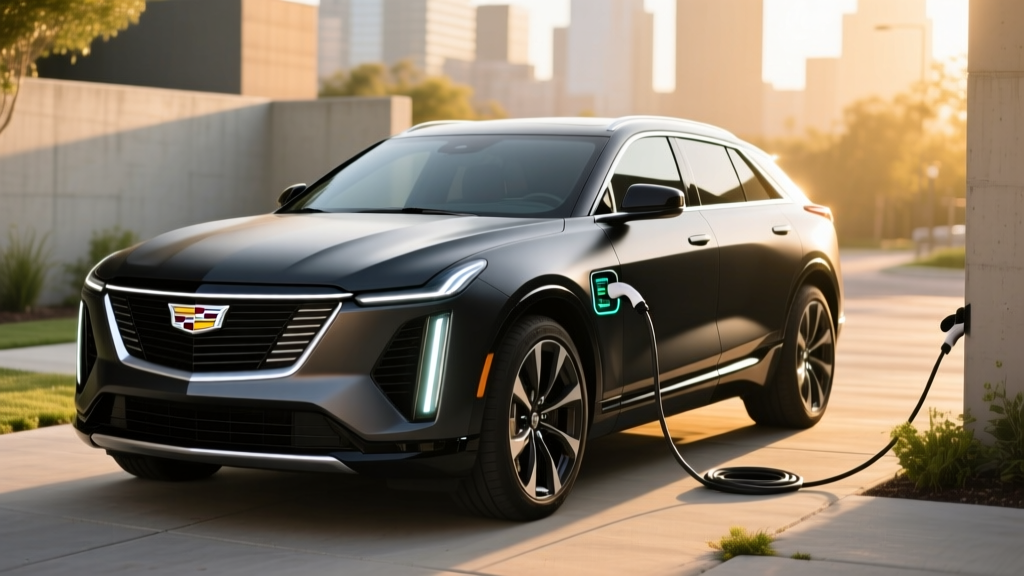
The 2026 Cadillac Lyriq Sport occupies a specific niche in the luxury EV SUV market: it's the performance-oriented variant of Cadillac's first dedicated electric vehicle, built on GM's Ultium platform with dual-motor all-wheel drive and a 500-horsepower output. While the Luxury and Premium Luxury trims emphasize comfort and value, the Sport trim adds aggressive styling, a sport-tuned suspension, and the full-output dual-motor powertrain. This review breaks down exactly what you get — and where the Lyriq Sport falls short — based on real-world driving, charging, and ownership economics.
Quick Verdict: Who the Lyriq Sport Is For
The 2026 Cadillac Lyriq Sport is best suited for luxury SUV buyers who want a premium badge, strong straight-line performance, and a refined ride — but don't need class-leading charging speeds or cutting-edge autonomous driving features. If you're cross-shopping the BMW iX xDrive50, Audi Q8 e-tron, or Genesis Electrified GV70, the Lyriq Sport undercuts them on price while delivering comparable range. Its weakness is DC fast-charging speed relative to 800-volt competitors like the Hyundai Ioniq 5 or Porsche Macan Electric.
Range, Efficiency, and the Real-World Reality
The 2026 Lyriq Sport carries a 102 kWh usable Ultium battery pack (NMC lithium-ion chemistry) and returns an EPA-estimated 314 miles of range with its standard 20-inch wheels. Opt for the available 22-inch wheels and that figure drops to approximately 295 miles due to increased rolling resistance and weight.
- EPA Sticker: 314 miles (20" wheels, AWD Sport)
- Highway (70-80 mph sustained): Expect ~255–275 miles. The Lyriq Sport's boxy SUV profile and dual-motor drag hurt efficiency at speed.
- City / Mixed Driving: ~290–310 miles — regenerative braking recovers energy effectively in stop-and-go traffic.
- Cold Weather (below 32°F): Budget for 20–30% range loss. A heat pump is standard, which mitigates cabin-heating energy draw, but battery chemistry still suffers in freezing temps. Expect ~220–250 miles in sub-freezing highway driving.
Efficiency lands at approximately 89 MPGe combined (about 38 kWh per 100 miles) per fueleconomy.gov. That's competitive with the Audi Q8 e-tron but trails the more aerodynamic BMW iX. On a practical level, at the national average electricity rate of ~$0.17/kWh, a full home charge costs roughly $17.35 — translating to about $0.055 per mile, versus $0.14–$0.17 per mile in a comparable gas-powered Cadillac XT5.
Charging: Home and DC Fast-Charging Specs
Charging speed is where the Lyriq Sport faces the most scrutiny. GM's Ultium platform uses a 400-volt architecture, which limits peak DC fast-charging rates compared to 800V competitors.
| Charging Level | Power / Rate | Speed |
|---|---|---|
| Level 1 (120V household) | ~1.4 kW | ~4 miles per hour |
| Level 2 (240V home / public) | 19.2 kW (max onboard charger) | ~52 miles per hour; 0–100% in ~6 hours |
| DC Fast Charge (CCS) | 190 kW peak | 10–80% in ~33 minutes; tapers significantly above 80% |
The 19.2 kW onboard AC charger is a genuine advantage — it's one of the fastest in the luxury EV SUV segment and means a depleted battery fully replenishes overnight on a properly wired Level 2 home charger (requires a 100-amp circuit for maximum speed; a 60-amp circuit delivers ~11.5 kW / ~32 mi/hr).
On DC fast charging, the 190 kW peak is respectable but not class-leading. On a 350 kW Electrify America or EVgo station, you'll see peak rates briefly between 15–40% state of charge, then a steady taper. Plan for ~33 minutes for a 10–80% session, and understand that 80–100% can add another 25+ minutes. For road trips, this means 200-mile legs with 30-minute stops — workable, but the Hyundai Ioniq 5 (800V, 10–80% in ~18 minutes) or Porsche Macan Electric (270 kW peak) set a higher bar.
The Lyriq Sport ships with a CCS1 connector. GM has committed to transitioning to NACS (Tesla's connector) for future models, and 2026 Lyriqs include a NACS adapter for Supercharger access, expanding the public charging network significantly.
Performance and Drivetrain
| Spec | 2026 Lyriq Sport |
|---|---|
| Drivetrain | Dual-motor AWD |
| Horsepower | 500 hp |
| Torque | 450 lb-ft |
| 0–60 mph | 4.6 seconds |
| Top Speed | 118 mph (electronically limited) |
| Towing Capacity | 3,500 lbs (with trailering package) |
| Battery (Usable) | 102 kWh, NMC |
| EPA Range | 314 miles (20" wheels) |
| Efficiency | 89 MPGe / 38 kWh/100mi |
The 500-hp dual-motor setup delivers confident highway merging and passing. The 4.6-second 0–60 time puts it in the same ballpark as the BMW iX xDrive50 (4.4 seconds) and well ahead of the single-motor Lyriq Luxury (7.5 seconds). The sport-tuned adaptive suspension firms up noticeably in Sport mode, reducing body roll without becoming harsh on broken pavement. Steering is precise but light — this is a grand tourer, not a track car.
One-pedal driving is available and well-calibrated, allowing most commuters to avoid the friction brake pedal entirely in city driving. The regenerative braking paddle behind the left steering-wheel spoke provides additional on-demand deceleration.
Interior, Tech, and Cargo
The Lyriq Sport's cabin is where Cadillac justifies its luxury positioning. The centerpiece is a 33-inch LED curved display that spans from the instrument cluster to the infotainment touchscreen, running Google Built-In (Google Maps, Google Assistant, Play Store apps native to the vehicle). Wireless Apple CarPlay and Android Auto are standard.
Notable tech features include:
- Super Cruise: GM's Level 2 hands-free driver-assistance system, operational on over 750,000 miles of mapped highways in the US and Canada. Requires driver attention monitoring via infrared camera. This is not autonomous driving — you must remain engaged.
- AKG 19-speaker audio system (standard on Sport; upgradeable to 23-speaker)
- Head-up display with augmented-reality navigation overlay
- Remote parking assist and 360-degree camera system
- Over-the-air updates for powertrain calibration, infotainment, and ADAS features
Cargo and passenger space:
- Front headroom: 39.8 inches | Legroom: 42.2 inches
- Rear headroom: 38.7 inches | Legroom: 39.6 inches
- Cargo behind rear seats: 28.0 cu ft
- Cargo with rear seats folded: 60.9 cu ft
- Front trunk (frunk): Not available — the Ultium platform's front subframe houses HVAC and power electronics
The lack of a frunk is a notable omission versus the Ford Mustang Mach-E or Rivian R1S. Cargo volume trails the BMW iX (35.5 cu ft behind rear seats) but matches the Genesis Electrified GV70.
Pricing, Trims, and Federal Tax Credit
| Trim | Base MSRP | Est. As-Tested | §30D Credit Eligible? |
|---|---|---|---|
| Sport (base) | $60,590 | $62,000–$65,000 | Potentially — see rules below |
| Sport w/ Premium Pkg | $65,090 | $68,000–$72,000 | Potentially — see rules below |
The Lyriq Sport starts at $60,590 (including destination). The Luxury trim starts lower at $53,290, but lacks the dual-motor AWD powertrain and sport suspension. Fully optioned, a Lyriq Sport can reach the low $70,000s.
- MSRP Cap: SUVs must have an MSRP at or below $80,000. The Lyriq Sport qualifies.
- Buyer Income Cap: Modified AGI must not exceed $150,000 (single) / $300,000 (joint). Exceed this and you're ineligible.
- Battery Sourcing: A percentage of critical minerals and battery components must be sourced from the US or free-trade-agreement countries. These thresholds increase annually. GM has worked to localize Ultium battery production (cells built in Ohio and Tennessee), but specific credit amounts ($3,750 or $7,500) depend on current-year sourcing compliance. Verify at irs.gov before purchasing.
- Point-of-Sale Transfer: Eligible buyers can transfer the credit to the dealer at purchase, reducing the upfront price rather than waiting for a tax refund.
Consult a tax professional for your specific situation. State and local incentives (utility rebates, HOV-lane access, reduced registration fees) vary by jurisdiction — check your state's energy office or AFDC for local programs.
Warranty and Ownership Costs
GM backs the Lyriq Sport with:
- Battery & Powertrain: 8 years / 100,000 miles (whichever comes first), covering capacity retention below 70% of original
- Bumper-to-Bumper: 4 years / 50,000 miles
- Corrosion: 6 years / 100,000 miles
- Roadside Assistance: 6 years / 70,000 miles
The 70% battery-capacity retention threshold is standard for the industry. Real-world Ultium degradation data is still limited given the Lyriq's 2023 launch, but GM's thermal-management system (active liquid cooling/heating) is designed to minimize calendar and cycle degradation. Early owner reports suggest 3–5% loss over the first 30,000 miles, consistent with NMC packs from other manufacturers.
Insurance premiums run 15–25% higher than a comparable gas-powered Cadillac XT5, reflecting EV repair costs and higher MSRP. Expect $2,200–$3,000 annually depending on your profile (source: industry averages via NHTSA and insurer data). Maintenance costs are significantly lower — no oil changes, no transmission fluid, and regenerative braking extends pad life to 80,000+ miles in typical driving.
Lyriq Sport vs. Key Competitors
| Spec | 2026 Lyriq Sport | 2026 BMW iX xDrive50 | 2026 Audi Q8 e-tron |
|---|---|---|---|
| Base MSRP | $60,590 | $87,250 | $74,400 |
| EPA Range | 314 mi | 324 mi | 288 mi |
| Battery | 102 kWh (NMC) | 111.5 kWh (NMC) | 114 kWh (NMC) |
| HP / 0–60 | 500 hp / 4.6s | 516 hp / 4.4s | 402 hp / 5.5s |
| Peak DC Charge | 190 kW | 200 kW | 170 kW |
| 10–80% Time | ~33 min | ~31 min | ~34 min |
| Level 2 Charger | 19.2 kW | 11 kW | 19.2 kW |
| Cargo (rear up) | 28.0 cu ft | 35.5 cu ft | 28.5 cu ft |
- You want luxury-badge performance under $65,000
- You charge primarily at home (the 19.2 kW onboard charger is excellent)
- Super Cruise hands-free highway driving matters to you
- You prefer American-built vehicles (Spring Hill, Tennessee assembly)
- Cargo space is a priority (BMW iX offers 27% more)
- You road-trip frequently and want the fastest possible DC charging (Porsche Macan Electric, Hyundai Ioniq 5)
- You need a third row (consider the Kia EV9 or Rivian R1S)
Pros and Cons
- Strong value vs. German luxury EV SUVs ($20K–$27K less than iX/Q8)
- 19.2 kW Level 2 onboard charger — fastest in class for home charging
- 500 hp dual-motor AWD is genuinely quick (4.6s 0–60)
- Super Cruise is one of the best Level 2 highway systems available
- 314-mile EPA range is competitive
- Quiet, well-isolated cabin with premium materials
- NACS adapter included for Tesla Supercharger access
- 190 kW DC fast charging is mid-pack; 800V competitors charge faster
- No front trunk (frunk) — lost storage opportunity
- Cargo volume (28 cu ft) trails the BMW iX and some rivals
- Infotainment learning curve with the 33-inch curved display
- Sport trim pricing pushes past $65K with options
- Rear-seat legroom is adequate but not generous for the class
- Regenerative braking could be stronger for true one-pedal driving
Frequently Asked Questions
What is the real-world range of the 2026 Cadillac Lyriq Sport?
The EPA rates the Lyriq Sport at 314 miles with 20-inch wheels. In real-world highway driving at 70–80 mph, expect 255–275 miles. In cold weather (below freezing), budget for 220–250 miles on the highway. City driving with regenerative braking gets closest to the EPA number, around 290–310 miles.
How fast does the Lyriq Sport charge at home and on the road?
At home on a 240V Level 2 charger, the Lyriq Sport accepts up to 19.2 kW, adding about 52 miles of range per hour and fully charging in roughly 6 hours. On a DC fast charger, it peaks at 190 kW and charges from 10–80% in approximately 33 minutes. The charge curve tapers significantly above 80%, so avoid charging past 80% on road trips unless necessary.
Does the 2026 Lyriq Sport qualify for the $7,500 federal EV tax credit?
Potentially. The Lyriq Sport's MSRP is under the $80,000 SUV cap, and GM assembles Ultium batteries in the US. However, eligibility depends on your income (under $150K single / $300K joint), the current-year critical-mineral and battery-component sourcing thresholds, and your tax liability. The credit can be transferred to the dealer at point of sale. Verify current eligibility at irs.gov and consult a tax professional.
Is the Lyriq Sport worth buying over the BMW iX or Audi Q8 e-tron?
If value is a priority, yes — the Lyriq Sport delivers comparable range, more horsepower than the Q8 e-tron, and a class-leading home charging rate for $15,000–$27,000 less. If cargo space, rear-seat room, or the fastest DC charging matter most, the BMW iX is the stronger (but far more expensive) choice.
What is Super Cruise and is it self-driving?
Super Cruise is GM's SAE Level 2 hands-free driver-assistance system. It controls steering, acceleration, and braking on over 750,000 miles of mapped divided highways. An infrared camera monitors driver attention and will disengage the system if you look away. It is not self-driving (Level 4) — you must remain aware and ready to take over at any time.
Does the Lyriq Sport have a frunk?
No. The front compartment houses power electronics and HVAC components. All storage is in the rear cargo area (28.0 cu ft behind the second row, 60.9 cu ft with seats folded).
How long will the Ultium battery last?
GM warranties the battery for 8 years / 100,000 miles against capacity loss below 70%. NMC chemistry with active liquid thermal management typically sees 3–5% degradation in the first 30,000 miles, then a slower linear decline. Most owners can expect 85–90% capacity retention at 100,000 miles based on industry-wide NMC data.
Can I tow with the Lyriq Sport?
Yes, with the available trailering package, the Lyriq Sport is rated for 3,500 pounds. Towing will reduce range by approximately 30–50% depending on trailer weight and aerodynamics.