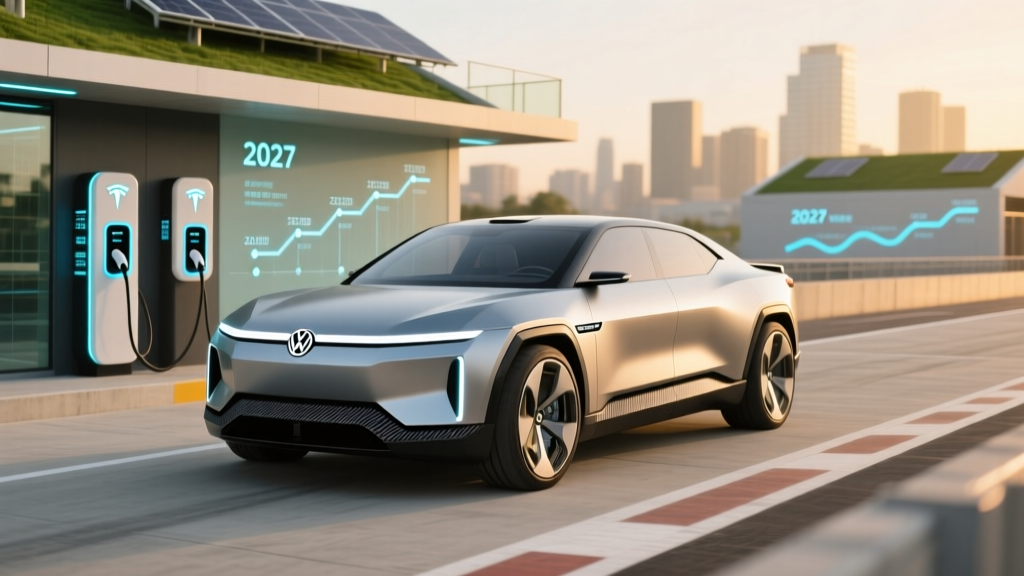
The $5.8 billion investment from Volkswagen Group into Rivian isn't a traditional joint venture that produces a co-branded vehicle. Instead, it's a technology-licensing and software-sharing partnership that will reshape both companies' EV lineups through the rest of the decade. For buyers eyeing Rivian's upcoming R2 midsize SUV or VW's next-generation electric models, the implications are substantial: shared electrical architecture, joint software development, and a combined manufacturing footprint that could finally give Rivian the scale it needs to compete on price.
This article examines what the Rivian-VW partnership actually delivers, the confirmed and projected specs for the vehicles it will produce, and whether the first fruits of this collaboration are worth waiting for versus buying what's available today.
What the Rivian-VW Partnership Actually Is
Announced in June 2024 and expanded through subsequent tranches, the deal centers on two pillars:
- Electrical architecture sharing: Rivian's zonal vehicle architecture — which reduces wiring harness weight and complexity by consolidating electronic control units — will underpin future VW Group EVs globally, including models sold under the Volkswagen, Audi, Porsche, and potentially Scout brands.
- Software joint venture: A jointly owned technology company develops the core vehicle software stack, including over-the-air update infrastructure, infotainment, and ADAS middleware. Both companies contribute engineering talent and IP.
Critically, this is not a badge-engineering arrangement. Rivian vehicles will remain Rivian-designed and built at Rivian plants. VW vehicles will remain VW. But underneath, they'll share the nervous system that makes modern EVs smart, updatable, and efficient to manufacture.
The R2: First Vehicle Built on the Partnership's Scale Economics
The Rivian R2 is the first vehicle that benefits from the partnership's cost-reduction engineering, even though its core architecture was developed before VW's investment. The R2 is a midsize, two-row electric SUV positioned below the R1S in both size and price, targeting the high-volume segment occupied by the Tesla Model Y and the upcoming Volkswagen ID. Tiguan electric variant.
Rivian confirmed R2 production will begin in the first half of 2026 at its Normal, Illinois facility, with the Georgia plant coming online later. Here's what we know from Rivian's published specifications and pre-production disclosures:
| Attribute | Standard Range | Large Battery | Max Pack (if offered) |
|---|---|---|---|
| Battery Chemistry | LFP (prismatic) | NMC (cylindrical 46mm) | NMC |
| Usable Capacity | ~75 kWh | ~100 kWh | ~120 kWh (est.) |
| EPA Est. Range | ~270 mi | ~340 mi | ~380+ mi (est.) |
| Drivetrain | Dual-Motor AWD | Dual-Motor / Tri-Motor AWD | Tri-Motor AWD |
| Horsepower | ~500 hp | ~600 hp | ~800+ hp |
| 0-60 mph | ~4.5 sec | ~3.5 sec | ~2.8 sec (est.) |
| Base MSRP | ~$45,000 | ~$52,000 | TBD |
Note: Specs above are based on Rivian's pre-production disclosures and analyst briefings as of early 2026. Final EPA certification figures may differ. The R2 is expected to begin deliveries in mid-2026.
Real-World Range: What the EPA Sticker Won't Tell You
Rivian's R1S and R1T have historically delivered real-world range within 5-10% of their EPA estimates in mixed driving, which is better than many competitors. The R2's more aerodynamic profile (estimated drag coefficient around 0.29 vs the R1S's 0.36) should improve highway efficiency, but the physics of cold-weather battery chemistry remain unchanged.
The LFP Standard Range pack will exhibit less cold-weather degradation than the NMC Large Battery — typically 15-20% loss vs 25-30% — because LFP chemistry tolerates low-temperature discharge better. However, LFP's lower energy density means the Standard Range R2 carries fewer total kWh to begin with.
Charging Speed: DC Fast Charge and Home Level 2
Rivian has confirmed the R2 will support NACS (North American Charging Standard) natively, giving it direct access to Tesla's Supercharger network without an adapter — a significant advantage over CCS-equipped competitors still relying on adapter solutions.
| Charging Level | Max Power | Speed / Time | Notes |
|---|---|---|---|
| Level 1 (120V) | ~1.4 kW | ~3-4 mi/hr | Emergency/trickle only |
| Level 2 (240V, 48A) | ~11.5 kW | ~27 mi/hr; full charge ~9-11 hrs | Home Wall Connector or equivalent |
| DC Fast Charge | ~220 kW peak | 10-80% in ~22 min (est.) | NACS native; tapers above 80% |
The projected 220 kW peak DC charge rate places the R2 in line with the Hyundai Ioniq 5 and below the Lucid Air's 300+ kW capability but ahead of the current Ford Mustang Mach-E. The critical metric isn't peak kW — it's the sustained charge curve. Rivian's R1 vehicles have demonstrated relatively flat charge curves from 20-60% SoC before tapering, and the R2's new 46mm cylindrical cells (in NMC trims) are expected to sustain higher charge rates longer due to improved thermal management in the pack design.
At home on a 48-amp Level 2 circuit (requiring a 60-amp breaker), the R2 should recover roughly 27 miles of range per hour of charging. An overnight session from 20% to 100% takes approximately 9-11 hours depending on pack size — well within the window of a typical overnight parking window.
Efficiency, Performance, and Practicality
Target efficiency for the R2 Large Battery AWD is approximately 95-100 MPGe combined (roughly 33-35 kWh per 100 miles). This would place it slightly behind the Tesla Model Y Long Range AWD (116 MPGe combined per fueleconomy.gov) but competitive with the Ford Mustang Mach-E Extended Range AWD and significantly ahead of the R1S, which achieves around 70-77 MPGe due to its truck-based weight and aerodynamics.
Performance figures from Rivian's dual-motor and tri-motor configurations are expected to be strong. The dual-motor R2 should hit 0-60 mph in approximately 4.5 seconds with 500 horsepower, while a potential tri-motor variant could dip below 3 seconds — territory currently occupied by the Tesla Model Y Performance and the Porsche Macan Electric.
Cargo and Passenger Space
The R2 is positioned as a midsize two-row SUV, roughly the dimensions of the Porsche Macan or Tesla Model Y. Projected interior dimensions based on Rivian's design disclosures:
- Rear legroom: ~38 inches (vs Model Y's ~41 inches — a potential drawback for taller passengers)
- Cargo behind rear seats: ~28-30 cubic feet (comparable to Model Y's 30 cu ft)
- Cargo with rear seats folded: ~65-70 cubic feet
- Front trunk (frunk): ~10-12 cubic feet — Rivian has confirmed the R2 will retain a front trunk, a feature the Model Y lacks
Rivian's signature gear tunnel (available on R1T/R1S) is not expected on the R2 due to its shorter wheelbase, but the company has teased modular interior storage solutions including a configurable center console and rear-seat pass-through for long items like skis.
Pricing, Trims, and Federal Tax Credit Eligibility
Rivian has stated the R2 will start at approximately $45,000 for the Standard Range dual-motor AWD, with the Large Battery variant starting near $52,000. Fully optioned tri-motor configurations could reach $65,000-$70,000.
| Trim | Base MSRP | §30D Credit Eligibility | Effective Price (if eligible) |
|---|---|---|---|
| Standard Range AWD | ~$45,000 | Likely eligible (under $80K cap) | ~$37,500 (with $7,500 credit) |
| Large Battery AWD | ~$52,000 | Likely eligible | ~$44,500 |
| Tri-Motor Performance | ~$65,000+ | Likely eligible (under $80K SUV cap) | ~$57,500+ |
- MSRP cap: SUVs must be under $80,000 — all R2 trims should qualify.
- Income cap: Modified AGI must not exceed $150,000 (single), $225,000 (head of household), or $300,000 (joint). Check IRS guidelines for current-year thresholds.
- Battery sourcing: The $7,500 credit is split into two $3,750 halves — one for critical minerals sourcing and one for battery component manufacturing. LFP cells sourced from Chinese supply chains may fail the component test, potentially reducing the credit to $3,750 or $0 depending on final sourcing rules. Rivian has indicated it is actively reshoring battery supply to maximize credit eligibility.
- Point-of-sale transfer: As of 2024, the credit can be transferred to the dealer at purchase, reducing your out-of-pocket cost immediately rather than waiting for tax filing. Confirm with your Rivian delivery advisor.
Warranty and Long-Term Ownership
Rivian's current warranty structure for the R1 series provides a strong baseline for what R2 buyers should expect:
- Battery warranty: 8 years / 175,000 miles (whichever comes first), covering defects and capacity loss below 70% of original capacity
- Powertrain warranty: 8 years / 175,000 miles covering motors, inverter, and reduction gearbox
- Bumper-to-bumper: 5 years / 60,000 miles
- Roadside assistance: 5 years / unlimited miles
The 175,000-mile battery warranty is among the most generous in the industry, exceeding Tesla's 120,000-mile threshold (Model Y) and matching or exceeding Hyundai's 100,000-mile coverage. For buyers concerned about long-term battery degradation, Rivian's R1 fleet data shows approximately 5-7% degradation over the first 50,000 miles, with the curve flattening significantly thereafter — consistent with industry-wide NMC and LFP degradation patterns.
Standout Tech and Notable Drawbacks
What Sets the R2 Apart
- Native NACS: Direct Supercharger access without an adapter, a growing advantage as VW's Electrify America network still faces reliability challenges at many stations.
- Zonal architecture: Fewer wiring harnesses, fewer ECUs, faster OTA updates, and lower manufacturing cost — the same tech VW is licensing for its own future EVs.
- Rivian's software stack: Widely regarded as one of the best in the industry for responsiveness, navigation integration, and trip planning with real-time charger availability.
- Adventure-ready features: Expected to include Rivian's Gear Guard (security camera system), built-in air compressor, and Camp Mode with climate control for overnight use.
- Driver assistance: Rivian Driver+ (SAE Level 2) with highway hands-on assistance, automatic lane changes, and enhanced cruise — competitive with Tesla Autopilot and Ford BlueCruise but not a "self-driving" system.
Drawbacks to Consider
- Production ramp risk: Rivian's Normal, Illinois plant has historically struggled with production volume. The R2 represents a massive scale-up, and early delivery timelines may slip.
- Service center density: Rivian has fewer than 50 service locations nationwide as of early 2026. If you live outside a major metro area, warranty service may require a loaner vehicle and multi-day turnaround.
- No third row: Families needing six or seven seats will need to look at the R1S or competitors like the Kia EV9.
- LFP range trade-off: The Standard Range LFP pack offers excellent cycle life and lower degradation but sacrifices approximately 70 miles of range vs the Large Battery.
- Towing unconfirmed: Rivian has not published R2 towing capacity. The R1S tows 7,700 lbs; expect the R2 to tow 3,500-5,000 lbs, but this is unverified.
Who the R2 Is For — and Who Should Look Elsewhere
Choose the R2 if:
- You want a midsize electric SUV with genuine off-road capability and adventure features (air compressor, Gear Guard, Camp Mode)
- Native NACS/Supercharger access is a priority for road-trip charging reliability
- You value OTA software updates and a modern, responsive infotainment system
- You can wait for mid-to-late 2026 deliveries and absorb potential production delays
- Your household income qualifies for the §30D credit, bringing the effective price near $37,500-$44,500
Look elsewhere if:
- You need a vehicle immediately — the Tesla Model Y, Hyundai Ioniq 5, and Ford Mustang Mach-E are available now with confirmed specs
- You need three rows of seating (Kia EV9, Rivian R1S)
- You live far from a Rivian service center and cannot tolerate multi-day loaner scenarios
- You prioritize maximum range above all else (Lucid Air, Tesla Model S, or the R1S Max Pack may serve better)
How the VW Side of the Partnership Benefits Buyers
While the R2 is a Rivian product, VW's involvement has tangible downstream effects for both Rivian and VW buyers:
- Rivian financial stability: VW's $5.8B investment (spread across multiple tranches through 2027) gives Rivian the cash runway to scale R2 production without dilutive equity raises or aggressive debt. This reduces the risk of the company cutting corners on quality or service infrastructure.
- Shared software costs: The joint software venture means Rivian's engineering team isn't solely responsible for maintaining and updating the vehicle OS. VW's contribution of hundreds of software engineers accelerates feature development and bug resolution.
- VW's future EVs get better: VW's next-generation ID models built on Rivian's zonal architecture should feature faster OTA updates, better energy management, and more reliable infotainment — addressing the most common complaints about current ID.3 and ID.4 vehicles.
For VW shoppers, this means the 2027-2028 ID lineup should be substantially more competitive with Tesla and Rivian on the software front, even if the exterior design and driving dynamics remain distinctly VW.
Competitive Positioning: R2 vs Key Rivals
| Vehicle | EPA Range | DC Fast Charge | Base MSRP | Connector |
|---|---|---|---|---|
| Rivian R2 Large Battery | ~340 mi | ~220 kW | ~$52,000 | NACS |
| Tesla Model Y LR AWD | 311 mi | 250 kW | ~$48,990 | NACS |
| Ford Mustang Mach-E ER AWD | 290 mi | 150 kW | ~$50,995 | CCS (NACS adapter) |
| Hyundai Ioniq 5 Long Range AWD | 290 mi | 240 kW | ~$52,600 | NACS (2025+) |
| VW ID.4 Pro S AWD | 275 mi | 175 kW | ~$49,545 | CCS (NACS 2026+) |
The R2's projected 340-mile range and 220 kW charging, combined with Rivian's adventure-oriented feature set and native Supercharger access, position it as a strong value proposition at $52,000 before incentives. Its primary risk isn't the product — it's whether Rivian can build enough of them, fast enough, to meet demand without the multi-year reservation queues that plagued the R1 launch.
Frequently Asked Questions
When can I actually buy a Rivian R2?
Rivian plans to begin R2 production in the first half of 2026 at its Normal, Illinois facility. Reservations are open now with a refundable deposit. Delivery timing will depend on trim and configuration — early reservation holders are likely to receive vehicles by late 2026, while later orders may push into 2027.
Will the Rivian-VW partnership affect my R1S or R1T?
Not directly. The R1S and R1T continue on Rivian's existing platform. However, the software joint venture may accelerate feature updates and OTA improvements for existing Rivian vehicles as the shared software stack matures.
Does the R2 qualify for the $7,500 federal tax credit?
Based on projected MSRP (under the $80,000 SUV cap), the R2 should qualify for at least partial credit. However, the full $7,500 depends on battery-sourcing requirements that are evolving under current IRS rules. The LFP Standard Range variant may face challenges with the critical-minerals or component-manufacturing tests depending on cell sourcing. Confirm eligibility with Rivian and a tax professional before purchase.
Is the R2 better than the Tesla Model Y?
On paper, the R2 offers more range (~340 vs 311 miles), a front trunk, adventure features, and a more premium interior. The Model Y has the advantage of proven production scale, a mature Supercharger network, and immediate availability. If you can wait for the R2 and value off-road capability and Rivian's software, it's a compelling alternative. If you need a car now, the Model Y remains the default.
What happens if Rivian goes out of business?
VW's $5.8 billion investment significantly reduces this risk. The partnership gives Rivian the financial runway and manufacturing scale that was its primary vulnerability. While no company is immune to failure, the VW backing makes Rivian one of the more financially stable EV startups heading into 2026-2027.
Will VW sell a version of the R2?
No. The partnership shares underlying technology (electrical architecture, software), not vehicle designs. VW's future electric SUVs will use Rivian's zonal architecture but will be designed, engineered, and branded entirely as Volkswagens. Think of it as sharing a motherboard, not a body.