Quick Verdict: The 2026 Tesla Model Y Still Sets the Bar
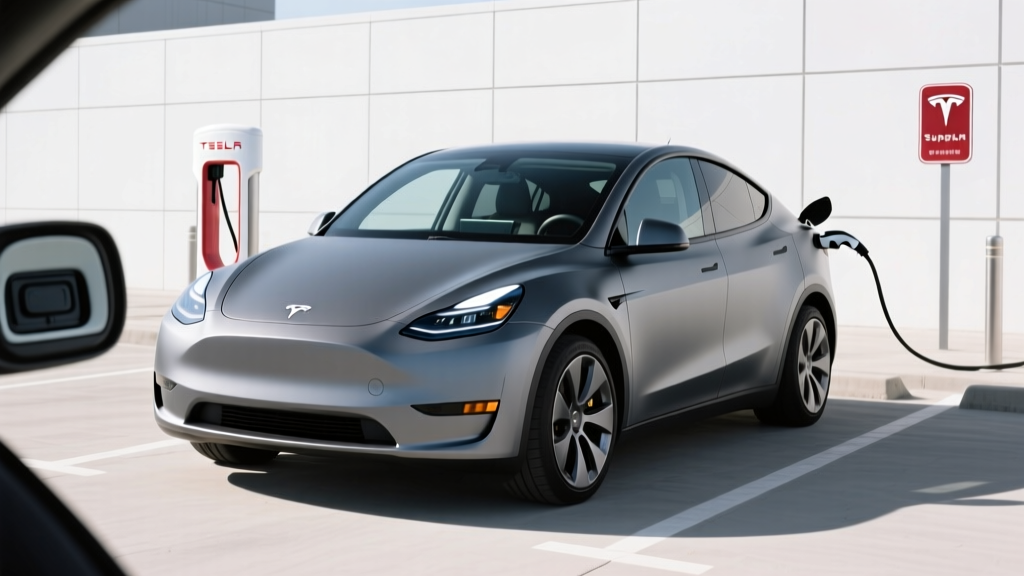
The 2026 Tesla Model Y remains the benchmark compact electric SUV — not because it's perfect, but because no competitor matches its combination of 320 miles of EPA range, 250 kW DC fast charging, Supercharger network access, and sub-$45,000 pricing after federal incentives. The Juniper refresh brought a quieter cabin, ventilated seats, ambient lighting, and a rear touchscreen, addressing the most common complaints from pre-2025 owners. For buyers researching not just the car but the ownership ecosystem — including how quickly a Tesla service distribution center can source parts when something goes wrong — the Model Y's maturity is its biggest advantage.
| Spec | Long Range RWD | Long Range AWD | Performance |
|---|---|---|---|
| EPA Range | 320 mi | 300 mi | 277 mi |
| Battery (usable) | 75 kWh (est.) NMC | 75 kWh (est.) NMC | 75 kWh (est.) NMC |
| DC Fast Charge Peak | 250 kW | 250 kW | 250 kW |
| 10–80% DC Time | ~25 min | ~25 min | ~25 min |
| Level 2 (11.5 kW) | ~44 mi/hr | ~44 mi/hr | ~44 mi/hr |
| 0–60 mph | 5.8 sec | 4.8 sec | 3.5 sec |
| Horsepower | 346 hp | 510 hp | 510 hp |
| Drivetrain | RWD | Dual-Motor AWD | Dual-Motor AWD |
| MPGe (combined) | 122 MPGe | 115 MPGe | 111 MPGe |
| Efficiency | 27 kWh/100mi | 29 kWh/100mi | 30 kWh/100mi |
| Base MSRP | $44,990 | $47,990 | $52,990 |
Range and Efficiency: EPA vs. Real-World Driving
The Long Range RWD Model Y carries an EPA-estimated 320 miles, placing it among the most efficient compact electric SUVs sold in the US. Tesla's energy management — including heat pump standardization and refined regenerative braking — delivers strong real-world numbers, but physics still applies.
- City/commute (65°F): 305–320 mi — regen-heavy driving maximizes efficiency
- Highway (70–75 mph, 65°F): 265–285 mi — aerodynamic drag cuts range ~12–15%
- Cold weather (20°F, mixed driving): 225–260 mi — expect 20–30% loss without preconditioning; less with garage parking and scheduled departure
- Towing (1,500 lb trailer): ~190–220 mi — significant range reduction; plan charging stops accordingly
Efficiency ratings from fueleconomy.gov show 122 MPGe combined for the RWD variant, translating to roughly 27 kWh per 100 miles. That's best-in-class for this segment, edging out the Hyundai Ioniq 5 (114 MPGe combined) and Ford Mustang Mach-E (111 MPGe combined for extended-range RWD).
Charging Speed: Supercharger Network Advantage
The 2026 Model Y supports peak DC fast charging at 250 kW on V3 and V4 Tesla Superchargers. The 10–80% session takes approximately 25 minutes under ideal battery-temperature conditions. Preconditioning — triggered automatically when you navigate to a Supercharger — warms the NMC pack to optimal temperature, which is critical for sustaining peak charge rates.
| Charging Level | Power / Rate | Miles Added per Hour | Notes |
|---|---|---|---|
| Level 1 (120V, 12A) | ~1.4 kW | ~5 mi/hr | Emergency/trickle only |
| Level 2 (240V, 48A) | 11.5 kW | ~44 mi/hr | Full overnight charge in ~7 hr |
| DC Fast (Supercharger V3/V4) | Peak 250 kW | ~162 mi in 15 min | Tapers above 60% SoC |
| DC Fast (CCS adapter, non-Tesla) | Peak ~150–200 kW | Varies by station | Requires Tesla CCS adapter (included) |
A critical nuance: the 250 kW peak rate is not sustained across the full 10–80% session. The charge curve peaks early (roughly 10–30% SoC) and tapers progressively. Expect an average rate closer to 150–170 kW across the full session. This is normal for NMC chemistry and thermal management — not a deficiency — but buyers comparing peak kW numbers across brands should understand the difference between peak and sustained rates.
Home Level 2 charging at 11.5 kW (48 amps on a 60-amp circuit) adds roughly 44 miles of range per hour. Most owners charging overnight from 20% to 80% will wake to a full daily supply. Installation typically requires a NEMA 14-50 outlet or hardwired Tesla Wall Connector, with costs ranging from $500 to $2,000 depending on panel proximity and local permitting.
Performance and Drivetrain
The 2026 Model Y lineup offers three configurations. The Long Range RWD provides 346 hp and a 5.8-second 0–60 time — more than adequate for merging and passing. The Long Range AWD bumps output to 510 hp with a 4.8-second sprint, while the Performance variant matches the 510 hp output but with a 3.5-second 0–60 thanks to track-tuned suspension, larger brakes, and 21-inch Überturbine wheels.
Handling benefits from the Juniper refresh's revised damping and improved noise isolation. Road noise — a persistent complaint in pre-2025 Model Ys — is noticeably reduced, though the Performance variant's 21-inch wheels reintroduce some of that trade-off. The dual-motor AWD system provides confident traction in rain and light snow without the range penalty of a traditional mechanical AWD system.
Interior, Cargo, and Technology
The Juniper interior represents a meaningful upgrade. Ventilated front seats, ambient lighting, a rear 8-inch touchscreen for passengers, and power-folding second-row seats elevate the experience. The minimalist design remains polarizing — no physical stalks (turn signals are steering-wheel buttons), no instrument cluster, everything routes through the 15.4-inch center display.
Cargo capacity: 30.2 cubic feet behind the second row, expanding to 72.1 cubic feet with seats folded. The front trunk (frunk) adds 4.1 cubic feet — useful for charging cables and small bags. Rear legroom measures 41.6 inches, competitive with the Ioniq 5 and Mach-E.
Driver assistance: Basic Autopilot (Traffic-Aware Cruise Control + Autosteer) is standard. Full Self-Driving (Supervised) remains a $8,000 option or $99/month subscription. FSD is SAE Level 2 — it does not make the car self-driving. The driver must remain engaged, monitor the road, and keep hands available to intervene at all times. This distinction matters: only Level 4 systems like Waymo's robotaxi service operate without driver supervision.
Tesla Autopilot and FSD (Supervised) require continuous driver attention. They assist with steering, acceleration, and braking but do not replace the driver. You are legally and operationally responsible for the vehicle at all times.
Pricing, Tax Credits, and Total Cost
The 2026 Model Y Long Range RWD starts at $44,990 (including destination). The Long Range AWD is $47,990, and the Performance is $52,990. All trims fall under the IRS §30D MSRP cap of $80,000 for SUVs, making them potentially eligible for the full $7,500 federal tax credit — but eligibility depends on multiple factors beyond the vehicle itself.
| Trim | Base MSRP | After $7,500 §30D Credit | Notes |
|---|---|---|---|
| Long Range RWD | $44,990 | $37,490 | Below MSRP cap; verify buyer income + sourcing |
| Long Range AWD | $47,990 | $40,490 | Below MSRP cap; verify buyer income + sourcing |
| Performance | $52,990 | $45,490 | Below MSRP cap; verify buyer income + sourcing |
- Buyer income cap: AGI ≤ $150,000 (single), $225,000 (head of household), $300,000 (married filing jointly)
- Vehicle MSRP cap: ≤ $80,000 for SUVs (all Model Y trims qualify)
- Battery sourcing: Critical minerals and battery components must meet phased-in domestic/free-trade sourcing thresholds — check Tesla's eligibility page at purchase, as sourcing requirements tighten annually
- Point-of-sale transfer: The $7,500 credit can be transferred to the dealer at purchase, reducing the out-of-pocket price immediately (rather than waiting for tax filing)
- Verify current status: Rules change frequently — always confirm at irs.gov before purchasing
Tesla Service Distribution Center: What Owners Should Know
One advantage Tesla holds over newer EV entrants is its parts logistics network. Tesla operates regional service distribution centers across the US that supply mobile service technicians and service centers with high-demand replacement parts — suspension components, 12V lithium auxiliary batteries, drive unit assemblies, glass panels, and interior trim.
For owners, this matters practically: when a Model Y needs a warranty repair, Tesla's mobile service fleet (which handles the majority of non-lift repairs) can often source parts from a regional distribution center within 1–3 business days. This contrasts with some competitors where back-ordered parts can stretch wait times to weeks. That said, Tesla service quality remains inconsistent by region — some owners report excellent mobile service experiences, while others describe frustrating communication gaps at physical service centers. The distribution network solves the parts-availability problem but not always the customer-service variability.
Key service facts for 2026 Model Y owners:
- Warranty: 4 years / 50,000 miles (basic vehicle); 8 years / 120,000 miles (battery and drive unit, with ≥70% capacity retention)
- Mobile service coverage: Available in most metro areas; handles tire rotation, cabin air filter replacement, 12V battery swap, minor body trim, and software-related hardware diagnostics
- Service center visits required for: High-voltage battery replacement, drive unit swap, structural repairs, and major suspension work
Pros, Cons, and Competition
- Best-in-class efficiency (122 MPGe, 27 kWh/100mi)
- Supercharger network reliability (17,000+ US stalls)
- Over-the-air updates continuously add features
- Strong cargo capacity (30.2 cu ft / 72.1 cu ft folded)
- Parts availability via Tesla service distribution centers
- Competitive pricing after $7,500 tax credit
- No physical turn-signal stalks (steering-wheel buttons)
- Service center quality varies significantly by location
- FSD (Supervised) remains Level 2 — not autonomous
- Ride firmness on Performance trim with 21" wheels
- No Apple CarPlay / Android Auto integration
- Cold-weather range loss without preconditioning discipline
Key competitors: The Hyundai Ioniq 5 (310 mi EPA, 800V architecture for 10–80% in ~18 min, ~$43,000 base) offers faster DC charging but lacks Supercharger access without an adapter. The Ford Mustang Mach-E (320 mi EPA extended-range RWD, ~$42,995 base) is a strong value play but trails in efficiency and charging infrastructure. The Kia EV6 (310 mi EPA, 800V, ~$42,900) matches Ioniq 5 charging speed. All three qualify for partial or full §30D credit depending on trim and sourcing.
The Model Y wins on total ecosystem value — vehicle efficiency, Supercharger reliability, and parts logistics through Tesla's service distribution centers. Competitors win on DC charging speed (800V architectures) and interior material quality. Choose based on which trade-off matters more to your ownership pattern.
Who Should Buy the 2026 Tesla Model Y?
- You rely on road-trip charging and want the most reliable DC fast-charging network
- You value efficiency and want to minimize per-mile electricity cost
- You live in an area with strong Tesla mobile service coverage
- You want a proven platform with established parts availability
- You need the fastest possible DC charging (Ioniq 5/EV6 800V advantage)
- You want Apple CarPlay / Android Auto
- You prefer physical controls over touchscreen-only operation
- Your local Tesla service center has poor reviews (check regional forums)
Frequently Asked Questions
What is the real-world range of the 2026 Tesla Model Y?
The Long Range RWD is EPA-rated at 320 miles. Real-world highway driving at 70–75 mph typically yields 265–285 miles. In cold weather (20°F), expect 225–260 miles unless you precondition the battery and cabin while plugged in.
How fast does the Model Y charge at home and on the road?
At home on a Level 2 (240V, 48A) charger, the Model Y adds roughly 44 miles of range per hour, fully charging overnight in about 7 hours from near-empty. On a Tesla Supercharger V3/V4, it peaks at 250 kW and charges from 10–80% in approximately 25 minutes, though the rate tapers above 60% SoC.
Does the 2026 Model Y qualify for the $7,500 federal EV tax credit?
All Model Y trims are below the $80,000 MSRP cap for SUVs and may qualify for the full $7,500 credit under IRS §30D, provided the buyer meets income limits (≤$150K single / $300K joint) and the vehicle's battery meets current-year critical-mineral and component sourcing thresholds. Verify eligibility at irs.gov before purchase, as sourcing rules tighten annually.
Is the Model Y worth buying over the Ioniq 5 or Mach-E?
The Model Y leads in efficiency, Supercharger network access, and parts logistics. The Ioniq 5 and EV6 charge faster on DC (800V architecture). The Mach-E offers a lower base price. If road-trip charging reliability and long-term parts availability matter most, the Model Y remains the strongest all-around choice. If DC charging speed or interior material quality are higher priorities, the Korean platforms are compelling alternatives.
What happens if my Model Y needs a repair?
Tesla's mobile service handles most non-lift repairs (tire rotation, cabin filter, 12V battery, minor trim) at your home or workplace. For major repairs (drive unit, high-voltage battery, structural), you'll visit a service center. Tesla's regional service distribution centers typically supply parts within 1–3 business days, which is faster than many competitors — but service quality varies by location. Check local owner forums for your specific service center's reputation.
How long will the Model Y battery last?
Tesla warranties the battery for 8 years / 120,000 miles with ≥70% capacity retention. Real-world degradation data from Tesla's fleet suggests NMC packs lose roughly 10–12% capacity over 150,000 miles, with the steepest drop in the first 20,000 miles and gradual linear loss afterward. Proper care — avoiding prolonged 100% SoC storage, using daily charge limits of 80–90%, and preconditioning before DC fast charging — helps maximize longevity.