The Short Answer on the Mercedes C-Class Electric Car
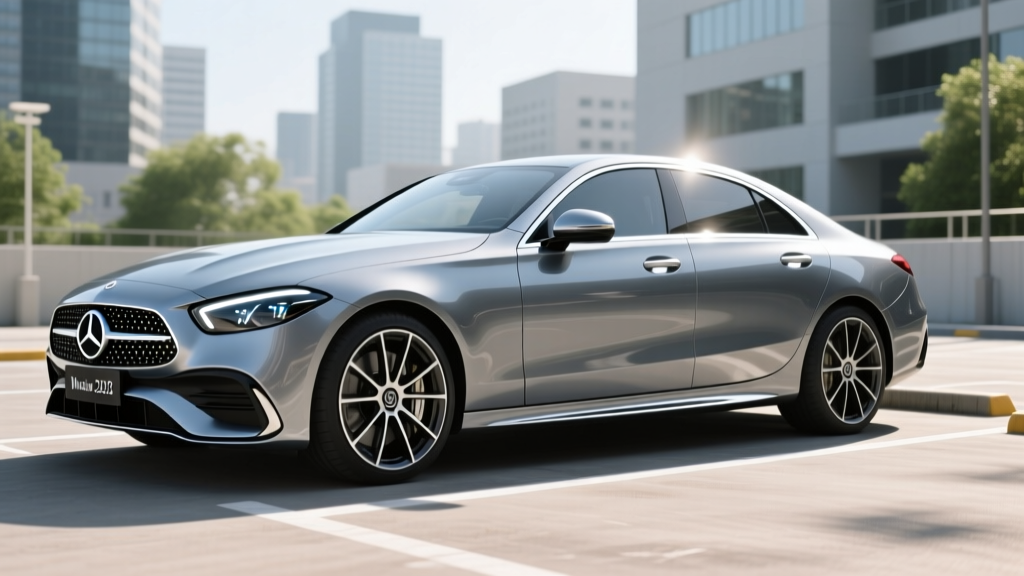
The Mercedes-Benz C-Class EV (built on the MMA platform) is the brand's electric entry-luxury sedan targeting ~430 miles of WLTP range (expect an EPA estimate near 350–380 miles for the US) and an 800V architecture capable of ~300 kW DC fast charging — adding roughly 250 miles in about 15 minutes. US pricing for the 2026 model year is expected to start in the $55,000–$60,000 range before destination and incentives. If you want a premium electric sedan that mirrors the C-Class footprint and driving refinement without paying EQS money, this is Mercedes' answer — but home Level 2 charging access is essential to making the ownership economics work.
What the Mercedes C-Class Electric Car Actually Is
For years, Mercedes buyers wanting to go electric had to jump straight to the EQE or EQS — larger, heavier, and significantly more expensive than a standard C-Class. The C-Class electric car changes that equation. Built on Mercedes' Modular Architecture for Agility (MMA), this is a dedicated EV platform designed from the ground up for compact and midsize electric vehicles, not a converted gas chassis.
The MMA platform brings several critical upgrades over older Mercedes EV architectures:
- 800-volt electrical architecture — enabling faster DC charging and more efficient power delivery
- NMC (nickel manganese cobalt) battery chemistry with an estimated ~85 kWh usable capacity for the long-range variant
- Silicon oxide anode technology in the battery cells, improving energy density and reducing weight
- Standard rear-wheel drive with available 4MATIC all-wheel drive
Mercedes has also confirmed an LFP (lithium iron phosphate) variant for the base model — trading some range for lower cost, longer cycle life, and the ability to regularly charge to 100% without degradation concerns. This dual-chemistry approach mirrors what Tesla and Hyundai have done successfully.
Range, Efficiency, and Real-World Expectations
Mercedes claims a WLTP range exceeding 700 km (roughly 435 miles) for the top-spec MMA sedan. However, WLTP testing is more generous than the EPA cycle used in the United States. Here's how to translate that into realistic expectations:
Range Reality Check
WLTP claim: ~435 miles
Estimated EPA rating: ~350–380 miles (NMC long-range); ~300–320 miles (LFP base)
Real-world highway (70 mph, mild weather): ~300–330 miles
Real-world winter (30°F, highway): ~250–280 miles (expect 15–25% cold-weather reduction)
Efficiency is where the MMA platform shines. Mercedes targets an energy consumption of approximately 12 kWh/100 km (WLTP), which translates to roughly 28–30 kWh/100 miles in EPA terms — competitive with the Tesla Model 3 Long Range and significantly better than the EQE sedan. Lower consumption means you're paying less per mile to charge, whether at home or on DC fast chargers.
Charging Speed: What 800V Actually Gets You
The 800V architecture is the single biggest practical upgrade for daily ownership. Here's what the charging profile looks like across levels:
| Charging Level | Power (kW) | Miles Added Per Hour | Typical Use Case |
|---|---|---|---|
| Level 1 (120V household) | ~1.4 kW | ~4–5 mi/hr | Emergency top-up only |
| Level 2 (240V, 48A home) | ~11.5 kW | ~35–40 mi/hr | Daily overnight charging |
| DC Fast Charge (peak) | ~300 kW | ~250 mi in 15 min | Road trips |
The ~300 kW peak DC charge rate is impressive, but as with all EVs, peak speed is not sustained speed. Expect the C-Class EV to pull maximum power between roughly 10% and 40% state of charge, then taper progressively. A realistic 10–80% charge time is approximately 20–25 minutes at a 350 kW-capable charger (such as Electrify America or newer Tesla Supercharger V4 stalls with the NACS adapter). Above 80%, charging slows dramatically to protect the battery — plan your road-trip stops to charge to 80% and move on rather than waiting for a full battery.
Home charging reality: A full Level 2 home installation (48-amp hardwired charger on a 60-amp circuit) will replenish the battery from 20% to 100% overnight in roughly 7–8 hours. Installation costs typically range from $800 to $2,500 depending on panel capacity and conduit run length. If your home has a 200-amp electrical panel with spare capacity, expect the lower end. Older homes with 100-amp service may require a panel upgrade ($2,000–$4,000 additional).
Pricing, Trims, and Federal Tax Credit Eligibility
Based on Mercedes' positioning and the MMA platform strategy, here's the estimated 2026 US pricing structure:
- C 300e (LFP, RWD, base): ~$55,000 MSRP
- C 350 (NMC, RWD, long-range): ~$60,000 MSRP
- C 350 4MATIC (NMC, AWD): ~$63,000 MSRP
- AMG variant: Expected later, likely $70,000+
§30D Federal Tax Credit — Key Rules (2026)
- Credit amount: Up to $7,500, split into $3,750 for battery components (North American manufacturing) + $3,750 for critical minerals sourcing
- MSRP cap for sedans: $55,000 — this could limit or eliminate the credit for higher trims
- Buyer income cap: $150,000 (single), $225,000 (head of household), $300,000 (joint) modified AGI
- Battery sourcing requirements: Increasingly strict critical mineral and component sourcing thresholds; Mercedes' supply chain compliance varies by model year
- Point-of-sale transfer: Eligible buyers can transfer the credit to the dealer for an immediate price reduction at purchase
Source: IRS §30D Clean Vehicle Credits. Eligibility rules are subject to change — verify with a tax professional before purchase.
The $55,000 sedan MSRP cap is the critical constraint. If the base LFP model comes in at or below $55,000, it may qualify for the full or partial credit. Higher trims almost certainly will not. This makes the base model disproportionately attractive from a value standpoint.
Mercedes C-Class EV vs. Gas C-Class: Cost of Ownership
How does the electric C-Class stack up against the conventional C300 sedan over five years? This comparison assumes 12,000 miles/year, $0.14/kWh home electricity, $3.60/gallon premium fuel, and home Level 2 charging availability.
| Cost Category (5 Years) | C-Class EV (C 350) | C300 Gas Sedan |
|---|---|---|
| Purchase Price (MSRP) | ~$60,000 | ~$47,500 |
| Fuel / Electricity | ~$3,024 | ~$10,800 |
| Maintenance | ~$1,800 | ~$4,500 |
| Insurance (est.) | ~$12,000 | ~$10,200 |
| Federal Tax Credit | $0–$7,500 (trim dependent) | $0 |
| Estimated Depreciation | ~$27,000 | ~$21,000 |
| Total 5-Year Cost | ~$69,824–$77,324 | ~$72,000 |
Key takeaways: The EV's higher purchase price is substantially offset by fuel and maintenance savings (roughly $10,500 saved over five years). Insurance tends to run 10–20% higher on EVs due to repair costs and parts pricing. Depreciation remains the wildcard — luxury EVs have seen steeper depreciation curves than their gas counterparts in recent years, though this may stabilize as the market matures. If the base LFP trim qualifies for a partial or full tax credit, the five-year cost parity tips meaningfully in the EV's favor.
For context, the C-Class EV's estimated 28–30 kWh/100 mi efficiency translates to roughly 112–120 MPGe — compared to the C300's EPA rating of 29 MPG combined. At national average electricity and fuel prices, the per-mile energy cost is approximately $0.042/mile (EV, home charging) versus $0.15/mile (gas C300).
Common Misconceptions — Myth vs. Fact
| Myth | Fact |
|---|---|
| "The battery will need replacing in a few years" | Mercedes provides an 8-year/100,000-mile high-voltage battery warranty with a guaranteed capacity retention threshold (typically 70%). Modern NMC and LFP batteries are engineered for 1,500–3,000+ charge cycles — equating to 300,000+ miles before significant degradation. |
| "Charging takes too long for road trips" | At ~300 kW peak, the C-Class EV adds 250 miles in ~15 minutes. Combined with route-planned preconditioning, this aligns with typical rest-stop durations. |
| "It won't work in cold climates" | Cold weather reduces range by 15–25%, but the MMA platform includes a heat pump for cabin heating efficiency and battery preconditioning to optimize charging speed in low temperatures. |
| "I need a Tesla to use Superchargers" | The North American market C-Class EV is expected to feature the NACS connector natively, providing direct access to the Tesla Supercharger network — the largest and most reliable DC fast-charging network in the US. |
| "EVs have zero maintenance" | EVs eliminate oil changes, spark plugs, and transmission fluid, but still require tire rotation/replacement (EVs are heavier and have instant torque, accelerating tire wear), brake fluid checks, cabin air filters, and wiper fluid. |
Ownership Realities First-Time EV Buyers Must Consider
Before committing to the Mercedes C-Class electric car, honestly assess your situation against these practical factors:
Home Charging Access
This is the single most important variable. If you can install a Level 2 (240V) charger at home — whether in a garage, carport, or driveway — daily EV ownership is effortless. You plug in at night and wake up with a full battery every morning. If you rely solely on public charging, the convenience gap is real and the per-mile cost can double or triple compared to home rates. Renters and condo dwellers should investigate workplace charging, shared-property charger installation programs, and nearby public Level 2 locations before purchasing.
Driving Patterns
If your daily commute is under 60 miles round-trip, even the LFP base model covers a full week of driving on a single charge. For frequent road-trippers (4+ long trips per year), the NMC long-range variant with 300 kW DC fast charging significantly reduces stop durations. If you regularly drive 300+ miles in a single stretch through charging-sparse regions (parts of the Mountain West, rural Midwest), a PHEV or gas vehicle may still be more practical.
Climate
Buyers in northern states should budget for 15–25% winter range loss. A C-Class EV rated at 360 miles EPA may deliver 270–300 miles in sustained 20°F highway driving. Garage parking and preconditioning (warming the battery and cabin while still plugged in) mitigate this significantly.
Should You Buy the Mercedes C-Class Electric Car?
Choose the C-Class EV if:
- You have reliable home Level 2 charging (or can install it)
- You want entry-luxury refinement with EV efficiency and instant torque
- Your daily driving is under 80 miles and road trips are infrequent or along well-served charging corridors
- You value the latest MBUX infotainment and SAE Level 2 driver-assistance features
- The base LFP trim fits your budget and potentially qualifies for the §30D tax credit
Consider a gas C-Class or C300e PHEV instead if:
- You cannot install home charging and public infrastructure near you is limited
- You regularly drive 350+ miles in cold weather through areas with sparse DC chargers
- You want to minimize upfront cost and the $55,000+ EV price premium matters for your budget
- You plan to keep the car 10+ years and are concerned about long-term EV depreciation uncertainty
Frequently Asked Questions
When will the Mercedes C-Class electric car be available in the US?
The MMA-based sedan is expected to arrive at US dealers for the 2026 model year. Exact timing varies by market and trim. Check Mercedes-Benz USA for the latest availability.
Will it use NACS or CCS for charging?
Mercedes has committed to adopting the NACS (Tesla-style) connector for North American vehicles. The C-Class EV should ship with NACS natively, granting direct access to Tesla Superchargers without an adapter.
How does the C-Class EV compare to the Tesla Model 3?
The Model 3 Long Range starts around $42,000, offers ~341 miles EPA, and charges at up to 250 kW. The C-Class EV will cost significantly more but offers Mercedes' interior materials, MBUX system, and luxury ride quality that the Model 3 doesn't match. It's a segment-above comparison — closer to a BMW i4 or Audi A4 e-tron.
What is the battery warranty?
Mercedes provides an 8-year/100,000-mile high-voltage battery warranty guaranteeing minimum capacity retention (typically 70% of original capacity). This is industry-standard and consistent with EPA and fueleconomy.gov reporting norms.
Is the driver-assistance system self-driving?
No. Mercedes' Drive Pilot and Distronic systems are SAE Level 2 driver-assistance — meaning the driver must remain engaged and responsible for the vehicle at all times. While Mercedes has received limited Level 3 approval for Drive Pilot in specific conditions (low-speed highway traffic in certain jurisdictions), this is not general self-driving capability.
Can I charge to 100% every day?
For the LFP battery variant: yes, LFP chemistry tolerates regular 100% charges without accelerated degradation. For the NMC long-range variant: Mercedes recommends daily charging to 80–90% and reserving 100% for road trips to maximize long-term battery health.