The 2026 Rivian R1S and R1T: A Platform Defined by Code
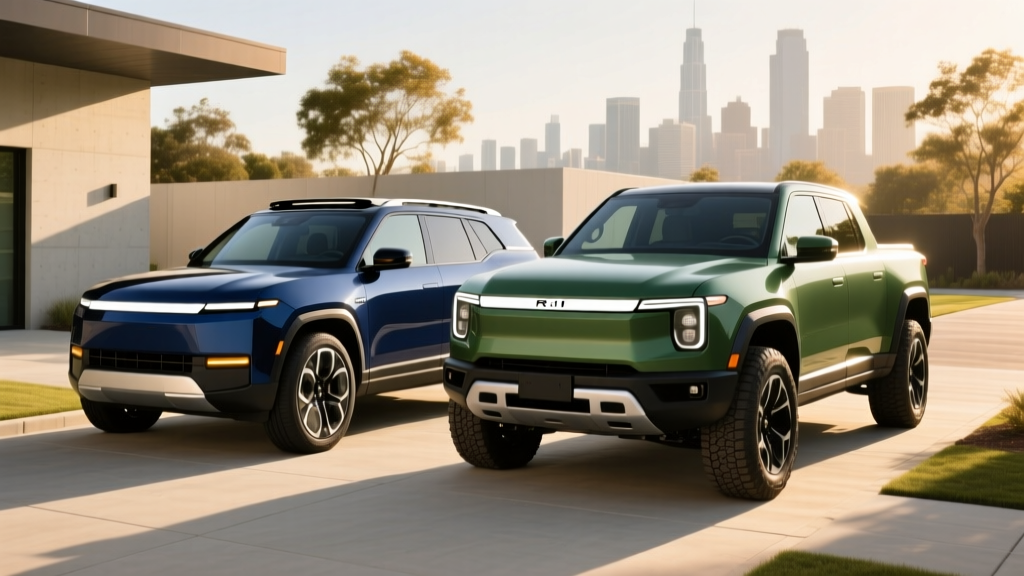
The 2026 Rivian R1S (SUV) and R1T (truck) represent the maturation of America's first serious electric adventure-vehicle startup. While the hardware—quad-motor variants, LFP battery options, and refined interiors—is impressive, the real story is the software. Rivian's aggressive over-the-air (OTA) update strategy has effectively turned the R1 platform into a living product, where range, charging speeds, and driver-assist capabilities improve long after the vehicle leaves the Normal, Illinois assembly line.
For buyers researching the platform, understanding the cadence and impact of Rivian software updates is just as critical as evaluating the sticker price or the EPA range. This review covers the current hardware specs while contextualizing how Rivian's software-first approach changes the ownership equation compared to legacy automakers.
Range, Battery, and Real-World Efficiency
Rivian offers multiple battery configurations for 2026, catering to different range requirements and budgets. The shift toward LFP (lithium iron phosphate) chemistry for the standard pack marks a significant move toward longevity and lower cost, while the Max pack retains NMC (nickel manganese cobalt) for maximum energy density.
| Configuration | Chemistry | Capacity (kWh) | EPA Range (R1T) | Efficiency |
|---|---|---|---|---|
| Standard (Dual-Motor) | LFP | ~105 kWh (usable) | ~270 miles | ~42 kWh/100mi |
| Large (Dual-Motor) | NMC | ~129 kWh (usable) | ~352 miles | ~41 kWh/100mi |
| Max (Dual-Motor) | NMC | ~149 kWh (usable) | ~410 miles | ~40 kWh/100mi |
Real-World Range Reality Check
EPA Sticker: 352 miles (Large Pack Dual-Motor R1T)
Highway (75 mph): Expect ~290–310 miles. The R1's brick-like aerodynamics (Cd ~0.38) punish highway efficiency.
Cold Weather (20°F): Expect a 20–30% reduction, yielding ~240–260 miles without preconditioning. Rivian's heat pump and software-managed thermal conditioning help mitigate this, but physics is physics.
Charging Speed and Infrastructure
A frequent critique of early Rivians was their charging speed. Recent Rivian software updates and the transition to the NACS (Tesla Supercharger) native port for 2026 models have drastically improved the picture. The 2026 architecture supports a peak DC fast-charge rate of approximately 220 kW on Max and Large packs.
| Level | Power/Rate | Speed (Miles per Hour) | Notes |
|---|---|---|---|
| Level 1 (120V) | 1.4 kW | ~3-4 mi/hr | Emergency/trickle only |
| Level 2 (240V/48A) | 11.5 kW | ~28-32 mi/hr | Full charge in ~12-14 hours (Large Pack) |
| DC Fast Charge | Peak 220 kW | ~700+ mi/hr (peak) | 10-80% in ~28-33 minutes |
Note on charge curves: The 220 kW peak is not sustained. Software updates have flattened the curve, maintaining ~180 kW up to 50% SoC before tapering. Always precondition the battery via the nav system before arriving at a charger to ensure maximum speed.
Performance and Hardware Specs
Whether you choose the Dual-Motor or the Quad-Motor, the 2026 Rivians are brutally quick. The Quad-Motor R1T remains one of the fastest trucks on the road, while the Dual-Motor offers a more accessible entry point.
- Dual-Motor (AWD): 533 hp / 610 lb-ft torque, 0-60 mph in ~4.5 seconds.
- Quad-Motor (AWD): 1,025 hp / 1,100+ lb-ft torque, 0-60 mph in ~2.5 seconds.
- Towing: Max 11,000 lbs (R1T) / 7,700 lbs (R1S). Note that towing at max capacity cuts range by roughly 50%.
Software Updates: The Differentiator
Rivian pushes OTA updates roughly every 4–6 weeks. Unlike some competitors who use OTA primarily for infotainment tweaks, Rivian updates touch the powertrain, thermal management, and ADAS.
- Range & Efficiency: Software tweaks to regenerative braking algorithms and thermal management have historically "unlocked" 5–10 miles of range for existing owners.
- Driver+ (ADAS): Rivian's Level 2 driver-assist system (hands-on) continues to improve its lane-centering and adaptive cruise control logic via neural-net training data from the fleet.
- UI/UX: The 15.6-inch landscape touchscreen is fast and responsive, with recent updates adding customizable shortcuts and improved camp-mode thermal cabin management.
Pricing, Trims, and Tax Credits
The 2026 pricing structure reflects Rivian's effort to move downmarket with the Standard pack while maintaining premium margins on the Max.
| Trim/Config | Base MSRP (R1T) | As-Tested (w/ options) | Federal Credit Eligibility |
|---|---|---|---|
| Dual-Motor Standard | $71,700 | $75,000 | Partial/Depends on sourcing |
| Dual-Motor Large | $79,900 | $84,000 | Likely eligible (MSRP <$80k for trucks) |
| Quad-Motor Max | $105,000 | $112,000 | Ineligible (Exceeds $80k MSRP cap) |
Federal Tax Credit (§30D) Nuance: Trucks (R1T) have an $80,000 MSRP cap; SUVs (R1S) have an $80,000 cap. However, the R1T Quad-Motor and most Max-pack configurations exceed this cap. Furthermore, buyers must meet income limits ($150k single / $300k joint) and the vehicle must satisfy critical mineral and battery component sourcing rules. Always verify current eligibility via the IRS §30D portal and consult a tax professional. The point-of-sale transfer option allows you to hand the credit to the dealer for a down-payment reduction.
Interior, Cargo, and Utility
The R1T's "Gear Tunnel" remains its party trick—a massive transverse trunk between the cab and the bed, offering 11.7 cu ft of lockable, weather-sealed storage. The R1S offers 104.7 cu ft of total cargo volume with the second and third rows folded.
- R1T Bed: 4.5 ft long (5 ft with tailgate down).
- Frunk: 11.1 cu ft, drainable (great for ice/tailgating).
- Ground Clearance: Up to 14.4 inches in Max mode (air suspension).
Pros and Cons
Pros
- Class-leading software update cadence and feature depth.
- Native NACS support unlocks the Supercharger network.
- Incredible off-road capability and utility (Gear Tunnel, Frunk).
- LFP option offers 100% SoH charging confidence for daily use.
Cons
- Highway efficiency is poor due to aerodynamic drag.
- Quad-Motor and Max trims are ineligible for the federal tax credit.
- Third row in R1S is tight for adults on long trips.
- Insurance premiums remain higher than segment average.
Frequently Asked Questions
How often do Rivian software updates occur?
Rivian typically releases major OTA updates every 4 to 8 weeks, with smaller bug-fix patches in between. These are downloaded via Wi-Fi or the vehicle's built-in cellular connection.
Does the 2026 Rivian R1T qualify for the $7,500 tax credit?
It depends on the trim. The Dual-Motor Large Pack (if MSRP is under $80,000 and you meet income limits) often qualifies. The Quad-Motor and Max Pack usually exceed the $80,000 MSRP cap for trucks and do not qualify. Always check the latest fueleconomy.gov data.
Is Rivian's Driver+ system self-driving?
No. It is a SAE Level 2 system. You must keep your hands on the wheel and eyes on the road. It does not handle complex urban environments or construction zones without intervention.
Can I charge my Rivian at a Tesla Supercharger?
Yes. 2026 Rivians come with a native NACS port, meaning you can plug directly into V3 and V4 Superchargers without an adapter.