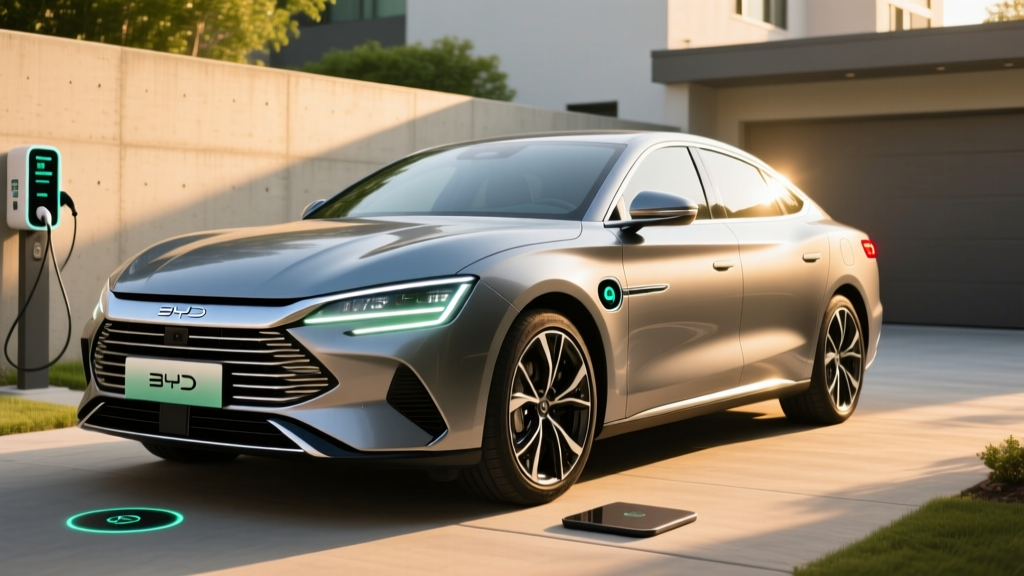
The BYD Han sedan occupies a strange space in the global EV market. It is BYD's flagship electric sedan, a direct competitor to the Tesla Model S and Mercedes EQE in China and parts of Europe, and one of the most technically interesting EVs to emerge from Shenzhen. But for U.S. buyers in 2026, the Han remains a vehicle you can research extensively yet cannot purchase new from an American dealer. This review covers the Han's full specification set, real-world performance data from international testing, and the trade-policy realities that keep it off U.S. roads — so you know exactly what this car offers and what alternatives exist domestically.
BYD Han Sedan: Core Specifications at a Glance
| Specification | Value |
|---|---|
| Body Style | 4-door executive sedan |
| Drivetrain | RWD (single motor) / AWD (dual motor) |
| Battery Capacity | 85.4 kWh usable (Blade LFP) |
| Battery Chemistry | Lithium Iron Phosphate (LFP) |
| EPA-Equivalent Range (CLTC/WLTP) | CLTC 715 km (~444 mi) / WLTP ~521 km (~324 mi) |
| Estimated U.S. EPA Range | ~285–310 mi (projected, not EPA-certified) |
| Efficiency | ~30 kWh/100 mi (WLTP combined) |
| Max DC Fast Charge | 120 kW peak |
| 10–80% DC Charge Time | ~30 minutes (at rated peak) |
| Level 2 AC Charge Rate | 7 kW (single-phase) / 11 kW (three-phase) |
| 0–100 km/h (0–62 mph) | 7.9 s (RWD) / 3.9 s (AWD) |
| Power Output | 241 hp (RWD) / 510 hp (AWD) |
| Torque | 350 Nm (RWD) / 700 Nm (AWD) |
| Length / Width / Height | 4,995 mm / 1,910 mm / 1,495 mm |
| Wheelbase | 2,920 mm |
| Cargo Volume | ~14.5 cu ft (trunk) |
| Base MSRP (China) | ~¥209,800 (~$29,000 USD) |
| AWD Flagship MSRP (China) | ~¥299,800 (~$41,500 USD) |
| Battery Warranty (China) | 8 years / 150,000 km (first owner, unlimited in some trims) |
Note: The BYD Han is not currently sold in the United States. All range figures are from CLTC or WLTP testing cycles; projected EPA-equivalent figures are estimates based on typical cycle-conversion ratios. Pricing reflects the Chinese domestic market and does not include U.S. import duties, tariffs, or homologation costs.
Range and Efficiency: What the Numbers Actually Mean
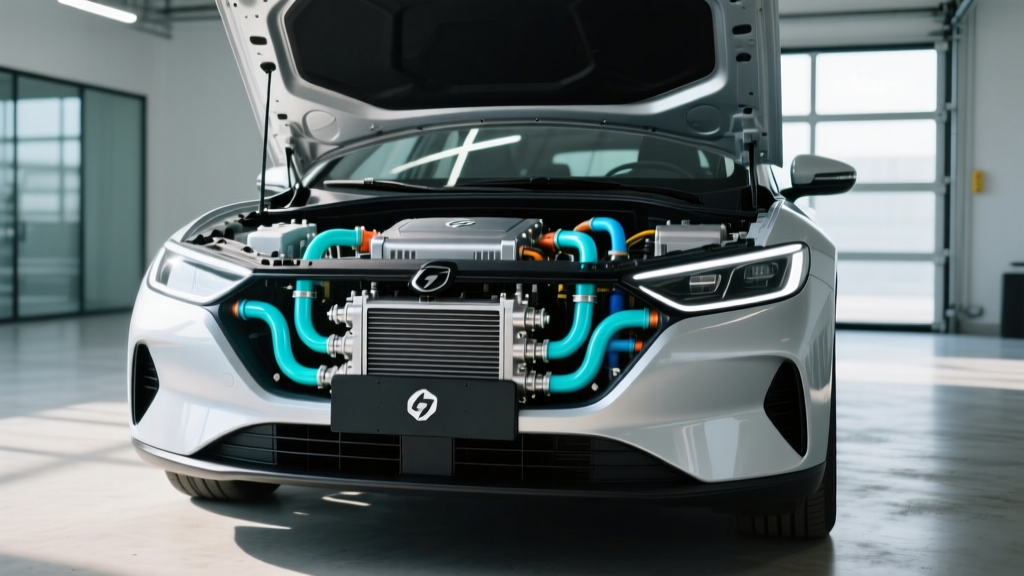
The Han's 85.4 kWh Blade battery is a defining feature. BYD's Blade cell design uses long, thin LFP prismatic cells arranged directly in a structural pack — eliminating the traditional module layer. The result is a pack that is more space-efficient and significantly more resistant to thermal runaway than conventional NMC pouch or cylindrical cells. BYD's nail-penetration test, where a steel nail is driven through a cell without triggering a fire, has become a signature demonstration of this chemistry's safety advantage.
However, LFP's trade-off is lower energy density. At roughly 140–160 Wh/kg at the cell level, LFP packs are heavier than equivalent NMC packs. The Han's curb weight sits around 2,250 kg (4,960 lbs) for the RWD model, which is substantial for a sedan and contributes to the efficiency figure of approximately 30 kWh per 100 miles — not class-leading compared to the Tesla Model 3's ~25 kWh/100mi or the Hyundai Ioniq 6's ~24 kWh/100mi.
LFP does offer one major ownership advantage: cycle life. LFP cells typically sustain 3,000–5,000 full charge cycles before reaching 80% capacity retention, compared to 1,000–2,000 cycles for NMC. For a daily commuter, this translates to well over 500,000 miles of battery life under normal conditions. BYD also recommends regular charging to 100% for LFP batteries — unlike NMC, where daily charging to 80% is preferred to minimize degradation. This simplifies ownership and eliminates the range-restriction habit that NMC owners develop.
Charging: DC Fast and Home Level 2 Speeds
| Charging Level | Power (kW) | Connector | Rate / Time |
|---|---|---|---|
| Level 1 (120V household) | ~1.4 kW | J1772 (if U.S. spec) | ~4 mi/hr added |
| Level 2 (240V home/public AC) | 7 kW (1-phase) / 11 kW (3-phase) | Type 2 (EU) / GB/T (China) | ~22–34 mi/hr added |
| DC Fast Charge | 120 kW peak | CCS2 (EU) / GB/T (China) | 10–80% in ~30 min |
The Han's 120 kW peak DC fast-charge rate is the most significant limitation for long-distance drivers. In 2026, competitors like the Hyundai Ioniq 6 (peak 240 kW, 10–80% in ~18 minutes), the Tesla Model 3 (peak 250 kW, ~15 minutes), and the Porsche Taycan (peak 270 kW, ~18 minutes) charge roughly twice as fast at compatible stations.
The 120 kW figure is a peak — not a sustained rate. Based on typical LFP charge curves, the Han sustains close to peak power from roughly 10% to 50% state of charge, then tapers progressively. From 80% to 100%, expect charge speeds to drop below 30 kW, adding 15–20 additional minutes to reach a full charge. For road-trippers making 200-mile hops, this means roughly 25–30 minute stops — workable, but noticeably slower than the 15–18 minute stops possible in an Ioniq 6 or Model 3.
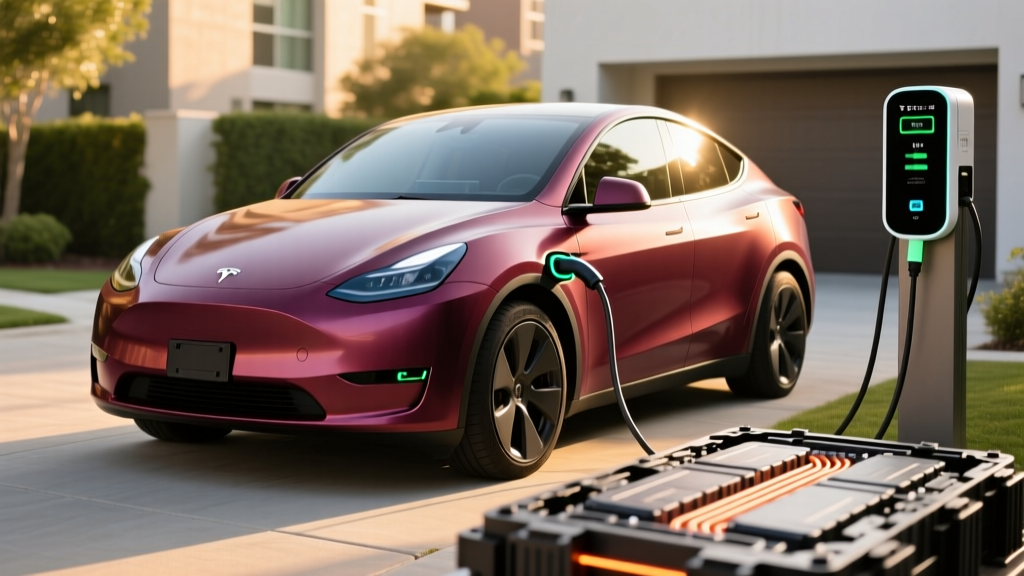
At home on a 7 kW single-phase Level 2 charger (the standard in most U.S. residential installations), a full charge from empty takes approximately 12 hours. On an 11 kW three-phase connection (more common in Europe and parts of Asia), that drops to roughly 8 hours. For a daily commuter adding 40–60 miles per day, overnight charging on any Level 2 setup is more than sufficient.
Performance: RWD Efficiency vs. AWD Thrills
The BYD Han EV is offered in two primary powertrain configurations:
- RWD (single motor): 241 hp, 350 Nm torque, 0–62 mph in 7.9 seconds. This is the efficiency-focused variant, delivering the longest range and the lowest price.
- AWD (dual motor): 510 hp combined, 700 Nm torque, 0–62 mph in 3.9 seconds. The performance variant sacrifices roughly 30–40 miles of range for serious straight-line acceleration.
The AWD model's 3.9-second 0–62 mph time places it in genuine sports-sedan territory — comparable to the Tesla Model 3 Performance (3.1 seconds to 60 mph, though the Tesla is lighter) and well ahead of most combustion-powered executive sedans. However, the Han's 2,250+ kg curb weight is noticeable in cornering. This is a grand-touring sedan, not a track car. The steering is weighted for comfort, and the suspension tuning prioritizes ride quality over body control. On twisty roads, the mass is apparent; on highways and city streets, the Han is composed and quiet.
Regenerative braking offers two modes — standard and larger (one-pedal-style) — adjustable via the center touchscreen. The Han does not offer true one-pedal driving to a complete stop in all conditions; at very low speeds, the friction brakes blend in, which is typical of many non-Tesla EVs.
Interior, Technology, and Driver Assistance
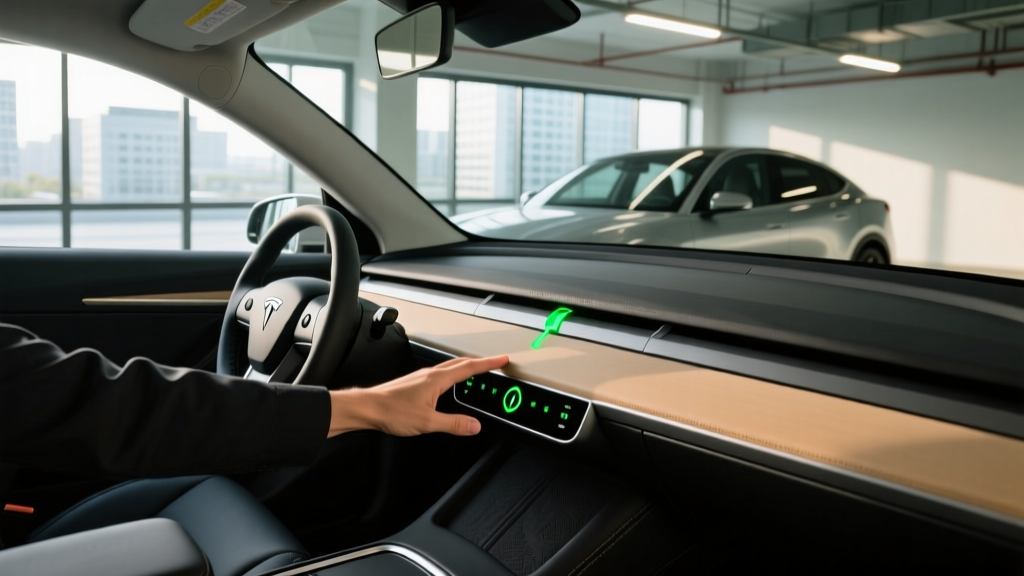
The Han's interior represents BYD's most premium execution. The dashboard is dominated by a 15.6-inch rotating center touchscreen — a BYD signature that toggles between landscape and portrait orientation depending on the app. The instrument cluster is a 12.3-inch digital display. Materials include quilted Nappa leather on higher trims, real wood trim, and aluminum accents. Build quality in the China-market Han is strong, with tight panel gaps and solid switchgear — a significant step up from BYD's earlier-generation vehicles.
Key technology features include:
- BYD DiLink 4.0 infotainment with OTA updates, navigation, and voice control
- 12-speaker Dynaudio sound system (AWD flagship trim)
- Wireless phone charging pad (15W)
- Heated and ventilated front seats, heated rear seats (upper trims)
- Panoramic glass roof with electric sunshade
- 360-degree surround-view camera with transparent chassis mode
- Vehicle-to-Load (V2L) capability — power external devices at up to 3.3 kW via an adapter
Driver assistance (DiPilot): The Han is equipped with BYD's DiPilot system, which includes adaptive cruise control with stop-and-go, lane-keeping assist, automatic emergency braking, blind-spot monitoring, and rear cross-traffic alert. This is an SAE Level 2 driver-assistance system — meaning the driver must remain fully engaged with hands on the wheel and eyes on the road at all times. It is not autonomous driving. The system is competent for highway cruising but does not offer the hands-off, eyes-on capability of GM's Super Cruise or Ford's BlueCruise on mapped highways. There is no equivalent to Tesla's FSD (Supervised) city-streets navigation in the Han's software stack.
Passenger and cargo space: The Han's 2,920 mm wheelbase translates to generous rear legroom — approximately 40.5 inches, which exceeds the Tesla Model S (~35.4 in) and rivals long-wheelbase luxury sedans. The trunk offers approximately 14.5 cubic feet, which is adequate for a sedan but less than the Model S's hatchback-style 25+ cu ft. There is no front trunk (frunk); the space under the hood is occupied by power electronics and the 12V auxiliary battery.
Pricing, Tax Credits, and U.S. Availability
This is where the BYD Han's story becomes complicated for American readers.
| Market | Trim | Approximate Price |
|---|---|---|
| China (domestic) | RWD Premium | ¥209,800 (~$29,000 USD) |
| China (domestic) | AWD Flagship | ¥299,800 (~$41,500 USD) |
| Europe (Norway, estimated) | Various | €50,000–€62,000 (~$54,000–$67,000 USD) |
| United States | N/A | Not available for sale |
Why the Han isn't sold in the U.S.: The United States imposes a 27.5% tariff on imported Chinese-built passenger vehicles (a combination of the standard 2.5% auto tariff and the Section 301 tariff of 25% on Chinese goods). In 2024, the Biden administration further increased the Section 301 tariff on Chinese EVs to 100%, effective 2024–2025. Combined, these tariffs would more than double the Han's landed cost, making it uncompetitive against domestically assembled alternatives. Additionally, BYD has not homologated the Han for U.S. safety standards (FMVSS), which would require significant engineering changes to lighting, crash structures, and software.
Federal tax credit (§30D): Because the BYD Han is not sold in the United States, it is not eligible for the IRS §30D Clean Vehicle Credit. Even if it were available, the credit's battery-component and critical-mineral sourcing requirements — which explicitly exclude vehicles with battery components manufactured by a "foreign entity of concern" (FEOC), a designation that includes Chinese battery manufacturers from 2024 onward — would almost certainly disqualify it. For U.S. buyers seeking a $7,500 point-of-sale credit, the Han is not a pathway.
How the BYD Han Compares to U.S.-Available Alternatives
If the Han's combination of range, luxury, and LFP battery safety appeals to you, here is how the closest U.S.-market alternatives stack up:
| Spec | BYD Han (China) | Tesla Model 3 LR | Hyundai Ioniq 6 LR | BMW i5 eDrive40 |
|---|---|---|---|---|
| EPA Range | ~285–310 mi (est.) | 341 mi | 361 mi | 295 mi |
| Battery (kWh) | 85.4 (LFP) | 79 (NMC) | 77.4 (NMC) | 84.3 (NMC) |
| DC Fast Charge Peak | 120 kW | 250 kW | 240 kW | 205 kW |
| 10–80% DC Time | ~30 min | ~18 min | ~18 min | ~24 min |
| 0–60 mph | 7.9 s (RWD) | 4.2 s | 6.2 s | 5.7 s |
| Base MSRP (U.S.) | N/A | $47,740 | $42,450 | $66,800 |
| Federal Tax Credit | Not eligible | $7,500 (varies) | $7,500 (varies) | Not eligible (MSRP cap / sourcing) |
The Tesla Model 3 Long Range and Hyundai Ioniq 6 both offer substantially faster charging, longer EPA-certified range, and U.S. availability with potential tax-credit eligibility. The BMW i5 competes on luxury and refinement but at a significantly higher price. The Han's advantage is its LFP battery longevity and its remarkably low price in China — but those advantages do not translate to the U.S. market under current trade policy.
Pros, Cons, and Who This EV Suits Best
Pros
- Blade LFP battery offers exceptional cycle life and thermal safety
- Generous rear-seat legroom rivaling long-wheelbase luxury sedans
- Strong build quality and premium materials for its price class
- V2L capability for powering external devices
- AWD variant delivers 3.9-second 0–62 mph acceleration
- Extremely competitive pricing in China and select export markets
Cons
- Not available for sale in the United States
- 120 kW peak DC charging is slow by 2026 standards
- LFP chemistry suffers greater cold-weather range loss than NMC
- Heavy curb weight (~4,960 lbs) impacts handling agility
- DiPilot ADAS lacks hands-free highway capability
- No frunk; trunk space modest at ~14.5 cu ft
- No U.S. service/parts network or FMVSS homologation
Who the BYD Han suits best: If you live in China, Southeast Asia, Latin America, or parts of Europe where the Han is sold, it is an excellent executive sedan for daily commuting and moderate-distance travel. The LFP battery's longevity makes it especially appealing to high-mileage drivers and fleet operators who plan to keep the vehicle 8–10+ years. The AWD variant suits enthusiasts who want sports-sedan acceleration in a practical package.
U.S. buyers should look elsewhere. The combination of trade barriers, tariff costs, lack of homologation, and zero service infrastructure makes the Han a non-starter in America. The Tesla Model 3, Hyundai Ioniq 6, and upcoming LFP-equipped models from domestic manufacturers offer comparable or superior specifications with full U.S. support, EPA certification, and potential tax-credit eligibility.
Frequently Asked Questions
What is the real-world range of the BYD Han sedan?
In mixed driving under moderate temperatures, expect approximately 260–290 miles from the 85.4 kWh Blade battery (RWD model). On sustained highway driving at 70+ mph, that drops to roughly 230–260 miles. In sub-freezing winter conditions, plan for 200–240 miles due to LFP's cold-weather sensitivity and cabin heating demands. These are projected figures — the Han has not been EPA-certified.
How fast does the BYD Han charge at home and on DC fast chargers?
On a DC fast charger, the Han peaks at 120 kW and charges from 10–80% in approximately 30 minutes. At home on a 7 kW Level 2 charger, a full charge takes about 12 hours. The 120 kW peak is modest by 2026 standards — roughly half the speed of an Ioniq 6 or Tesla Model 3 at a compatible high-power station.
Does the BYD Han qualify for the U.S. federal EV tax credit?
No. The BYD Han is not sold in the United States and is not eligible for the IRS §30D Clean Vehicle Credit. Even if imported, its Chinese-manufactured battery components would likely disqualify it under the FEOC sourcing rules that took effect in 2024.
Is the BYD Han worth buying over a Tesla Model 3 or Hyundai Ioniq 6?
In markets where both are available, the Han competes on price and LFP battery longevity. However, the Model 3 and Ioniq 6 charge significantly faster (250 kW and 240 kW respectively), carry EPA-certified range ratings, and have established service networks. In the U.S., the choice is made for you — the Han is not an option.
How long will the BYD Han's Blade battery last?
LFP chemistry is rated for 3,000–5,000 full charge cycles to 80% capacity retention. At 300 miles per cycle, that translates to 900,000–1,500,000 miles before significant degradation — far exceeding the vehicle's mechanical lifespan. BYD's battery warranty in China covers 8 years / 150,000 km, with some trims offering unlimited mileage coverage for the first owner.
Will BYD ever sell the Han in the United States?
As of 2026, BYD has not announced plans to enter the U.S. passenger vehicle market. The company has focused its international expansion on Europe, Southeast Asia, Latin America, and the Middle East. The current U.S. tariff environment — including a 100% Section 301 tariff on Chinese EVs — makes a U.S. launch economically unviable in the near term. BYD's global sales data and strategy updates can be tracked via the company's official site.