The Rivian R3 at a Glance: A Compact Electric SUV for the Masses
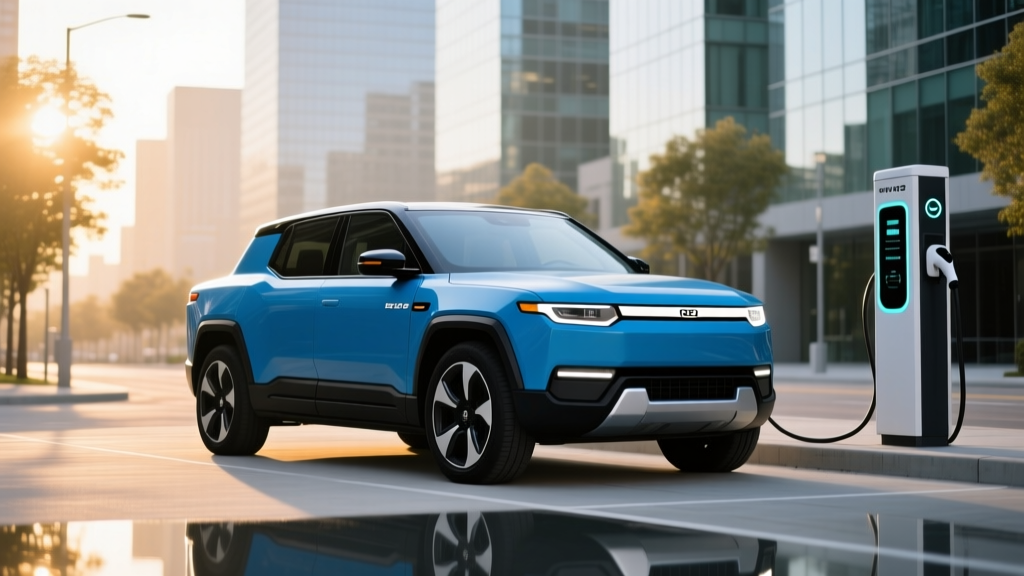
If you've been searching what is the Rivian R3, you're not alone. Announced in early 2024 and slated for production beginning in 2026 at Rivian's Normal, Illinois facility, the R3 is the automaker's bid to crack the high-volume compact electric SUV segment — the same battleground occupied by the Volvo EX30, Hyundai Kona Electric, and upcoming Tesla Model Q. Unlike the larger R1S and R1T, the R3 targets a lower price point, aiming to bring Rivian's design language and adventure-oriented ethos to buyers who don't need three rows or a truck bed.
Because the R3 has not yet entered customer deliveries as of early 2026, the specifications below are based on Rivian's official announcements, preliminary EPA filings, and industry analysis. We'll update this profile with verified EPA data from fueleconomy.gov once final certification numbers are published. Treat every figure as estimated or preliminary until Rivian confirms production-spec vehicles.
Preliminary Specifications: Range, Battery, and Efficiency
| Attribute | Estimated / Announced |
|---|---|
| EPA Est. Range | ~300+ miles (Standard Battery); ~350+ miles (Large Battery) |
| Battery Capacity (Usable) | ~70 kWh (Standard); ~95 kWh (Large) |
| Battery Chemistry | LFP (Standard Battery expected); NMC (Large Battery expected) |
| Max DC Fast Charge | ~200 kW (est.) |
| 10–80% DC Charge Time | ~25–30 minutes (est.) |
| Level 2 Home Charge Rate | ~11.5 kW / ~30–35 mi/hr |
| Charging Port | NACS (native Tesla Supercharger access) |
| Drivetrain | Single-motor RWD (base); Dual-motor AWD (available) |
| Horsepower | ~250 hp (RWD); ~400 hp (Dual-Motor AWD) |
| 0–60 mph | ~6.5 sec (RWD); ~4.5 sec (AWD) |
| Efficiency (Est.) | ~120 MPGe / ~28 kWh/100 mi |
| Base MSRP (Est.) | ~$45,000 (before incentives) |
| Battery/Powertrain Warranty | 8 years / 100,000 miles (expected, based on R1 platform) |
The preliminary EPA target of 300+ miles (Standard Battery) is a best-case certification figure. In real-world driving, expect:
- Highway (70–75 mph): ~250–270 miles — aerodynamic drag cuts into efficiency significantly at sustained speed.
- City / mixed driving: ~280–310 miles — regenerative braking recaptures energy in stop-and-go traffic.
- Cold weather (below 30°F): ~200–230 miles — lithium-ion batteries lose 20–30% of usable capacity in freezing temperatures, even with a heat pump (expected on the R3).
Battery Chemistry: LFP vs. NMC in the R3
Rivian has signaled that the R3's Standard Battery will likely use lithium iron phosphate (LFP) chemistry, while the available Large Battery will use nickel manganese cobalt (NMC). This is a strategic split that mirrors what Tesla, Ford, and Hyundai have adopted in their lineups. Here's what that means for you as a buyer:
| Factor | LFP (Standard Battery) | NMC (Large Battery) |
|---|---|---|
| Energy Density | Lower — heavier pack for same kWh | Higher — more range in lighter package |
| Cycle Life | 3,000–5,000+ cycles — excellent longevity | 1,000–2,000 cycles — good but less than LFP |
| Daily Charging to 100% | Recommended — no degradation concern | Charge to 80% daily, 100% for trips only |
| Cold-Weather Performance | Slightly worse in extreme cold | Marginally better low-temp output |
| Cost | Lower — enables the ~$45K base price | Higher — adds ~$5,000–$8,000 to trim price |
| Critical Mineral Sourcing | No cobalt or nickel — easier for §30D compliance | Cobalt/nickel — sourcing rules may affect credit |
Bottom line: If you plan to keep the R3 for 8+ years and charge at home nightly, the LFP Standard Battery is arguably the smarter long-term play — it degrades slower and tolerates 100% daily charges. The NMC Large Battery is the pick if you regularly drive 200+ miles between charges or take frequent road trips where the extra 50+ miles of range reduces stops.
Charging Speed: DC Fast Charging and Home Level 2
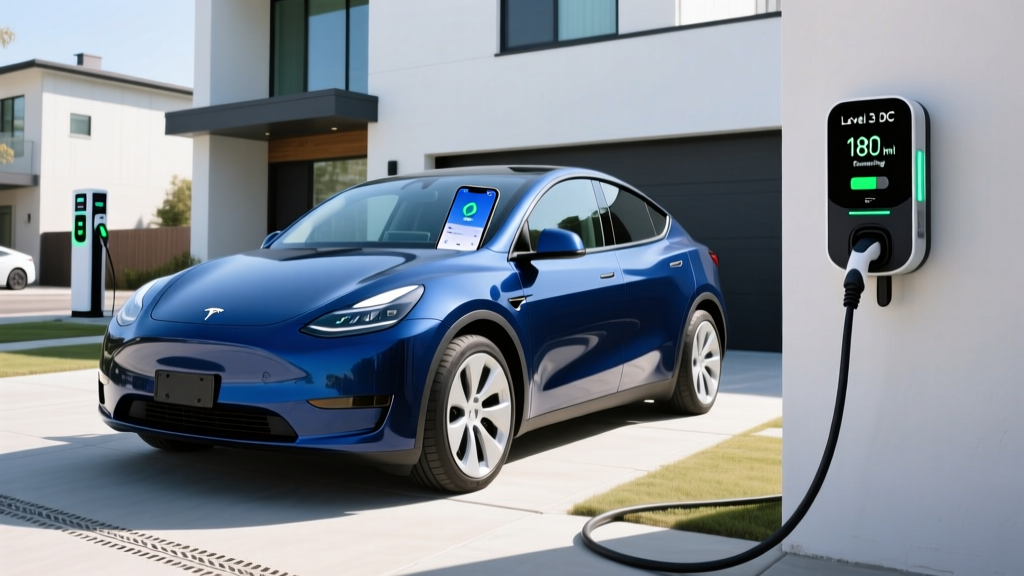
Charging infrastructure access is where the R3 gains a significant advantage: Rivian has adopted the NACS (North American Charging Standard) port natively, meaning R3 owners will have direct access to Tesla's Supercharger network — the most reliable and widespread DC fast-charging network in the U.S. — without an adapter.
| Charging Level | Power (kW) | Speed (Miles Added) | Notes |
|---|---|---|---|
| Level 1 (120V household) | ~1.4 kW | ~3–4 mi/hr | Emergency/trickle only |
| Level 2 (240V home) | ~11.5 kW | ~30–35 mi/hr | Full charge overnight (~9–10 hrs) |
| DC Fast Charge (peak) | ~200 kW | ~150+ mi in 15 min | 10–80% in ~25–30 min (est.) |
Charging curve reality check: The ~200 kW peak rate will not be sustained across the entire session. Expect peak power between roughly 10–40% state of charge (SoC), tapering to ~120 kW by 60% and dropping further above 80%. This is normal lithium-ion behavior, not a Rivian-specific limitation. The 10–80% estimate of 25–30 minutes assumes a preconditioned battery (the R3's navigation system is expected to precondition automatically when routing to a charger) and a station capable of delivering 250+ kW.
For home charging, a 48-amp Level 2 wall connector on a 60-amp circuit will deliver the full ~11.5 kW. If your home has a 200-amp electrical panel with spare capacity, installation typically runs $800–$2,000 depending on run length and local permitting. Homes needing a panel upgrade to 200A should budget an additional $1,500–$3,000 — consult a licensed electrician for a site-specific quote.
Performance and Drivetrain Options
The R3 is expected to launch with two drivetrain configurations:
- Single-Motor RWD (base): ~250 horsepower, 0–60 mph in approximately 6.5 seconds. This will be the volume trim — adequate for merging, commuting, and daily driving. Rear-wheel drive keeps the base price low and efficiency high.
- Dual-Motor AWD (available): ~400 horsepower, 0–60 mph in approximately 4.5 seconds. The AWD variant adds a front motor for all-weather traction and significantly more passing power. Expect a ~15–20 mile range penalty versus the RWD due to the added weight and drivetrain losses.
Rivian has not confirmed whether a performance-oriented R3 (analogous to the R1T/R1S Quad-Motor or Dual-Motor Performance trims) will join the lineup at launch. Given the R3's mass-market positioning, a tri-motor or high-performance variant seems unlikely before 2028 at the earliest.
Pricing, Trims, and Federal Tax Credit Eligibility
Rivian CEO RJ Scaringe has publicly stated the R3 will start around $45,000 before incentives, placing it in direct competition with the Volvo EX30, Hyundai Kona Electric, and base Tesla Model Y (should its price drop into this range). Here's the estimated trim structure:
| Trim (Est.) | Drivetrain | Battery | Est. MSRP |
|---|---|---|---|
| Standard | RWD | ~70 kWh LFP | ~$45,000 |
| Standard AWD | Dual-Motor AWD | ~70 kWh LFP | ~$50,000 |
| Large Battery AWD | Dual-Motor AWD | ~95 kWh NMC | ~$55,000–$58,000 |
Does the Rivian R3 Qualify for the Federal EV Tax Credit?
Under current IRS §30D rules, the R3's eligibility for the up-to-$7,500 federal tax credit depends on several factors that won't be finalized until production begins:
- MSRP Cap: The R3 must have an MSRP at or below $55,000 (SUV/truck classification — Rivian will likely classify the R3 as an SUV to access the higher cap). The Standard and Standard AWD trims should clear this; the Large Battery AWD may exceed it depending on final pricing.
- Buyer Income Cap: Modified adjusted gross income must not exceed $150,000 (single), $225,000 (head of household), or $300,000 (joint filing).
- Battery Sourcing: Critical minerals and battery components must meet escalating domestic/free-trade-agreement sourcing thresholds. The LFP Standard Battery — using no cobalt or nickel — may have an easier path to compliance than the NMC Large Battery, but final sourcing depends on Rivian's supply chain at time of production.
- Point-of-Sale Transfer: If eligible, the credit can be applied at purchase as an immediate price reduction (transferred to the dealer), effectively lowering the out-of-pocket cost to ~$37,500 for the base trim.
- Final Assembly: Must occur in North America — the R3 will be built in Normal, Illinois, satisfying this requirement.
Interior, Cargo, and Technology
The R3 is a compact SUV — think slightly smaller than the R1S, roughly in the footprint of a Hyundai Kona or Volvo EX30. Rivian has not published final interior dimensions, but based on the vehicle's exterior proportions and segment norms, expect:
- Cargo volume (behind rear seats): ~22–25 cubic feet
- Cargo volume (rear seats folded): ~50–55 cubic feet
- Front legroom: ~41 inches
- Rear legroom: ~36–37 inches (tighter than the R1S; suitable for adults on shorter trips)
- Frunk (front trunk): Expected — Rivian has made this a brand staple
On the technology front, the R3 is expected to inherit the R1 platform's infotainment system: a large central touchscreen (likely 15+ inches), over-the-air updates, integrated navigation with charger preconditioning, and Rivian's Driver+ assistance suite. Driver+ is a SAE Level 2 system — it provides adaptive cruise control and lane-centering on highways but requires the driver to remain fully attentive at all times. This is not autonomous or "self-driving" capability.
Notable expected features include:
- Phone-as-key via Bluetooth/UWB
- Vehicle-to-load (V2L) capability — power camping gear or tools from the battery
- Integrated rooftop rack mounting points (Rivian's adventure DNA)
- Camp Mode with climate control for overnight sleeping
- Heat pump for efficient cabin heating in cold weather
Who Should Buy the Rivian R3 — And Who Shouldn't
- Want a compact EV SUV under $50K with 300+ miles of range
- Value native Supercharger (NACS) access without adapters
- Are an outdoor-oriented buyer who wants V2L, a frunk, and roof-rack compatibility
- Commute 30–60 miles daily and charge at home overnight
- Want LFP battery longevity for 8–10+ years of ownership
- Need three rows of seating (consider the R1S or Kia EV9)
- Require 350+ miles of real-world highway range regularly (wait for the Large Battery or consider the Hyundai Ioniq 5)
- Need to tow — the R3's towing capacity is expected to be modest (~1,500–2,500 lbs)
- Can't wait — production doesn't begin until late 2026; deliveries likely in 2027
- Want a proven track record — Rivian is still a young automaker with limited service center density
Key Competitors: R3 vs. the Compact EV SUV Field
The R3 enters a crowded and growing segment. Here's how it stacks up against announced or current rivals on paper:
| Model | EPA Range | Base MSRP | Max DC kW | Charging Port |
|---|---|---|---|---|
| Rivian R3 (est.) | ~300+ mi | ~$45,000 | ~200 kW | NACS |
| Volvo EX30 | ~275 mi | ~$36,000 | 153 kW | CCS (NACS adapter avail.) |
| Hyundai Kona Electric | 261 mi | ~$33,000 | 100 kW | CCS (NACS adapter avail.) |
| Tesla Model Y (2026) | ~310 mi | ~$44,000 | 250 kW | NACS |
The R3's primary advantage over the EX30 and Kona Electric is native NACS access to the Supercharger network and a longer estimated range. Against the Model Y, it trades slightly slower peak charging for a more adventure-oriented design, V2L capability, and potentially stronger LFP battery longevity at the base trim. The Model Y remains the segment benchmark for charging speed and interior space — the R3 will need to deliver on build quality and software reliability to compete.
Warranty and Ownership Considerations
Based on Rivian's current R1 platform coverage, the R3 is expected to carry:
- Battery warranty: 8 years / 100,000 miles (minimum 70% capacity retention)
- Powertrain warranty: 8 years / 100,000 miles
- Bumper-to-bumper: 5 years / 60,000 miles
One ownership consideration unique to Rivian: the company operates its own service network rather than relying on franchised dealers. While this means no dealership hassles, service center density is still limited outside major metro areas. If you live in a rural region, confirm that Rivian has a service presence — or mobile service availability — near you before committing.
Frequently Asked Questions
What is the real-world range of the Rivian R3?
Based on preliminary estimates, expect ~250–270 miles on the highway, ~280–310 miles in city/mixed driving, and ~200–230 miles in freezing weather for the Standard Battery (LFP, ~70 kWh). The Large Battery variant should add 40–50 real-world miles to each scenario. Final EPA certification will provide verified numbers closer to production.
How fast does the Rivian R3 charge?
Estimated peak DC fast charging is ~200 kW, achieving a 10–80% charge in approximately 25–30 minutes at a compatible station. Home Level 2 charging at 11.5 kW adds roughly 30–35 miles per hour, fully replenishing the Standard Battery overnight in about 9–10 hours.
How much does the Rivian R3 cost after tax credits?
If the base Standard trim prices at ~$45,000 and qualifies for the full $7,500 federal tax credit (via point-of-sale transfer), the effective price drops to approximately $37,500. Eligibility depends on your income, the vehicle's final battery sourcing, and current IRS rules. State incentives may reduce the cost further — check your local programs.
Is the Rivian R3 worth buying versus the Tesla Model Y or Volvo EX30?
The R3 is worth considering if you value native Supercharger access, LFP battery longevity, V2L capability, and Rivian's adventure-focused design. The Model Y still leads in charging speed, interior volume, and software maturity. The EX30 undercuts on price but lacks range and fast-charging speed. Your decision will hinge on whether you can wait for 2026–2027 delivery and whether Rivian's service network covers your area.
Does the Rivian R3 qualify for the $7,500 federal EV tax credit?
It is expected to qualify in its Standard and Standard AWD trims (under the $55,000 SUV MSRP cap), provided battery-sourcing requirements are met and buyer income limits are satisfied. The Large Battery AWD trim may exceed the MSRP cap. Always verify with IRS §30D guidance and a tax professional before relying on credit eligibility.
When can I buy the Rivian R3?
Production is expected to begin in late 2026 at Rivian's Normal, Illinois factory, with first deliveries likely in early-to-mid 2027. Reservations are currently open on Rivian's website with a refundable deposit. Final specs, pricing, and trim availability will be confirmed closer to production start.