Quick Verdict: The Benchmark BEV Drive Experience
The 2026 Tesla Model Y Long Range AWD remains the default midsize electric crossover for buyers who want a proven, high-efficiency BEV drive with access to the largest fast-charging network in North America. With an EPA-estimated 320 miles of range, a peak 250 kW DC fast-charge rate, and a starting MSRP of $44,990 (before incentives), it occupies a narrow sweet spot: roomy enough for families, efficient enough for daily commuting, and fast enough to make road trips practical without excessive charging stops.
But the competitive field has closed. The Hyundai Ioniq 5, Ford Mustang Mach-E, and Chevrolet Equinox EV all offer compelling alternatives at lower price points or with distinct trade-offs. This review breaks down the exact numbers — range, charging curves, ownership cost, and tax credit eligibility — so you can decide whether the Model Y still earns its benchmark status in 2026.
Range & Efficiency: EPA vs. the Real World
Real-World Expectation: ~270–290 miles on mixed highway driving at 70 mph; ~230–250 miles in sustained cold weather (below 32°F) with cabin heating; up to 310+ miles in city/regen-heavy driving at moderate temperatures.
The Model Y Long Range AWD uses a 78.1 kWh usable battery pack (NMC chemistry, 2170 cells) paired with Tesla's heat pump and octovalve thermal management system. On the EPA's test cycle, it achieves 122 MPGe combined (28 kWh/100 mi), which translates to class-leading efficiency for a dual-motor AWD crossover.
In real-world BEV drive testing, efficiency varies significantly by conditions. At highway speeds of 70–75 mph in 65°F weather, expect consumption around 30–32 kWh/100 mi, yielding roughly 270–280 miles before the battery buffer engages. In stop-and-go city driving with aggressive regenerative braking, that figure improves to 25–27 kWh/100 mi. Cold weather is the Achilles heel of all BEVs: at 20°F with the heat pump running, range drops 20–30%, landing around 220–250 miles depending on driving style and preconditioning habits.
One often-overlooked advantage: Tesla's navigation system automatically preconditions the battery when routing to a Supercharger, which preserves range accuracy and enables peak charging speeds upon arrival. Competitors without integrated route-based preconditioning often arrive at chargers with cold batteries, sacrificing 10–20 minutes to slower charge curves.
Charging Speed: DC Fast, Level 2, and the Supercharger Advantage
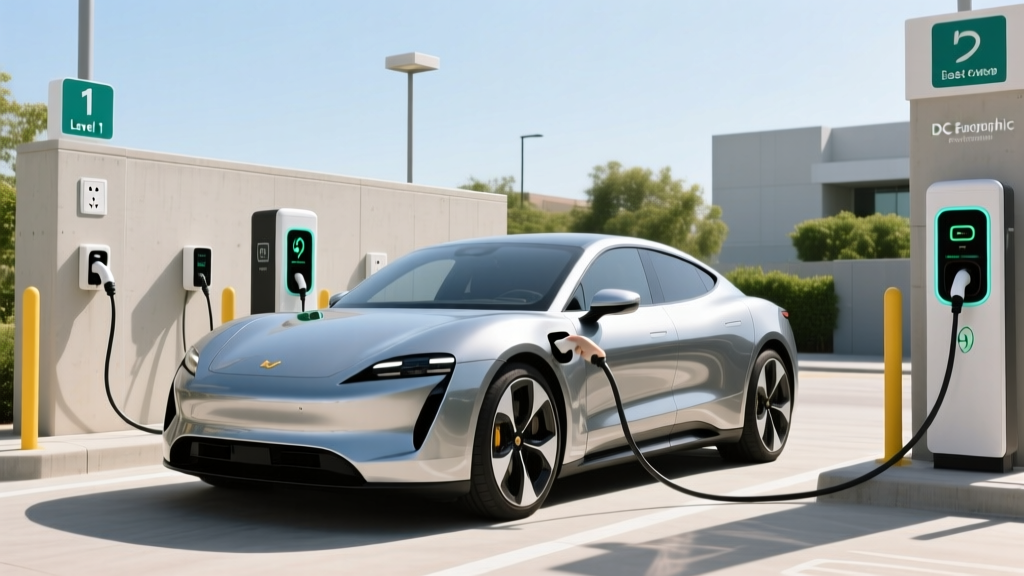
| Charging Level | Power / Rate | Speed (Miles Added) | Time (10–80%) |
|---|---|---|---|
| DC Fast Charge (V3/V4 Supercharger) | Peak 250 kW | ~200 mi in 15 min (peak) | ~22–25 minutes |
| DC Fast Charge (CCS adapter, third-party) | Up to 250 kW (station dependent) | Varies by network | ~22–30 minutes |
| Level 2 Home (48A / 11.5 kW Wall Connector) | 11.5 kW | ~44 mi/hr | ~7–8 hours (0–100%) |
| Level 2 Home (32A / 7.7 kW) | 7.7 kW | ~30 mi/hr | ~10–11 hours (0–100%) |
| Level 1 (120V standard outlet) | ~1.4 kW | ~3–4 mi/hr | Not practical for full charge |
The Model Y's 250 kW peak DC fast-charge capability is not sustained across the full charging session — no production EV sustains peak rate to 80%. The charge curve holds near 250 kW from roughly 10% to 30% state of charge, then tapers progressively: ~180 kW at 50%, ~100 kW at 70%, and below 50 kW above 85%. A typical 10–80% session at a V3 or V4 Supercharger takes 22–25 minutes with proper battery preconditioning.
On third-party networks (Electrify America, EVgo, ChargePoint) using Tesla's CCS adapter, speeds depend on station output and battery temperature. Without route-based preconditioning, expect slower initial ramp-up — potentially adding 5–10 minutes to a session.
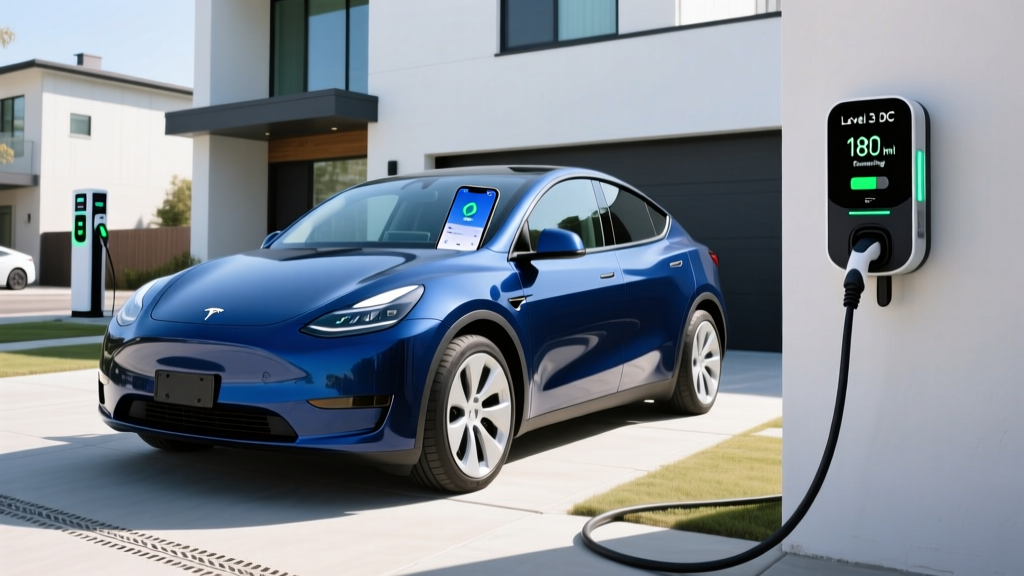
For home charging, Tesla's Wall Connector at 48 amps (requiring a 60-amp circuit) delivers 11.5 kW, adding roughly 44 miles of range per hour of charging. Most owners charging overnight from 20% to 80% will replenish ~190 miles in about 4.5 hours. Installation cost for a dedicated 60A circuit typically runs $800–$2,000 depending on panel proximity and local permitting, on top of the ~$475 Wall Connector hardware cost. Always consult a licensed electrician for a site-specific quote.
Performance & Drivetrain
| Specification | Long Range AWD | Performance AWD |
|---|---|---|
| Drivetrain | Dual-motor AWD | Dual-motor AWD |
| Horsepower | 384 hp | 456 hp |
| Torque | 375 lb-ft | 434 lb-ft |
| 0–60 mph | 4.8 seconds | 3.5 seconds |
| Top Speed | 135 mph | 155 mph |
| EPA Range | 320 miles | 285 miles |
| Battery (usable) | 78.1 kWh (NMC) | 78.1 kWh (NMC) |
| Towing Capacity | 3,500 lbs | 3,500 lbs |
The Long Range AWD's 4.8-second 0–60 time is more than adequate for highway merging and passing, and the dual-motor setup provides confident all-weather traction. The Performance variant shaves 1.3 seconds off that sprint but sacrifices 35 miles of EPA range due to stickier tires, sport-tuned suspension, and larger 21" wheels. For most buyers, the Long Range offers the better balance of efficiency, comfort, and acceleration.
Regenerative braking in the Model Y is strong but not fully one-pedal at low speeds — you'll still use the friction brake for final stops. Tesla removed the user-adjustable regen setting several model years ago, which some EV veterans find frustrating when transitioning from vehicles with customizable regen profiles.
Interior, Cargo, and Tech
The Model Y's cabin follows Tesla's minimalist philosophy: a single 15.4" center touchscreen controls nearly every function, with no physical instrument cluster or head-up display. Build quality on 2026 models from the Fremont and Austin plants has improved noticeably over 2022–2023 units, with tighter panel gaps and upgraded materials on the dashboard and door panels.
Cargo & Passenger Space:
- Rear cargo (behind second row): 30.2 cu ft
- Cargo with second row folded: 72.1 cu ft
- Front trunk (frunk): 4.1 cu ft
- Rear legroom: 41.6 inches
- Front headroom: 41.0 inches
- Seating: 5 passengers standard (optional third row available but extremely cramped — best for small children only)
The cargo area is one of the Model Y's strongest selling points for families. The hatchback design and flat load floor make it practical for strollers, groceries, and luggage. The frunk is small compared to the Ford Mustang Mach-E's 81-liter front trunk but adequate for charging cables and a small bag.
Notable Tech Features:
- Tesla Autopilot (SAE Level 2) standard — includes Traffic-Aware Cruise Control and Autosteer
- Full Self-Driving (Supervised) available as a $8,000 add-on or $99/month subscription — still requires active driver supervision at all times
- Over-the-air software updates adding features post-purchase
- Sentry Mode (360° parking surveillance using external cameras)
- Dog Mode and Camp Mode for climate control while parked
- Native Supercharger routing with battery preconditioning
Pricing, Tax Credits, and Ownership Cost
| Trim | Base MSRP | Destination | Total Before Credits | Est. After §30D Credit* |
|---|---|---|---|---|
| Long Range AWD | $44,990 | $1,390 | $46,380 | ~$38,880 |
| Performance AWD | $48,990 | $1,390 | $50,380 | ~$42,880 |
*Federal tax credit estimates assume buyer eligibility. Actual credit amount and availability depend on current-year IRS rules.
Under IRS §30D, the Model Y qualifies for up to $7,500 in federal clean vehicle credits — but eligibility is not universal. Key requirements for 2026 include:
- MSRP cap: SUVs/crossovers must have an MSRP at or below $80,000 (both Model Y trims qualify)
- Buyer income cap: Modified adjusted gross income must not exceed $150,000 (single), $225,000 (head of household), or $300,000 (joint filers)
- Battery sourcing: A percentage of critical minerals and battery components must be sourced from the US or free-trade-agreement countries — Tesla's shifting supply chain means eligibility can change by production batch
- Point-of-sale transfer: Eligible buyers can transfer the credit to the dealer at purchase, reducing the upfront price rather than waiting for a tax refund
Because battery-sourcing rules are complex and subject to change, always verify current eligibility on the IRS website or with a qualified tax professional before relying on the credit in your purchase decision.
5-Year Ownership Cost Snapshot: Based on 15,000 miles/year, $0.14/kWh home charging average, and $3.50/gallon gas for a comparable ICE crossover (25 MPG combined), the Model Y saves approximately $5,500–$7,000 in fuel costs over five years. Insurance premiums for the Model Y tend to run 15–25% higher than comparable gas crossovers, partially offsetting fuel savings. Depreciation remains a wildcard — Tesla's frequent price adjustments have created volatility in used values.
Warranty & Battery Longevity
Tesla provides the following coverage for the 2026 Model Y:
- Basic Vehicle Warranty: 4 years / 50,000 miles
- Battery & Drive Unit Warranty: 8 years / 120,000 miles (whichever comes first), with a minimum 70% capacity retention guarantee
The NMC battery pack in the Model Y has demonstrated strong longevity in fleet data. Based on aggregated owner reports and Tesla's own impact data, average degradation is approximately 10–12% after 150,000 miles. Most owners will never see the battery fall below the 70% warranty threshold within the warranty period. For maximum longevity, Tesla recommends daily charging to 80–90% for NMC packs and reserving 100% charges for road trips — a practice that reduces stress on the cells and slows capacity loss over time.
Pros & Cons
Pros
- Class-leading efficiency (122 MPGe / 28 kWh/100mi)
- Access to 6,000+ North American Superchargers — the most reliable DC fast-charging network
- 320-mile EPA range covers most road trips with one stop
- Spacious cargo area (72.1 cu ft max) with hatchback practicality
- Strong over-the-air update track record
- Heat pump standard — better cold-weather range retention than resistive heating
Cons
- Minimalist interior lacks physical controls — everything routed through touchscreen
- No Apple CarPlay or Android Auto support
- Insurance premiums 15–25% higher than segment average
- Rear visibility compromised by sloping roofline and small rear window
- FSD (Supervised) at $8,000 remains a Level 2 system — expensive for what it delivers
- CCS adapter required for non-Tesla DC fast chargers (included with new vehicles, but an extra step)
Who Should Buy the 2026 Model Y?
Choose the Model Y if:
- You road-trip frequently and value Supercharger network reliability over lower purchase price
- You need a hatchback cargo area for family gear, pets, or hobbies
- You prioritize efficiency and want to minimize kWh consumption per mile
- You can charge at home and want an overnight routine that covers 90% of driving needs
Consider Alternatives if:
- You want Apple CarPlay/Android Auto (look at Hyundai Ioniq 5, Ford Mach-E)
- Upfront price is a primary concern (Chevrolet Equinox EV starts ~$8,000 lower)
- You prefer physical buttons and a traditional instrument cluster (VW ID.4, Mach-E)
- You need true 7-seat capability (Kia EV9 or a three-row PHEV may serve better)
Frequently Asked Questions
What is the real-world range of the 2026 Tesla Model Y?
The EPA rates the Long Range AWD at 320 miles, but real-world BEV drive range depends heavily on conditions. Expect 270–290 miles on highway trips at 70 mph in moderate weather, 310+ miles in city driving with regenerative braking, and 220–250 miles in sustained sub-freezing temperatures with cabin heating. Preconditioning and moderate speeds significantly improve real-world results.
How fast does the Model Y charge at home and on the road?
On a V3/V4 Supercharger at 250 kW peak, the Model Y charges from 10–80% in approximately 22–25 minutes with battery preconditioning. At home on a 48-amp Level 2 Wall Connector (11.5 kW), it adds about 44 miles per hour — enough to fully replenish overnight. On a standard 120V outlet (Level 1), expect only 3–4 miles per hour, which is suitable only for emergency trickle charging.
Does the 2026 Model Y qualify for the $7,500 federal EV tax credit?
It can, but eligibility depends on your income, the vehicle's MSRP, and battery-sourcing compliance. Both trims fall under the $80,000 SUV MSRP cap. Your modified AGI must be below $150K (single) / $300K (joint). Battery-sourcing requirements under §30D may affect eligibility by production date. Always check IRS.gov for the latest qualifying vehicle list before purchasing, and consult a tax professional.
Is the Model Y worth buying vs. the Ioniq 5 or Mach-E?
The Model Y wins on efficiency, Supercharger network access, and cargo volume. The Hyundai Ioniq 5 undercuts on price (~$3,000–$5,000 less), offers 800V ultra-fast charging (10–80% in ~18 minutes at 350 kW chargers), and includes Apple CarPlay. The Ford Mustang Mach-E offers a more traditional driving feel and available BlueCruise hands-free driving on mapped highways. If charging network reliability and cargo space top your list, the Model Y holds its edge. If you value lower cost or CarPlay integration, the Ioniq 5 is a strong alternative.
How long will the Model Y battery last?
Tesla warranties the battery for 8 years / 120,000 miles with a 70% minimum capacity retention guarantee. Real-world fleet data suggests NMC packs in the Model Y degrade approximately 10–12% over 150,000 miles when charged responsibly (80–90% daily, 100% only for trips). Many high-mileage owners report 85%+ state of health at 200,000 miles. Full battery replacement outside warranty, if ever needed, currently costs approximately $12,000–$16,000 including labor.
Can the Model Y tow?
Yes — both trims are rated for 3,500 pounds of towing capacity when equipped with the factory tow package. This covers small boat trailers, bike racks, and light utility trailers. Towing significantly reduces range — expect a 30–50% range reduction depending on trailer weight, aerodynamics, and speed.