Rivian's Pivotal 2026: R2 Production Begins as Revenue Climbs
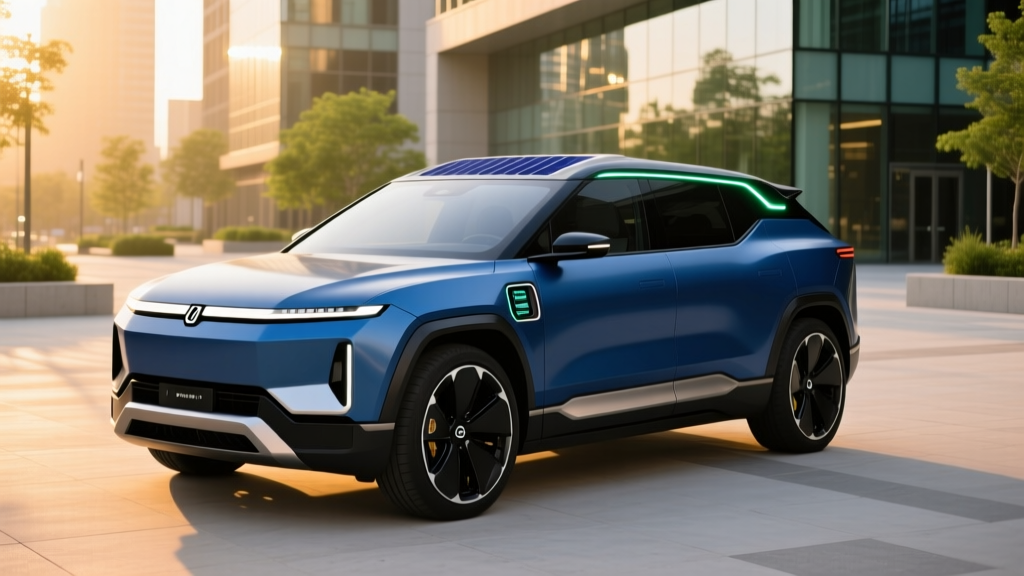
Rivian has crossed a critical threshold. With the compact R2 SUV rolling off the newly expanded Normal, Illinois assembly line and the company reporting sequential revenue growth through early 2026, the automaker is transitioning from startup uncertainty to scaled production. For buyers, the question is no longer will Rivian survive? but is the R2 the right compact electric SUV for you?
We've tracked the R2 from its announcement through its first production units. Below is a comprehensive, spec-driven profile of the 2026 Rivian R2 — covering real-world range expectations, charging behavior, pricing after federal tax credits, and how it stacks up against the Tesla Model Y, Hyundai Ioniq 5, and Ford Mustang Mach-E.
2026 Rivian R2: Core Specifications at a Glance
| Specification | R2 Standard | R2 Max (Dual-Motor) |
|---|---|---|
| Base MSRP | $44,900 | $52,400 |
| EPA Range (est.) | 270 mi | 330 mi |
| Battery Capacity (usable) | 75 kWh | 100 kWh |
| Battery Chemistry | LFP (prismatic) | NMC (cylindrical 46mm) |
| Drivetrain | RWD (single motor) | AWD (dual motor) |
| Horsepower | 335 hp | 665 hp |
| 0–60 mph | 6.5 sec | 3.4 sec |
| Max DC Fast Charge | 175 kW | 200 kW |
| 10–80% DCFC Time | ~28 min | ~25 min |
| Level 2 Home Charge | 11.5 kW (31 mi/hr) | 11.5 kW (37 mi/hr) |
| Efficiency | 113 MPGe / 30 kWh/100mi | 105 MPGe / 32 kWh/100mi |
| Towing Capacity | 3,300 lbs | 4,500 lbs |
| Cargo (rear seats up) | 34 cu ft | 34 cu ft |
| Cargo (rear seats folded) | 72 cu ft | 72 cu ft |
| Front Trunk (Frunk) | 11 cu ft | 11 cu ft |
| Battery/Powertrain Warranty | 8 yr / 100,000 mi | 8 yr / 100,000 mi |
Note: R2 specifications are based on Rivian's published preliminary data for the 2026 model year. Final EPA certification figures may vary by ±5%. Source: Rivian R2 official page.
Range and Efficiency: EPA vs. Real-World Expectations
R2 Max (Dual-Motor, 330 mi EPA): Expect approximately 275–295 miles on a mixed highway drive at 70 mph. In sustained cold weather (below 30°F), plan for 220–250 miles before needing to charge. City driving with regen braking can push closer to or slightly above the EPA estimate.
R2 Standard (RWD, 270 mi EPA): Highway real-world: ~230–250 miles. Cold-weather highway: ~185–210 miles. The smaller LFP pack is more sensitive to temperature extremes due to lower energy density.
The R2's 330-mile EPA estimate on the Max trim places it squarely in the competitive sweet spot — trailing the Tesla Model Y Long Range (~340 mi) but ahead of the base Hyundai Ioniq 5 (~303 mi). What matters more than the sticker number is how the R2 manages energy in the conditions you actually drive in.
Rivian's thermal management system includes a heat pump as standard equipment across all trims, which reduces cold-weather cabin-heating energy draw by roughly 30–40% compared to resistive heating. That's a meaningful advantage over competitors still using PTC heaters in base trims. However, the R2's boxy, adventure-oriented profile creates a higher drag coefficient (~0.31 Cd estimated) than the sleeker Ioniq 5 or Model Y, which is why highway efficiency drops noticeably above 70 mph.
The LFP chemistry in the Standard trim offers a different ownership trade-off: lower energy density means less range, but LFP cells tolerate regular 100% charging without accelerating degradation the way NMC cells do. Rivian recommends daily charging to 100% for LFP-equipped R2s — a practical benefit for commuters who want the full pack available every morning.
Charging Performance: DC Fast Charge and Home Level 2
Rivian equipped the R2 with the North American Charging Standard (NACS) port natively — no adapter required at Tesla Superchargers or any NACS-equipped public station. This is a significant infrastructure advantage as the industry consolidates around NACS through 2026.
| Charging Level | Power / Rate | R2 Standard (75 kWh) | R2 Max (100 kWh) |
|---|---|---|---|
| Level 1 (120V household) | 1.4 kW | ~3 mi/hr | ~3 mi/hr |
| Level 2 (240V, 48A home) | 11.5 kW | ~31 mi/hr | ~37 mi/hr |
| DC Fast Charge (peak) | 175 kW / 200 kW | 10–80% in ~28 min | 10–80% in ~25 min |
| DCFC sustained (20–60% SoC) | ~150 kW / ~175 kW | Adds ~130 mi in 15 min | Adds ~160 mi in 15 min |
Understanding the charge curve: The R2 Max peaks at 200 kW between roughly 10–35% state of charge, then tapers progressively. By 60% SoC, charging power drops to approximately 120 kW, and above 80% it falls below 50 kW. This is typical for NMC cells and is why the 10–80% metric is the industry standard — charging the final 20% can take as long as the first 70%. For road trips, plan stops around the 15–80% window for the fastest turnaround.
At home on a Level 2 wall connector (240V, 48-amp circuit, requiring a 60-amp breaker), the R2 Max recovers approximately 37 miles of range per hour of charging. An overnight session of 8 hours adds roughly 296 miles — more than enough to replenish a full day's driving. Installation costs for a Level 2 home setup typically range from $500 to $2,000 depending on your electrical panel's capacity and the run length from panel to garage. If your home has a 200-amp panel with spare capacity, expect the lower end; a panel upgrade to 200A can add $1,500–$3,000.
Performance and Drivetrain
The R2 Max's dual-motor AWD configuration delivers 665 horsepower and a 3.4-second 0–60 mph time — brisk enough to merge onto any freeway with authority, though not quite in Model Y Performance territory (3.5 seconds, 510 hp on the 2026 refresh). The single-motor RWD Standard trim prioritizes efficiency at 335 hp and a 6.5-second sprint, which is adequate for daily driving but won't win any stoplight contests.
Rivian's torque vectoring on the dual-motor trim provides genuine off-road capability — the R2 inherits the R1S's adventure DNA in a smaller, more affordable package. Ground clearance is 8.9 inches on the Max with the available air suspension, and the R2's approach/departure angles make it competent on forest service roads and moderate trails. This is where the R2 differentiates itself from the car-based Model Y and Ioniq 5: it's a credible compact adventure SUV, not just a crossover with a battery.
Towing is rated at 4,500 lbs for the dual-motor Max (3,300 lbs for the RWD Standard). Towing at max capacity will cut range roughly in half — expect 150–170 miles from the Max when pulling a loaded trailer. Rivian's integrated trailer brake controller and tow-assist camera views are included on the Max trim.
Pricing, Trims, and Federal Tax Credit Eligibility
| Trim | Base MSRP | Est. Destination | As-Tested (typical options) | §30D Credit Potential | Effective Price |
|---|---|---|---|---|---|
| R2 Standard (RWD) | $44,900 | $1,800 | $47,500 | Up to $7,500* | ~$40,000 |
| R2 Max (Dual-Motor AWD) | $52,400 | $1,800 | $57,000 | Up to $7,500* | ~$47,300 |
*Federal tax credit (§30D) eligibility is not automatic. As of 2026, the IRS requires all of the following for the full $7,500 credit:
- MSRP cap: SUVs must be priced at or below $80,000 — both R2 trims qualify.
- Buyer income cap: Modified adjusted gross income must not exceed $150,000 (single), $225,000 (head of household), or $300,000 (joint filers).
- Battery sourcing: A percentage of critical minerals and battery components must be sourced from the U.S. or free-trade-agreement countries. These thresholds increase annually. Rivian's LFP Standard pack sourcing has been under scrutiny; verify current-year eligibility on IRS.gov §30D guidance before purchasing.
- Point-of-sale transfer: As of 2024+, you can transfer the credit to the dealer at purchase for an immediate price reduction rather than claiming it on your tax return.
- VIN registration: The vehicle must be registered in the U.S. for personal use.
Rivian's financial trajectory matters here. The company's revenue growth through Q1 2026 reflects higher R1T/R1S volumes and the initial R2 production ramp. A financially stable manufacturer means better long-term parts availability, software support, and warranty service — a legitimate concern with any newer automaker. Rivian's cash position and production cadence reports suggest the R2 ramp is on track, though early production units historically carry higher defect rates than mid-cycle builds. Buyers may want to target vehicles produced after the first 6–12 months of the R2's production run for the best build quality.
Interior, Cargo, and Technology
The R2's cabin is a scaled-down version of the R1S philosophy: minimalist, durable materials with a large 15.3-inch central touchscreen running Rivian's in-house infotainment OS. Wireless Apple CarPlay and Android Auto are standard. The digital instrument cluster is a 12.3-inch display behind a flat-bottom steering wheel.
Passenger space:
- Front legroom: 41.2 inches
- Rear legroom: 38.5 inches
- Front headroom: 40.8 inches
- Rear headroom: 39.1 inches
- Seating: 5-passenger, 2-row configuration
Cargo: 34 cubic feet behind the rear seats expands to 72 cubic feet with the 60/40 split rear seats folded. The 11-cubic-foot frunk includes a drain plug — useful for ice and beverages on camping trips. A roof rail system with integrated crossbar mounting points supports Rivian's accessory ecosystem (roof tent, cargo box, bike racks).
Driver assistance: Rivian's Driver+ system is a Level 2 SAE driver-assist suite — it combines adaptive cruise control, lane centering, and automatic lane changes on divided highways. The driver must remain attentive and keep hands on or near the wheel at all times. This is not autonomous driving. An interior camera monitors driver attention and will issue escalating warnings if engagement lapses. Expect capabilities comparable to Ford BlueCruise or GM Super Cruise in scope, though Rivian's system does not yet support hands-free operation on mapped highways the way BlueCruise does.
Warranty and Long-Term Ownership
Rivian provides the following coverage on the 2026 R2:
- Battery & drive unit warranty: 8 years / 100,000 miles (whichever comes first), with a capacity retention threshold of 70% of original usable kWh.
- Bumper-to-bumper limited warranty: 5 years / 60,000 miles
- Corrosion warranty: 12 years, unlimited miles
- Roadside assistance: 5 years / 60,000 miles
The 70% battery retention threshold is industry-standard but worth monitoring. Based on data from R1T/R1S owners (now 3–4 years into ownership), Rivian's NMC packs have shown approximately 5–8% degradation at 50,000 miles — well within the warranty envelope. The LFP pack in the Standard R2 is expected to degrade more slowly due to LFP's superior cycle life (2,000–3,000+ cycles vs. 1,000–2,000 for NMC), though real-world R2 LFP data won't be available until late 2027 at the earliest.
Insurance costs for the R2 are expected to run 15–25% higher than a comparably priced gas SUV, consistent with the EV segment average. Get quotes from multiple carriers before purchase — some insurers now offer specific EV discounts.
Pros, Cons, and Verdict: Is the R2 Worth It?
Pros
- Native NACS port — full Supercharger network access without adapters
- Genuine off-road capability in a compact EV SUV
- 330-mile EPA range on Max trim is competitive with class leaders
- LFP option for buyers who want daily 100% charging without degradation anxiety
- 11-cu-ft frunk with drain plug; strong adventure accessory ecosystem
- Heat pump standard on all trims
- Falls under $80K MSRP cap for full §30D tax credit eligibility
Cons
- Early production units may have fit-and-finish issues (Rivian's historical pattern)
- Single-motor RWD range (270 mi EPA) trails many dual-motor competitors
- DCFC peak of 175–200 kW is good but not class-leading (Hyundai/Kia at 240+ kW)
- Driver+ is capable but not yet hands-free like BlueCruise/Super Cruise
- Service center network is still expanding — rural owners may face long tow distances
- LFP battery sourcing may affect partial §30D credit eligibility (verify per IRS)
- No third-row option — families needing 7 seats must look at the R1S
Who Should Buy the R2?
Choose the R2 Max (Dual-Motor) if: You want a compact SUV that handles weekend trail runs, tows a small camper or boat, and delivers 330 miles of range for road trips. The AWD system and air suspension make this a legitimate adventure vehicle that happens to be electric.
Choose the R2 Standard (RWD) if: You're a commuter who charges at home nightly, wants the lowest entry price, and values LFP chemistry's long-term durability and daily 100% charging tolerance. The 270-mile range is sufficient for most commutes with a home charger.
Look elsewhere if: You need hands-free highway driving (Ford Mustang Mach-E with BlueCruise), maximum DC fast-charge speed (Hyundai Ioniq 5 at 240 kW), or a proven decade-long service network (Tesla Model Y).
Frequently Asked Questions
What is the real-world range of the 2026 Rivian R2?
The R2 Max achieves an EPA-estimated 330 miles. In real-world highway driving at 70 mph, expect 275–295 miles. In cold weather (below 30°F), plan for 220–250 miles. The Standard RWD trim (270 mi EPA) delivers roughly 230–250 miles highway and 185–210 miles in cold conditions.
How fast does the R2 charge at home and on the road?
On a Level 2 home charger (240V, 48A), the R2 Max adds about 37 miles of range per hour — a full overnight charge replenishes the battery. On DC fast chargers, the Max peaks at 200 kW and charges from 10–80% in approximately 25 minutes. The Standard peaks at 175 kW with a 10–80% time of about 28 minutes.
How much does the Rivian R2 cost after tax credits?
The R2 Standard starts at $44,900 MSRP; the Max starts at $52,400. If you qualify for the full $7,500 federal §30D credit (subject to income caps, MSRP limits, and battery sourcing rules), the effective price drops to approximately $40,000 for the Standard and $47,300 for the Max. Verify eligibility at IRS.gov before purchase.
Does the Rivian R2 qualify for the federal EV tax credit?
Both trims fall under the $80,000 SUV MSRP cap. However, the full $7,500 credit depends on your income (≤$150K single / ≤$300K joint), the battery's critical-mineral and component sourcing meeting 2026 thresholds, and proper point-of-sale or tax-return claiming. The LFP Standard pack's mineral sourcing has been a variable — confirm current eligibility with your dealer and the IRS before committing.
Is the Rivian R2 worth buying vs. the Tesla Model Y or Hyundai Ioniq 5?
The R2 wins on off-road capability, native NACS access, and adventure-oriented design. The Model Y still leads in Supercharger network maturity, software ecosystem, and proven service infrastructure. The Ioniq 5 leads in DC fast-charge speed (240 kW peak) and interior space efficiency. Your choice depends on whether adventure versatility (R2), charging speed (Ioniq 5), or ecosystem maturity (Model Y) matters most.
What is Rivian's financial outlook, and is it safe to buy?
Rivian's revenue has grown sequentially through early 2026, driven by R1T/R1S demand and the R2 production start. The company's cash reserves and production cadence reports indicate near-term stability. However, as with any young automaker, long-term viability depends on achieving sustained profitability. The 8-year battery warranty is backed by the manufacturer; consider this context alongside the vehicle's merits.