Quick Answer: What the Santa Monica Electric Dirt Bike Crackdown Means in 2026
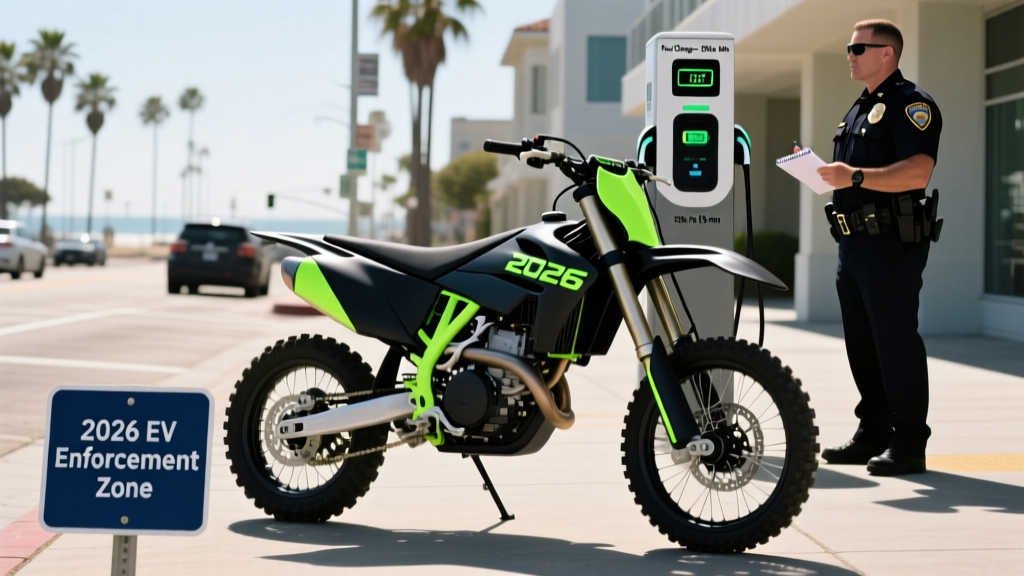
Starting in late 2024 and intensifying through 2026, the Santa Monica Police Department (SMPD) and the California Highway Patrol (CHP) have conducted targeted enforcement operations against riders of off-road electric dirt bikes—such as the Sur-Ron Light Bee, Talaria Sting, and KTM Freeride E-XC—on public roads, bike lanes, boardwalks, and pedestrian paths. These vehicles are classified as off-highway vehicles (OHVs) and are not street-legal in California. Riders face fines of $250–$1,000+ per citation, vehicle impoundment, and misdemeanor charges for repeat offenses. If you want an electric ride for commuting in Santa Monica, you need a street-legal electric motorcycle, a registered moped, or an e-bike that meets California's Class 1–3 definitions.
Why Santa Monica Is Cracking Down on Electric Dirt Bikes
Santa Monica's enforcement surge isn't arbitrary—it responds to a measurable spike in complaints. The city's 311 complaint system and SMPD logs show a sharp increase in noise, near-miss, and reckless-riding reports tied to high-powered electric dirt bikes starting in 2023. While these bikes are marketed as "quiet" compared to gas-powered motocross machines, their real-world issue is speed and behavior: models like the Sur-Ron Light Bee X (peak output ~6 kW / ~8 hp) and the Talaria Sting R (peak ~8 kW / ~10.7 hp) can reach 45–50 mph, and riders frequently operate them on the Third Street Promenade, the beach path, and residential sidewalks—areas where even 15 mph poses a collision risk to pedestrians.
California Vehicle Code (CVC) §38300 classifies these machines as off-highway motor vehicles. They lack the equipment required for street registration: DOT-approved lighting, mirrors, horn, speedometer, and a 17-digit VIN from a manufacturer certified for on-road use. The California DMV will not issue plates for them. Riding one on any public roadway, bike lane, or city path is illegal regardless of the rider's age or license status.
Fines, Impound Costs, and Legal Consequences
Here is what a rider actually faces during a crackdown operation:
| Violation | Fine / Fee | Additional Consequence |
|---|---|---|
| Operating an unregistered vehicle (CVC §4000) | $280–$500 | Citation; vehicle may be impounded |
| Reckless driving (CVC §23103) | $390–$1,000 | Misdemeanor; possible jail time (up to 90 days) |
| Riding on sidewalk / bike path (SMC §3.12.080) | $175–$350 | Warning or citation depending on behavior |
| Vehicle impoundment (CVC §22651) | $250 tow + $35–$50/day storage | Must prove legal ownership to retrieve |
| Minor operating without helmet (CVC §21212) | $25–$100 (parent/guardian) | Mandatory safety course |
A first-time rider stopped on the beach path might walk away with a $350 citation. A repeat offender doing 40 mph on Pico Boulevard faces a reckless driving misdemeanor, a $1,000 fine, and a $400+ impound bill—totaling roughly $1,400–$1,800 for a single incident. The bike itself, which may have cost $3,500–$5,500, could sit in impound for weeks if the owner cannot provide a bill of sale and proof that the vehicle is not stolen.
Street-Legal Electric Alternatives: Cost and Spec Comparison
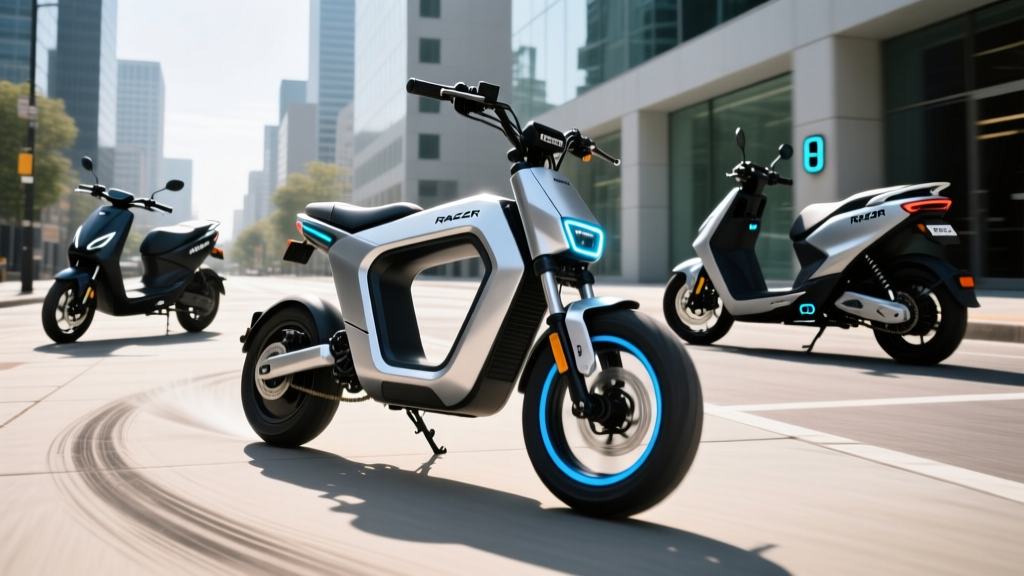
If the goal is electric two-wheeled transportation in Santa Monica, several street-legal options exist. Below is a 2026 spec comparison of popular alternatives, from e-bikes to electric motorcycles, all of which can be legally registered and ridden on public roads.
| Model | Type | Top Speed | Range (real-world) | Battery (kWh) | Charge Time (0–100%) | MSRP | Street-Legal? |
|---|---|---|---|---|---|---|---|
| Rad Power RadCity 5 Plus | Class 2 E-bike | 20 mph | 28–45 mi | 0.672 kWh | ~5 hr | $1,999 | Yes (bike lane/path) |
| Super73 ZX | Class 2 E-bike | 20 mph | 30–40 mi | 0.96 kWh | ~6 hr | $2,995 | Yes (bike lane/path) |
| NIU MQi GT EVO | Electric Moped | 43 mph | 40–55 mi | 2.1 kWh (dual) | ~4 hr | $4,499 | Yes (DMV registered) |
| Zero S (2026) | Electric Motorcycle | 98 mph | 82 mi (city) / 56 mi (hwy) | 14.4 kWh (usable) | ~4.5 hr (L2) | $13,995 | Yes (full DMV reg.) |
| Ryvid Anthem | Electric Moped | 35 mph | 30–40 mi | 1.8 kWh | ~3 hr | $7,995 | Yes (DMV registered) |
The key distinction: Class 1–3 e-bikes (CVC §312.5) require no DMV registration, no license, and no insurance. They are legal on bike paths and lanes. Electric mopeds (under 30 mph per CVC §406) require DMV registration and an M1/M2 license endorsement but no insurance in California. Electric motorcycles like the Zero S require full registration, insurance, an M1 endorsement, and a DOT helmet.
Total Cost of Ownership: E-Bike vs. Electric Moped vs. Gas Scooter
Beyond the sticker price, here is what five years of ownership actually costs for each category in the Santa Monica area, assuming a 12-mile daily commute (round trip), 260 riding days per year:
| Category | E-Bike (RadCity 5+) | Electric Moped (NIU MQi GT) | Gas Scooter (Honda PCX160) |
|---|---|---|---|
| Purchase Price | $1,999 | $4,499 | $4,299 |
| DMV Registration | $0 | ~$150/yr ($750 total) | ~$150/yr ($750 total) |
| Insurance (5 yr) | $0 (homeowner's rider optional ~$60/yr) | $0 (CA mopeds exempt) or ~$400/yr optional | ~$600/yr ($3,000 total) |
| Energy/Fuel (5 yr) | ~$0.04/charge × 1,300 charges = ~$52 | ~$0.18/charge × 1,300 = ~$234 | ~$780 (at 85 mpg, $4.80/gal) |
| Maintenance (5 yr) | ~$400 (tires, brake pads, chain) | ~$500 (tires, brakes, belt) | ~$1,800 (oil, CVT belt, tires, valves) |
| 5-Year Total | ~$2,451 | ~$5,983 | ~$10,629 |
The e-bike wins on pure economics. The electric moped costs roughly 2.4× more over five years but offers higher speed, DMV registration (making it legal on all roads), and cargo capacity. The gas scooter is the most expensive option by a wide margin—primarily due to fuel and maintenance costs. A Honda PCX160 requires oil changes every 2,500 miles, CVT belt replacement, and valve adjustments, none of which apply to electric drivetrains.
Real-World Ownership Considerations for Santa Monica Riders
Charging Access
Santa Monica has a higher density of public charging than most US cities, but two-wheeler charging is almost entirely home-dependent. You charge an e-bike or moped from a standard 120V outlet (Level 1). A RadCity 5 Plus with its 0.672 kWh battery pulls roughly 750W from the wall and charges in about 5 hours. If you live in an apartment without a garage outlet, you will need to remove the battery (most e-bikes and the NIU MQi GT have removable packs) and charge it indoors—confirm with your landlord that lithium battery charging is permitted under your lease.
Climate and Range
Santa Monica's mild coastal climate (rarely below 50°F) is ideal for EV range. Unlike cold-weather markets where lithium batteries lose 20–30% capacity below 32°F, you will see rated or near-rated range year-round. The NIU MQi GT's claimed 55-mile range holds up well in 60–75°F coastal air. Highway riding at 40+ mph will cut range by roughly 25% versus city stop-and-go—this applies to all electric two-wheelers due to aerodynamic drag scaling with the square of velocity.
Driving Patterns
If your commute is under 15 miles round trip on surface streets and bike lanes, a Class 2 e-bike is the practical choice. If you need to travel on Pico or Santa Monica Boulevard at 35–45 mph, you need a registered moped or motorcycle. Off-road electric dirt bikes belong at designated OHV areas such as California State Vehicular Recreation Areas—not city streets.
Common Misconceptions: Myth vs. Fact
| Myth | Fact |
|---|---|
| "It's electric, so it's basically an e-bike." | A Sur-Ron Light Bee produces ~6 kW peak and weighs 110 lbs. California defines an e-bike as having a motor under 750W (1 hp). The Sur-Ron exceeds this by 8× and is classified as an OHV. |
| "I can register it as a moped." | The CA DMV requires a 17-digit VIN from a manufacturer certified for on-road use, DOT lighting, and a certificate of origin. Off-road electric dirt bikes do not have these. |
| "Police can't catch an electric dirt bike." | SMPD and CHP use plate readers, body cameras, and coordinated sweep operations. Impounded bikes are tracked by serial number. Multiple riders have been identified via social media footage. |
| "I only ride it on the beach path, so it's fine." | SMC §3.12.080 prohibits motorized vehicles on beach paths and the boardwalk. SMPD specifically targets these areas during crackdown operations. |
| "Electric dirt bikes qualify for the federal EV tax credit." | The IRS §30D credit applies to four-wheeled vehicles with at least four wheels, a GVWR under 14,000 lbs, and specific battery-sourcing requirements. Two-wheeled electric vehicles are not eligible. A separate, now-expired §30D(e) credit for two-wheelers ended in 2022. |
Decision Framework: What Should You Actually Ride?
Choose a Class 2 e-bike (e.g., RadCity 5 Plus, Super73 ZX) if:
- Your commute is under 15 miles round trip
- You ride primarily on bike lanes, paths, and residential streets
- You want zero registration, zero insurance, and under $2,500 five-year cost
- You can charge a removable battery at home or in your apartment
Choose an electric moped (e.g., NIU MQi GT, Ryvid Anthem) if:
- You need to travel on arterials at 35–45 mph
- You want DMV registration for full road legality
- You have an M1 or M2 license endorsement (or are willing to get one)
- You accept a ~$6,000 five-year total cost
Choose an electric motorcycle (e.g., Zero S, LiveWire ONE) if:
- You need highway speeds (65+ mph) and 80+ mile range
- You want a full-featured motorcycle experience with ABS, traction control, and multiple ride modes
- You have a motorcycle endorsement (M1) and can budget $14,000+ upfront plus ~$800/yr insurance
- You have access to a 240V Level 2 charger at home for faster charging (Zero S charges in ~4.5 hr on L2 vs. ~10 hr on L1)
Choose an off-road electric dirt bike (e.g., Sur-Ron, Talaria) ONLY if:
- You ride exclusively on private property or at designated California OHV areas
- You do not plan to ride on any public road, bike lane, sidewalk, or beach path
- You accept that Santa Monica law enforcement actively enforces against these vehicles in the city
Frequently Asked Questions
Can I make my Sur-Ron or Talaria street-legal in California?
In practice, no. These bikes lack the manufacturer certification, DOT lighting, and 17-digit VIN structure required for DMV registration. Some aftermarket companies sell "street-legal conversion kits," but the California DMV and CHP do not recognize these conversions for originally off-road-manufactured vehicles. The only legal path is to ride them on private land or at OHV parks.
Are Class 3 e-bikes (28 mph) legal on Santa Monica bike paths?
Class 3 e-bikes (motor-assist up to 28 mph) are legal on bike lanes and roads but are prohibited on some multi-use paths under Santa Monica Municipal Code. Check posted signage at each path entrance. The beach path generally restricts motorized devices regardless of class.
Do electric mopeds require insurance in California?
California does not require liability insurance for motorized scooters and mopeds under CVC §406. However, carrying at least minimum liability coverage (~$150–$400/yr) is strongly recommended—you are still personally liable for any injury or property damage you cause.
What happens to my impounded electric dirt bike?
Under CVC §22651, impounded vehicles are held for a minimum of 30 days if the driver had a suspended license or no license. Otherwise, you can retrieve the vehicle once you pay tow and storage fees and provide proof of ownership. If unclaimed after 15–30 days, the vehicle may be sold at a lien sale.
Is there any federal or California incentive for buying an electric motorcycle or moped?
The federal §30D clean vehicle credit does not apply to two- or three-wheeled vehicles (the prior two-wheeler credit expired in 2022). California's Clean Transportation Program occasionally offers point-of-sale rebates for electric motorcycles through the Clean Cars 4 All program, but availability varies by income qualification and funding cycle. Check the California Energy Commission site for current offerings.