The Quick Answer
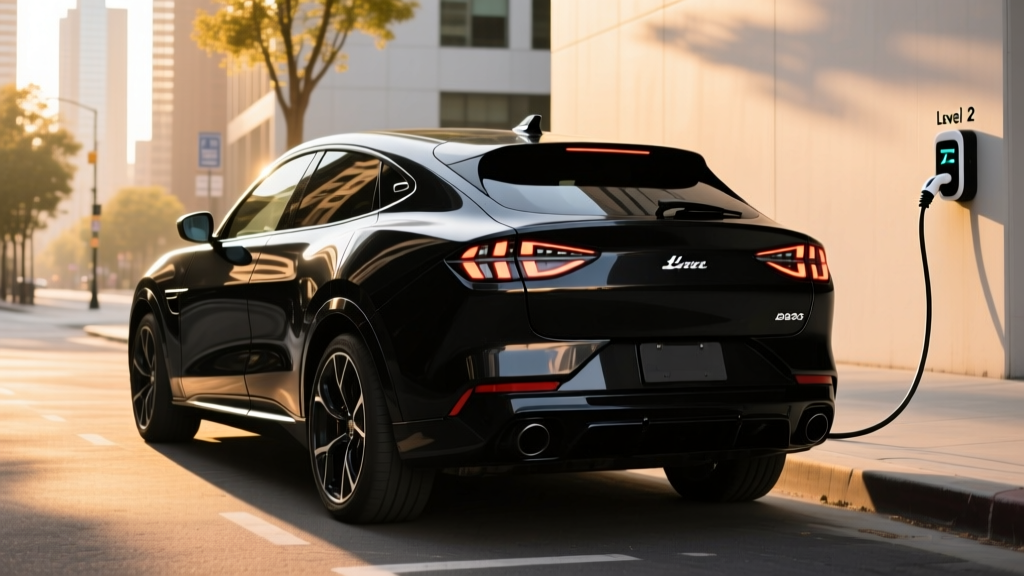
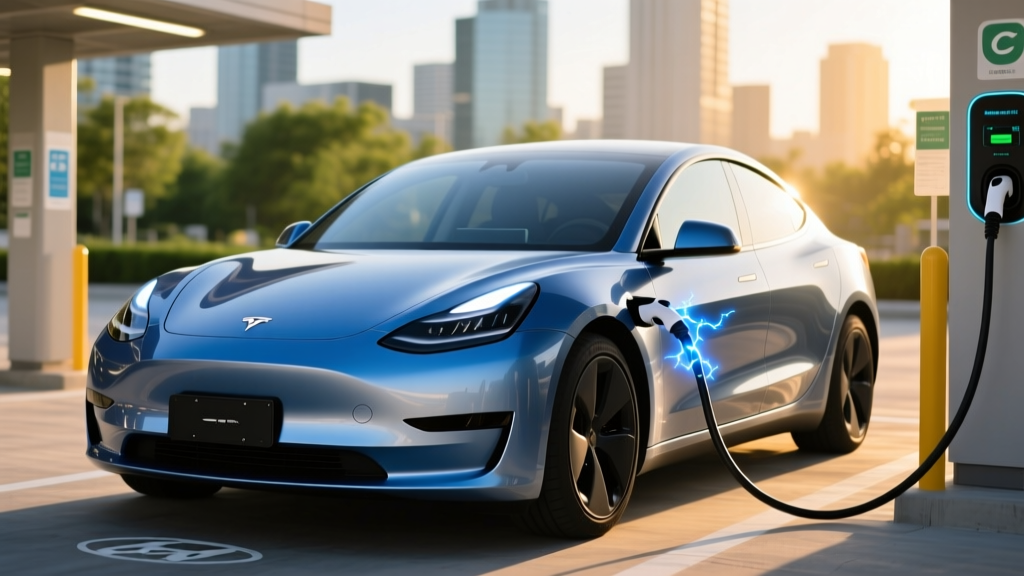
Charging a typical electric car with a 75 kWh battery from empty to full requires about 75–83 kWh of electricity (accounting for ~10% charging losses). At the U.S. average residential rate of $0.17/kWh in 2026, that's roughly $12.75–$14.10 for a full charge at home, delivering around 250–300 miles of EPA-rated range. Public DC fast charging costs significantly more — typically $0.35–$0.55/kWh, or $26–$42 for the same fill-up. For comparison, fueling a 25 MPG gas car 300 miles at $3.40/gallon costs about $40.80.
The real answer to "how much electricity to charge an electric car" depends on your battery size, electricity rate, charging method, and driving patterns. Below, we break down every cost variable with concrete numbers so you can calculate your exact situation.
Understanding kWh: The Unit That Determines Your Charging Cost
Before calculating costs, you need to understand the single most important unit in EV ownership: the kilowatt-hour (kWh). Think of kWh as the EV equivalent of gallons in a gas tank — it measures energy. A car with an 84 kWh battery (like the Tesla Model Y Long Range) holds more energy than one with a 58 kWh battery (like the base Hyundai Ioniq 5 Standard Range).
kW (kilowatts), by contrast, measures power — how fast energy flows. A 150 kW DC fast charger delivers energy faster than a 7.2 kW Level 2 home charger, but the total energy your battery needs (in kWh) stays the same regardless of speed.
Your cost per charge boils down to a simple formula:
Cost = Battery kWh needed ÷ Charging efficiency × Price per kWh
Charging efficiency typically runs 85–92%, meaning 8–15% of the electricity drawn from your panel is lost as heat during the AC-to-DC conversion (Level 1 and Level 2) or thermal management. DC fast charging is slightly more efficient at the battery level but can incur losses from battery cooling systems running simultaneously.
Home Charging Costs: Level 1 and Level 2 Breakdown
Home charging is where most EV owners do 80–90% of their charging, and it's consistently the cheapest option. Here's what it actually costs across common battery sizes:
| Vehicle Example | Usable Battery (kWh) | Energy Drawn (kWh)* | Level 1 Cost (120V, 1.4 kW) | Level 2 Cost (240V, 7.2–11.5 kW) | Charge Time (L2, 7.2 kW) |
|---|---|---|---|---|---|
| Chevrolet Equinox EV (2026) | 85 kWh | ~94 kWh | $15.98 | $15.98 | ~13 hours |
| Tesla Model Y LR (2026) | 75 kWh | ~83 kWh | $14.11 | $14.11 | ~11.5 hours |
| Hyundai Ioniq 5 Std Range | 58 kWh | ~64 kWh | $10.88 | $10.88 | ~9 hours |
| Ford F-150 Lightning Ext. Range | 131 kWh | ~145 kWh | $24.65 | $24.65 | ~20 hours |
| BMW i4 eDrive40 | 81 kWh | ~90 kWh | $15.30 | $15.30 | ~12.5 hours |
*Includes ~10% charging losses for Level 1/Level 2 AC charging.
Notice that the total kWh cost is the same whether you charge on Level 1 or Level 2 — you're paying for the same total energy. The difference is time. Level 1 (a standard 120V outlet) adds roughly 3–5 miles of range per hour. Level 2 (a 240V circuit, like a dryer outlet) adds 20–44 miles per hour depending on the vehicle's onboard charger capacity.
Time-of-Use Rates: The Hidden Savings Lever
If your utility offers time-of-use (TOU) rates, charging overnight can drop your cost dramatically. Many utilities in 2026 offer off-peak rates of $0.08–$0.12/kWh between 10 PM and 6 AM. At $0.10/kWh, that same Tesla Model Y full charge drops from $14.11 to $8.30. Some utilities even offer dedicated EV rate plans with super-off-peak windows below $0.07/kWh.
Contact your utility and ask specifically about EV charging rate plans — many require enrollment and a separate meter or smart-charger integration.
Public Charging Costs: DC Fast Charging and Level 2 Networks
Public charging is where costs escalate quickly. Networks price by the kWh in most states (some still charge by the minute, which penalizes vehicles with slower charge curves). Here's the 2026 landscape:
| Network | DC Fast Charge ($/kWh) | Level 2 Public ($/kWh) | Notes |
|---|---|---|---|
| Tesla Supercharger | $0.28–$0.42 | N/A | Now open to NACS-equipped non-Tesla EVs; idle fees apply |
| Electrify America | $0.38–$0.55 | $0.25–$0.35 | Pass+ membership reduces rates ~15% |
| EVgo | $0.36–$0.52 | $0.22–$0.32 | Subscription plans available for frequent users |
| ChargePoint | $0.35–$0.55 | $0.18–$0.30 | Varies heavily by station owner |
| Free/Workplace Charging | Rare | $0.00–$0.15 | Declining availability; some employers still offer free L2 |
At $0.45/kWh (a realistic average for DC fast charging in 2026), filling that 75 kWh Tesla Model Y from 10–80% (about 52 kWh actually delivered, plus losses) costs approximately $26–$30. That's roughly double the cost of home charging for the same energy.
The DC Fast Charging Cost Trap
Myth: "DC fast charging is always the best option because it's quickest."
Fact: DC fast charging costs 2–3x more per kWh than home charging, and exclusive reliance on it can erase most of the fuel-cost advantage EVs hold over gas cars. Additionally, frequent DC fast charging accelerates battery degradation slightly — most manufacturers recommend limiting DCFC to road trips and using Level 2 for daily needs. Plan your ownership around home or workplace Level 2 charging, and treat DCFC as a road-trip tool.
EV Charging Cost vs. Gas: The Full Comparison
This is the question that drives most purchase decisions. Let's compare real numbers using a 2026 Tesla Model Y Long Range (120 MPGe combined, per fueleconomy.gov) against a comparable 2026 Toyota RAV4 AWD (30 MPG combined) over 12,000 annual miles:
| Scenario | Tesla Model Y LR (EV) | Toyota RAV4 AWD (Gas) | Annual Savings (EV) |
|---|---|---|---|
| 100% Home Charging (L2) at $0.17/kWh | $612 | $1,360 (at $3.40/gal) | $748 |
| Home Charging at $0.10/kWh (TOU off-peak) | $360 | $1,360 | $1,000 |
| 50% Home / 50% DCFC ($0.45/kWh avg) | $1,116 | $1,360 | $244 |
| 100% DCFC at $0.45/kWh | $1,620 | $1,360 | –$260 (gas wins) |
The data reveals a critical ownership truth: if you charge exclusively on DC fast chargers at public rates, an EV can actually cost more to "fuel" than a comparable gas car. The economic case for EVs rests on consistent access to affordable home or workplace charging. Without it, the math flips.
Cost Per Mile: The Universal Metric
Strip away the complexity and look at cost per mile driven:
- EV at home ($0.17/kWh, 3.5 mi/kWh): $0.049/mile
- EV at home ($0.10/kWh, TOU): $0.029/mile
- EV on DCFC ($0.45/kWh): $0.129/mile
- Gas car (30 MPG, $3.40/gal): $0.113/mile
- Gas car (22 MPG, $3.40/gal): $0.155/mile
At home rates, an EV costs 3–5 cents per mile to fuel. That's the number that reshapes your transportation budget.
Total Ownership Cost: Beyond Just Charging
Charging cost is one line item. Here's a 5-year total cost of ownership comparison for a typical EV versus a gas vehicle in the same class, incorporating the factors that actually hit your wallet:
| Cost Category | 2026 Tesla Model Y LR ($47,990 MSRP) | 2026 Toyota RAV4 XLE AWD ($33,500 MSRP) |
|---|---|---|
| Purchase Price (after incentives) | $40,490 (est. $7,500 §30D credit*) | $33,500 |
| Fuel/Energy (5 yrs, home L2 at $0.17) | $3,060 | $6,800 |
| Maintenance (5 yrs) | $1,200 (tire rotations, cabin filter, fluid top-offs) | $3,800 (oil changes, brakes, filters, belts) |
| Insurance (5 yrs avg) | $9,600 ($160/mo avg — EV premiums run 15–25% higher) | $7,200 ($120/mo avg) |
| Depreciation (est.) | $18,000 (EV depreciation has improved but still steeper) | $12,500 |
| 5-Year Total | $72,350 | $63,800 |
*Federal §30D tax credit eligibility depends on MSRP caps ($55,000 for SUVs), buyer income limits ($300,000 MFJ / $150,000 single), and battery critical-mineral sourcing requirements. Verify current-year rules at IRS.gov and consult a tax professional. Point-of-sale transfer available at participating dealers.
The honest takeaway: EVs save significantly on fuel and maintenance, but higher purchase prices, steeper depreciation, and elevated insurance premiums can offset those gains over 5 years. The breakeven point typically arrives around year 6–8 for buyers with home charging access, or sooner if you drive above-average annual miles (15,000+).
Real-World Factors That Change Your Electricity Cost
Cold Weather: The Range and Charging Tax
Battery chemistry doesn't care about your calendar. In sub-freezing temperatures (below 32°F), expect 20–35% range reduction due to increased battery resistance and cabin heating demands. A Model Y rated at 320 miles EPA may deliver 210–250 miles in a 20°F winter. This means you'll charge more frequently, increasing your annual electricity consumption by 15–25% in cold climates.
Cold batteries also charge slower. DC fast charging in freezing weather can add 5–15 minutes to a 10–80% session as the battery thermal management system warms the pack before accepting peak charge rates. Vehicles with heat pumps (standard on most 2026 EVs from Tesla, Hyundai/Kia, and BMW) mitigate but don't eliminate this effect.
Highway Driving vs. City Driving
EVs are most efficient in stop-and-go city driving where regenerative braking recovers kinetic energy. At sustained highway speeds above 70 mph, aerodynamic drag dominates, and efficiency drops 15–25% compared to the EPA combined rating. If your commute is mostly 75 mph interstate, budget for higher kWh consumption — perhaps 3.0 mi/kWh instead of the EPA-rated 3.5 mi/kWh.
Home Charging Access: The Make-or-Break Factor
If you own a home with a garage or dedicated parking spot near your electrical panel, EV ownership is straightforward. A Level 2 home charger installation typically costs $500–$2,500 (equipment: $300–$700; electrician: $200–$1,500; permit: $50–$300), with costs rising if your panel needs an upgrade from 100A to 200A service ($1,500–$4,000).
If you live in an apartment, rely on street parking, or lack access to a dedicated circuit, your charging economics change fundamentally. You'll depend on public Level 2 chargers ($0.18–$0.35/kWh) and DC fast chargers ($0.35–$0.55/kWh), which erases much of the fuel-cost advantage. Before buying an EV, honestly assess whether you can install or reliably access affordable charging — this matters more than any spec sheet number.
Decision Framework: Should You Buy an EV Based on Charging Costs?
Use This If-Then Framework
Choose an EV if:
- You have reliable home or workplace Level 2 charging access
- Your daily driving is under 80 miles round-trip (most EVs handle this easily with overnight L2 charging)
- Your utility offers off-peak TOU rates below $0.12/kWh
- You drive 12,000+ miles annually (higher mileage = faster payback on fuel savings)
- You qualify for the §30D federal credit or state incentives
- You plan to keep the vehicle 5+ years (amortizes the upfront premium)
Choose a hybrid (HEV/PHEV) instead if:
- You lack home/workplace charging and would rely entirely on public DCFC
- You regularly drive 300+ miles in a day through charging-sparse regions
- You live in an apartment without charging infrastructure and your landlord won't install it
- Your budget is under $30,000 and you can't access used-EV credits
Consider a PHEV as a bridge if:
- You can charge at home but take frequent road trips (a PHEV like the Toyota RAV4 Prime gives 42 miles electric-only plus a gas engine for longer trips)
- You want EV-like daily commuting without range anxiety on weekends
- Your household has one car that must do everything
Common Misconceptions About EV Charging Costs
| Myth | Fact |
|---|---|
| "Charging an EV will double my electric bill." | Adding an EV typically increases household electricity use by 30–40%. At $0.17/kWh, expect $50–$70/month added for 12,000 miles/year — still far less than $110+/month in gas for an equivalent car. |
| "I need a special electrical upgrade to charge at home." | Most homes with a 200A panel and a garage can add a Level 2 charger with a simple 40–50A circuit. Only older homes with 100A service typically need panel upgrades. |
| "Fast charging is always faster and better." | DCFC costs 2–3x more per kWh and charges slow significantly above 80% SoC. For daily needs, overnight Level 2 is cheaper and gentler on battery health. |
| "EVs are always cheaper to fuel than gas cars." | Only with affordable home charging. At $0.50/kWh public DCFC rates, some EVs cost more per mile than a 30+ MPG gas car. |
| "Solar panels make EV charging free." | Solar offsets your energy cost but has its own payback period (7–12 years). It's complementary, not a prerequisite. |
Frequently Asked Questions
How many kWh does it take to charge an electric car from empty to full?
It depends on the battery size and charging losses. A 75 kWh battery requires roughly 82–83 kWh from the grid on Level 2 (accounting for ~10% conversion losses). Larger batteries like the F-150 Lightning's 131 kWh pack need about 145 kWh. You rarely charge from 0–100% in practice; most daily top-ups use 20–40 kWh.
How much does it cost to charge an EV per month?
For 1,000 miles/month of driving in an EV averaging 3.5 mi/kWh, you need about 286 kWh. At the U.S. average residential rate of $0.17/kWh, that's $48.60/month. With off-peak TOU rates at $0.10/kWh, it drops to about $28.60/month.
Is it cheaper to charge an EV at home or at a public station?
Home charging is consistently 2–3x cheaper. Residential rates average $0.17/kWh, while public DC fast chargers run $0.35–$0.55/kWh. Public Level 2 stations ($0.18–$0.35/kWh) fall in between but are still more expensive than home. The economic case for EVs depends on reliable home or workplace charging.
Does charging speed affect how much electricity I use?
Not significantly in total kWh. Whether you charge at 1.4 kW (Level 1) or 11.5 kW (Level 2), the battery receives the same total energy. DC fast charging at 150+ kW has slightly lower conversion losses but may activate battery cooling systems that add marginal energy draw. The primary difference is time, not total electricity consumed.
How does cold weather affect EV charging costs?
Cold weather increases energy consumption by 15–35% due to cabin heating and reduced battery efficiency. You'll use more kWh per mile in winter, raising your monthly charging cost proportionally. Preconditioning the battery while plugged in (using grid power rather than battery power to warm the pack) helps mitigate this if your vehicle supports it.
Will I need to upgrade my electrical panel to charge at home?
Maybe. Homes with 200A service usually have sufficient capacity for a 40–48A Level 2 charger circuit. Homes with older 100A panels may need an upgrade ($1,500–$4,000) or can opt for a lower-amperage charger (16–24A) that still adds 15–25 miles of range per hour — enough for most daily needs. A licensed electrician can assess your panel's available capacity.
The bottom line on how much electricity it takes to charge an electric car: plan for roughly 30 kWh per 100 miles driven (including charging losses), budget $40–$70/month for home charging at average rates, and ensure you have affordable Level 2 access before committing to a full EV. The math works — but only if your charging situation does.