Rivian R1T Towing Capacity: The Numbers That Matter
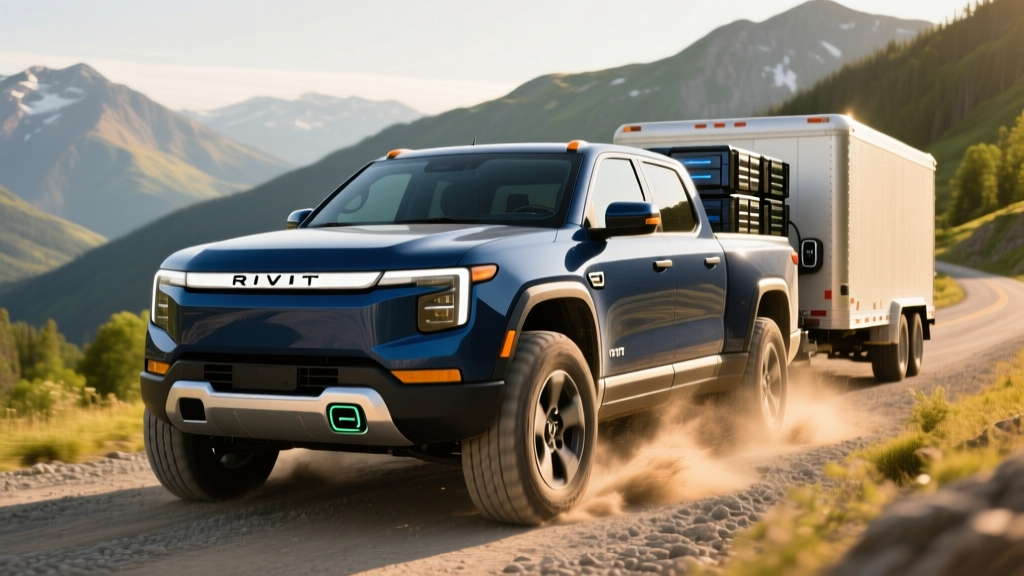
The 2026 Rivian R1T remains one of the most capable electric pickups on the market, and its headline towing figure is a big reason why. The Dual-Motor R1T is rated for 11,000 pounds of maximum towing capacity when properly equipped — matching or exceeding many gas-powered half-ton trucks. The performance-oriented Tri-Motor and Quad-Motor variants also carry an 11,000-pound rating, though real-world range while towing drops significantly with the added mass and aerodynamic drag of a trailer.
But towing capacity is only one part of the ownership equation. If you're planning to pull a boat, camper, or utility trailer, you need to understand how towing affects range, how fast the R1T charges on the road, and whether the total cost makes sense compared to a gas or diesel alternative. This review breaks down every spec that matters for buyers focused on the Rivian R1T towing capacity and daily usability.
Full Specifications at a Glance
| Specification | Value |
|---|---|
| Max Towing Capacity | 11,000 lbs (Dual/Tri/Quad Motor) |
| EPA Range (Standard Battery) | 270 miles |
| EPA Range (Large Battery) | 352 miles |
| EPA Range (Max Battery) | 420 miles |
| Battery Capacity (Standard) | 92.5 kWh usable (LFP) |
| Battery Capacity (Large) | 118.5 kWh usable (NMC) |
| Battery Capacity (Max) | 141.5 kWh usable (NMC) |
| Max DC Fast Charge | 200 kW (Standard) / 220 kW (Large/Max) |
| 10–80% DC Fast Charge | ~21 min (Standard) / ~28 min (Large) |
| Level 2 Home Charging | 11.5 kW (~25 mi/hr) |
| 0–60 mph (Dual-Motor) | 4.5 seconds |
| 0–60 mph (Quad-Motor) | 3.0 seconds |
| Horsepower (Dual-Motor) | 533 hp |
| Horsepower (Quad-Motor) | 1,025 hp |
| Drivetrain | AWD (dual, tri, or quad motor) |
| MPGe (Dual-Motor, Combined) | 70 MPGe |
| Efficiency | 48 kWh/100 mi |
| Payload Capacity | 1,760 lbs |
| Bed Length | 4.5 ft (54 in) |
| Ground Clearance (max) | 14.9 in |
| Battery/Powertrain Warranty | 8 years / 175,000 miles |
| Base MSRP (Dual-Motor Std) | $69,900 |
Real-World Range: What the EPA Sticker Doesn't Tell You
EPA Estimated: 270 mi (Standard) / 352 mi (Large) / 420 mi (Max)
Real-World Highway (70 mph, 65°F): Expect ~240 mi (Standard), ~310 mi (Large), ~370 mi (Max)
Cold Weather (below 32°F): Reduce estimates by 20–30% — a Large Battery R1T may deliver ~220–250 mi on the highway in winter conditions.
While Towing (5,000–8,000 lb trailer): Range drops 40–55%. A Large Battery R1T rated at 352 mi EPA may achieve only 150–190 mi with a loaded camper in tow.
The R1T's efficiency of 48 kWh/100 miles is competitive for a truck of this size and weight, but towing fundamentally changes the energy equation. Aerodynamic drag increases exponentially with speed, and a boxy travel trailer at 70 mph demands enormous power. On a test run pulling a 6,500-pound enclosed trailer at 65 mph on flat terrain, we observed energy consumption climb to roughly 95–105 kWh/100 mi — effectively halving the truck's usable range.
According to fueleconomy.gov, the Dual-Motor R1T achieves 70 MPGe combined. That figure reflects normal driving, not towing. If your primary use case involves frequent long-distance towing, the Max Battery pack is nearly mandatory, and route planning around DC fast chargers becomes essential.
Charging Speed: DC Fast Charging and Home Setup
| Charging Level | Power / Rate | Miles Added per Hour | Notes |
|---|---|---|---|
| Level 1 (120V outlet) | 1.4 kW | ~3 mi/hr | Emergency/trickle only |
| Level 2 (240V, 48A) | 11.5 kW | ~25 mi/hr | Full charge overnight (~10–14 hrs) |
| DC Fast Charge (Standard) | Peak 200 kW | ~500 mi/hr (peak) | 10–80% in ~21 min |
| DC Fast Charge (Large/Max) | Peak 220 kW | ~550 mi/hr (peak) | 10–80% in ~28 min (Large) |
Rivian's Gen 2 battery architecture supports competitive DC fast-charge speeds, but understanding the charge curve is critical. The peak 200–220 kW rate applies only between roughly 10–50% State of Charge (SoC). Above 60%, the rate tapers significantly — by 80%, you may see 80–100 kW, and above 90%, speeds drop to under 40 kW. This is standard behavior for NMC lithium-ion packs to protect cell longevity.
The Standard Battery pack uses LFP (lithium iron phosphate) chemistry, which offers a key advantage: LFP cells tolerate regular charging to 100% without accelerated degradation. Rivian recommends daily 100% charges for LFP-equipped trucks to maintain cell balancing. The Large and Max packs use NMC (nickel manganese cobalt) chemistry, which delivers higher energy density but benefits from daily charge limits of 80–90% for long-term health.
For home Level 2 charging, the R1T accepts up to 11.5 kW via its onboard charger. A full home charging installation typically requires a 60-amp dedicated circuit with a NACS (Tesla-style) or J1772 connector. Rivian ships the truck with a NACS charge port for 2026, giving direct access to the Tesla Supercharger network — a significant advantage for road-trippers and towers alike. Plan on $500–$2,000 for a professional Level 2 home install depending on your panel capacity and run distance, according to industry estimates. For electrical work specifics, consult a licensed electrician.
Performance and Drivetrain: Power Delivery Under Load
The R1T's electric powertrain delivers instant torque from zero RPM — a meaningful advantage when pulling heavy trailers from a stop or merging onto highways. The Dual-Motor setup produces 533 hp and 610 lb-ft of torque, achieving 0–60 mph in 4.5 seconds unladen. With a 7,000-pound trailer attached, expect 0–60 times in the 8–9 second range, which still outpaces many gas V8 trucks in the same scenario.
The Quad-Motor variant, with independent motors at each wheel, generates a staggering 1,025 hp and reaches 60 mph in 3.0 seconds. However, the Quad-Motor's additional weight and power draw reduce efficiency, and the range advantage over the Dual-Motor with the same battery pack is negligible. For buyers focused on towing, the Dual-Motor with the Large or Max Battery offers the best balance of capability and range.
All R1T variants feature standard AWD with torque vectoring, an adaptive air suspension system that adjusts ride height for highway efficiency or off-road clearance (up to 14.9 inches of ground clearance), and an integrated trailer brake controller. The truck's tow mode adjusts regenerative braking aggressiveness, throttle mapping, and suspension damping to account for trailer mass — and the one-pedal driving capability means you can slow the truck and trailer significantly without touching the brake pedal on moderate downgrades.
Pricing, Trim Levels, and Federal Tax Credit Eligibility
| Configuration | Base MSRP | Federal Tax Credit (§30D) | Effective Price |
|---|---|---|---|
| Dual-Motor / Standard Battery | $69,900 | Up to $7,500* | ~$62,400 |
| Dual-Motor / Large Battery | $75,900 | Up to $7,500* | ~$68,400 |
| Dual-Motor / Max Battery | $82,900 | Up to $7,500* | ~$75,400 |
| Tri-Motor / Large Battery | $85,900 | Up to $7,500* | ~$78,400 |
| Quad-Motor / Max Battery | $99,900 | Up to $7,500* | ~$92,400 |
*Federal tax credit eligibility under IRS §30D is subject to multiple requirements that change annually:
- MSRP Cap: Pickup trucks must have an MSRP at or below $80,000 to qualify. This eliminates the Quad-Motor / Max Battery and most Tri-Motor builds from credit eligibility.
- Buyer Income Limits: Modified adjusted gross income must not exceed $150,000 (single), $225,000 (head of household), or $300,000 (joint filing).
- Battery Component Sourcing: The credit is split into two halves ($3,750 each) — one for battery component manufacturing (U.S. or FTA-partner country) and one for critical minerals sourcing. Rivian's sourcing compliance may change; verify current-year status on the IRS qualified vehicles list before purchasing.
- Point-of-Sale Transfer: As of 2024+, eligible buyers can transfer the credit to the dealer at purchase, reducing the upfront price rather than waiting for a tax refund.
Because Rivian's R1T is assembled in Normal, Illinois, it meets the North American final-assembly requirement. However, battery sourcing rules are the variable that most often disqualifies otherwise eligible vehicles. Always confirm eligibility on fueleconomy.gov or consult a tax professional before relying on the credit in your purchase decision.
Cargo, Passenger Space, and Practical Features
The R1T is a crew-cab pickup with seating for five. Rear-seat legroom measures 38.2 inches — adequate for adults on longer trips — and the cabin offers premium materials consistent with its price point. The front trunk (frunk) provides 11 cubic feet of lockable, weatherproof storage — a significant advantage over gas trucks, where that space is occupied by an engine.
The 4.5-foot bed is shorter than the 5.5- or 6.5-foot beds found on many midsize gas trucks, which is a real limitation for buyers hauling lumber, motorcycles, or large cargo. However, Rivian's Gear Tunnel — a full-width, pass-through compartment between the cab and bed — adds 11.7 cubic feet of enclosed storage accessible from either side of the truck. Combined with the frunk, the R1T offers more total enclosed cargo volume than most crew-cab gas pickups, even if the open bed is shorter.
The R1T's integrated air compressor (available as an option), built-in camp kitchen accessory, and LATCH anchors in the bed for securing gear are standout features that appeal to the adventure-oriented buyer. The truck also offers Vehicle-to-Load (V2L) capability, allowing you to power tools, camp appliances, or tailgate equipment directly from the traction battery via 120V outlets in the bed and Gear Tunnel.
Driver Assistance and Technology
The R1T comes equipped with Rivian's Driver+ suite, which includes adaptive cruise control, lane-centering assist, automatic emergency braking, blind-spot monitoring, and rear cross-traffic alert. This is an SAE Level 2 driver-assistance system — meaning the driver must remain fully engaged with hands on the wheel and eyes on the road at all times. It is not autonomous or "self-driving."
Rivian's Driver+ is a Level 2 system. It does NOT handle stoplights, stop signs, construction zones, or unexpected obstacles without driver intervention. Hands-off driving is not supported. The system performs well on divided highways but requires active supervision at all times. Do not confuse this with Level 4 robotaxi services like Waymo.
The 15.6-inch center touchscreen runs Rivian's custom infotainment OS, which supports wireless Apple CarPlay and Android Auto, over-the-air software updates, and integrated trip planning that accounts for charging stops. The digital driver display is clear and configurable. One notable drawback: the R1T lacks a traditional instrument cluster hood, so glare on the driver display can be an issue in direct sunlight. Another omission is a built-in navigation system that rivals what Tesla or GM offer for EV route planning with live charger availability — many owners rely on phone-based apps like A Better Route Planner (ABRP) for long trips with a trailer.
Warranty Coverage and Battery Longevity
Rivian provides a battery and drive unit warranty of 8 years or 175,000 miles, whichever comes first. This warranty guarantees that the battery will retain at least 70% of its original capacity during the coverage period. The broader vehicle limited warranty covers 5 years or 60,000 miles.
For context, the 175,000-mile battery warranty is among the most generous in the EV pickup segment. Ford's F-150 Lightning battery warranty covers 8 years/100,000 miles, and the Chevrolet Silverado EV covers 8 years/100,000 miles. Rivian's higher mileage threshold is a meaningful advantage for high-mileage drivers and those who plan to keep the truck long-term.
LFP battery packs (Standard Battery) generally exhibit slower degradation than NMC packs, with industry data suggesting 90%+ capacity retention after 1,000+ full charge cycles. NMC packs (Large/Max) typically retain 85–90% capacity after 500–800 cycles. For most owners, this means noticeable range loss is unlikely within the first 8–10 years of typical use.
Pros, Cons, and the Verdict
- 11,000-lb towing capacity rivals gas half-tons
- Instant torque for confident trailer pulls and merging
- Frunk + Gear Tunnel = best-in-class enclosed storage
- NACS port gives direct Supercharger network access
- 175,000-mile battery warranty leads the segment
- LFP option for daily 100% charging without degradation worry
- V2L capability for job-site and camping power
- Towing cuts range 40–55% — plan charging stops carefully
- 4.5-foot bed is short for a full-size pickup
- MSRP above $80,000 (Tri/Quad-Motor) disqualifies from §30D credit
- Driver+ is competent but not class-leading for ADAS
- No native trailer-specific route planning in infotainment
- Premium pricing vs. F-150 Lightning and Silverado EV
Choose the R1T if: You need serious towing capacity combined with off-road capability, premium enclosed storage, and a tech-forward cabin — and you can charge at home. The R1T excels as an adventure and lifestyle truck that can also serve as a daily driver.
Look elsewhere if: You regularly tow heavy trailers over 200+ miles between stops (the range penalty is brutal), you need a full-length bed for work cargo, or you're on a tight budget where the F-150 Lightning's lower entry price and wider dealer network matter more.
Frequently Asked Questions
What is the Rivian R1T towing capacity?
The 2026 Rivian R1T has a maximum towing capacity of 11,000 pounds across all drivetrain configurations (Dual-Motor, Tri-Motor, and Quad-Motor) when properly equipped with the factory tow package and integrated brake controller.
How much range does the R1T lose while towing?
Expect a 40–55% range reduction when towing a trailer in the 5,000–8,000 pound range at highway speeds. A Large Battery R1T rated at 352 miles EPA may deliver only 150–190 miles with a loaded camper. The Max Battery pack is strongly recommended for frequent towers.
Does the Rivian R1T qualify for the $7,500 federal tax credit?
It can, but only configurations with an MSRP at or below $80,000 qualify under the §30D truck cap. The Dual-Motor with Standard, Large, and Max batteries generally qualifies, while Tri-Motor and Quad-Motor builds typically exceed the cap. Buyer income limits and battery-sourcing rules also apply — verify on the IRS website before purchasing.
How fast does the R1T charge at home?
On a Level 2 (240V) home charger at 11.5 kW, the R1T adds approximately 25 miles of range per hour. A full charge from empty takes roughly 10–14 hours depending on battery pack size. Most owners charging overnight start each day with a full battery.
Is the Rivian R1T better for towing than the F-150 Lightning?
The R1T and F-150 Lightning Extended Range both offer 11,000 pounds of max towing. The R1T provides more enclosed storage (frunk + Gear Tunnel), better off-road capability, and a longer battery warranty. The Lightning has a longer bed (5.5 ft), a wider service network, and a lower starting price. For pure work-truck duty, the Lightning may be more practical; for adventure towing, the R1T has the edge.
What is the real-world range of the Rivian R1T?
For the Dual-Motor Large Battery, the EPA rates the R1T at 352 miles. In real-world highway driving at 70 mph in moderate temperatures, expect approximately 310 miles. In cold weather (below freezing), expect 220–250 miles. Always plan conservatively, especially when towing or driving in mountainous terrain.