Why Buyers Are Searching for a Kia EV9 Lease in 2026
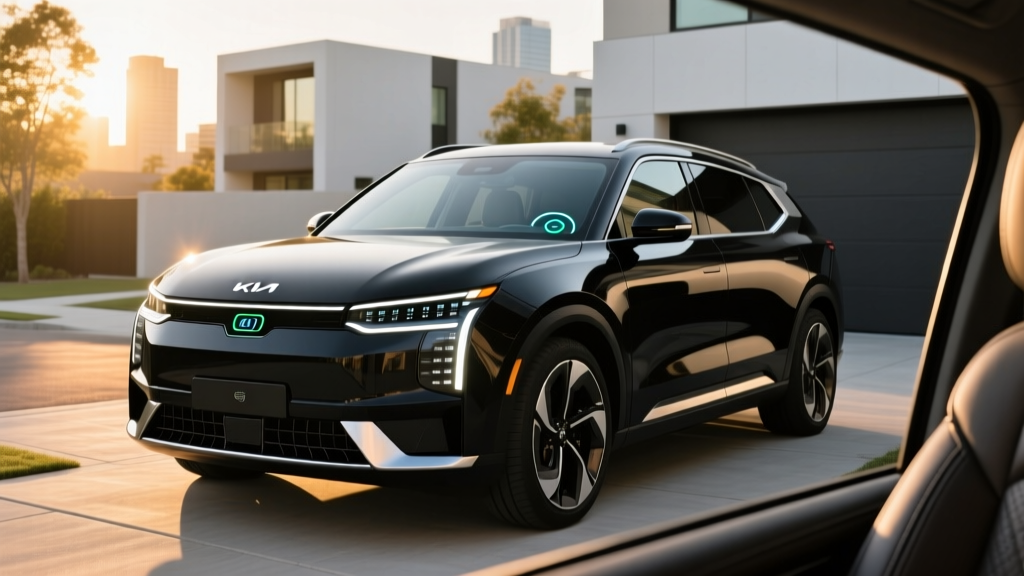
The three-row Kia EV9 remains one of the few mainstream electric SUVs that can genuinely seat adults in all three rows while offering over 300 miles of EPA range. But with a starting MSRP that climbs past $55,000 for the Long Range trims and pushes $75,000+ for the GT-Line AWD, many shoppers are turning to leasing as a way to access the EV9 without committing to long-term depreciation risk. A well-structured EV9 lease can also unlock the full $7,500 federal tax credit as a point-of-sale rebate — even when purchasing the vehicle outright might not qualify due to battery-sourcing rules that shift year to year.
This guide walks through the real math of owning a 2026 Kia EV9 over five years: purchase price, fuel savings, insurance premiums, maintenance, depreciation, and the incentive landscape. If you're cross-shopping the EV9 against the Hyundai Ioniq 9, Rivian R1S, or Tesla Model X, these numbers are what actually matter.
2026 Kia EV9: Key Specs at a Glance
| Spec | Light Range RWD | Long Range RWD | Long Range AWD | GT-Line AWD |
|---|---|---|---|---|
| Base MSRP | $55,395 | $60,395 | $65,395 | $73,995 |
| EPA Range | 230 mi | 304 mi | 282 mi | 270 mi |
| Battery (usable) | 76.1 kWh | 100.0 kWh (NMC) | 100.0 kWh (NMC) | 100.0 kWh (NMC) |
| Peak DC Charge Rate | ~170 kW | ~210 kW | ~210 kW | ~210 kW |
| 10–80% DC Time | ~24 min | ~24 min | ~24 min | ~24 min |
| Level 2 Rate | 10.9 kW | 10.9 kW | 10.9 kW | 10.9 kW |
| Horsepower | 215 hp | 201 hp | 379 hp | 379 hp |
| 0–60 mph | 8.2 sec | 9.0 sec | 5.0 sec | 5.0 sec |
| MPGe (combined) | 88 MPGe | 83 MPGe | 85 MPGe | 80 MPGe |
| Battery/Powertrain Warranty | 10 years / 100,000 miles | |||
5-Year Total Cost of Ownership: EV9 vs. Comparable Gas SUV
To understand whether an EV9 lease makes financial sense, we need to compare it against a direct gas-powered competitor. The closest match is the Kia Telluride SX Prestige AWD (MSRP ~$53,000, EPA 20 MPG combined). Below is a 5-year / 75,000-mile ownership projection for the EV9 Long Range AWD ($65,395) versus the Telluride.
| Cost Category (5 yr / 75k mi) | Kia EV9 LR AWD | Kia Telluride AWD (Gas) |
|---|---|---|
| Purchase / Lease Cost | $65,395 (or ~$850/mo lease) | $53,000 |
| Federal Tax Credit (§30D) | −$7,500 (if eligible) | $0 |
| Fuel / Charging | $4,220 | $11,250 |
| Maintenance | $1,800 | $4,500 |
| Insurance (5 yr total) | $14,500 | $10,800 |
| Estimated Depreciation | $28,000 | $19,500 |
| Net 5-Year Cost | ~$78,415 | ~$69,550 |
The EV9 still costs more over five years even with the federal credit and fuel savings, primarily due to higher depreciation and insurance. However, leasing can mitigate the depreciation risk — which we'll detail below.
Charging Cost Per Mile vs. Gas
The fuel math is where the EV9 shines, but the exact savings depend on your electricity rate and driving mix.
- Home charging (national average $0.16/kWh): The EV9 Long Range AWD averages ~0.33 kWh/mile. That's $0.053/mile.
- Public DC fast charging (average $0.40/kWh): $0.132/mile.
- Gas Telluride at $3.50/gal and 20 MPG combined: $0.175/mile.
If 80% of your charging is at home and 20% on public DCFC, your blended rate is roughly $0.069/mile — a 61% savings per mile versus gasoline. Over 15,000 miles/year, that's $1,590 saved annually on fuel alone. Source: fueleconomy.gov.
Maintenance Savings: What You Don't Pay For
| Maintenance Item | EV9 (5 yr) | Telluride (5 yr) |
|---|---|---|
| Oil Changes | $0 | $750 |
| Transmission Fluid | $0 | $250 |
| Brake Pads/Rotors | $200 (regen extends life) | $1,200 |
| Air Filters / Spark Plugs | $0 | $400 |
| Coolant / Misc. | $300 | $500 |
| Tire Rotation & Replacement | $1,300 | $1,400 |
| Total | $1,800 | $4,500 |
The EV9 saves roughly $2,700 in maintenance over five years. Regenerative braking dramatically reduces brake pad wear — many EV owners go 80,000+ miles on original pads. However, EV tires tend to wear faster due to higher vehicle weight and instant torque; budget for one tire set replacement within 5 years.
Federal Tax Credit: Does the EV9 Qualify for §30D?
The federal EV tax credit under IRS §30D offers up to $7,500 for qualifying new clean vehicles. But eligibility is not automatic — it depends on three moving targets that change periodically:
- MSRP Cap: SUVs must have an MSRP at or below $80,000. All 2026 EV9 trims qualify (top GT-Line AWD is $73,995).
- Buyer Income Cap: Modified AGI must not exceed $150,000 (single), $225,000 (head of household), or $300,000 (joint filing).
- Battery Sourcing / Critical Minerals: A percentage of battery components must be manufactured or assembled in North America, and critical minerals must be sourced from the U.S. or FTA partners. These thresholds tighten annually. The EV9 is built in West Point, Georgia, but battery cell sourcing determines credit eligibility — verify current-year status on the IRS qualified vehicles list before purchasing.
- Point-of-Sale Transfer: Since 2024, buyers can transfer the credit to the dealer as an upfront price reduction, effectively lowering the purchase price or lease capitalized cost by $7,500 at signing.
The Lease Loophole: Why EV9 Lease Deals Can Be More Advantageous
Here's where leasing the EV9 gets interesting. Under the IRS commercial clean vehicle credit (§45W), vehicles leased through a qualifying lessor may pass the full $7,500 credit to the lessee as a capitalized cost reduction — even if the battery sourcing requirements for §30D aren't fully met. This is because the lessor (the financing entity) claims the commercial credit, not the individual buyer. Many Kia dealers structure EV9 leases to pass this savings directly to you.
Important caveat: This "lease loophole" depends on the lessor's tax position and how they structure the lease. Always ask the dealer whether the $7,500 is being applied as a cap cost reduction and confirm in writing. Tax rules can change — consult a tax professional for your specific situation.
Insurance Reality: The Cost EV Buyers Often Overlook
EV insurance premiums run 15–25% higher than comparable gas vehicles on average. For the EV9, expect annual premiums of $2,600–$3,200 depending on your state, driving record, and coverage level. The reasons:
- Higher repair costs: EV-specific components (battery pack, power electronics) are expensive to replace after collision damage.
- Specialized labor: Fewer body shops are certified for high-voltage EV repairs, driving up labor rates.
- Vehicle value: A $65,000+ SUV carries higher comprehensive and collision premiums regardless of powertrain.
Shop quotes from EV-friendly insurers (Geico, Progressive, and State Farm all have competitive EV rates in most states) and ask about EV-specific discounts. Bundling home and auto can save 10–15%.
Depreciation and Resale Value: What Leasing Protects You From
EV depreciation has been steeper than gas vehicles over the past few years, driven by rapid battery technology improvements, aggressive price cuts from Tesla and others, and shifting consumer demand. Large electric SUVs like the EV9 have seen 40–50% depreciation over three years in recent market conditions, compared to 30–35% for a gas Telluride.
This is precisely why leasing can be the smarter play for the EV9:
- You transfer depreciation risk to the lessor. If EV resale values continue to soften, you walk away at lease end with no exposure.
- You can upgrade to newer battery tech. Solid-state batteries and improved charging architectures are expected to reach mainstream models by 2028–2029. A 36-month lease positions you to upgrade.
- Tax credit is applied upfront. The $7,500 reduces your effective cap cost, lowering monthly payments.
If you plan to keep the vehicle 7–10 years (well within the 10-year/100,000-mile battery warranty), buying may make more sense — you'll eventually recoup the higher upfront cost through fuel savings and won't face perpetual lease payments.
State, Local, and Utility Incentives: Stacking Savings on Top of Federal
- California: Up to $2,000 additional rebate through the Clean Fuel Reward (if active), plus potential CVRP rebates for income-qualified buyers.
- Colorado: State tax credit of up to $5,000 for new EVs (varies by MSRP and income).
- New York: Drive Clean Rebate up to $2,000 (point-of-sale).
- Utility rebates: Many utilities offer $500–$1,500 rebates for home Level 2 charger installation, plus off-peak charging rates that can drop your $/kWh to $0.08–$0.10.
- HOV lane access: Several states grant solo HOV lane access to EVs — a significant time savings in metro areas like Los Angeles, Washington D.C., and Atlanta.
Stacked together, a buyer in Colorado could potentially combine the $7,500 federal credit + $5,000 state credit + $1,000 utility charger rebate for $13,500 in total incentives — dramatically improving the EV9's cost proposition.
EV9 Lease Decision Framework: Buy, Lease, or Wait?
Choose an EV9 lease if:
- You want to lock in the $7,500 credit without worrying about battery-sourcing rule changes
- You prefer to upgrade every 3 years to access newer EV tech
- You want to avoid long-term depreciation risk on a $65K+ vehicle
- Your annual mileage stays under 12,000–15,000 miles (typical lease limits)
Choose to buy the EV9 if:
- You plan to keep the vehicle 7+ years (amortizing the higher purchase price)
- You drive 15,000+ miles/year (lease overage penalties add up fast)
- You qualify for the full §30D credit and your state offers stacking incentives
- You want to modify the vehicle (roof racks, wraps, etc. — leases restrict this)
Wait if:
- You can delay until late 2026/2027 when updated battery chemistries or refreshed trims may arrive
- Your home electrical panel needs a costly upgrade ($2,000–$4,000 for a 200A service) before installing Level 2 charging
Frequently Asked Questions
How much does a 2026 Kia EV9 lease cost per month?
With the $7,500 federal credit applied as a cap cost reduction, a 36-month EV9 Long Range AWD lease typically falls in the $750–$950/month range depending on down payment, money factor, and residual value. GT-Line trims push closer to $1,000–$1,100/month. Always negotiate the capitalized cost (sale price) before discussing monthly payments.
Do I qualify for the $7,500 federal tax credit on the EV9?
You qualify if your modified AGI is under the IRS thresholds ($150K single / $300K joint), the vehicle MSRP is under $80,000 (all EV9 trims qualify), and the battery meets current-year sourcing requirements. Because sourcing rules change, verify on the IRS qualified vehicles list before signing. Leasing may bypass sourcing restrictions via the §45W commercial credit.
How much will I save on fuel with the EV9 vs. a gas SUV?
Assuming 80% home charging at $0.16/kWh and 20% DC fast charging at $0.40/kWh, the EV9 costs roughly $0.069/mile to fuel. A comparable gas SUV at 20 MPG and $3.50/gallon costs $0.175/mile. Over 15,000 miles/year, that's a $1,590 annual savings — or $7,950 over five years.
Is the EV9 expensive to insure compared to a gas SUV?
Yes, expect to pay 15–25% more. Budget $2,600–$3,200/year for the EV9 versus $2,000–$2,400 for a Telluride. The gap comes from higher repair costs for EV-specific components and the vehicle's higher replacement value. Shop multiple insurers and bundle policies to reduce premiums.
What happens if the EV9 battery degrades during a lease?
Battery degradation is covered under Kia's 10-year/100,000-mile battery warranty (capacity retention below 70% triggers a claim). Over a typical 3-year/36,000-mile lease, expect only 3–5% degradation — well within normal parameters. You'll return the vehicle before any meaningful capacity loss occurs.
Can I charge the EV9 at home, and what does installation cost?
Yes. The EV9 accepts up to 10.9 kW on Level 2 (240V). A full charge from empty takes roughly 9.5 hours for the 100 kWh battery — ideal for overnight charging. Home Level 2 installation typically costs $800–$2,500 including the charger and electrician labor, assuming your panel has capacity. A 200-amp panel upgrade adds $1,500–$4,000 if needed.
How does cold weather affect the EV9's range?
In sustained sub-freezing temperatures (below 32°F), expect a 20–30% range reduction. The Long Range AWD's 282-mile EPA rating drops to roughly 200–225 miles in harsh winter conditions. The EV9 uses a heat pump (standard on most trims), which helps mitigate cabin heating losses compared to resistive heaters. Preconditioning the battery while plugged in preserves range and improves DC fast-charge speeds in cold weather.