Quick Verdict: Is Rivian Electric Worth Your Money?
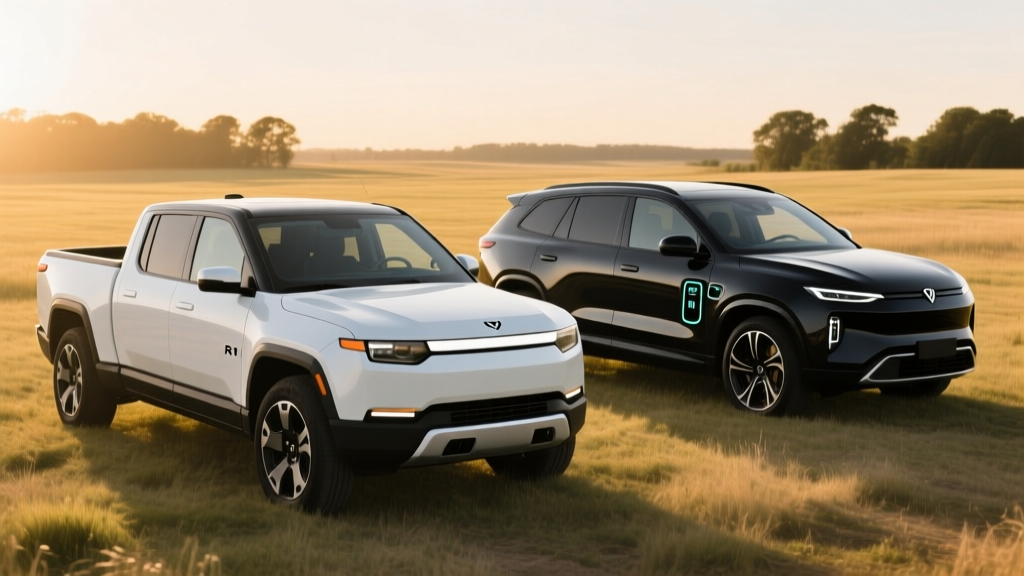
Rivian has evolved from an ambitious startup into a proven EV manufacturer with two distinct vehicles: the R1T pickup and the R1S three-row SUV. Both sit on Rivian's updated Gen 2 skateboard platform, which introduced a more efficient drive unit architecture and a new Standard battery option built on lithium iron phosphate (LFP) chemistry. For 2026, the lineup spans roughly $70,000 to $100,000+ before incentives, targeting buyers who need genuine off-road capability, serious towing, and enough range to make road trips viable without constant stops.
The short answer to "is Rivian electric a smart buy?" depends heavily on your use case. If you need a three-row family hauler that can also tow a boat and handle backcountry trails, the R1S has almost no direct rival. If you want an electric pickup that isn't a gargantuan fleet truck, the R1T occupies a niche the Ford F-150 Lightning (discontinued after 2024) and the much larger Chevrolet Silverado EV don't quite fill. But if you're purely optimizing for efficiency or lowest cost per mile, Rivian's boxy, heavy adventure vehicles will lose to a Tesla Model Y or Hyundai Ioniq 5 every time.
2026 Rivian Lineup: R1T and R1S at a Glance
| Spec | R1T Dual-Motor | R1S Dual-Motor | R1T Tri-Motor | R1S Tri-Motor |
|---|---|---|---|---|
| EPA Range (Max Pack) | ~328 mi | ~321 mi | ~420 mi (est.) | ~410 mi (est.) |
| EPA Range (Standard LFP) | ~270 mi | ~260 mi | N/A | N/A |
| Battery (Max Pack) | ~149 kWh (NMC) | ~149 kWh (NMC) | ~149 kWh (NMC) | ~149 kWh (NMC) |
| Battery (Standard) | ~95 kWh (LFP) | ~95 kWh (LFP) | N/A | N/A |
| Horsepower (Dual) | 533 hp | 533 hp | 850 hp | 850 hp |
| 0-60 mph (Dual) | 4.5 sec | 4.6 sec | ~3.0 sec | ~3.1 sec |
| Max DC Fast Charge | 220 kW | 220 kW | 220 kW | 220 kW |
| 10-80% DCFC Time | ~30 min (Max) | ~30 min (Max) | ~30 min (Max) | ~30 min (Max) |
| Level 2 Home Charge | 11.5 kW (~25 mi/hr) | 11.5 kW (~25 mi/hr) | 11.5 kW | 11.5 kW |
| Towing Capacity | 11,000 lbs | 7,700 lbs | 11,000 lbs | 7,700 lbs |
| Base MSRP (2026) | ~$69,900 | ~$74,900 | ~$99,900 | ~$104,900 |
Sources: Rivian R1T, Rivian R1S, fueleconomy.gov. Specs reflect 2026 model year estimates based on Gen 2 platform updates. Confirm exact figures with Rivian at time of order.
Real-World Range: What the EPA Sticker Doesn't Tell You
The Max Pack R1T's EPA estimate of ~328 miles is respectable for a 7,000+ lb vehicle. In practice, expect 260-290 miles on highway road trips at 70-80 mph, and closer to 220-250 miles in sustained cold weather (below 30°F) without preconditioning. The LFP Standard battery (~270 mi EPA) drops to roughly 200-220 miles real-world highway, which is adequate for commuting but requires planning on longer routes.
Rivian's Gen 2 drive units improved efficiency over the original Gen 1 R1T/R1S, but physics is unforgiving: these are tall, heavy, brick-shaped vehicles pushing serious frontal area. On the EPA combined cycle, the Dual-Motor R1T Max Pack achieves roughly 73 MPGe (about 46 kWh/100 mi). That's roughly 30% less efficient than a Tesla Model Y and 20% behind the Ford F-150 Lightning's extended-range variant.
For Standard LFP pack owners, the calculus shifts. LFP chemistry tolerates regular 100% charging without the degradation concerns of NMC, meaning you can use the full ~270-mile EPA range daily. With NMC Max Packs, Rivian recommends daily charging to ~85-90% to preserve long-term battery health, effectively giving you ~280-295 usable miles per charge in ideal conditions.
Towing dramatically compresses range. Expect a 40-50% range reduction when pulling a 5,000+ lb trailer at highway speeds — a 328-mile Max Pack becomes a ~165-190 mile vehicle under load. This is consistent across all electric trucks and is the single biggest planning challenge for R1T owners who tow frequently.
Charging Speed and Infrastructure
Rivian's Gen 2 platform supports peak DC fast charging at 220 kW on the Max Pack, with the Standard LFP pack peaking around 180 kW. The charge curve is relatively flat through 50% SoC before tapering significantly above 80% — a characteristic shared by nearly all EVs but particularly pronounced here due to the large battery.
| Charging Level | Power / Rate | Miles Added per Hour | Notes |
|---|---|---|---|
| Level 1 (120V) | ~1.4 kW | ~3 mi/hr | Emergency/trickle only |
| Level 2 (240V, 48A) | 11.5 kW | ~25 mi/hr | Full charge overnight (~10-12 hrs Max Pack) |
| DC Fast (Max Pack) | Peak 220 kW | ~140 mi in 20 min | 10-80% in ~30 min; tapers above 80% |
| DC Fast (Standard LFP) | Peak 180 kW | ~115 mi in 20 min | 10-80% in ~25 min (smaller battery) |
| Rivian Adventure Network | Up to 200 kW+ | Varies | Proprietary stations near trails/parks |
At home, a 48-amp Level 2 wall connector on a NEMA 14-50 or hardwired circuit is essential. The Max Pack's ~149 kWh usable capacity means a full Level 2 charge takes roughly 12-13 hours from near-empty — fine for overnight top-ups but impractical for same-day turnaround if you drain the battery on a road trip.
Rivian uses the NACS (Tesla-style) connector on 2026 models, granting native access to Tesla Superchargers (now open to non-Tesla EVs) plus Rivian's own growing Adventure Network. This eliminates the CCS adapter hassle that plagued earlier model years. The Adventure Network strategically places chargers near national parks, ski areas, and overlanding routes — a thoughtful touch, though station density remains far below Electrify America or Tesla's network.
Performance, Drivetrain, and Capability
The Dual-Motor configuration delivers 533 hp and a 4.5-second 0-60 time in the R1T — quick for a pickup, though not supercar territory. The Tri-Motor variant (available in Max Pack only) pushes output to approximately 850 hp with a sub-3.0-second 0-60, placing it in performance-SUV territory despite its body-on-frame-equivalent weight.
All R1T and R1S models come standard with all-wheel drive using Rivian's quad-motor or dual-motor torque-vectoring system. The air suspension provides up to 14.9 inches of ground clearance in Off-Road mode, rivaling dedicated off-road vehicles. Approach, departure, and breakover angles are class-leading for electric trucks.
The R1T's Gear Tunnel — a full-width pass-through storage compartment behind the cab — remains one of the most clever features in any vehicle, offering ~11.7 cu ft of lockable, weather-sealed space. Combined with the bed (~54 cu ft) and front trunk (frunk, ~11 cu ft), the R1T offers versatile cargo solutions that a conventional pickup can't match. The R1S provides seating for up to seven with ~104.7 cu ft of total cargo volume behind the first row (seats folded).
Pricing, Trims, and Federal Tax Credit Eligibility
Rivian's 2026 pricing positions both vehicles in the premium adventure segment:
| Configuration | Base MSRP | Federal §30D Credit | Effective Price (est.) |
|---|---|---|---|
| R1T Dual-Motor Standard (LFP) | ~$69,900 | Up to $7,500* | ~$62,400 |
| R1T Dual-Motor Max (NMC) | ~$84,900 | Up to $7,500* | ~$77,400 |
| R1T Tri-Motor Max | ~$99,900 | $0 (MSRP cap) | ~$99,900 |
| R1S Dual-Motor Standard (LFP) | ~$74,900 | Up to $7,500* | ~$67,400 |
| R1S Dual-Motor Max (NMC) | ~$89,900 | Up to $7,500* | ~$82,400 |
| R1S Tri-Motor Max | ~$104,900 | $0 (MSRP cap) | ~$104,900 |
*IRS §30D eligibility requires meeting ALL of the following:
- MSRP cap: Vans, SUVs, and pickups must be ≤$80,000 MSRP. Tri-Motor trims exceed this and are ineligible.
- Buyer income cap: AGI ≤$300,000 (joint), $225,000 (head of household), $150,000 (single).
- Battery sourcing: Critical minerals and battery components must meet escalating domestic/free-trade-agreement percentages per IRS guidelines. Rivian's US-built batteries generally qualify, but verify at point of sale.
- Point-of-sale transfer: The credit can be applied at purchase as a down-payment reduction through a registered dealer, subject to Rivian's participation in the POS program.
Always confirm eligibility with a tax professional and check current IRS §30D rules before purchasing — battery sourcing requirements tighten annually and can change a vehicle's eligibility mid-year.
Technology, Driver Assistance, and Ownership Experience
Rivian's infotainment runs on a custom 15.6-inch center touchscreen with a clean, responsive interface. The system supports over-the-air updates, which Rivian deploys regularly to add features and improve performance. Unlike some competitors, there is no Apple CarPlay or Android Auto — Rivian insists on its native system, which integrates navigation, media, and vehicle controls. This is a dealbreaker for some buyers accustomed to phone projection.
The Driver+ system provides highway driver assistance with adaptive cruise control and lane centering. This is an SAE Level 2 system — meaning you must keep your hands on the wheel and remain fully engaged at all times. It is not a hands-free system like GM's Super Cruise or Ford's BlueCruise, and Rivian does not currently market it as anything close to autonomous driving. The system works well on well-marked highways but is not a differentiator versus Tesla Autopilot or GM's offerings.
Unique tech highlights include:
- Camp Kitchen accessory (R1T) — a slide-out kitchen system with induction cooktop and sink that deploys from the Gear Tunnel
- V2L (Vehicle-to-Load) capability — power tools, campsite equipment, or home essentials during outages via bed and frunk outlets
- Drive Cam — records your off-road adventures with built-in cameras
- Phone-as-key with Bluetooth LE proximity unlock
Warranty coverage includes an 8-year/175,000-mile battery and drive unit warranty (for Max Pack NMC) and 8-year/100,000-mile for the Standard LFP pack, with a 70% minimum capacity retention threshold. The vehicle limited warranty is 5 years/60,000 miles. Rivian's service model relies on a mix of owned service centers and mobile service vans — coverage has expanded significantly since 2022 but remains sparser than legacy dealer networks in rural areas.
Pros, Cons, and Who Should Buy a Rivian
- Class-leading off-road capability with 14.9" ground clearance and quad-motor torque vectoring
- R1T Gear Tunnel is genuinely innovative cargo storage
- 11,000-lb towing (R1T) exceeds most electric competitors
- LFP Standard pack offers affordable entry point and 100% daily charging tolerance
- NACS connector gives native Supercharger access in 2026
- Over-the-air updates continuously improve the vehicle
- Built in Normal, Illinois — strong US manufacturing story
- Efficiency lags rivals — ~46 kWh/100 mi is thirsty for an EV
- No Apple CarPlay or Android Auto
- Tri-Motor trims exceed the $80K MSRP cap — no federal tax credit
- Service center density still limited outside major metros
- Towing cuts range by 40-50% — trip planning required
- Driver+ is competent but not class-leading among L2 systems
- Insurance premiums run 15-25% above segment average
Who This EV Suits Best
Buy the R1T if: You need a mid-size electric pickup for weekend towing, overlanding, or gear-heavy adventures, and you value clever storage (Gear Tunnel, frunk) over maximum bed length. It's the best EV for people who actually use their truck off-pavement.
Buy the R1S if: You need three rows of seating for a family and want genuine off-road and towing capability in an SUV form factor. The R1S has almost no direct electric rival — the closest comparison is the Tesla Model X, which offers less ground clearance and no serious off-road pretensions.
Look elsewhere if: You prioritize efficiency, lowest cost per mile, or cutting-edge autonomous driving features. A Tesla Model Y, Hyundai Ioniq 5, or Kia EV6 will cost less to charge, charge faster at public stations, and offer more advanced driver-assist tech (in Tesla's case) at a lower price.
Frequently Asked Questions
Is Rivian a fully electric company?
Yes. Rivian manufactures only battery electric vehicles — no hybrids, no plug-in hybrids, no internal combustion engines. The R1T pickup, R1S SUV, and EDV commercial delivery van (built for Amazon) are all 100% battery electric.
What is the real-world range of a Rivian R1T or R1S?
The Max Pack R1T achieves ~328 miles EPA, but expect 260-290 miles on highway road trips and 220-250 miles in cold weather. The Standard LFP pack (~270 mi EPA) delivers roughly 200-220 miles real-world highway. Towing cuts range by 40-50%.
How fast does a Rivian charge at home and on the road?
At home on a 48-amp Level 2 charger (11.5 kW), a Max Pack adds ~25 miles per hour and fully charges in 12-13 hours. On DC fast chargers, the Max Pack peaks at 220 kW and charges 10-80% in approximately 30 minutes. The Standard LFP pack peaks at ~180 kW with a similar 10-80% time due to its smaller capacity.
Does Rivian qualify for the $7,500 federal EV tax credit?
Dual-Motor Standard and Max Pack configurations under the $80,000 MSRP cap can qualify for up to $7,500 under IRS §30D, provided the buyer meets income limits ($300K joint, $150K single) and battery sourcing requirements are satisfied. Tri-Motor trims exceed the MSRP cap and are ineligible. Always verify current eligibility on irs.gov and consult a tax professional.
Is Rivian better than Tesla for a family?
It depends on priorities. The R1S offers three rows, superior off-road capability, more cargo versatility, and a more rugged build than the Model X — but the Model X is more efficient, charges faster, has Autopilot/FSD, and offers access to Tesla's mature service network. For families who camp, tow, or drive in rough conditions, the R1S is the stronger pick. For efficiency-optimizing suburban commuters, the Model X or Model Y wins.
How long will a Rivian battery last?
Rivian warranties the Max Pack NMC battery for 8 years/175,000 miles and the Standard LFP pack for 8 years/100,000 miles, with a 70% minimum capacity retention guarantee. LFP chemistry typically shows slower degradation than NMC over equivalent cycles. Real-world data from early Gen 1 owners (2022-2024) suggests ~5-8% degradation over 50,000-80,000 miles, though long-term Gen 2 data is still accumulating.
Can Rivian vehicles tow, and how does towing affect range?
The R1T is rated for 11,000 lbs of towing and the R1S for 7,700 lbs. Both handle towing competently, but expect a 40-50% range reduction at highway speeds with a loaded trailer. A Max Pack R1T towing 5,000+ lbs will realistically deliver 165-190 miles between charges. Plan routes around DC fast chargers accordingly.