2026 Tesla Model 3: The Efficiency Benchmark Under the Microscope
The Tesla Model 3 Highland refresh matured into one of the most energy-efficient sedans on the market, and for 2026, it remains the default answer for buyers calculating the lowest total cost of ownership in the premium EV segment. But sticker price is only the beginning. Between fluctuating federal tax credit rules, home charging installation costs, insurance premiums, and real-world energy consumption, the math gets complex fast.
This profile dissects the 2026 Tesla Model 3 lineup — the Rear-Wheel Drive (RWD), Long Range Rear-Wheel Drive (LR RWD), Long Range All-Wheel Drive (LR AWD), and Performance — with exact numbers for range, charging, pricing, and the ownership costs that actually matter once you drive off the lot.
Spec Table: 2026 Tesla Model 3 Lineup at a Glance
| Spec | RWD | Long Range RWD | Long Range AWD | Performance |
|---|---|---|---|---|
| Base MSRP | $38,990 | $42,490 | $47,490 | $52,990 |
| EPA Range | 272 mi | 363 mi | 346 mi | 315 mi |
| Battery (usable) | ~57.5 kWh (LFP) | ~75 kWh (NMC) | ~75 kWh (NMC) | ~75 kWh (NMC) |
| Max DC Fast Charge | 170 kW | 250 kW | 250 kW | 250 kW |
| 10–80% DC Time | ~25 min | ~25 min | ~25 min | ~25 min |
| Level 2 Rate (kW) | 11.5 kW | 11.5 kW | 11.5 kW | 11.5 kW |
| 0–60 mph | 5.8 sec | 4.9 sec | 4.2 sec | 2.9 sec |
| Horsepower | 271 hp | 346 hp | 440 hp | 510 hp |
| Drivetrain | RWD | RWD | AWD (Dual Motor) | AWD (Dual Motor) |
| MPGe (Combined) | 132 MPGe | 134 MPGe | 125 MPGe | 118 MPGe |
| Efficiency (kWh/100 mi) | 25 | 25 | 27 | 28 |
Source: fueleconomy.gov and Tesla specifications. Prices exclude destination fee ($1,390).
Real-World Range: What the EPA Sticker Doesn't Tell You
The Model 3's heat pump (standard across all trims) helps mitigate cold-weather losses compared to older EVs relying on resistive cabin heating, but physics wins: any EV loses range in freezing temperatures. Preconditioning the battery while plugged in — easily scheduled via the Tesla app — recovers a meaningful portion of that loss by warming the pack before departure.
For daily commuting under 60 miles round-trip, even the RWD trim's real-world range means charging just twice a week on a home Level 2 setup. Road-trippers targeting 300+ mile days will want the Long Range RWD for its buffer against detour and weather uncertainty.
Charging Speed: DC Fast Charging and Home Setup
Charging speed is where the RWD and Long Range trims diverge most sharply. The RWD's LFP battery peaks at 170 kW on DC fast chargers, while the NMC-equipped Long Range and Performance models sustain up to 250 kW — a meaningful difference on road trips.
| Charging Level | Power | RWD Speed | Long Range / Perf Speed |
|---|---|---|---|
| Level 1 (120V) | ~1.4 kW | ~3–4 mi/hr | ~3–4 mi/hr |
| Level 2 (240V, 48A) | 11.5 kW | ~30 mi/hr | ~42 mi/hr |
| DC Fast (Peak) | 170 kW / 250 kW | ~170 mi in 15 min | ~200 mi in 15 min |
Charging curve reality: The 250 kW peak on Long Range trims holds between roughly 10–45% State of Charge, then tapers progressively. A 10–80% session takes approximately 25 minutes at a V3 or V4 Tesla Supercharger. Above 80%, charging slows dramatically — plan on an additional 15–20 minutes if you need a full battery, which is why Tesla's navigation system typically routes you to depart at 80% or less.
The LFP RWD's 170 kW peak is less impressive on paper, but LFP chemistry tolerates regular 100% charging without accelerated degradation — a genuine ownership advantage. Tesla recommends daily charging to 100% for LFP packs, whereas NMC packs are best kept at 80% daily with periodic 100% for calibration.
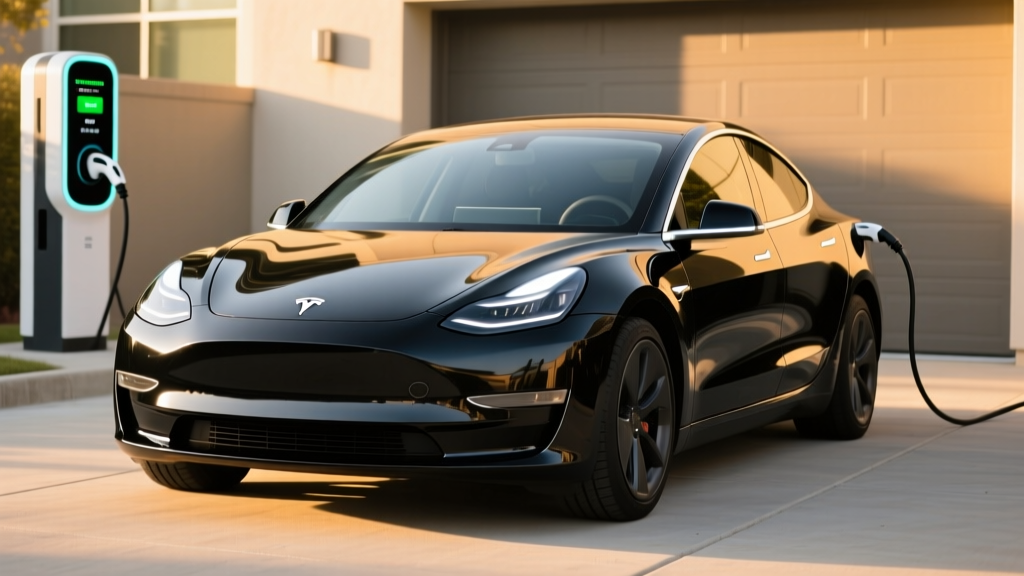
Home charging cost: Installing a dedicated 240V/60A circuit for the Tesla Wall Connector ($420 for hardware) typically runs $800–$2,000 for electrician labor, depending on panel proximity and local permit fees. If your home's electrical panel needs a 200A upgrade, add $1,500–$3,500. Over five years of home charging at the national average of $0.16/kWh, a Model 3 Long Range driven 12,000 miles/year consumes roughly $480/year in electricity — compared to about $1,560/year for a 30 MPG gas sedan at $3.50/gallon.
Pricing, Tax Credits, and True Purchase Cost
The 2026 Model 3 pricing ladder is straightforward, but federal tax credit eligibility under IRS §30D requires careful attention to income caps, MSRP limits, and battery-component sourcing rules that shift annually.
| Trim | MSRP (incl. dest.) | §30D Credit Eligibility | Effective Price (with credit) |
|---|---|---|---|
| RWD | $40,380 | Eligible for up to $7,500 (point-of-sale) | ~$32,880 |
| Long Range RWD | $43,880 | Eligible for up to $7,500 | ~$36,380 |
| Long Range AWD | $48,880 | Eligible for up to $7,500 | ~$41,380 |
| Performance | $54,380 | Eligible for up to $7,500 | ~$46,880 |
- MSRP cap: Sedans must be ≤$55,000. All Model 3 trims qualify.
- Buyer income cap: Modified AGI ≤$150,000 (single), ≤$225,000 (head of household), ≤$300,000 (joint). Exceed these and the credit phases out entirely.
- Battery sourcing: Critical minerals and battery components must meet escalating domestic/free-trade-agreement thresholds. Tesla's supply chain has largely complied, but verify current-year status at IRS.gov before purchase.
- Point-of-sale transfer: You can transfer the credit to the dealer at purchase, reducing your out-of-pocket cost immediately — no need to wait for tax filing.
Total 5-year cost of ownership estimate (Long Range RWD, 12,000 mi/yr):
- Purchase (after credit): ~$36,380
- Electricity (5 yrs): ~$2,400
- Insurance (5 yrs, national avg. EV premium): ~$9,500–$11,000
- Maintenance (tires, cabin filter, wiper fluid): ~$1,200
- Estimated depreciation (5 yrs): ~$14,000–$16,000
- Estimated 5-year total: ~$63,500–$67,000
Compare that to a similarly equipped BMW 330i or Mercedes C300, where fuel alone adds $7,800+ over five years and maintenance runs $3,000–$4,500. The Model 3's TCO advantage is real but narrows if you lack home charging access and must rely on DC fast charging at $0.35–$0.50/kWh.
Performance, Interior, and Technology
Even the base RWD Model 3 hits 60 mph in 5.8 seconds — quicker than most gas-powered sport sedans. The Performance trim's 2.9-second run enters supercar territory, with adaptive damping and track-ready brakes justifying the badge beyond straight-line speed.
Interior dimensions:
- Front legroom: 42.2 in
- Rear legroom: 35.3 in
- Cargo (trunk + frunk): 23.0 cu ft total (19.8 trunk + 3.1 frunk)
- Curb weight: 3,862–4,065 lbs depending on trim
The 15.4-inch center touchscreen handles nearly all vehicle functions — climate, mirrors, glovebox, and drive settings. There is no traditional instrument cluster; speed and navigation appear in the upper-left corner of the main display. This minimalist approach divides buyers: some find it liberating, others miss redundant physical controls.
Standout tech:
- Tesla Autopilot (standard): SAE Level 2 adaptive cruise + lane centering — not self-driving; driver supervision required at all times.
- Full Self-Driving (Supervised): Optional ($8,000 or $99/mo) adds automatic lane changes, traffic light recognition, and navigation-guided on/off-ramp handling. Still Level 2 — you are the driver.
- Over-the-air updates: Tesla regularly pushes performance, UI, and feature improvements remotely.
- Sentry Mode / Dashcam: Continuous recording when parked or driving, stored on USB drive.
- Ventilated front seats, ambient lighting, and acoustic glass (all trims post-Highland refresh).
Notable drawbacks: No Apple CarPlay or Android Auto. Turn-signal stalks were removed in the Highland refresh — signals are now steering-wheel-mounted buttons, which many drivers find unintuitive, especially in roundabouts. Rear-seat headroom is tight for passengers over 6'2". No heads-up display.
Warranty and Battery Longevity
Tesla's warranty structure is competitive but not class-leading:
- Basic vehicle: 4 years / 50,000 miles
- Battery & drive unit (RWD): 8 years / 100,000 miles
- Battery & drive unit (Long Range / Performance): 8 years / 120,000 miles
- Capacity retention threshold: Tesla warrants that the battery will retain at least 70% of original capacity during the warranty period.
LFP chemistry in the RWD trim offers a cycle-life advantage — LFP cells typically tolerate 3,000+ full charge cycles with minimal degradation, versus roughly 1,000–1,500 for NMC. For high-mileage drivers (20,000+ mi/yr), the RWD's LFP pack may outlast the vehicle itself, even though its range is lower. NMC packs in the Long Range trims offer higher energy density but benefit from staying between 20–80% SoC for daily use.
Pros and Cons
- Class-leading efficiency (25 kWh/100 mi on LR RWD)
- Access to Tesla Supercharger network — the most reliable DC fast-charging ecosystem
- LFP option (RWD) allows daily 100% charging without degradation concern
- Strong resale value relative to EV segment average
- Low maintenance costs — no oil, filters, spark plugs, or exhaust
- Over-the-air updates add features post-purchase
- No Apple CarPlay / Android Auto
- Turn-signal buttons on steering wheel are polarizing
- Rear-seat space is snug for tall adults
- Insurance premiums run 15–25% above comparable gas sedans
- FSD (Supervised) costs $8,000 and remains Level 2 — not autonomous
- No heads-up display or traditional instrument cluster
Who Should Buy the 2026 Tesla Model 3?
Choose the Long Range RWD if: You take regular road trips, live in a cold-weather state, or simply want the 363-mile EPA buffer. This is the sweet-spot trim for most buyers.
Choose the Long Range AWD if: You need all-weather traction for snow-belt winters and value the dual-motor torque split. The $5,000 premium over LR RWD buys confidence, not just speed.
Choose the Performance if: You want a genuine sports sedan that happens to be electric — 2.9 seconds to 60 mph, adaptive suspension, and track braking. Just know the 315-mile range is the trade-off.
Look elsewhere if: You need a spacious rear seat for car seats or tall passengers (consider the Model Y or Hyundai Ioniq 6), you rely on Apple CarPlay, or you lack home charging and your area has sparse DC fast-charging infrastructure.
Frequently Asked Questions
What is the real-world range of the 2026 Tesla Model 3?
The EPA rates the Long Range RWD at 363 miles, but expect 310–330 miles in mixed real-world driving, 280–300 on sustained highway trips, and 220–260 in freezing weather. The RWD (272 mi EPA) delivers roughly 230–250 miles in temperate conditions and 190–220 in winter.
How fast does the Model 3 charge at home and on the road?
On a home Level 2 charger (240V, 48A), the Model 3 adds roughly 30–42 miles of range per hour depending on trim, fully recharging overnight. On DC fast chargers, Long Range trims peak at 250 kW (10–80% in ~25 min), while the RWD peaks at 170 kW (10–80% in ~25 min, but with a smaller total battery).
Does the 2026 Tesla Model 3 qualify for the $7,500 federal tax credit?
All trims fall under the $55,000 sedan MSRP cap and are generally eligible for up to $7,500 under IRS §30D, provided the buyer meets income limits (≤$150K single / ≤$300K joint) and the vehicle's battery sourcing meets current-year critical-mineral and component requirements. The credit can be transferred at point of sale. Always verify current eligibility at IRS.gov before purchasing.
Is the Model 3 worth buying over the Hyundai Ioniq 6 or BMW i4?
The Model 3 wins on charging-network access (Superchargers), software integration, and efficiency. The Ioniq 6 offers more rear-seat room and CarPlay; the BMW i4 delivers a more traditional luxury interior and physical controls. If Supercharger reliability and OTA updates matter most, the Model 3 leads. If interior space or CarPlay is non-negotiable, test-drive the competitors.
What does Model 3 insurance cost?
National averages for Model 3 insurance run $1,800–$2,400/year depending on trim, driver age, and location — roughly 15–25% above a comparable gas sedan. Tesla Insurance is available in some states and may offer competitive rates based on real-time driving data.
Is Tesla Autopilot or FSD actually self-driving?
No. Both Autopilot and Full Self-Driving (Supervised) are SAE Level 2 driver-assistance systems. You must keep your hands on the wheel and eyes on the road at all times. The system can manage lane centering, adaptive cruise, and (with FSD) navigation-guided lane changes, but it does not replace the driver. Only Level 4 robotaxi services like Waymo operate without a human driver — and those are geofenced to specific cities.