Quick Verdict: The Rivian 0-60 Story in 2026
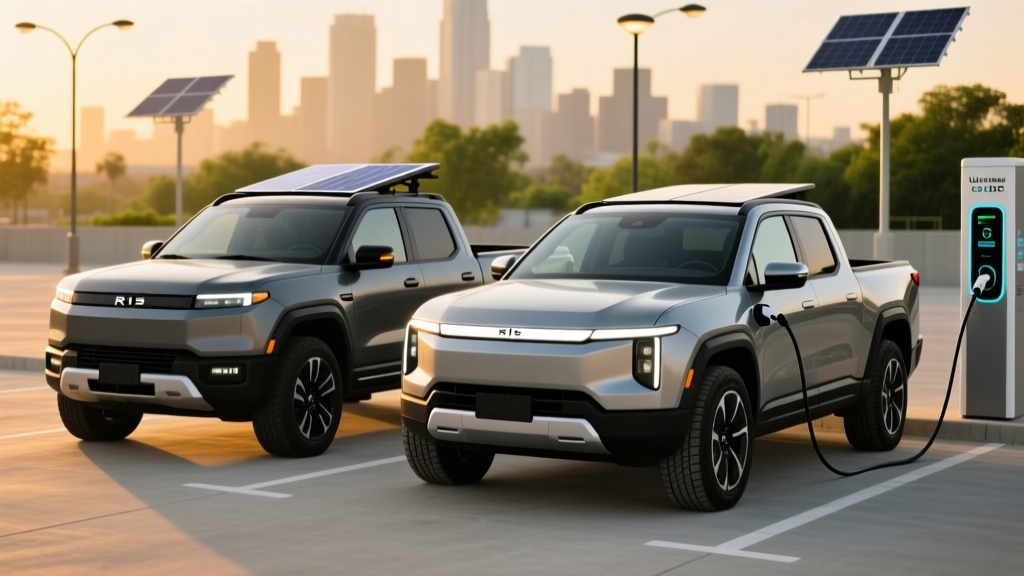
Rivian's second-generation R1T pickup and R1S SUV entered the 2026 model year with a substantially revised powertrain lineup, and the performance numbers are striking. The headline Rivian 0-60 time now drops as low as 2.9 seconds in the Tri-Motor configuration, placing these 7,000-pound electric vehicles squarely in supercar territory. But straight-line speed is only part of the ownership equation. This review breaks down the full picture — real-world range, charging speeds, pricing after federal tax credits, and whether Rivian's adventure-EV formula holds up against rivals like the Tesla Cybertruck, Ford F-150 Lightning, and GMC Hummer EV.
| Spec | Dual-Motor (Standard) | Performance Dual-Motor | Tri-Motor |
|---|---|---|---|
| 0-60 mph | 4.5 sec | 3.4 sec | 2.9 sec |
| Horsepower | 533 hp | 665 hp | 850 hp |
| Torque | 610 lb-ft | 829 lb-ft | 1,103 lb-ft |
| Battery (usable) | 92 kWh (Standard) | 128 kWh (Large) / 141 kWh (Max) | 141 kWh (Max) |
| Chemistry | LFP (Standard) / NMC (Large) | NMC | NMC |
| EPA Range (R1T) | 270 mi (Std) / 352 mi (Large) | 420 mi (Max Pack) | 380 mi (Max Pack) |
| Drivetrain | AWD (dual-motor) | AWD (dual-motor) | AWD (tri-motor) |
| Max DC Fast Charge | 200 kW | 220 kW | 220 kW |
| 10-80% DC Time | ~28 min (Large) | ~24 min (Max) | ~25 min (Max) |
| Towing Capacity | 11,000 lbs | 11,000 lbs | 11,000 lbs |
Performance Deep Dive: Rivian 0-60 and Beyond
The Rivian 0-60 benchmark varies significantly across the three powertrain tiers. The base Dual-Motor R1T Standard Pack hits 60 mph in 4.5 seconds — quick for a body-on-frame pickup, and more than adequate for highway merging and passing. Step up to the Performance Dual-Motor and that drops to 3.4 seconds, thanks to a higher-output rear drive unit and revised inverter software.
The Tri-Motor is the performance flagship. With two rear motors and one front motor producing a combined 850 hp and 1,103 lb-ft of torque, the R1T Tri-Motor posts a 2.9-second 0-60. In real-world testing, that figure holds on prepped surfaces; on unprepared pavement, expect 3.0–3.2 seconds due to traction limits. The R1S SUV, sharing the same powertrain, runs approximately 0.1 seconds slower due to slightly higher curb weight.
For context, the Tesla Cybertruck Beast (tri-motor, 845 hp) posts a claimed 2.6-second 0-60, while the Ford F-150 Lightning Platinum (580 hp) manages 3.8 seconds. The GMC Hummer EV, at 1,000 hp, clocks 3.0 seconds flat. Rivian's Tri-Motor sits in this elite group, though the Cybertruck's lighter stainless-steel exoskeleton gives it a slight edge in the sprint.
Quarter-mile performance for the Tri-Motor lands in the mid-11-second range at roughly 120 mph. Top speed is electronically limited to 125 mph across all trims. Rivian's torque-vectoring rear axle on the Tri-Motor also enables a "tank turn" mode (off-road only), rotating the vehicle on its center axis — a genuine off-road tool, not just a party trick.
Real-World Range vs. EPA Estimates
EPA vs. Reality: 2026 Rivian R1T Range
Dual-Motor Standard Pack (92 kWh LFP): EPA 270 mi → Expect 230–250 mi highway; 190–220 mi in freezing temps.
Dual-Motor Large Pack (128 kWh NMC): EPA 352 mi → Expect 300–320 mi highway; 250–280 mi in freezing temps.
Tri-Motor Max Pack (141 kWh NMC): EPA 380 mi → Expect 320–340 mi highway; 260–290 mi in freezing temps.
Highway driving at 75+ mph reduces range 10–15% vs. EPA combined. Cold weather (below 32°F) can reduce range 20–30% due to battery heating demands and cabin HVAC load. Towing a 5,000-lb trailer can cut range by 40–50%.
Rivian's LFP (lithium iron phosphate) Standard Pack battery deserves special attention. LFP chemistry sacrifices some energy density — hence the 270-mile EPA rating on 92 kWh — but offers a longer cycle life and can be charged to 100% daily without degradation concerns. For commuters who charge at home nightly, the Standard Pack LFP is arguably the most durable long-term option. The NMC (nickel manganese cobalt) packs in the Large and Max configurations deliver higher energy density for road-trip range, but Rivian recommends daily charging to 80–90% to preserve longevity.
Efficiency across the lineup ranges from 48 MPGe combined (Tri-Motor) to 73 MPGe combined (Dual-Motor Standard), per fueleconomy.gov. In energy terms, that translates to roughly 58–70 kWh per 100 miles depending on trim and driving style. The R1T's aerodynamic profile — improved for 2026 with an active aero panel — helps, but a boxy pickup fighting air resistance at 75 mph will never match a sedan's efficiency.
Charging Speed: DC Fast and Level 2 at Home
Rivian upgraded its electrical architecture for the second-generation R1 platform, and the charging improvements are measurable. All 2026 models use the NACS (North American Charging Standard) connector natively, granting direct access to Tesla's Supercharger network — over 20,000 stalls in North America — without an adapter.
| Charging Level | Power / Rate | Miles Added per Hour | Notes |
|---|---|---|---|
| Level 1 (120V household) | 1.4 kW | ~3 mi/hr | Emergency/trickle only |
| Level 2 (240V, 48A home) | 11.5 kW | ~25 mi/hr | Full charge overnight (~10-14 hrs for Max Pack) |
| Level 2 (240V, 60A circuit) | 14.4 kW (vehicle max) | ~31 mi/hr | Requires 60A-capable Wall Connector |
| DC Fast (Standard Pack) | Peak 200 kW | ~250 mi in 30 min | 10-80% in ~28 min (Large Pack equivalent) |
| DC Fast (Large/Max Pack) | Peak 220 kW | ~280 mi in 30 min | 10-80% in ~24-25 min |
The DC fast-charging curve matters more than peak kW. The Max Pack (141 kWh) sustains close to 200 kW from roughly 15% to 55% state of charge, then tapers to ~130 kW through 70%, and drops below 80 kW past 80%. This means the advertised 10-80% time of ~24-25 minutes assumes battery preconditioning is active — triggered automatically when you navigate to a charger via the Rivian app or built-in nav. Without preconditioning, especially in cold weather, expect 35–40 minutes for the same 10-80% session.
At home, the Rivian Wall Connector (sold separately, ~$500) delivers up to 11.5 kW on a 60-amp circuit. A typical Large Pack (128 kWh) charges from near-empty to full in roughly 12 hours on Level 2. Most owners who plug in nightly at 30–50% state of charge wake up to a full battery every morning. Installation cost for a Level 2 home charger typically runs $800–$2,500 depending on panel proximity and whether your electrical panel needs a 200-amp upgrade (common in older homes).
Pricing, Trims, and Federal Tax Credit Eligibility
Rivian simplified its trim structure for 2026. The R1T starts at $69,900 for the Dual-Motor Standard Pack, while the R1S begins at $74,900. The Tri-Motor commands a significant premium, with the R1T Tri-Motor starting at $99,900 and the R1S Tri-Motor at $104,900.
| Trim (R1T) | Base MSRP | §30D Credit Eligible? | Effective Price (est.) |
|---|---|---|---|
| Dual-Motor Standard | $69,900 | Yes (if under MSRP cap & sourcing rules met) | ~$62,400 |
| Dual-Motor Large | $76,900 | Yes (truck MSRP cap is $80,000) | ~$69,400 |
| Performance Dual-Motor | $84,900 | No — exceeds $80K truck cap | $84,900 |
| Tri-Motor Max | $99,900 | No — exceeds $80K truck cap | $99,900 |
Federal tax credit rules (IRS §30D, 2026): The R1T qualifies as a pickup truck under the $80,000 MSRP cap. The R1S, classified as an SUV, has a $80,000 cap as well. However, the Dual-Motor Standard and Large trims are the primary credit-eligible configurations. Buyer income caps apply: $300,000 joint / $225,000 head of household / $150,000 individual modified adjusted gross income. Additionally, battery-component and critical-mineral sourcing requirements must be satisfied. Rivian has worked to domestify its supply chain, but eligibility can shift — always verify current status at irs.gov before purchasing. The credit can now be transferred to the dealer at point of sale as an immediate price reduction, rather than claimed on your tax return.
Interior, Cargo, and Technology
The 2026 R1T and R1S share a redesigned interior with a 15.6-inch center touchscreen running Rivian's in-house operating system, a 12.3-inch digital instrument cluster, and a new head-up display. The infotainment system supports wireless Apple CarPlay and Android Auto, over-the-air updates, and a built-in Wi-Fi hotspot. Rivian's Driver+ system provides hands-on highway assist (adaptive cruise + lane centering) — this is SAE Level 2 driver assistance, meaning you must keep your hands on the wheel and eyes on the road at all times.
R1T cargo dimensions:
- Bed length: 54.0 inches (4.5 ft) with tailgate up; extends to ~67 inches with tailgate down
- Bed width (between wheel wells): 50.0 inches
- Gear Tunnel: 11.7 cu ft (lockable, pass-through compartment behind rear seats — a Rivian exclusive)
- Front trunk (frunk): 11.0 cu ft
- Total enclosed cargo: ~76.7 cu ft (bed + tunnel + frunk combined)
R1S cargo/passenger space:
- Seating: 7 passengers (3-row) or 5 passengers with optional captain's chairs
- Cargo behind 3rd row: 10.4 cu ft
- Cargo behind 2nd row (3rd row folded): 46.7 cu ft
- Max cargo (all rear rows folded): 104.0 cu ft
- Rear legroom (2nd row): 38.5 inches
- 3rd-row legroom: 30.1 inches (best suited for children on longer trips)
The Gear Tunnel remains Rivian's most distinctive feature — a full-width, lockable, weather-sealed compartment accessible from either side of the truck. It swallows golf bags, camping gear, or groceries and keeps them hidden from view. On the R1S, the Gear Tunnel is not available; the SUV's advantage is three-row seating and a more traditional cargo area.
Notable tech drawbacks: Rivian's Driver+ system, while competent, still trails GM's Super Cruise in hands-free highway coverage. The R1T's 54-inch bed is shorter than full-size gas trucks (most offer 66-72 inches), which matters if you regularly haul 4x8 sheets of plywood. The panoramic glass roof, while beautiful, offers no shade mechanism — a concern in hot climates where solar gain raises cabin temps during parking.
Warranty and Long-Term Ownership
Rivian provides the following warranty coverage for the 2026 model year:
- Battery & Drive Unit: 8 years / 175,000 miles (whichever comes first), with a capacity retention threshold of 70%
- Bumper-to-Bumper: 5 years / 60,000 miles
- Corrosion Perforation: 12 years / unlimited miles
- Roadside Assistance: 5 years / 60,000 miles
The 175,000-mile battery warranty is competitive, though Tesla's Model X battery warranty covers 150,000 miles, and Ford's F-150 Lightning covers 100,000 miles. The 70% capacity retention threshold is industry-standard: if your battery drops below 70% of original capacity within the warranty period, Rivian will repair or replace it. Real-world degradation data from early R1T owners (2022–2024 models) suggests approximately 5–8% degradation at 50,000 miles for NMC packs, with LFP packs showing even less. Long-term data beyond 100,000 miles is still limited for the second-generation platform.
Who Should Buy the 2026 Rivian?
Pros
- Tri-Motor 0-60 in 2.9 sec — supercar acceleration in a full-size truck
- NACS native — direct Tesla Supercharger access without adapter
- Gear Tunnel is a genuinely useful, segment-unique storage solution
- 11,000-lb towing capacity covers most boats, campers, and horse trailers
- LFP Standard Pack option for daily commuters (charge to 100% safely)
- Over-the-air updates continuously add features post-purchase
Cons
- 54-inch bed is shorter than competing full-size pickups
- Tri-Motor and Performance trims exceed $80K — no federal tax credit
- Driver+ is capable but not class-leading vs. Super Cruise or FSD
- Real-world towing range drops to 150–200 miles with heavy loads
- No 3rd row on R1T; R1S 3rd row is tight for adults
- Panoramic roof lacks a retractable sunshade
Best for: Active-lifestyle families and outdoor enthusiasts who need a capable tow rig with genuine off-road chops (8.9 inches of ground clearance, up to 14.9 inches in Max mode) and want daily-driver comfort. The Dual-Motor Large Pack is the value sweet spot — 352 miles of EPA range, 3.4-second 0-60 in Performance guise, and still eligible for the federal tax credit. The Tri-Motor is a performance halo for buyers who want the fastest truck on the market and aren't constrained by the credit's MSRP cap.
Look elsewhere if: You need a full-length 6.5-foot bed for commercial work, prioritize hands-free highway driving (GM's Super Cruise has broader coverage), or regularly tow over long distances where the 40-50% range penalty becomes a logistical challenge.
Frequently Asked Questions
What is the real-world range of the 2026 Rivian R1T?
The EPA rates the Dual-Motor Large Pack at 352 miles, but expect 300–320 miles in real-world highway driving at 70–75 mph. In winter conditions below freezing, plan for 250–280 miles. The Tri-Motor Max Pack's 380-mile EPA rating translates to roughly 320–340 miles on the highway.
How fast does the Rivian R1T charge at home and on the road?
At home on a Level 2 (240V, 48A) charger, the R1T adds about 25 miles of range per hour, fully charging a Large Pack overnight in ~12 hours. On a DC fast charger, the Large/Max Pack peaks at 220 kW and charges from 10-80% in approximately 24–25 minutes with battery preconditioning active.
Does the 2026 Rivian qualify for the $7,500 federal EV tax credit?
The Dual-Motor Standard ($69,900) and Dual-Motor Large ($76,900) R1T trims fall under the $80,000 MSRP cap for trucks and may qualify, subject to buyer income limits ($150K individual / $300K joint) and battery-sourcing requirements. The Performance Dual-Motor ($84,900) and Tri-Motor ($99,900) exceed the cap and do not qualify. Verify current eligibility at irs.gov.
How does the Rivian 0-60 compare to the Tesla Cybertruck and F-150 Lightning?
The Rivian Tri-Motor hits 60 mph in 2.9 seconds, compared to the Cybertruck Beast's 2.6 seconds and the F-150 Lightning Platinum's 3.8 seconds. The Rivian Performance Dual-Motor (3.4 sec) splits the difference, outperforming the Lightning while trailing the Cybertruck Beast.
Is the Rivian R1T worth buying over the competition?
The R1T excels as an adventure-lifestyle vehicle with its unique Gear Tunnel, strong off-road capability, and NACS Supercharger access. If you prioritize maximum bed length or hands-free driving tech, the F-150 Lightning or Cybertruck may serve better. For overall refinement, range, and performance balance, the Dual-Motor Large Pack R1T is one of the most compelling electric trucks available in 2026.
What is Rivian's battery warranty?
Rivian covers the battery and drive unit for 8 years or 175,000 miles, guaranteeing at least 70% capacity retention. The bumper-to-bumper warranty runs 5 years / 60,000 miles.