Why the BMW i4 Dominates the Certified Pre-Owned EV Market
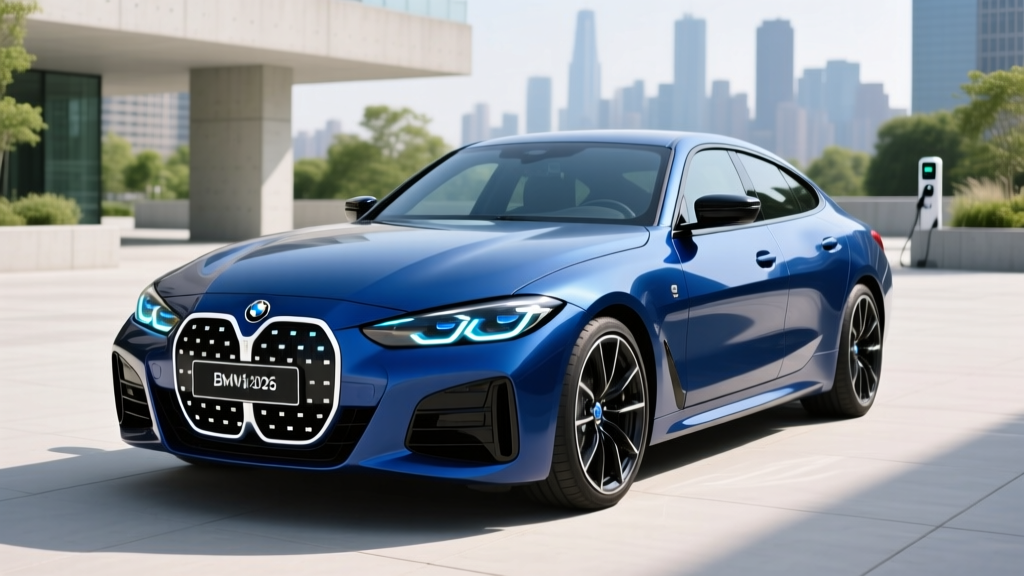
The BMW i4 has quietly become one of the most compelling vehicles in the certified pre-owned electric marketplace. Originally launched for the 2022 model year, enough lease returns and trade-ins have now cycled through BMW dealerships to make the i4 a staple of CPO inventories. For buyers who want a premium electric Gran Coupe without absorbing first-owner depreciation, a BMW i4 certified pre-owned example offers a calculated path into German EV ownership — provided you understand exactly what you're getting.
This guide covers every number that matters: real-world range versus the EPA sticker, DC fast-charging behavior including the taper curve, battery chemistry and degradation expectations, the CPO warranty structure, and the often-misunderstood used-EV tax credit. Whether you're cross-shopping the i4 against a Tesla Model 3, Polestar 2, or Hyundai Ioniq 6, the data below will anchor your decision.
BMW i4 Trims and Specifications at a Glance
The i4 launched with three powertrain configurations across the 2022–2025 model years. Here's how they stack up on paper and in practice.
| Spec | i4 eDrive40 | i4 M50 | i4 eDrive35 |
|---|---|---|---|
| Drivetrain | RWD (single motor) | AWD (dual motor) | RWD (single motor) |
| Horsepower | 335 hp | 536 hp | 281 hp |
| 0–60 mph | 5.5 sec | 3.7 sec | 5.8 sec |
| Battery (usable) | 81.5 kWh (NMC) | 81.5 kWh (NMC) | 66.0 kWh (NMC) |
| EPA Range | 301 mi (18" wheels) | 227–270 mi | 252–256 mi |
| MPGe (combined) | 109 MPGe | 97 MPGe | 110 MPGe |
| Efficiency | 31 kWh/100 mi | 35 kWh/100 mi | 30 kWh/100 mi |
| Max DC Fast Charge | 200 kW (CCS) | 200 kW (CCS) | 180 kW (CCS) |
| 10–80% DCFC Time | ~31 min | ~31 min | ~31 min |
| Level 2 Rate | 11 kW (~36 mi/hr) | 11 kW (~36 mi/hr) | 11 kW (~36 mi/hr) |
| Original Base MSRP | ~$55,900 | ~$67,300 | ~$52,200 |
Sources: fueleconomy.gov, BMW USA specifications. Range varies by wheel size and model year — the figures above reflect the most common configurations found on CPO lots.
Real-World Range: What the EPA Sticker Doesn't Tell You
EPA Estimated: 301 miles
Real-World Highway (70 mph, moderate climate): ~250–270 miles
Real-World Highway (cold weather, <32°F): ~200–230 miles
Real-World Mixed Commuting: ~270–290 miles
The i4 eDrive40's 301-mile EPA rating is legitimate for mixed suburban and city driving in moderate temperatures, where regenerative braking recovers energy and speeds stay below 65 mph. However, sustained highway driving at 70–80 mph pushes aerodynamic drag to the forefront, and the i4's Gran Coupe silhouette — while sleek — still loses more energy to wind resistance than a dedicated efficiency platform like the Hyundai Ioniq 6.
Cold weather compounds the issue. The i4 uses a resistive PTC heater in earlier model years (2022–2023) rather than a heat pump, which draws significantly more energy from the traction battery for cabin warmth. Expect a 25–35% range reduction in sub-freezing conditions, especially on short trips where the cabin must heat from cold repeatedly. Later model years (2024+) may include improved thermal management — verify with the dealer whether a specific CPO unit has a heat pump equipped.
The M50 variant sacrifices range for performance. With 536 hp and dual motors, its 227-mile EPA figure (on 20" wheels) drops to roughly 180–200 miles on a cold highway run. If your commute exceeds 150 miles one-way in winter, the M50 requires deliberate charging planning.
Charging Speed and Infrastructure: CCS in a NACS World
All BMW i4 models through the 2025 model year use the CCS1 connector for DC fast charging and the J1772 connector for Level 2 AC charging. This matters in 2026 because the industry has largely migrated to Tesla's NACS standard, with most automakers adopting it for new vehicles starting in 2025–2026.
| Charging Level | Power / Rate | Miles Added per Hour | Full Charge Time |
|---|---|---|---|
| Level 1 (120V household) | ~1.4 kW | ~4–5 mi/hr | ~55–65 hours (0–100%) |
| Level 2 (240V home/public) | Up to 11 kW | ~30–36 mi/hr | ~8.5–9 hours (0–100%) |
| DC Fast Charge (CCS) | Peak 200 kW | ~650 mi/hr at peak | ~31 min (10–80%) |
Understanding the Charge Curve
The i4's 200 kW peak DC charge rate sounds competitive, but peak is not sustained. In real-world testing at Electrify America and similar CCS networks, the i4 eDrive40 typically holds 180–200 kW from roughly 10% to 30% State of Charge, then tapers progressively. From 50% to 80%, expect rates closer to 80–110 kW. This taper curve is why the 10–80% time lands at approximately 31 minutes rather than the theoretical ~24 minutes a sustained 200 kW would deliver.
For home Level 2 charging, the i4's 11 kW onboard charger is a genuine advantage over competitors limited to 7.2 or 9.6 kW. With a 48-amp home charger on a 240V/60A circuit, you can add roughly 36 miles of range per hour — enough to fully replenish the 81.5 kWh battery overnight in about 8.5 hours. Most CPO buyers should budget $500–$1,500 for a quality Level 2 home charger installation (equipment plus electrician), assuming the electrical panel has capacity.
The CCS Connector Reality in 2026
While NACS has become the dominant new-vehicle connector, CCS infrastructure remains widely available at Electrify America, EVgo, and ChargePoint stations. BMW has offered NACS adapters for CCS-equipped vehicles, and aftermarket CCS-to-NACS adapters from reputable manufacturers are available for approximately $150–$250. A CPO i4 buyer should not view the CCS connector as a dealbreaker — but should confirm adapter compatibility if Tesla Supercharger access is a priority.
Battery Health, Chemistry, and Degradation
The i4 uses an NMC (nickel manganese cobalt) lithium-ion battery pack supplied primarily by Samsung SDI. NMC chemistry offers higher energy density than LFP (lithium iron phosphate), which is how BMW fits 81.5 kWh of usable capacity into the i4's platform — but NMC is more sensitive to sustained high State of Charge and extreme temperatures over time.
Based on fleet data from early 2022–2023 i4 models now reaching high mileage, typical degradation at 60,000 miles falls in the 5–8% range, meaning a CPO i4 eDrive40 that started at 301 miles EPA may display roughly 278–286 miles of projected range at full charge. This is within normal expectations for a liquid-cooled NMC pack with active thermal management.
BMW's high-voltage battery warranty covers 8 years or 100,000 miles against defects and excessive capacity loss (defined as dropping below 70% of original capacity). For a 2022 model year CPO example, that factory battery warranty remains in effect through the 2030 model year — a significant safety net. Always request the battery State of Health (SoH) report from the dealer before purchase; BMW's diagnostic system can generate this, and a healthy CPO unit should show 92%+ SoH.
Pricing and the Used-EV Tax Credit
Certified pre-owned BMW i4 pricing in early 2026 typically falls in these ranges depending on trim, mileage, and condition:
| Trim | Typical CPO Price Range | Original MSRP | Depreciation Savings |
|---|---|---|---|
| i4 eDrive35 (2022–2023) | $33,000–$39,000 | $52,200+ | ~$13,000–$19,000 |
| i4 eDrive40 (2022–2023) | $37,000–$44,000 | $55,900+ | ~$12,000–$19,000 |
| i4 M50 (2022–2023) | $42,000–$52,000 | $67,300+ | ~$15,000–$25,000 |
| i4 eDrive40 (2024–2025) | $44,000–$52,000 | $57,000+ | ~$5,000–$13,000 |
The §25E Used Clean Vehicle Credit
Here's where a BMW i4 certified pre-owned purchase gets interesting from a tax perspective. Under IRS §25E, buyers of qualifying used EVs can claim a tax credit equal to 30% of the sale price, up to a maximum of $4,000. This is separate from the §30D new-vehicle credit and has its own eligibility rules:
- Sale price cap: The vehicle must sell for $25,000 or less to qualify — meaning many CPO i4 examples will not qualify, since most trade above that threshold.
- Buyer income limits: Modified adjusted gross income must not exceed $75,000 (single), $112,500 (head of household), or $150,000 (joint filing).
- Vehicle age: The model year must be at least two years older than the calendar year of purchase (a 2026 purchase requires a 2024 or older model year).
- Dealer requirement: The sale must occur through a licensed dealer, and the dealer must report the sale to the IRS.
- One-time use: The credit can only be claimed once per buyer every three years.
Source: IRS.gov §25E Used Clean Vehicle Credit. Tax rules are subject to change — consult a tax professional for your specific situation.
In practice, the $25,000 sale price cap is the primary barrier. A CPO i4 eDrive35 with higher mileage might occasionally list near $25,000 in certain markets, making the $4,000 credit achievable and effectively dropping the net cost to $21,000–$25,000. For most i4 CPO inventory, however, buyers should not count on the used-EV credit — price the vehicle on its merits without factoring in the incentive.
Note: the §30D new-vehicle credit (up to $7,500) does not apply to CPO or used purchases. Only the §25E used credit is relevant here, and its $25,000 cap is strict.
Interior, Cargo, and Daily Livability
The i4 is built on BMW's CLAR platform — the same architecture underpinning the 4 Series Gran Coupe — which means interior quality is a genuine step above dedicated-EV competitors in this price range. The curved display running BMW iDrive 8 (or 8.5 in later model years) anchors a cabin with real aluminum or wood trim, premium synthetic leather (Sensatec) or optional Merino leather, and a build solidity that's immediately apparent on a test drive.
| Dimension | Measurement |
|---|---|
| Front Headroom | 38.3 in |
| Rear Headroom | 36.3 in |
| Front Legroom | 41.7 in |
| Rear Legroom | 34.5 in |
| Cargo (rear seats up) | 16.6 cu ft |
| Cargo (rear seats folded) | 45.6 cu ft |
The 16.6 cu ft cargo area with seats upright is competitive with the Tesla Model 3's trunk (though the Model 3's frunk adds space the i4 lacks — BMW's CLAR platform reserves that volume for front drivetrain components). The hatchback-style liftgate is a practical advantage over traditional sedans, making loading bulky items easier. However, rear legroom at 34.5 inches is snug for taller passengers on longer trips — the Tesla Model 3 and Hyundai Ioniq 6 both offer more rear-seat space.
Technology and Driver Assistance
The i4 comes equipped with BMW's Driving Assistant Professional, which includes adaptive cruise control with stop-and-go, lane-keeping assist, and automatic emergency braking. This is an SAE Level 2 system — the driver must remain fully engaged with hands on the wheel and eyes on the road at all times. It is not a self-driving system and should not be confused with Level 4 autonomous services like Waymo.
The iDrive 8/8.5 infotainment system supports wireless Apple CarPlay and Android Auto, over-the-air updates, and BMW's Digital Key Plus (using a compatible smartphone as the key). One common criticism: BMW's reliance on touchscreen and touch-sensitive controls for climate and volume can be distracting while driving, though iDrive 8.5 improved responsiveness.
BMW CPO Warranty: What You Actually Get
A BMW Certified Pre-Owned vehicle isn't simply a used car with a detail. The CPO program includes a multi-point inspection (typically 196 points for BMW), reconditioning to defined standards, and crucially, an extended warranty:
- CPO Warranty: 1 year / unlimited miles added to whatever remains of the original 4-year/50,000-mile new-vehicle limited warranty. If the original warranty has expired, the CPO warranty provides 1 year / unlimited miles from the CPO purchase date.
- Powertrain/Battery Warranty: The original 8-year/100,000-mile high-voltage battery warranty and powertrain coverage carry over from the original in-service date — these are not reset by the CPO sale.
- Roadside Assistance: BMW CPO includes unlimited-mileage roadside assistance for the CPO warranty period.
- Vehicle History: Every CPO vehicle comes with a CARFAX report, and BMW requires a clean title (no salvage, flood, or frame damage).
For a 2022 i4 with ~30,000 miles purchased CPO in early 2026, the original 4-year/50,000-mile bumper-to-bumper warranty may have just expired or be near expiration — meaning the CPO extension provides roughly one year of comprehensive coverage. The battery warranty, however, remains active until 2030 or 100,000 miles, whichever comes first. This is a meaningful advantage over buying a non-certified used i4 from a private party or independent lot.
Pros and Cons: The Honest Assessment
Pros
- Premium interior quality that outclasses Tesla, Polestar, and Hyundai at this price point
- Strong 301-mile EPA range on the eDrive40 (18" wheels)
- 200 kW DC fast-charging capability with a reasonable 31-min 10–80% time
- 11 kW Level 2 onboard charger — faster home charging than most competitors
- Engaging driving dynamics; BMW's chassis tuning remains a benchmark
- CPO warranty extends coverage and includes battery warranty carryover
- Hatchback liftgate adds cargo practicality
Cons
- CCS connector in a market shifting to NACS — adapter required for Superchargers
- Rear legroom (34.5 in) is tight for adults on long trips
- No front trunk (frunk) — cargo space limited to the rear hatch area
- Resistive cabin heater on early models increases cold-weather energy consumption
- Used-EV tax credit (§25E) largely inaccessible due to the $25,000 price cap
- iDrive touch controls can be distracting vs. physical buttons
- M50 range (227 mi EPA) is limiting for road trips without frequent stops
Is a CPO BMW i4 Worth It vs. the Competition?
The CPO i4 occupies a specific niche: buyers who prioritize build quality, driving refinement, and brand prestige over maximum range or the lowest cost per mile. Here's how it stacks up against the alternatives in the $35,000–$50,000 CPO/pre-owned bracket:
- vs. Tesla Model 3 (used/CPO): The Model 3 offers better range (333 mi EPA for Long Range), NACS Supercharger access, and a more spacious rear seat. The i4 wins on interior materials, ride comfort, and noise isolation.
- vs. Polestar 2 (used): The Polestar 2 matches the i4 on premium feel but falls short on range (270 mi EPA for dual-motor) and charging speed. The i4 is the more practical daily driver.
- vs. Hyundai Ioniq 6 (used): The Ioniq 6 delivers superior range (361 mi EPA) and efficiency, plus 800V architecture for faster charging. The i4 delivers a more premium cabin and stronger brand cachet.
Who Should Look Elsewhere: Frequent road-trippers who need maximum range and NACS Supercharger access. Families who regularly carry rear-seat passengers on long drives. Buyers in extreme cold climates where the lack of a heat pump (on early models) compounds range loss.
Frequently Asked Questions
What is the real-world range of a CPO BMW i4?
The i4 eDrive40 delivers roughly 250–270 miles on the highway in moderate weather and 270–290 miles in mixed commuting. In cold weather below freezing, expect 200–230 miles on the highway. The eDrive35 will return about 210–230 miles highway, and the M50 approximately 180–200 miles highway in cold conditions.
How fast does the BMW i4 charge at home and on the road?
At home on a Level 2 (240V) charger, the i4 accepts up to 11 kW, adding roughly 36 miles of range per hour for a full overnight charge. On a DC fast charger, it peaks at 200 kW and charges from 10% to 80% in approximately 31 minutes, though sustained rates taper significantly above 50% SoC.
Does a CPO BMW i4 qualify for any federal tax credit?
It may qualify for the §25E Used Clean Vehicle Credit of up to $4,000, but only if the sale price is $25,000 or less and the buyer meets income caps ($75K single / $150K joint). Most CPO i4 examples sell above $25,000, making the credit inaccessible for typical inventory. The §30D new-vehicle credit does not apply to used purchases. Always verify current rules at IRS.gov and consult a tax professional.
Is the BMW i4 CPO warranty worth the premium over a private-party purchase?
For most buyers, yes. The CPO program adds at least one year of unlimited-mile comprehensive coverage, ensures a clean title and multi-point inspection, and preserves the remaining 8-year/100,000-mile battery warranty. A private-party purchase saves money upfront but carries the risk of undisclosed issues and no dealer-backed warranty safety net.
Should I worry about the CCS connector on a used i4?
Not significantly. CCS charging infrastructure from Electrify America, EVgo, and ChargePoint remains widely available. If Tesla Supercharger access is important to you, BMW and third-party CCS-to-NACS adapters are available. The CCS connector is a manageable inconvenience, not a dealbreaker.
How do I check battery health before buying a CPO i4?
Request a BMW battery State of Health (SoH) diagnostic report from the selling dealer. A healthy CPO i4 should show 92% or higher SoH. You can also check the vehicle's displayed range at full charge against the original EPA figure — a significant shortfall (more than 10%) warrants further investigation. The 8-year/100,000-mile battery warranty provides coverage if capacity drops below 70%.