The Ultimate EV Dilemma: Innovation vs. Stability
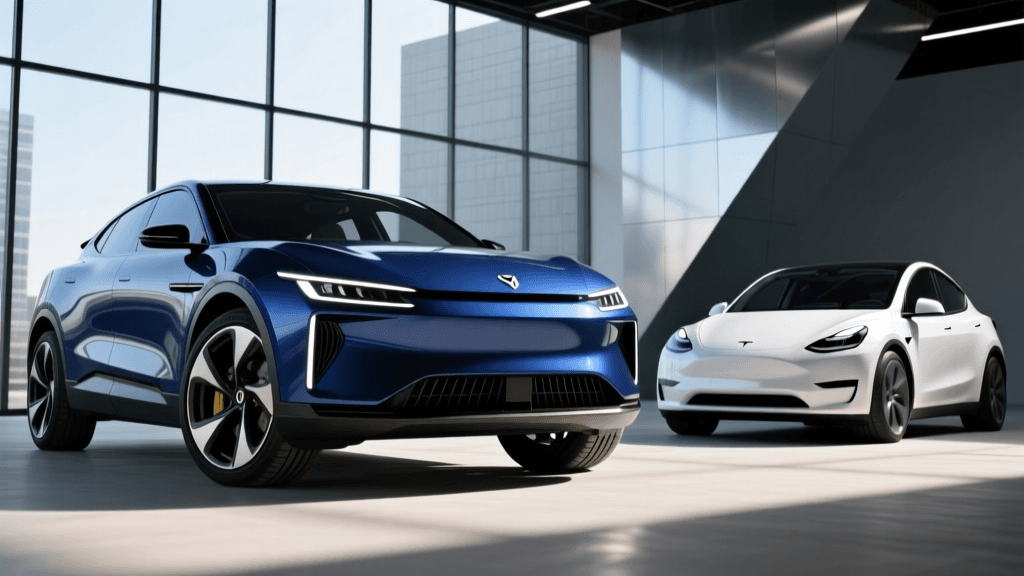
The electric vehicle market is no stranger to ambitious startups promising to disrupt the status quo, but few have generated as much polarizing debate as Fisker Inc. When the Fisker Ocean debuted, it was heralded as a design masterpiece and a potential Tesla-killer. However, as the automotive industry undergoes a brutal consolidation phase, buying an EV is no longer just about horsepower and battery size; it is fundamentally about the survival of the automaker behind the badge. In this head-to-head showdown, we pit the beautifully designed but financially embattled Fisker Ocean Extreme against the undisputed segment benchmark: the Tesla Model Y Long Range. We will dissect real-world range, interior technology, and most importantly, the long-term viability of owning a vehicle from a company navigating severe financial distress.
Fisker Ocean Extreme vs. Tesla Model Y Long Range: Spec Showdown
Before diving into the nuances of software stability and corporate health, let us look at the raw numbers. The Fisker Ocean Extreme was designed to be a halo product, packed with a massive battery and premium features, while the Model Y Long Range relies on industry-leading efficiency and manufacturing scale.
| Feature | Fisker Ocean Extreme | Tesla Model Y Long Range |
|---|---|---|
| Battery Capacity | 113 kWh (NMC) | 81 kWh (NCA/NMC) |
| EPA Estimated Range | 360 miles | 330 miles |
| Drivetrain | Dual Motor AWD | Dual Motor AWD |
| Peak Horsepower | 564 hp | 384 hp |
| 0-60 mph | 3.7 seconds | 4.8 seconds |
| Max DC Fast Charging | ~250 kW | ~250 kW |
| Starting MSRP (Pre-Liquidation) | $68,999 | $48,990 |
Real-World Range, Efficiency, and Charging
On paper, the Fisker Ocean Extreme boasts an impressive 360 miles of EPA-estimated range, edging out the Model Y Long Range. According to data from the U.S. Department of Energy's Fueleconomy portal, achieving these numbers requires optimal driving conditions and careful management of the vehicle's regenerative braking settings. The Ocean utilizes a massive 113 kWh battery pack supplied by CATL. While this provides excellent range, it also makes the vehicle significantly heavier than the Model Y, resulting in lower overall efficiency (miles per kWh).
When it comes to charging, the Tesla Model Y maintains a distinct advantage. Tesla’s Supercharger network remains the gold standard for reliability, plug-and-charge seamlessness, and geographic coverage. Fisker originally partnered with Electrify America, a network notorious for its inconsistent uptime and fragmented user experience. While Fisker announced NACS (North American Charging Standard) adapters to allow Ocean owners to use Tesla Superchargers, the company's subsequent financial collapse has left many owners scrambling to source third-party adapters and deal with software handshake issues at the charger. If road-tripping reliability is your top priority, the Model Y’s native charging ecosystem wins this round decisively.
Interior Quality, Tech, and the 'California Mode'
Step inside the Fisker Ocean, and you are immediately struck by the tactile quality of the cabin. Fisker prioritized sustainable materials, utilizing recycled plastics, vegan leather, and reclaimed fishing nets for the interior trim. The centerpiece is the 17.1-inch rotating infotainment screen, which can flip from a landscape 'Control Mode' to a portrait 'Hollywood Mode' for media consumption while parked. The party trick, however, is 'California Mode,' which simultaneously rolls down all four windows, opens the rear hatch glass, and retracts the solar roof panel (on equipped models) to create an open-air, convertible-like experience.
Conversely, the Tesla Model Y interior is famously minimalist. It lacks a traditional instrument cluster, relying entirely on the central 15-inch touchscreen for everything from speedometer readings to glovebox release. While the Model Y's cabin materials have improved with recent updates, it still feels more utilitarian compared to the Ocean's lounge-like atmosphere. However, Tesla’s software is vastly superior in terms of speed, responsiveness, and over-the-air (OTA) update reliability. The Ocean’s software has been plagued by bugs, including frozen screens, phantom braking alerts, and key fob connectivity drops, which severely dampens the premium feel of the hardware.
The Elephant in the Room: Fisker’s Company Viability
No review of the Fisker Ocean is complete without addressing the dire financial state of Fisker Inc. In a head-to-head showdown, corporate viability is just as critical as the product itself. In June 2024, Fisker Inc. filed for Chapter 11 bankruptcy after failing to secure a rescue deal with a major automaker. The company halted production at its Magna Steyr facility in Austria and began liquidating its remaining inventory of 'Razor' and 'Sport' trims at staggering discounts, sometimes slashing prices by over $30,000.
For a prospective buyer, this transforms the Ocean from a standard vehicle purchase into a high-risk asset acquisition. When an automaker ceases operations, the proprietary software servers that manage the mobile app, remote locking, and OTA updates are often shut down. Furthermore, the supply chain for replacement parts—such as custom headlights, the unique solar roof glass, or specialized suspension components—evaporates. According to the National Highway Traffic Safety Administration (NHTSA), the Fisker Ocean has already been subject to recalls regarding software glitches and loss of motive power. With the company in bankruptcy, executing complex software-related recalls or hardware warranties becomes incredibly difficult, leaving owners to rely on independent EV specialists and third-party mechanics.
As noted by industry analysts tracking startup failures at Reuters Autos & Transportation, the EV startup graveyard is growing, and consumers are increasingly factoring corporate longevity into their purchasing decisions. Tesla, despite its own controversies, possesses massive cash reserves, vertical integration, and a global service network that guarantees the Model Y will be supported for decades.
Ownership Costs, Depreciation, and Warranty Risks
The financial implications of this showdown heavily favor the Tesla Model Y. Because of Fisker's bankruptcy and aggressive inventory liquidation, the Ocean is experiencing catastrophic depreciation. Early adopters who paid over $68,000 for the Extreme trim have seen their vehicle's market value plummet to the $30,000 range. While this makes the Ocean an enticing bargain for used car shoppers, it also means you are buying an 'orphan car.'
Insurance premiums for the Fisker Ocean have skyrocketed due to the lack of replacement parts and the specialized labor required for repairs. A minor fender bender that damages the Ocean's custom front bumper or integrated sensors could result in the vehicle being declared a total loss simply because the parts are no longer being manufactured. The Model Y, being one of the best-selling vehicles in the world, benefits from a massive aftermarket parts ecosystem, lower insurance rates, and predictable depreciation curves.
The Verdict: Should You Buy a Fisker Ocean?
The Fisker Ocean is a tragic masterpiece. It offers a stunning design, a spacious and eco-conscious interior, and class-leading range that genuinely rivals the best in the business. If you are an automotive enthusiast who wants a unique, head-turning EV and are willing to accept the risks of owning an orphaned vehicle—treating it as a secondary car rather than a primary daily driver—the heavily discounted liquidation pricing makes it a compelling, albeit risky, proposition.
However, in a head-to-head showdown for the average consumer's hard-earned money, the Tesla Model Y Long Range is the undisputed winner. The Model Y offers unparalleled charging infrastructure, reliable software, guaranteed parts availability, and the peace of mind that comes from buying a vehicle backed by a financially solvent, globally dominant automaker. The Fisker Ocean proves that building a great car is only half the battle; surviving the brutal economics of the auto industry is the other.