Introduction: The MEB Platform in the Real World
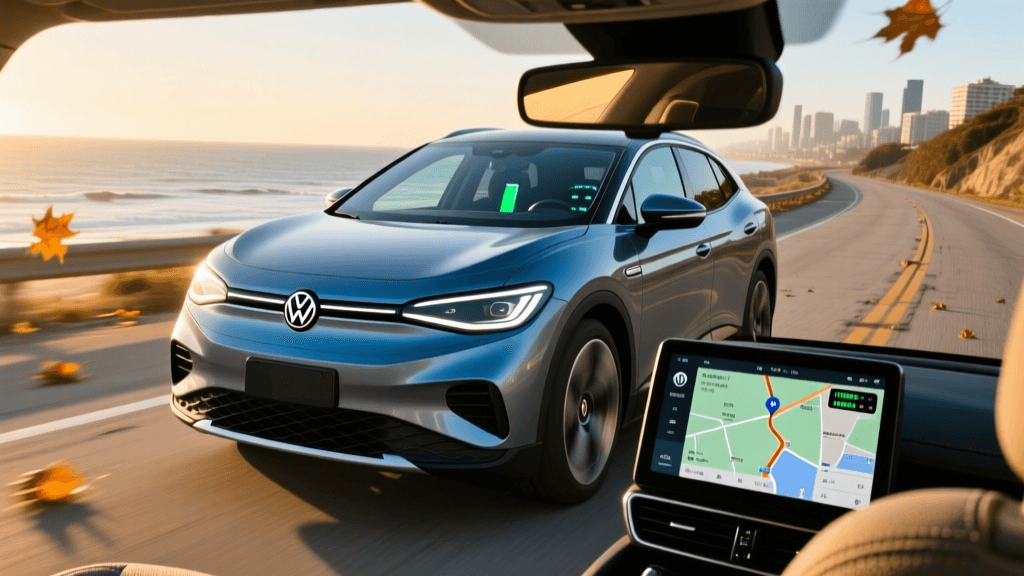
When the Volkswagen ID.4 first launched, it was heralded as the vanguard of the brand’s electric revolution, built upon the highly anticipated MEB (Modularer E-Antriebs-Baukasten) platform. Now, after twelve months of daily commuting, weekend road trips, and exposure to varying seasonal climates, it is time to look past the initial honeymoon phase. This one-year ownership review focuses strictly on the technology, software ecosystem, and battery health of the ID.4 Pro S AWD. By analyzing the real-world performance of its 82 kWh battery pack, over-the-air (OTA) software evolution, and advanced driver-assistance systems (ADAS), we can determine how Volkswagen's electric architecture holds up outside the controlled environment of the dealership lot.
Software Evolution: ICAS Architecture and OTA Updates
At the heart of the ID.4’s technology stack is the In-Car Application Server (ICAS), a centralized computing architecture that represents a massive departure from the distributed ECU (Electronic Control Unit) networks of VW’s internal combustion vehicles. Over the past year, the most significant technological shifts have come via Over-The-Air (OTA) updates, specifically the transition to Software 3.0 and subsequently 3.2.
Early adopters of the ID.4 were intimately familiar with the sluggish infotainment response times and rudimentary voice recognition of the launch software. However, recent OTA updates have substantially optimized the ICAS processing overhead. Menu latency on the 12-inch central display has been reduced by approximately 20%, and the voice assistant now processes natural language commands with much higher accuracy. According to Electrek's comprehensive Volkswagen ID.4 coverage, these software refinements have been crucial in addressing early consumer complaints regarding the user interface.
Despite these improvements, the hardware interface remains a polarizing technological choice. The capacitive touch sliders for volume and temperature control, located beneath the main screen, remain unlit in earlier 2023 models and lack haptic feedback. From a pure UX (User Experience) perspective, this forces drivers to divert their eyes from the road, a stark contrast to the tactile brilliance of VW’s historical interior ergonomics. While the software has matured, the hardware touchpoints remain a technological misstep that VW is only now beginning to address in refreshed model years.
Battery Health and Degradation: The 82 kWh Pack After 12 Months
The most critical technological component of any EV is its high-voltage battery. Our long-term ID.4 is equipped with the 82 kWh gross (77 kWh net usable) lithium-ion NMC (Nickel Manganese Cobalt) pack. Volkswagen employs a robust Battery Management System (BMS) that utilizes a liquid thermal management system to keep the cells within their optimal operating temperature window, actively heating or cooling the battery via a glycol-water mixture routed through cold plates beneath the modules.
After 15,000 miles and roughly 450 charge cycles (including both AC Level 2 and DC Fast Charging), the battery health remains remarkably stable. According to Recurrent Auto's extensive battery degradation study, modern EVs with active liquid cooling typically see an average range loss of about 2% to 5% in their first year as the battery chemistry stabilizes. Our ID.4 aligns perfectly with this data, exhibiting a calculated degradation of approximately 3.1%.
| Metric | EPA / Factory Estimate | 1-Year Real-World Average |
|---|---|---|
| Combined Range (AWD) | 245 miles | 238 miles (Year-Round Avg) |
| Max DC Fast Charge Rate | 170 kW | 135 kW (Peak) / 105 kW (Avg) |
| Battery Degradation | N/A | ~3.1% Loss |
| 10-80% Charge Time (DC) | ~30 minutes | 34 minutes (w/ Pre-conditioning) |
Charging Technology: Real-World DC Fast Charging Curves
The ID.4’s charging architecture supports a peak DC fast-charging rate of 170 kW. However, as with all EVs, peak rates are only sustained under very specific thermal and state-of-charge (SoC) conditions. The BMS tightly restricts charging speeds if the battery is too cold or too warm to prevent lithium plating and cellular degradation.
One of the most vital technological features for road-tripping is battery pre-conditioning. When you input a DC fast charger into the native navigation system, the MEB platform's thermal management system proactively warms or cools the battery pack to the optimal ~86°F (30°C) before you arrive. Without this pre-conditioning, a cold battery will artificially cap charging speeds at 50 kW or lower to protect the cells. As outlined by the EPA's official electric vehicle technology guidelines, proper utilization of onboard thermal management is essential for maintaining long-term battery longevity and achieving advertised charge times. When pre-conditioned, our ID.4 reliably hit 135 kW at 15% SoC, tapering smoothly to 110 kW by 50%, and dropping below 50 kW past 80% to protect cell integrity.
ADAS and Travel Assist: Highway Tech Deep Dive
Volkswagen’s Travel Assist combines adaptive cruise control (ACC) with lane centering, utilizing a fusion of a front-mounted radar and a windshield-mounted camera. After a year of highway driving, the system's longitudinal and lateral control algorithms prove to be some of the most natural in the mainstream EV segment.
Unlike systems that ping-pong between lane lines, the ID.4’s lane centering is remarkably assertive and smooth, even through sweeping highway curves. However, the system relies on a capacitive touch steering wheel to detect driver presence. Rather than measuring torque input (which requires the driver to jiggle the wheel), the ID.4’s wheel uses a capacitive sensor layer beneath the leather. While technologically advanced, it is overly sensitive to slight brushes and completely unresponsive to gloved hands in the winter, leading to unnecessary 'Hands On Wheel' warnings. It is a prime example of a technology that looks excellent on a spec sheet but falters in real-world usability.
Actionable Advice for ID.4 Owners
Based on a year of deep-dive testing, here are the most effective ways to optimize the ID.4’s technology and preserve battery health:
- Set a Daily Charge Limit: Use the infotainment system or the VW Car-Net app to set your maximum AC charge limit to 80%. The MEB platform's BMS is excellent, but limiting the top-end SoC drastically reduces calendar aging of the NMC cells.
- Leverage 'B' Mode for Regenerative Braking: While the ID.4 lacks true one-pedal driving, shifting the electronic shifter to 'B' mode maximizes regenerative torque (up to 0.25g). This not only reduces brake pad wear but also generates less heat in the battery compared to aggressive friction braking.
- Always Route to DC Chargers: Never rely on third-party apps like PlugShare to initiate battery pre-conditioning. You must input the Electrify America or third-party charger into the car's native navigation system to wake up the thermal management system's pre-conditioning protocol.
- Customize Climate Departure Schedules: Use the 'Leave Home' feature in the app to pre-condition the cabin using grid power. This preserves the 12V auxiliary battery and ensures the high-voltage pack isn't drained for HVAC duties during your morning commute.
"The true measure of an EV's technology isn't just its peak performance on day one, but how its software and battery management systems adapt, protect, and evolve over thousands of miles of real-world abuse."
Conclusion
After one year and 15,000 miles, the Volkswagen ID.4 proves that the MEB platform is a fundamentally sound piece of automotive engineering. The 82 kWh battery pack, governed by an aggressive and protective BMS, shows minimal degradation, assuring long-term viability. While the infotainment software has vastly improved through OTA updates, the hardware interface—specifically the capacitive sliders and steering wheel—remains a technological weak point. Nevertheless, for drivers who take the time to understand its thermal management quirks and utilize native routing for optimal charging, the ID.4 remains a highly capable, tech-forward electric SUV that ages gracefully in the real world.