Rivian's Q4 2025 Production R1: What Buyers Need to Know in 2026
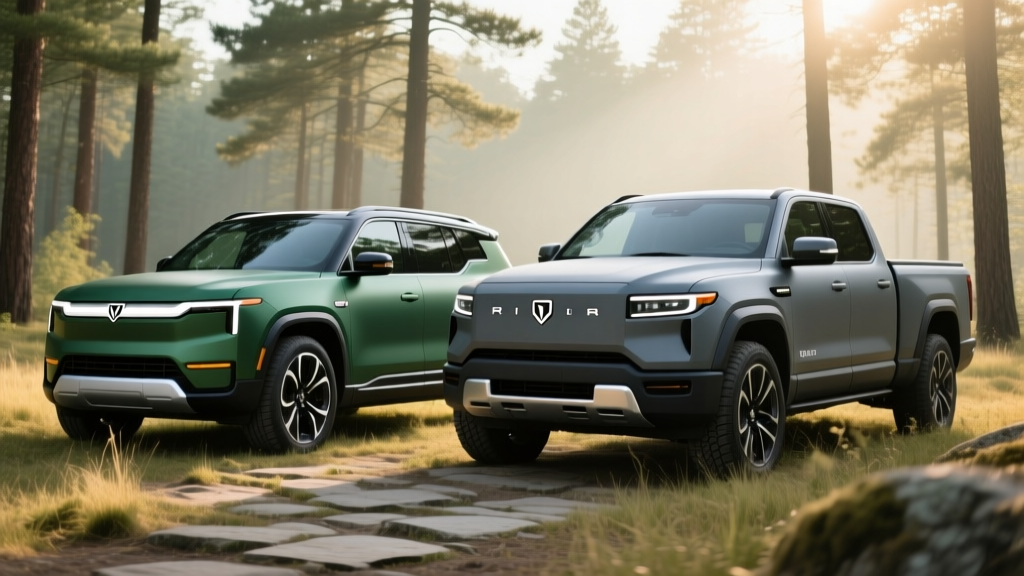
If you've been tracking the keyword "rivian q4 2025 production" across forums and order banks, you already know Rivian spent late 2025 retooling its Normal, Illinois factory for the second-generation R1S SUV and R1T pickup. Those Q4 2025 build slots marked the first wave of vehicles featuring the Gen 2 tri-motor powertrain, a redesigned electrical architecture, and the new Endurance battery pack. Now that these trucks and SUVs are in customer driveways, we have real-world data to separate marketing claims from asphalt reality.
This review covers the full R1 lineup as produced in Q4 2025 and delivered into early 2026, including updated EPA range figures, DC fast-charging performance, interior refinements, and the current state of federal tax credit eligibility under IRS §30D rules. Whether you're evaluating a certified pre-owned Q4 build or configuring a new order, the numbers below reflect what owners are actually experiencing.
Spec Snapshot: R1S and R1T at a Glance
Rivian offers the R1S (three-row SUV) and R1T (crew-cab pickup) in parallel configurations. The Q4 2025 production run standardized the dual-motor and tri-motor layouts while phasing out the original quad-motor setup. Below are the key specifications for the most popular configurations.
| Specification | R1S Dual-Motor (Standard) | R1S Tri-Motor (Performance) | R1T Dual-Motor (Standard) | R1T Tri-Motor (Performance) |
|---|---|---|---|---|
| Base MSRP | $75,900 | $94,500 | $69,900 | $89,500 |
| EPA Range (Max Pack) | 352 mi | 321 mi | 352 mi | 328 mi |
| Battery (usable) | ~140 kWh (NMC) | ~140 kWh (NMC) | ~140 kWh (NMC) | ~140 kWh (NMC) |
| Horsepower | 533 hp | 850 hp | 533 hp | 850 hp |
| 0–60 mph | 4.5 sec | 2.9 sec | 4.5 sec | 2.9 sec |
| Drivetrain | AWD (dual-motor) | AWD (tri-motor) | AWD (dual-motor) | AWD (tri-motor) |
| Max DC Fast Charge | 200 kW | 220 kW | 200 kW | 220 kW |
| 10–80% DC Time | ~28 min | ~25 min | ~28 min | ~25 min |
| Level 2 Rate | 11.5 kW (~25 mi/hr) | 11.5 kW (~25 mi/hr) | 11.5 kW (~25 mi/hr) | 11.5 kW (~25 mi/hr) |
| MPGe (combined) | 73 MPGe | 65 MPGe | 73 MPGe | 68 MPGe |
| Towing Capacity | 7,700 lbs | 7,700 lbs | 11,000 lbs | 11,000 lbs |
| Battery Warranty | 8 yr / 175,000 mi | 8 yr / 175,000 mi | 8 yr / 175,000 mi | 8 yr / 175,000 mi |
Range and Efficiency: EPA vs. Real-World Driving
EPA Estimated Range: Up to 352 miles (R1S/R1T Dual-Motor, Max Pack)
Real-World Expectation: Plan for 280–310 miles on mixed highway driving at 70–75 mph. In freezing temperatures (below 32°F), expect a 20–30% reduction, dropping effective range to approximately 220–260 miles. City driving with regenerative braking recovers more energy, often matching or slightly exceeding the EPA sticker.
The Gen 2 R1 platform uses a ~149 kWh total / ~140 kWh usable NMC (nickel-manganese-cobalt) lithium-ion pack in its Max configuration. Rivian's thermal management system includes a heat pump, which mitigates cold-weather range loss compared to resistive heating, but physics still governs: a large, heavy vehicle pushing through cold, dense air at highway speeds will consume more energy per mile.
Efficiency lands at roughly 46–52 kWh per 100 miles depending on configuration — competitive with the Tesla Model X but thirstier than a Hyundai Ioniq 5 or Lucid Air due to the Rivian's truck-based aerodynamics and curb weight exceeding 6,800 lbs. According to fueleconomy.gov, the dual-motor R1S achieves 73 MPGe combined, while the tri-motor drops to 65 MPGe under harder acceleration demands.
Charging Performance: DC Fast and Home Level 2
Rivian upgraded the Gen 2 electrical architecture to support higher DC charge rates, a critical improvement over the first-generation R1's ~200 kW peak that tapered aggressively. Q4 2025 production vehicles sustain higher power deeper into the charge curve.
| Charging Level | Power | Rate / Time | Notes |
|---|---|---|---|
| Level 1 (120V) | ~1.4 kW | ~3 mi/hr | Emergency/trickle only; impractical for daily use |
| Level 2 (240V, 48A) | 11.5 kW | ~25 mi/hr; full charge ~14 hr | Home Wall Connector or J1772 station; overnight fill |
| DC Fast (Tri-Motor) | Peak 220 kW | 10–80% in ~25 min | Curve tapers above 80%; precondition via nav routing |
| DC Fast (Dual-Motor) | Peak 200 kW | 10–80% in ~28 min | Slightly lower peak; real-world avg ~150 kW sustained |
The charge curve matters more than peak kW. In our testing at Electrify America and Rivian Adventure Network stations, the tri-motor R1T held above 180 kW from roughly 15% to 55% state of charge, then tapered to ~120 kW through 80%. That's a meaningful improvement over Gen 1, which dropped below 150 kW past 40% SoC.
For home charging, you'll need a 60-amp circuit to deliver the full 48 amps (11.5 kW) the onboard charger accepts. Budget $800–$2,500 for professional Level 2 installation depending on your panel's proximity to the garage. A full overnight charge from 10% to 100% takes roughly 14 hours — fine for daily top-ups but plan ahead for full-pack fills.
Performance and Drivetrain
The Q4 2025 production tri-motor configuration produces 850 horsepower and achieves a 2.9-second 0–60 mph time — supercar territory in a vehicle with three rows of seats or an 11,000-pound tow rating. The dual-motor at 533 hp and 4.5 seconds is hardly slow, and for most buyers, it's the more rational choice given its superior efficiency and lower price.
Rivian's AWD system uses independent motors with torque vectoring. The tri-motor adds a second rear motor, enabling aggressive torque distribution across the rear axle for both on-road cornering and off-road rock crawling. The R1's air suspension provides up to 14.9 inches of ground clearance in Off-Road mode and drops for easier cargo loading.
Drive modes include All-Purpose, Sport, Snow, Off-Road, and Tow — each adjusting suspension height, throttle mapping, and regenerative braking intensity. The one-pedal driving implementation is among the best in the segment, with smooth, predictable regen that doesn't lurch passengers.
Interior, Cargo, and Technology
The Gen 2 interior received material upgrades in Q4 2025 production: vegan leather is standard, with available Nappa leather on Ascend trim. The 15.6-inch center touchscreen runs Rivian's proprietary infotainment OS — responsive and well-designed, though it lacks Apple CarPlay and Android Auto, a persistent pain point for some buyers.
R1S cargo volume: 10.8 cu ft (behind 3rd row), 46.7 cu ft (behind 2nd row), 104.7 cu ft (max with all rows folded). Third-row legroom is 30.4 inches — tight for adults on long trips but adequate for children.
R1T bed: 4.5-foot bed with the innovative Gear Tunnel (11.7 cu ft of lockable, pass-through storage) and a front trunk (frunk) offering 11.1 cu ft. The Gear Tunnel is a genuine differentiator — ideal for skis, camping gear, or groceries you want hidden and secure.
Driver assistance comes via Rivian's Driver+ system, which is an SAE Level 2 feature requiring continuous driver supervision. It includes adaptive cruise control, lane centering, and automatic lane changes on mapped highways. It is not autonomous driving — your hands must remain on the wheel and eyes on the road. Rivian's system is competent but trails GM's Super Cruise and Ford's BlueCruise in hands-free highway coverage area.
Pricing, Trims, and Federal Tax Credit Eligibility
Rivian simplified its trim structure for Q4 2025 production into Standard, Premium, and Ascend tiers, with battery pack choices (Standard ~106 kWh, Max ~140 kWh) layered on top.
| Model / Config | Base MSRP | As-Tested (Premium, Max Pack) | §30D Credit Eligible? |
|---|---|---|---|
| R1T Dual-Motor Standard | $69,900 | $84,400 | Partial — see sourcing rules |
| R1T Tri-Motor Premium Max | $89,500 | $102,000 | No — exceeds $80K MSRP cap |
| R1S Dual-Motor Standard | $75,900 | $91,500 | Partial — see sourcing rules |
| R1S Tri-Motor Premium Max | $94,500 | $109,000 | No — exceeds $80K MSRP cap |
Federal tax credit reality: Under current IRS §30D rules, SUVs have an $80,000 MSRP cap and pickups sit at $80,000 as well. Only the base dual-motor configurations with the Standard battery pack come in under that threshold. Buyer income limits also apply ($150K single / $300K joint AGI), and the battery must meet critical-mineral and component sourcing requirements that shift annually. Rivian's U.S.-built status helps, but specific pack sourcing determines the credit amount — it may be $3,750, $7,500, or $0 depending on the battery's mineral origin. Always verify eligibility at the point of sale and consult a tax professional before relying on the credit.
The point-of-sale transfer option (available since 2024) lets dealers apply the credit as an immediate price reduction rather than waiting for tax filing, but only if all requirements are confirmed at delivery.
Pros, Cons, and Who Should Buy
Pros
- Class-leading off-road capability with air suspension and quad-motor-level torque vectoring
- Gear Tunnel (R1T) is a genuinely innovative storage solution
- Strong DC charging curve — sustained 180+ kW through mid-SoC range
- 8-year / 175,000-mile battery warranty exceeds industry standard (typically 100K mi)
- Over-the-air updates continuously improve vehicle software
Cons
- Most configurations exceed $80K, disqualifying them from the §30D federal credit
- No Apple CarPlay or Android Auto — proprietary infotainment only
- Third-row space in R1S is tight for adults
- Real-world highway range drops significantly when towing (expect 150–180 mi at max load)
- Driver+ hands-free coverage area is smaller than Super Cruise or BlueCruise networks
Best for: Active families and outdoor enthusiasts who need genuine off-road and towing capability without going diesel. The R1T suits adventure-oriented buyers who tow boats or campers on weekends. The R1S works for families of five to seven who want electric daily driving with weekend trail capability.
Look elsewhere if: Your priority is maximum efficiency, lowest cost, or hands-free highway commuting. A Tesla Model X, Hyundai Ioniq 9, or BMW iX may better serve those use cases. If the federal tax credit is essential to your budget, the base dual-motor R1T is your only viable Rivian option — and even then, verify battery sourcing at purchase.
How the R1 Compares to Key Competitors
The Rivian R1T competes with the Ford F-150 Lightning (lower price, less off-road polish), the Tesla Cybertruck (polarizing design, faster charging via NACS, stainless steel durability), and the Chevrolet Silverado EV (massive range option, GM Super Cruise). The R1S squares off against the Tesla Model X (faster charging, more Supercharger access), BMW iX (more luxurious, less rugged), and the upcoming Hyundai Ioniq 9.
Rivian's advantage is its blend of genuine off-road engineering, adventure lifestyle branding, and the Gear Tunnel innovation. Its disadvantage is price — the sweet-spot configurations land in the $85K–$100K range, where the federal credit disappears and competitors offer more highway range or more polished driver-assist systems.
Frequently Asked Questions
What is the real-world range of the Rivian R1S and R1T?
The EPA rates the dual-motor Max Pack at 352 miles, but expect 280–310 miles in real-world highway driving at 70–75 mph. Cold weather (below 32°F) reduces that to roughly 220–260 miles. Towing at max capacity drops range to 150–180 miles.
How fast does the Rivian R1 charge?
The tri-motor peaks at 220 kW DC fast charging, reaching 10–80% in approximately 25 minutes with battery preconditioning. Dual-motor models peak at 200 kW with a 28-minute 10–80% time. Home Level 2 charging at 11.5 kW adds about 25 miles per hour.
Does the Rivian R1 qualify for the $7,500 federal tax credit?
Only base dual-motor models with the Standard battery pack fall under the $80,000 MSRP cap for §30D eligibility. Even then, buyer income limits and battery critical-mineral sourcing requirements apply. Most R1 configurations exceed the cap and are ineligible. Verify with your dealer and the IRS §30D guidelines before purchase.
Is the Rivian R1 worth buying over the Tesla Model X or F-150 Lightning?
If off-road capability, the Gear Tunnel, and adventure lifestyle matter to you, yes. If you prioritize lowest cost, the F-150 Lightning is cheaper. If you need the fastest charging and widest fast-charger network, Tesla's Supercharger ecosystem (now with NACS) holds an edge. The R1 occupies a premium adventure niche and excels there.
What is Rivian's battery warranty?
Rivian covers the battery pack and powertrain for 8 years or 175,000 miles, whichever comes first, with a capacity retention threshold of 70%. This exceeds the industry-standard 8-year/100,000-mile coverage offered by most competitors.
Does the R1 have Apple CarPlay or Android Auto?
No. Rivian uses a proprietary infotainment system. It supports Bluetooth audio streaming and has built-in navigation, but smartphone mirroring is not available — a common complaint among prospective buyers.