Quick Answer: Can You EV Charge at Home?
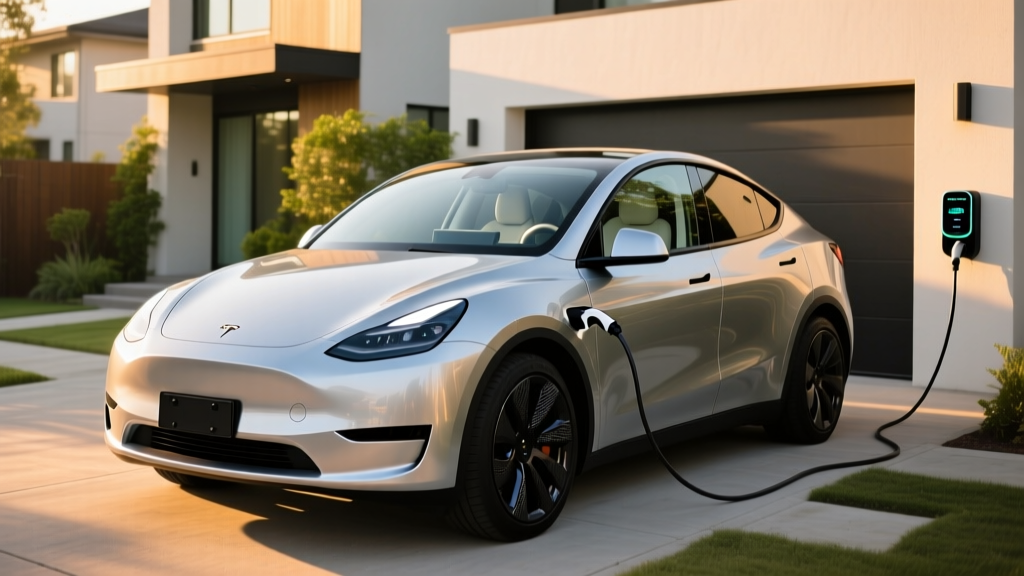
Yes — most EV owners do 80–90% of their charging at home. A standard 120V outlet (Level 1) adds 3–5 miles of range per hour, which works for drivers covering under 40 miles daily. A 240V Level 2 home charger adds 25–44 miles per hour and costs $500–$2,500 installed, fully replenishing most EV batteries overnight. Home charging typically costs $0.03–$0.05 per mile on a national average electricity rate of ~$0.17/kWh, compared to $0.12–$0.15 per mile for a 25 MPG gas car at $3.30/gallon.
Level 1 vs Level 2: Which Home Charging Setup Do You Need?
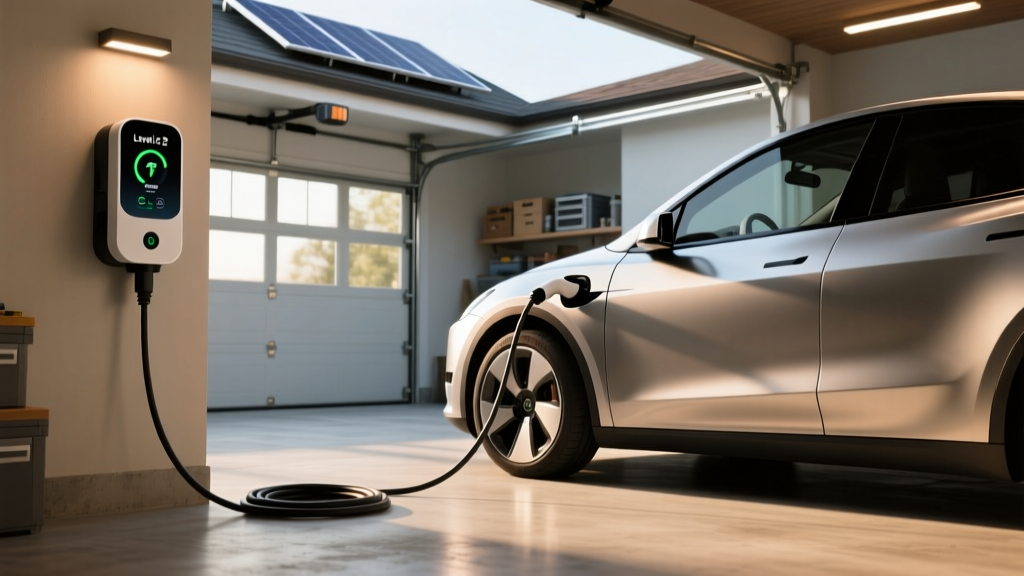
The single biggest decision for anyone planning to EV charge at home is whether a standard wall outlet is enough or whether you need a dedicated 240V circuit. Here's how the two levels compare in real-world terms:
| Metric | Level 1 (120V) | Level 2 (240V) |
|---|---|---|
| Power delivery | 1.0–1.4 kW | 7.2–11.5 kW |
| Miles of range per hour | 3–5 mi/hr | 25–44 mi/hr |
| Full charge time (80 kWh battery) | 55–80 hours | 7–11 hours |
| Equipment cost | $0 (included cable) | $250–$700 |
| Installation cost | $0 (existing outlet) | $500–$2,500 |
| Best for | <40 mi/day, PHEV owners | BEV owners, 100+ mi/day |
For plug-in hybrid owners — say a 2026 Toyota RAV4 Prime with 42 miles of electric range — Level 1 is usually sufficient. You plug in when you get home and the 14.5 kWh battery is full by morning. For a battery-electric vehicle like the Hyundai Ioniq 5 (84 kWh usable battery, EPA 310 miles), Level 1 means you'd need multiple days to fully recharge from empty. That's fine if you drive 30 miles a day and top up nightly, but inadequate for road-trip recovery or high-mileage commuters.
The Real Cost to Install a Level 2 Home Charger
Installation costs vary widely based on your electrical panel's capacity, the distance from the panel to your garage or driveway, and local permit requirements. Here's a realistic breakdown based on 2026 electrician rates:
| Component | Typical Range | Notes |
|---|---|---|
| Level 2 EVSE hardware (charger unit) | $250–$700 | Grizzl-E, ChargePoint Home Flex, Emporia, Wall Connector |
| 240V outlet (NEMA 14-50) install | $300–$800 | If panel has capacity and run is short (<30 ft) |
| Hardwired connection | $400–$1,200 | Often preferred; avoids outlet wear, allows higher amperage |
| Electrical panel upgrade (100A → 200A) | $1,500–$4,000 | Needed in older homes; adds 4–8 weeks for utility approval |
| Permit and inspection | $50–$300 | Required in most jurisdictions; varies by municipality |
| Total (no panel upgrade) | $500–$1,800 | Most common scenario for modern homes |
| Total (with panel upgrade) | $2,000–$5,000 | Common in homes built before 1990 |
A critical detail often overlooked: most homes built after 2000 have a 200-amp electrical panel with enough spare capacity for a 40-amp EV circuit. But if your panel is maxed out — common when you've added central AC, an electric oven, and a dryer — you may need a load management device or a panel upgrade. A licensed electrician can assess this in a 30-minute site visit.
EV Home Charging vs Gas: The 5-Year Cost Comparison
The strongest argument for home charging is fuel-cost savings. Let's compare a typical 2026 EV against a comparable gas vehicle over 5 years at 15,000 miles/year (75,000 miles total).
| Cost Factor | EV (e.g., Tesla Model Y LR) | Gas (e.g., Toyota RAV4 AWD) |
|---|---|---|
| Energy/fuel cost per mile | $0.04 (home, $0.17/kWh) | $0.13 (28 MPG combined, $3.60/gal) |
| 5-year fuel/energy total | $3,000 | $9,750 |
| Maintenance (5 years) | ~$1,500 | ~$3,500 |
| Home charger install (amortized) | $1,200 | $0 |
| Insurance premium delta | +$600–$1,200 (5yr) | Baseline |
| 5-year operating total | $5,700–$6,300 | $13,250 |
Net 5-year savings from home charging and lower maintenance: roughly $7,000–$7,500. That doesn't include the federal §30D tax credit, which can reduce the EV's purchase price by up to $7,500 at point of sale if the vehicle and buyer meet IRS eligibility requirements — including MSRP caps ($55,000 for cars, $80,000 for SUVs/trucks), buyer income limits ($150K single / $300K joint), and battery critical-mineral sourcing rules.
Per-Mile Energy Cost by State (Home Charging)
Electricity rates vary dramatically. Here's what home charging actually costs per mile in select states at 3.5 mi/kWh efficiency (typical for a mid-size crossover EV):
- Washington: $0.028/mi ($0.10/kWh)
- Texas: $0.037/mi ($0.13/kWh)
- National avg: $0.049/mi ($0.17/kWh)
- New York: $0.063/mi ($0.22/kWh)
- California: $0.080/mi ($0.28/kWh — but TOU rates can drop this to $0.04/mi overnight)
First-Time EV Buyer Mistakes to Avoid
Having tested dozens of EVs and managed home charging setups across different climates, these are the most common errors new owners make:
| Myth | Fact |
|---|---|
| "I need the biggest battery available." | If you charge at home nightly, a 250-mile EPA range covers 95% of daily needs. Paying $5,000+ extra for a 350-mile pack only matters for frequent road trippers. |
| "My EV will charge at the peak kW rate listed." | Peak charge rate (e.g., 250 kW) applies only between ~10–50% SoC under ideal thermal conditions. Above 80%, charging tapers sharply to protect battery chemistry. A "250 kW" EV may average 120 kW across a full 10–80% session. |
| "I can just plug into any outlet." | A standard 120V outlet on a shared circuit (garage with freezer, outdoor lights) can trip the breaker. A dedicated 20A circuit is recommended for reliable Level 1 charging. |
| "Cold weather won't matter — I have a garage." | Even garaged EVs lose 15–30% range when driving in sub-30°F weather. A heat pump (standard on most 2026 models) helps but doesn't eliminate the loss. Budget for real-world winter range. |
| "Home charging is always cheaper than gas." | In states with high electricity rates and no time-of-use plans (Hawaii at $0.43/kWh, parts of California at $0.35+), per-mile costs can approach those of an efficient hybrid. TOU plans that shift charging to off-peak hours are essential in these markets. |
Who Should — and Shouldn't — Buy an EV Based on Home Charging
Decision Framework: Is Home EV Charging Right for You?
Choose an EV if:
- You have a garage, carport, or driveway where a 240V circuit can be installed
- Your daily driving is under 80 miles round-trip (most commuters)
- You can access off-peak electricity rates (time-of-use plans)
- You want to reduce per-mile fuel costs by 60–75%
- You value never visiting a gas station for daily driving
Consider a PHEV instead if:
- You rent and can't install a Level 2 charger
- You regularly drive 200+ miles in a day with no reliable public charging en route
- You live in an apartment without EV charging infrastructure
- You frequently tow heavy loads (trailers, boats) where EV range drops 40–50%
Wait or choose a hybrid if:
- Your only parking is on-street with no charging access
- Your electrical panel needs a costly upgrade ($4,000+) and you plan to move within 3 years
- You live in an extreme-cold climate (regularly below 0°F) with no garage and short-trip patterns that prevent battery preconditioning
Home Charging Equipment: What to Actually Buy
Not all Level 2 chargers are equal. Here are the key specs to evaluate:
- Amperage: 32A (7.7 kW), 40A (9.6 kW), or 48A (11.5 kW). Higher amps = faster charging but requires a heavier-gauge wire and larger breaker. A 48A charger needs a 60A circuit.
- Connector: As of 2026, the NACS (North American Charging Standard) connector is adopted by Ford, GM, Rivian, Volvo, Hyundai/Kia, and others. Tesla vehicles use NACS natively. If you buy a non-Tesla EV with CCS1, you may need an adapter for future-proofing.
- Hardwired vs plug-in: Hardwired units avoid NEMA 14-50 outlet wear issues and allow full 48A delivery. Plug-in units are portable if you move homes.
- Smart features: Wi-Fi-enabled chargers (ChargePoint, Emporia, Tesla Wall Connector) let you schedule charging during off-peak hours, track energy use, and integrate with solar systems. This is not a luxury — it's how you keep per-mile costs low in high-rate states.
For a complete look at home charger options and EV charging technology fundamentals, refer to EPA's fueleconomy.gov resources on electric vehicle efficiency.
Frequently Asked Questions
Can I charge my EV from a regular household outlet?
Yes, using the Level 1 cable included with most EVs. A standard 120V/15A outlet delivers about 1.2 kW, adding 3–5 miles of range per hour. This is adequate for PHEVs (which have small 10–20 kWh batteries) and BEV owners who drive under 40 miles daily. For a full BEV battery recharge, expect 2–3 days on Level 1.
Do I need a permit to install a home EV charger?
Most municipalities require an electrical permit for a new 240V circuit. Permit fees typically run $50–$300. Your electrician usually handles the permit application. Skipping the permit risks insurance claim denials if an electrical fire occurs and the unpermitted work is discovered.
Will charging at home increase my electric bill significantly?
Driving 1,000 miles per month in an EV averaging 3.5 mi/kWh adds roughly 286 kWh to your bill. At the national average of $0.17/kWh, that's about $49/month — replacing $130–$150 in gasoline. Net monthly savings: $80–$100. Enrolling in a time-of-use plan and charging between 10 PM–6 AM can reduce this further in many utility territories.
How long does a home EV charger last?
Quality Level 2 chargers (ChargePoint, Grizzl-E, Tesla Wall Connector) are rated for 10–15 years of daily use. The cable and connector are the most common wear items. Most units carry 2–3 year warranties. Budget $300–$600 for a replacement unit a decade from now.
Does home charging degrade my EV battery faster?
No — home Level 2 charging is actually gentler on battery chemistry than repeated DC fast charging. The slower charge rate generates less heat, which is the primary driver of lithium-ion degradation. For NMC batteries, keeping daily charge between 20–80% State of Charge maximizes longevity. LFP batteries (used in base-model Teslas, some Ford and Hyundai trims) tolerate 100% daily charges without significant degradation — check your owner's manual for chemistry-specific guidance.
What if I live in an apartment or condo?
Multi-unit dwelling charging is improving. Some states (California, Colorado, New York) have "right to charge" laws preventing HOAs from unreasonably blocking charger installation. Shared Level 2 chargers in parking garages are increasingly common. If neither is available, rely on workplace charging and public DC fast chargers — but factor in higher per-kWh costs ($0.30–$0.50 at public stations) when calculating ownership economics.