Quick Verdict: Is the Rivian R1S Worth the Autonomy Premium?
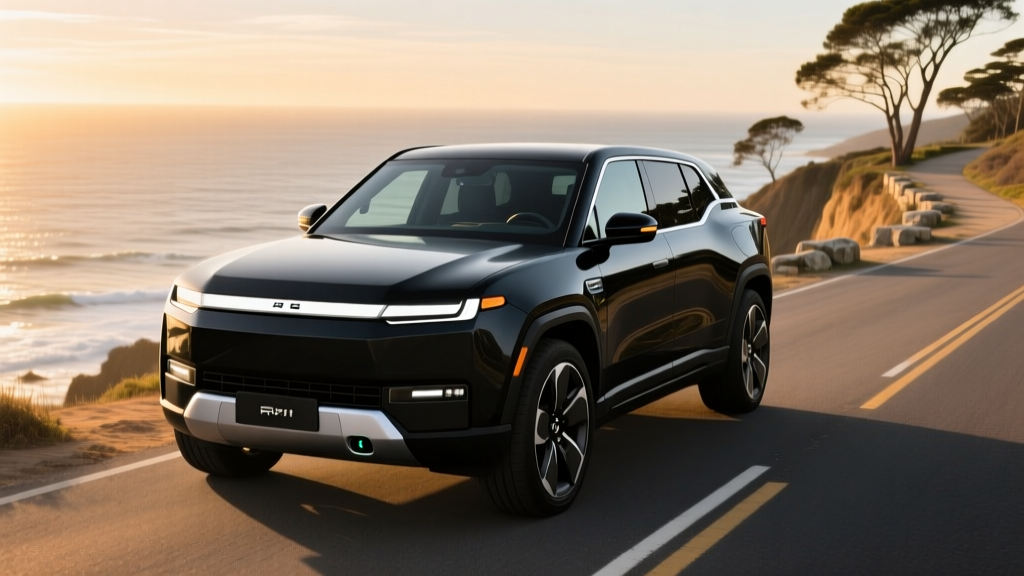
The 2026 Rivian R1S remains one of the most capable three-row electric SUVs on the market, blending genuine off-road chops with a tech-forward cabin and a rapidly maturing driver-assistance suite. But for buyers researching the rivian autonomy cost, the calculus goes beyond the sticker price. Between the vehicle's MSRP, the optional ADAS subscription, charging infrastructure needs, and federal tax credit variables, the true cost of owning Rivian's flagship SUV requires a careful spreadsheet — not just a brochure glance.
In this review, we dissect every ownership-relevant number: EPA range versus real-world results, DC fast-charge curves, battery chemistry trade-offs, and exactly what Rivian's driver-assist features cost you monthly and annually. If you're cross-shopping the R1S against the Tesla Model X, Kia EV9, or BMW iX, this is the data-driven breakdown you need.
Range, Battery, and Efficiency: The Numbers That Matter
The 2026 R1S is offered with two primary battery packs across its trim lineup. The Standard battery uses a lithium iron phosphate (LFP) chemistry, while the larger Max pack relies on nickel-manganese-cobalt (NMC) cells for higher energy density.
| Specification | Standard Pack (LFP) | Max Pack (NMC) |
|---|---|---|
| Usable Battery Capacity | 106 kWh | 141 kWh |
| EPA Estimated Range | 270 miles | 410 miles |
| MPGe (Combined) | 73 MPGe | 69 MPGe |
| Efficiency (kWh/100 mi) | 46 kWh/100 mi | 49 kWh/100 mi |
| Chemistry | LFP (prismatic) | NMC (cylindrical) |
Real-World Range Reality Check
EPA Sticker: 410 miles (Max Pack, Dual-Motor) / 270 miles (Standard Pack)
What to Expect: On highway road trips at 70-75 mph in moderate temperatures, expect roughly 330-360 miles from the Max Pack before needing a charge. In cold weather (below 30°F), range drops 20-30%, putting the Max Pack closer to 280-320 miles real-world. The Standard pack delivers approximately 210-230 miles highway and may dip below 190 miles in freezing conditions. The R1S's boxy aerodynamics penalize highway efficiency more than sleeker crossovers — plan your charging stops conservatively.
The LFP Standard pack trades range for longevity and cost. LFP cells tolerate frequent 100% charging without accelerated degradation, making them ideal for daily commuters with home charging. The NMC Max pack delivers the range needed for road trips but benefits from charging to 80-90% for daily use and reserving 100% for long trips only. According to fueleconomy.gov, the R1S Dual-Motor Max Pack achieves 69 MPGe combined — competitive for a 7,000-lb SUV but noticeably thirstier than lighter EVs.
Charging Speed: DC Fast Charge and Home Level 2
Rivian upgraded the R1S's charging architecture for 2026, moving to a more robust 800V-capable system on Max Pack trims that enables faster peak charge rates. The Standard pack retains a 400V architecture.
| Charging Level | Standard Pack (LFP) | Max Pack (NMC) |
|---|---|---|
| Level 1 (120V, 12A) | ~3 mi/hr | ~3 mi/hr |
| Level 2 (240V, 48A / 11.5 kW) | ~25 mi/hr (~11 hrs full) | ~30 mi/hr (~14 hrs full) |
| Level 2 (240V, 80A / 19.2 kW) | ~42 mi/hr (~6 hrs full) | ~50 mi/hr (~8 hrs full) |
| DC Fast Charge (Peak kW) | 200 kW | 300 kW |
| DC 10-80% Time | ~30 minutes | ~21 minutes |
| Connector | NACS (native) | NACS (native) |
The 2026 R1S comes equipped with a native NACS (North American Charging Standard) port, giving it direct access to Tesla Supercharger stations without an adapter — a significant advantage for road-trippers. The Max Pack's 300 kW peak rate is impressive, but as with all EVs, that peak is sustained only between roughly 10-40% state of charge. Expect the charge curve to taper significantly above 60%, with the 60-80% portion adding roughly 8-10 minutes. If you're planning a road trip, budget 25-28 minutes per stop for a realistic 10-80% session including plugging in and payment authentication.
For home charging, Rivian recommends a 60-amp circuit with a 48A Wall Charger for optimal Level 2 speeds. If your electrical panel supports a 100-amp circuit, the available 80A Rivian Wall Charger cuts overnight charging time nearly in half. Most R1S owners will find a 48A Level 2 setup ($500-$800 for equipment, $800-$2,000 for electrician installation) sufficient to replenish a day's driving overnight. Per the IRS, a separate residential charger tax credit (up to $1,000 under §30C) may offset installation costs — check eligibility with your tax professional.
Performance and Drivetrain
The 2026 R1S is offered in Dual-Motor and Quad-Motor configurations:
| Drivetrain | Horsepower | Torque (lb-ft) | 0-60 mph | Drivetrain |
|---|---|---|---|---|
| Dual-Motor AWD | 533 hp | 610 | 4.5 sec | AWD |
| Performance Dual-Motor | 665 hp | 827 | 3.4 sec | AWD |
| Quad-Motor AWD | 1,025 hp | 1,198 | 2.6 sec | AWD (independent) |
Even the base Dual-Motor delivers more than enough acceleration for merging and passing. The Quad-Motor is a performance statement — 1,025 horsepower in a three-row SUV borders on absurd, but the independent motor-per-wheel setup also enables genuine off-road capability with precise torque vectoring. Towing capacity reaches 7,700 lbs when properly equipped, putting the R1S in legitimate truck territory for boat and camper trailers.
Rivian Autonomy Cost: What Driver Assist Actually Costs
This is where the rivian autonomy cost question gets specific. Rivian offers its advanced driver-assistance system under the Rivian Driver+ branding, and unlike some competitors, the pricing structure is layered.
SAE Automation Level: Level 2
Rivian Driver+ and Driver+ Assist are SAE Level 2 systems. This means the vehicle can simultaneously control steering and speed under specific conditions, but the driver must remain fully attentive, keep hands on the wheel (or demonstrate engagement), and be prepared to take over at any moment. This is not self-driving. Only Level 4 services like Waymo operate without a human driver.
| Feature Tier | Capabilities | Cost |
|---|---|---|
| Standard ADAS (included) | Adaptive cruise, lane-keeping, automatic emergency braking, blind-spot monitoring | $0 (included in MSRP) |
| Driver+ | Hands-on-wheel highway assist with lane centering + adaptive cruise | $0 (included on Adventure & Ascend trims) |
| Driver+ Assist (Subscription) | Enhanced lane changes, hands-free driving on mapped highways (with eye monitoring), smart navigation integration | $49/month or $499/year (estimated 2026 pricing) |
The standard ADAS suite is competitive — automatic emergency braking, rear cross-traffic alert, and highway lane-keeping are all included at no extra charge. The Driver+ tier adds hands-on-wheel highway assist, similar to Toyota's ProPILOT Assist or Ford's base BlueCruise.
The real autonomy cost conversation centers on Driver+ Assist, the subscription-based hands-free system. At roughly $49/month ($499/year), the annualized autonomy cost is meaningful over a five-year ownership period: approximately $2,500 in subscription fees alone. Compare this to GM's Super Cruise, which includes three years free on qualifying vehicles before transitioning to a ~$25/month fee, or Tesla's FSD Supervised at $99/month (or $8,000 one-time purchase). Rivian's approach is middle-of-the-road on price, but the feature set is still maturing — hands-free coverage is limited to roughly 150,000+ miles of divided highway as of early 2026, and urban/street-level autonomy is not available.
⚠️ What Rivian Driver+ Assist Does NOT Do
- Does not navigate city streets or stoplights autonomously
- Does not handle construction zones reliably — driver must take over
- Requires driver eye monitoring — looking away triggers escalating warnings
- Not available in heavy rain, snow, or low-visibility conditions
- Hands-free operation limited to pre-mapped divided highways
Pricing, Trims, and Federal Tax Credit Eligibility
| Trim / Configuration | Base MSRP | As-Tested (Typical Options) | §30D Credit Eligibility |
|---|---|---|---|
| R1S Dual-Motor Standard (Adventure) | $79,900 | $83,000-$87,000 | Eligible — up to $7,500* |
| R1S Dual-Motor Max (Adventure) | $89,900 | $93,000-$98,000 | Eligible — up to $7,500* |
| R1S Dual-Motor Max (Ascend) | $94,900 | $100,000-$108,000 | Eligible — up to $7,500* |
| R1S Quad-Motor Max (Ascend) | $104,900 | $110,000-$118,000 | Eligible — up to $7,500* |
* Federal tax credit eligibility under IRS §30D requires meeting ALL of the following criteria for 2026:
- MSRP Cap: SUVs/vans/pickups must have an MSRP ≤ $80,000. Note: The base Dual-Motor Standard Adventure at $79,900 qualifies, but adding options that push the MSRP above $80,000 disqualifies the vehicle. Higher trims exceed the cap.
- Buyer Income Cap: Modified AGI ≤ $300,000 (joint filers), $225,000 (head of household), $150,000 (individual). Phase-out applies.
- Battery Sourcing: Critical minerals and battery components must meet escalating domestic/free-trade-agreement percentages. Rivian has worked to qualify, but the exact credit amount ($3,750 vs. $7,500) depends on current-year sourcing compliance. Verify at purchase.
- Point-of-Sale Transfer: The credit can be transferred to the dealer at purchase, reducing the purchase price directly — no waiting for tax filing.
- Final Assembly: Must occur in North America (Rivian's Normal, Illinois plant qualifies).
The MSRP cap is the biggest trap for R1S buyers. The base Dual-Motor Standard Adventure at $79,900 technically clears the $80,000 SUV cap — but adding the popular Adventure Package, premium paint, or larger wheels can push the MSRP over the limit. Always confirm the final MSRP on the window sticker before assuming credit eligibility. Consult a tax professional for your specific situation.
Interior, Cargo, and Daily Livability
The R1S seats up to seven passengers across three rows, though the third row is best suited for children or short-trip adults. Cargo space is generous:
| Measurement | Dimension |
|---|---|
| Cargo (behind 3rd row) | 20.0 cu ft |
| Cargo (3rd row folded) | 57.0 cu ft |
| Cargo (all rows folded) | 96.0 cu ft |
| Front trunk (frunk) | 11.0 cu ft |
| 2nd-row legroom | 39.5 in |
| 3rd-row legroom | 30.1 in |
The 11-cubic-foot frunk is a standout — large enough for charging cables, a week's groceries, or a soft cooler. Interior materials on the Ascend trim include open-pore wood and vegan leather that rival European luxury competitors. The 15.6-inch central touchscreen runs Rivian's proprietary OS, which has improved significantly in responsiveness and now supports wireless Apple CarPlay and Android Auto. A notable drawback: the R1S relies heavily on touchscreen controls for climate and seat adjustments, which some drivers find distracting compared to physical buttons.
Warranty and Long-Term Ownership
| Coverage | Terms |
|---|---|
| Basic Vehicle Warranty | 5 years / 60,000 miles |
| Battery & Powertrain | 8 years / 175,000 miles |
| Battery Capacity Guarantee | Retains ≥70% capacity over 8 yr / 175,000 mi |
Rivian's battery warranty is competitive and slightly more generous on mileage than the industry-standard 8yr/100,000mi. The 175,000-mile powertrain coverage provides strong peace of mind for high-mileage drivers. Battery degradation data for Rivian's packs is still accumulating — the company's first R1S deliveries were in 2022 — but early fleet data suggests NMC packs lose approximately 5-8% capacity over the first 60,000 miles, with the curve flattening thereafter. LFP packs are expected to degrade more slowly, though at the cost of lower energy density and range.
Pros, Cons, and Who Should Buy the R1S
✅ Pros
- Class-leading off-road capability among electric SUVs
- Native NACS — direct Tesla Supercharger access
- Up to 410 miles EPA range (Max Pack)
- 7,700-lb towing capacity
- Massive 11 cu ft frunk
- Generous 8yr/175,000mi battery warranty
- Standard ADAS included at no extra cost
❌ Cons
- Only base trim qualifies for full §30D tax credit (MSRP cap)
- Boxy shape reduces real-world highway range vs. EPA
- Autonomy subscription adds ~$500/yr to ownership cost
- Third row is tight for adults
- Heavy reliance on touchscreen for climate/vehicle controls
- Service center network still expanding in rural areas
Choose the Rivian R1S If:
- You need three rows, genuine off-road ability, and strong towing capacity
- You road-trip frequently and value the Max Pack's 410-mile range
- You want native Supercharger access without adapter hassle
Look Elsewhere If:
- Budget is under $75,000 and tax-credit maximization is a priority (consider the Kia EV9 or Hyundai Ioniq 9)
- You want a mature Level 3+ autonomous driving experience (not yet available on any consumer vehicle)
- Third-row adult comfort is a daily need (consider the Cadillac Escalade IQ or Mercedes EQS SUV)
Frequently Asked Questions
What is the real-world range of the 2026 Rivian R1S?
The Max Pack's EPA estimate is 410 miles, but expect 330-360 miles on highway road trips at 75 mph, and 280-320 miles in freezing temperatures. The Standard Pack delivers roughly 210-230 miles real-world highway.
How fast does the R1S charge on DC fast chargers and at home?
The Max Pack peaks at 300 kW DC fast charging, achieving 10-80% in approximately 21 minutes. The Standard Pack peaks at 200 kW with a 10-80% time of about 30 minutes. At home on a 48A Level 2 charger, expect roughly 25-30 miles of range per hour of charging.
How much does the R1S cost after federal tax credits?
The base Dual-Motor Standard Adventure starts at $79,900 MSRP. If you qualify for the full $7,500 §30D credit (meeting income, MSRP, and battery-sourcing requirements), the effective price drops to approximately $72,400. Higher trims exceed the $80,000 SUV MSRP cap and do not qualify. Always verify with a tax professional.
Is the Rivian R1S worth buying versus key competitors?
The R1S excels in off-road capability, towing, and adventure versatility. Against the Tesla Model X, it offers a more rugged build and better interior materials but less mature autonomous driving tech. Against the Kia EV9, it provides significantly more range and power but at a substantially higher price. The BMW iX is more refined on-road but lacks the R1S's third row and off-road chops.
What is the total Rivian autonomy cost over 5 years?
Standard ADAS and Driver+ (hands-on-wheel highway assist) are included in the vehicle price at no additional cost. The optional Driver+ Assist hands-free subscription runs approximately $499/year, totaling about $2,500 over five years. This is comparable to or slightly less than Tesla's FSD subscription over the same period.
Does the 2026 Rivian R1S qualify for the federal EV tax credit?
The base Dual-Motor Standard Adventure at $79,900 MSRP qualifies for the §30D credit, subject to buyer income limits (≤$300,000 joint), battery-sourcing compliance, and North American final assembly. Adding options that push MSRP above $80,000 disqualifies the vehicle. Higher trims (Max Pack, Ascend, Quad-Motor) exceed the cap. Check current IRS guidelines before purchasing.