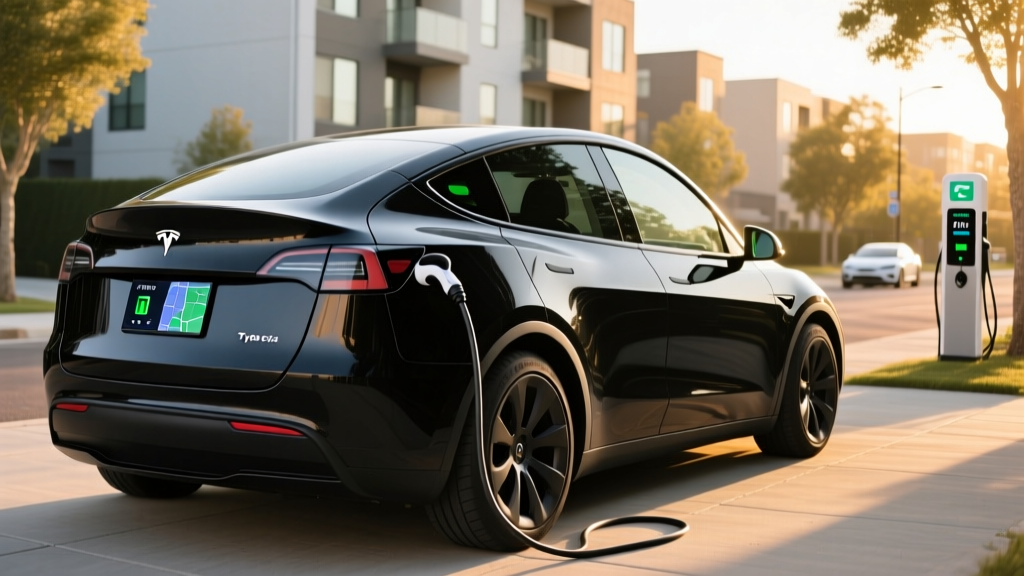
The Tesla Model Y never officially carried a 2019 model year in the United States — Tesla began deliveries of the first Model Y units in March 2020 as 2020-model vehicles. However, a significant number of early-build Model Y crossovers registered in late 2019 and early 2020 now populate the used-EV market, and many buyers colloquially search for the "2019 Model Y" when researching these earliest examples. If you are shopping for one of these first-generation Model Y Long Range or Performance variants today, this review covers exactly what to expect from a 5-to-6-year-old example in 2026: battery degradation reality, charging capability, real-world range, and whether the used-EV federal tax credit can bring the price down.
Quick Verdict: The Early Model Y in 2026
A well-maintained early Model Y Long Range AWD remains one of the most practical used electric crossovers available. You get a spacious cabin, access to the Tesla Supercharger network (now transitioning to NACS as the industry standard), strong efficiency, and over-the-air software updates that continue to add features years after purchase. The main risks with a 2019-era build are battery degradation (expect 8–14% capacity loss depending on charging habits), potential out-of-warranty drive unit or heat-pump repairs, and the fact that these early cars predate the 4680 structural battery pack and the refreshed "Juniper" interior. For buyers who can verify battery State of Health (SoH) before purchase, the value proposition is strong — especially if you qualify for the $4,000 used-EV credit.
Range and Efficiency: EPA Sticker vs. Real World
Real-World Expectation in 2026: With 10–14% battery degradation on a 5-year-old NMC pack, expect ~265–285 miles in mixed driving for a Long Range AWD. Highway-only driving at 75 mph drops this to ~240–255 miles. In freezing temperatures (below 32°F), plan for an additional 15–25% reduction, bringing cold-weather highway range to roughly 200–220 miles.
Efficiency: 131 MPGe combined / 27 kWh per 100 miles (Long Range AWD, per fueleconomy.gov)
The early Model Y's efficiency remains competitive even by 2026 standards. At roughly 27 kWh/100 mi, it sips less energy than many newer electric SUVs that carry heavier bodies or less aerodynamic profiles. Tesla's heat pump (standard on Model Y from launch, unlike the Model 3 which received it later) helps preserve range in cold weather compared to resistive-heater EVs, though you will still see meaningful range drop in sub-freezing conditions. The key variable when buying used is battery health — always check the car's displayed "Typical Range" at 100% SoC and compare it to the original EPA figure to estimate degradation.
Battery, Charging, and Powertrain Specs
| Spec | Value |
|---|---|
| Battery Capacity (usable) | ~75 kWh (NMC chemistry, Panasonic 2170 cells) |
| Battery Chemistry | Nickel Manganese Cobalt (NMC) |
| Drivetrain | Dual-motor AWD (induction front / permanent magnet rear) |
| Horsepower | ~384 hp combined |
| 0–60 mph | 4.8 seconds (Long Range) / 3.5 seconds (Performance) |
| EPA Range | 316 mi (LR AWD) / 280 mi (Performance) |
| Max DC Fast Charge Rate | 250 kW peak (V3 Supercharger) |
| 10–80% DC Fast Charge | ~25–27 minutes |
| Level 2 Home Charge Rate | 11.5 kW (48A) — ~44 miles of range per hour |
| Charging Port | NACS (Tesla proprietary, now industry standard) |
| Efficiency | 131 MPGe / 27 kWh/100 mi |
| Cargo Volume | 30.2 cu ft (rear seats up) / 72.1 cu ft (folded) + 4.1 cu ft frunk |
| Battery Warranty (original) | 8 years / 120,000 miles, 70% capacity retention |
| Base MSRP (2020) | $52,990 (LR AWD) / $60,990 (Performance) |
| Avg. Used Price (2026) | $24,000–$31,000 depending on mileage/condition |
Charging Speed in Practice
| Level | Power (kW) | Miles of Range Added |
|---|---|---|
| Level 1 (120V outlet) | ~1.4 kW | ~4–5 miles per hour |
| Level 2 (240V, Wall Connector) | 11.5 kW (48A) | ~44 miles per hour |
| DC Fast Charge (V3 Supercharger) | 250 kW peak | ~175 miles in 15 min (10–50% SoC) |
The 250 kW peak figure requires a V3 Supercharger and battery preconditioning (which the Model Y handles automatically when you navigate to a Supercharger). The charge curve tapers significantly above 60% SoC — you will see speeds drop to roughly 100 kW by 70% and below 50 kW above 85%. This is normal for NMC packs and why the 10–80% metric matters more than peak kW. On a road trip, plan your stops around the 10–70% window where charging is fastest.
With the NACS connector now adopted by Ford, GM, Rivian, Hyundai, and most major automakers as of 2025–2026, owning a Tesla with the native NACS port gives you seamless access to the expanding Supercharger network plus all third-party chargers that have added NACS cables (Electrify America, EVgo, and others are in the process of retrofitting).
Interior, Cargo, and Technology
The early Model Y interior follows Tesla's minimalist philosophy: a single 15-inch landscape touchscreen handles all infotainment, climate, and vehicle controls. There is no instrument cluster — speed and navigation appear in the upper-left corner of the main screen. Build quality on 2020-build vehicles was inconsistent (panel gaps, rattles, misaligned trim) and represents the most common complaint from early owners. Tesla improved this substantially in subsequent model years.
Space and dimensions: The Model Y offers 30.2 cubic feet of cargo space behind the second row and 72.1 cubic feet with the 60/40 split rear seats folded — competitive with compact gas crossovers like the Honda CR-V. The rear frunk adds 4.1 cubic feet for charging cables or groceries. Rear legroom measures 40.5 inches, adequate for adults on longer trips. An optional third row (seats two small children) was available but extremely rare and reduces cargo capacity significantly.
Tech highlights:
- Autopilot (standard): SAE Level 2 driver assistance — adaptive cruise control plus lane-centering. The driver must remain engaged and keep hands on the wheel at all times. This is not self-driving.
- Full Self-Driving (FSD) Supervised (optional add-on): Also SAE Level 2. Adds automatic lane changes, Navigate on Autopilot, traffic light/stop sign recognition, and the FSD city-streets capability. Despite the name, the driver must continuously supervise. FSD transfers with the vehicle if the original owner purchased it outright — verify this in the Tesla app before buying used.
- Over-the-air updates: Tesla continues pushing software improvements to 2020-era vehicles, including UI refinements, efficiency optimizations, and entertainment features.
- Sentry Mode and Dashcam: Uses the vehicle's external cameras for security recording and incident capture — a feature many owners consider indispensable.
Pricing, Used Market Value, and Tax Credits
| Scenario | Price Range |
|---|---|
| 2020 Model Y LR AWD (60k–80k miles, good condition) | $24,000–$28,000 |
| 2020 Model Y Performance (50k–70k miles) | $27,000–$32,000 |
| Used-EV Federal Credit (§25E, if eligible) | Up to $4,000 (30% of sale price, capped) |
| Net Cost After Max Credit | As low as ~$20,000–$24,000 |
- Sale price must be $25,000 or below to qualify
- Buyer income caps: $75,000 (single) / $112,500 (head of household) / $150,000 (joint) adjusted gross income
- Vehicle must be at least 2 model years old (2020 Model Y qualifies in 2026)
- Credit equals 30% of sale price, maximum $4,000
- Must purchase from a licensed dealer (private-party sales do not qualify)
- Buyer can claim the credit only once every 3 years
- Point-of-sale transfer available — reduces purchase price at the dealership
- Always verify current rules at IRS.gov §25E — regulations can change
The $25,000 sale-price cap is the critical constraint. Many used Model Y listings sit just above this threshold. Savvy buyers may negotiate a dealer price to $25,000 exactly to unlock the $4,000 credit, effectively bringing net cost to $21,000 — exceptional value for a 316-mile EPA-range dual-motor crossover. The new-vehicle §30D credit does not apply to used purchases.
Warranty Status and Ownership Costs
Here is where buying a 2020-build Model Y in 2026 requires careful attention. The original 8-year/120,000-mile battery and drive unit warranty (whichever comes first) means a March 2020 delivery vehicle's battery warranty expires in March 2028. If the car has fewer than 120,000 miles, you still have Tesla coverage for battery defects or capacity loss below 70%. However, the basic 4-year/50,000-mile vehicle warranty has long expired on all 2020 examples, meaning suspension components, interior electronics, the touchscreen, HVAC compressor, and the heat pump are all out-of-pocket if they fail.
Common out-of-warranty repair concerns for early Model Y:
- Heat pump failure: Early Model Y units had a known heat-pump issue (the "octovalve" and compressor). Repairs run $1,500–$3,000 out of warranty. Some were addressed under service campaigns — check the vehicle's service history.
- Drive unit whine or failure: The rear permanent-magnet motor can develop bearing noise. Replacement costs $3,000–$5,000+ if out of warranty.
- 12V battery: The 12V lead-acid auxiliary battery typically lasts 3–4 years. If the original hasn't been replaced, budget ~$300–$450 for a replacement (some owners upgrade to a lithium 12V for longevity).
- Suspension and bushings: Upper control arm bushings wear prematurely on early builds. Tesla issued a service bulletin. Budget $500–$1,000 per axle if not yet addressed.
Insurance: Model Y insurance premiums run 15–30% higher than comparable gas crossovers. Expect $150–$250/month depending on your state, driving record, and coverage level. Tesla Insurance (available in select states) can sometimes offer competitive rates — get a quote before purchasing.
Pros and Cons
- Excellent efficiency (27 kWh/100 mi) keeps charging costs low
- Access to Tesla Supercharger network (30,000+ stalls globally)
- NACS port — now the industry standard, no adapter needed
- Spacious cargo area (72.1 cu ft) for the footprint
- Strong performance (4.8s 0–60 in LR AWD)
- Continued OTA software updates in 2026
- Used-EV tax credit can bring effective price below $21,000
- Battery degradation (8–14% typical) reduces range to ~265–285 mi
- Build quality inconsistencies on 2020 builds (panel gaps, rattles)
- Basic vehicle warranty expired — out-of-pocket repair risk
- Heat pump and drive unit failures are known and costly
- No instrument cluster — all info on center screen
- Insurance premiums 15–30% higher than gas equivalents
- Pre-refresh interior — lacks Juniper cabin improvements
Who Should Buy an Early Model Y?
Consider alternatives if: You need guaranteed bumper-to-bumper warranty coverage (look at a certified pre-owned 2022+ Model Y or a new Hyundai Ioniq 5 / Kia EV6), you regularly tow more than 2,000 lbs, or you need the latest interior refinement and build quality.
Frequently Asked Questions
What is the real-world range of a 2020 Model Y in 2026?
Expect approximately 265–285 miles in mixed driving on a Long Range AWD with typical battery degradation (~10–12%). Highway-only driving at 75 mph reduces this to 240–255 miles. Cold weather (below 32°F) can drop range an additional 15–25%, yielding roughly 200–220 miles on the highway in winter. Always check the car's displayed range at 100% charge before buying.
How fast does the early Model Y charge?
On a V3 Supercharger (250 kW capable), the early Model Y charges from 10–80% in approximately 25–27 minutes with proper battery preconditioning. Peak charge rate is 250 kW but only sustained briefly around 15–25% SoC; expect an average of roughly 150 kW across the 10–80% window. At home on a Level 2 Tesla Wall Connector (48A / 11.5 kW), you add about 44 miles of range per hour — a full overnight charge easily replenishes daily driving.
Does a used 2020 Model Y qualify for any federal tax credit?
The new-vehicle §30D credit does not apply. However, the §25E Used Clean Vehicle Credit may provide up to $4,000 (30% of sale price, capped) if: the dealer sale price is $25,000 or less, your income falls below the caps ($75K single / $150K joint), and you haven't claimed the used credit in the past 3 years. Verify current rules at IRS.gov.
Is the early Model Y worth buying over a newer used EV?
At $24,000–$28,000 (before credits), it offers more range, cargo space, and charging infrastructure access than most used EVs in this price bracket. The main trade-off is expired basic warranty and potential repair costs. If you can verify battery SoH above 88% and a clean service history, the value is strong. Competitors to cross-shop include the 2021–2022 Ford Mustang Mach-E (larger battery options, less efficient), used Hyundai Ioniq 5 (faster 800V charging but CCS adapter needed for Superchargers), and the 2022+ Volkswagen ID.4 (softer ride, lower efficiency).
What should I check before buying a used 2020 Model Y?
Request a battery health reading from Tesla (or check the car's displayed 100% range vs. the original 316-mile EPA figure). Verify whether the heat pump service campaign was completed. Check for FSD license transfer if the original owner purchased it. Inspect upper control arms and bushings for wear. Confirm the 12V battery replacement history. And always run a title check for salvage or accident history.