Why Hoosiers Are Looking at a Rivian Lease in Indiana
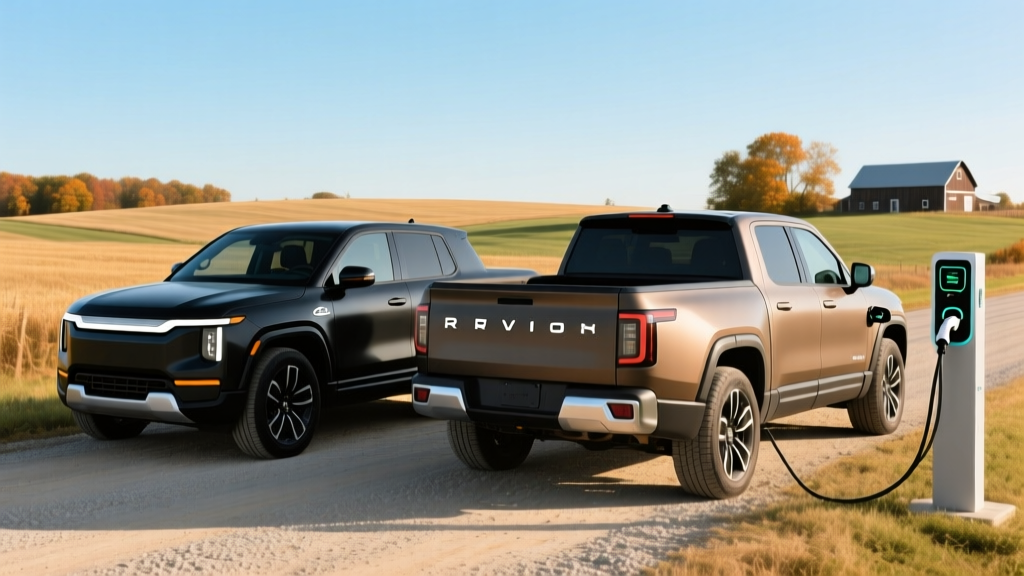
Indiana's EV landscape has shifted dramatically. With expanding charging corridors along I-65, I-70, and I-69, plus growing Level 2 infrastructure in Indianapolis, Fort Wayne, and Bloomington, leasing a Rivian R1S SUV or R1T truck is no longer a coastal-only proposition. But a Rivian lease in Indiana comes with unique considerations — from winter range loss on the highway to the mechanics of how federal tax credits flow through a lease agreement rather than a purchase.
This guide covers the 2026 Rivian R1S and R1T lineup with the exact numbers you need: EPA range, real-world efficiency in Midwest conditions, DC fast-charging curves, home charging requirements, and a clear breakdown of whether the $7,500 federal EV tax credit applies when you lease versus buy. We'll also address the practical ownership questions Indiana drivers face, from towing a boat to Lake Monroe to handling sub-freezing commutes in January.
2026 Rivian R1S and R1T: Spec Table at a Glance
Rivian offers both the three-row R1S SUV and the R1T pickup in multiple battery and motor configurations for 2026. Here are the core specifications buyers need to compare trims:
| Spec | R1S Dual-Motor (Standard) | R1S Dual-Motor (Large) | R1S Tri-Motor (Max) | R1T Dual-Motor (Standard) | R1T Tri-Motor (Max) |
|---|---|---|---|---|---|
| EPA Range | ~270 mi | ~352 mi | ~410 mi | ~270 mi | ~420 mi |
| Battery Capacity (usable) | ~92 kWh | ~128 kWh | ~149 kWh | ~92 kWh | ~149 kWh |
| Battery Chemistry | LFP (Standard) | NMC (Large) | NMC (Max) | LFP (Standard) | NMC (Max) |
| Horsepower | 533 hp | 533 hp | 850 hp | 533 hp | 850 hp |
| 0-60 mph | 4.5 sec | 4.5 sec | ~3.0 sec | 4.5 sec | ~3.0 sec |
| Drivetrain | AWD (Dual-Motor) | AWD (Dual-Motor) | AWD (Tri-Motor) | AWD (Dual-Motor) | AWD (Tri-Motor) |
| Max DC Fast Charge | ~200 kW | ~220 kW | ~220 kW | ~200 kW | ~220 kW |
| 10-80% DCFC Time | ~28 min | ~30 min | ~38 min | ~28 min | ~38 min |
| Level 2 Home Charge Rate | 11.5 kW (~25 mi/hr) | 11.5 kW (~25 mi/hr) | 11.5 kW (~25 mi/hr) | 11.5 kW (~25 mi/hr) | 11.5 kW (~25 mi/hr) |
| MPGe (combined) | ~73 MPGe | ~70 MPGe | ~65 MPGe | ~73 MPGe | ~65 MPGe |
| Base MSRP (2026) | ~$75,900 | ~$82,900 | ~$99,900 | ~$69,900 | ~$93,900 |
| Battery/Powertrain Warranty | 8 yr / 175,000 mi | 8 yr / 175,000 mi | 8 yr / 175,000 mi | 8 yr / 175,000 mi | 8 yr / 175,000 mi |
Sources: Rivian R1S specs, Rivian R1T specs, fueleconomy.gov. MSRP and range figures reflect 2026 model-year estimates and may vary by final EPA certification.
Real-World Range in Indiana: What the EPA Sticker Doesn't Tell You
Indiana's climate imposes real range penalties that coastal reviewers rarely address. Battery chemistry matters here: the Standard battery pack uses LFP (lithium iron phosphate) cells, which are more tolerant of repeated 100% charging but experience steeper range loss in cold temperatures compared to the NMC (nickel manganese cobalt) chemistry in the Large and Max packs. If your daily commute runs from Carmel to downtown Indianapolis and back — roughly 40 miles round trip — even the Standard pack handles it easily year-round. But if you're planning regular drives from Indianapolis to Chicago (180 miles one way), you'll want the Large or Max pack to avoid mid-trip charging in winter.
Efficiency measured in kWh per 100 miles tells the full story. The Dual-Motor R1S averages roughly 43-48 kWh/100mi in mixed driving, climbing to 50-55 kWh/100mi at sustained highway speeds. For comparison, a Tesla Model X runs closer to 35-38 kWh/100mi — the Rivian's boxy shape, heavier curb weight (~6,800-7,200 lbs depending on config), and all-terrain tires exact an efficiency penalty. You're trading some range for genuine off-road capability and a more rugged build.
Charging Speed: DC Fast Charging and Home Level 2 Setup
Charging speed is where Rivian's 2026 models show meaningful improvement over their Gen 1 predecessors. Here's what to expect across charging scenarios:
| Charging Level | Power / Rate | Miles Added per Hour | Best Use Case |
|---|---|---|---|
| Level 1 (120V household) | ~1.4 kW | ~3-4 mi/hr | Emergency / overnight trickle |
| Level 2 (240V home, 48A) | 11.5 kW | ~25 mi/hr | Daily home charging |
| DC Fast Charge (peak) | Up to ~220 kW | ~500+ mi/hr (peak) | Road trips |
DC fast-charging reality check: The peak 220 kW rate applies to the Large and Max packs and is not sustained across the entire session. Expect the charge curve to taper significantly above 80% state of charge. A typical 10-80% session at an Electrify America or Rivian Adventure Network station takes roughly 30 minutes for the Large pack and 38 minutes for the Max pack — but only if you arrive with the battery preconditioned. Without preconditioning (navigating to a charger in the Rivian's infotainment triggers this automatically), cold-soaked batteries can add 10-15 minutes to your stop.
For Indiana home charging, a Level 2 wall connector on a 60-amp circuit (delivering 48 amps continuous) will fully recharge a Standard pack overnight in about 9-10 hours and a Max pack in roughly 13-14 hours. Most Indiana electricians charge between $800 and $2,000 for a Level 2 installation assuming your electrical panel has capacity. Older homes in neighborhoods like Broad Ripple or Irvington may require a panel upgrade ($1,500-$3,000 additional) to support a 60-amp dedicated circuit. Duke Energy and Indiana Michigan Power both offer EV time-of-use rates that can reduce charging costs by shifting to overnight hours.
Rivian uses the NACS (North American Charging Standard) connector on 2026 models, giving direct access to Tesla Supercharger stations with no adapter required. This dramatically expands Indiana's fast-charging map — Supercharger stations in Indianapolis, Lafayette, Terre Haute, and South Bend are now plug-and-play for Rivian owners.
Pricing, Leasing, and the Federal Tax Credit in Indiana
| Model / Trim | Base MSRP (2026) | Est. Monthly Lease (36 mo) | §30D Tax Credit via Lease | Effective Lease Price |
|---|---|---|---|---|
| R1T Dual-Motor Standard | ~$69,900 | ~$899-$999/mo | Up to $7,500 (passed through) | Reduces cap cost / monthly payment |
| R1S Dual-Motor Standard | ~$75,900 | ~$949-$1,099/mo | Up to $7,500 (passed through) | Reduces cap cost / monthly payment |
| R1S Dual-Motor Large | ~$82,900 | ~$1,099-$1,249/mo | Up to $7,500 (passed through) | Reduces cap cost / monthly payment |
| R1T Tri-Motor Max | ~$93,900 | ~$1,299-$1,499/mo | Up to $7,500 (passed through) | Reduces cap cost / monthly payment |
| R1S Tri-Motor Max | ~$99,900 | ~$1,399-$1,599/mo | Up to $7,500 (passed through) | Reduces cap cost / monthly payment |
The lease loophole and §30D: Under the IRS's commercial clean vehicle credit structure (§45W), EVs leased through a dealership or financing entity can qualify for up to $7,500 in tax credits that the leasing company receives — and may pass on to you as a reduced capitalized cost (lowering your monthly payment). This is significant because it can bypass certain §30D purchase restrictions, including the buyer income caps ($150K single / $300K joint) and the critical-minerals/battery-sourcing requirements that disqualify some purchased Rivians from the full credit. However, there is no legal requirement for the lessor to pass the credit to you. Always confirm in writing that the $7,500 is applied as a cap-cost reduction before signing. Consult a tax professional and review current IRS guidance on clean vehicle credits for your specific situation.
For outright purchases, the §30D credit has strict rules: the vehicle MSRP must not exceed $80,000 for SUVs (R1S) or $80,000 for trucks (R1T), buyer modified adjusted gross income must fall below thresholds, and battery components and critical minerals must meet phased-in domestic-sourcing percentages. Several Rivian configurations — particularly Tri-Motor Max trims — exceed the MSRP cap and are ineligible for the purchase credit. The lease pathway can be the only way to capture a federal incentive on higher-trim Rivians.
Indiana does not currently offer a state EV purchase incentive or rebate, though the state does not impose additional EV registration surcharges beyond the standard fee structure. Check with the U.S. Department of Energy for any updated state-level programs.
Performance, Cargo Space, and Daily Livability
Every 2026 Rivian ships with dual- or tri-motor all-wheel drive, making it well-suited for Indiana's occasional ice and snow. The Dual-Motor's 533 hp and 4.5-second 0-60 time feel effortless for highway merging on I-465, while the Tri-Motor's 850 hp and ~3.0-second sprint is sports-car quick in a vehicle that can also ford 3+ feet of water.
R1S cargo and passenger space: The three-row R1S offers approximately 104.7 cubic feet of total cargo volume with both rear rows folded, 46.7 cu ft behind the second row, and 17.6 cu ft behind the third row. Third-row legroom is roughly 32.5 inches — adequate for children on trips to Holiday World but tight for adults on longer drives. The front trunk (frunk) adds 11.1 cu ft of lockable storage, perfect for charging cables or groceries.
R1T cargo and utility: The R1T's 4.5-foot bed is shorter than a full-size truck's, but the innovative Gear Tunnel (available on most trims) adds 11.6 cu ft of enclosed, lockable storage accessible from both sides. Towing capacity reaches 11,000 lbs on properly equipped Dual-Motor models — enough for a loaded boat trailer or a mid-size camper. However, towing cuts range roughly in half; expect 150-180 miles from a Large Pack when towing 7,000+ lbs on the highway.
Standout tech: Rivian's software-defined architecture delivers over-the-air updates, a 15.6-inch center touchscreen with an intuitive interface, a built-in camp kitchen option (R1T), and the Driver+ assistance suite (SAE Level 2 — hands on wheel, eyes on road required). The built-in air compressor, gear guard tonneau cover, and integrated Bluetooth camp speaker are the kind of thoughtful details that set Rivian apart from legacy automakers.
Notable drawbacks: The R1S third row remains cramped for adults. The glass roof lacks a retractable shade, which can make the cabin warm on sunny Indiana July afternoons. Service center density in Indiana is limited — the closest Rivian Service Center may be in Indianapolis or require mobile service for warranty work. Insurance premiums run 15-25% higher than comparable ICE vehicles, so get quotes before committing.
Pros
- Genuine off-road capability with 14.9" ground clearance and quad-motor option
- NACS connector = direct Tesla Supercharger access across Indiana
- Class-leading frunk + Gear Tunnel storage (R1T)
- 11,000-lb towing capacity (R1T Dual-Motor)
- Over-the-air updates continuously improve the vehicle
- LFP Standard pack allows routine 100% charging without degradation concern
Cons
- R1S third row too small for adults on long trips
- Efficiency penalty vs. Tesla Model X or Hyundai Ioniq 5 (~43-48 kWh/100mi)
- Limited Rivian service centers in Indiana — mobile service dependency
- Higher insurance premiums than ICE equivalents
- Tri-Motor Max trims exceed §30D MSRP cap for purchase credit
- Glass roof without shade can overheat cabin in summer
Who Should Lease a Rivian in Indiana?
Decision Framework
Choose the R1S if: You need three rows for a family of 5+, want genuine off-road capability for Indiana State Parks and weekend trips to Brown County, and value the frunk for gear storage. The Dual-Motor Large Pack offers the best balance of range (~352 mi EPA) and value for Hoosier families.
Choose the R1T if: You need a truck bed for home projects, tow a boat or camper, or want the Gear Tunnel for outdoor gear. The Dual-Motor Standard Pack at ~$69,900 is the most accessible entry point and may qualify for the full lease credit.
Look elsewhere if: You prioritize maximum efficiency over capability (consider a Tesla Model Y or Hyundai Ioniq 5), you lack home charging access (Indiana's public network is growing but not yet comprehensive in rural areas), or you need a nearby service center for peace of mind.
For the Indiana commuter doing 30-50 miles daily with home Level 2 charging, any Rivian configuration works well — you'll charge overnight and rarely visit a public station. For road-trippers who regularly drive to Michigan's Upper Peninsula, Nashville, or the Ozarks, the Large or Max pack is strongly recommended to minimize DC fast-charging stops. The lease structure makes particular sense if you want to capture the $7,500 federal incentive on a higher-trim model that exceeds the §30D MSRP cap, or if you prefer to swap vehicles every 36 months as battery and charging technology continues to evolve.
Frequently Asked Questions
What is the real-world range of a Rivian R1S in Indiana winters?
Expect roughly 250-280 miles from the Large Pack (352 mi EPA) in sustained below-freezing temperatures, assuming highway driving at 70 mph. Preconditioning the battery while plugged in and using seat heaters instead of cabin heat can recover 20-30 miles of that loss. City driving in winter is closer to the EPA estimate since regenerative braking recaptures energy in stop-and-go traffic.
How fast does a Rivian charge at home on Level 2?
At 11.5 kW (48 amps on a 60-amp circuit), you'll add approximately 25 miles of range per hour. A full charge from 10% to 100% on the Standard Pack takes about 8-9 hours; the Max Pack takes roughly 13-14 hours. Most Indiana owners plug in each evening and wake up fully charged — home Level 2 is the backbone of daily Rivian ownership.
Does a Rivian lease in Indiana qualify for the $7,500 federal tax credit?
Potentially yes, through the §45W commercial clean vehicle credit pathway. When you lease, the leasing company (the legal owner) may claim the credit and pass the savings to you as a lower capitalized cost. This can circumvent the §30D purchase restrictions on MSRP caps, buyer income limits, and battery-sourcing requirements. However, the lessor is not obligated to pass the credit through — confirm this in writing before signing. Consult a tax professional and review current IRS clean vehicle credit rules.
Is the Rivian R1T worth it vs. the Ford F-150 Lightning or Chevy Silverado EV?
The R1T excels in off-road capability, build quality, and clever storage (Gear Tunnel), but has a shorter bed (4.5 ft vs. 5.5 ft on the Lightning) and a higher starting price. The F-150 Lightning offers a more traditional truck experience with a larger bed and broader Ford dealer service network in Indiana. The Silverado EV targets fleet and work-truck buyers with a longer bed option. If you prioritize adventure and tech over maximum bed length and dealer proximity, the R1T is the stronger pick.
What happens if my Rivian needs warranty service in Indiana?
Rivian operates a mobile service fleet that handles many repairs at your home or workplace, plus a growing network of service centers. Indianapolis has a Rivian service location, but drivers in Evansville, Fort Wayne, or South Bend should expect mobile service or a potential drive to Indy for complex issues. The 8-year/175,000-mile battery and powertrain warranty provides long-term coverage, though turnaround time for parts can be longer than legacy automakers with established supply chains.
How much does it cost to charge a Rivian at home in Indiana?
At Indiana's average residential electricity rate of approximately $0.14/kWh (2026), fully charging a Standard Pack (~92 kWh usable) costs about $12.88, while a Max Pack (~149 kWh) costs about $20.86. With time-of-use rates from Duke Energy or Indiana Michigan Power, overnight charging can drop to $0.08-$0.10/kWh, reducing those figures to $7-$15 per full charge. Compared to $50-$70 to fill a gas tank, home EV charging delivers substantial fuel savings over a 36-month lease.