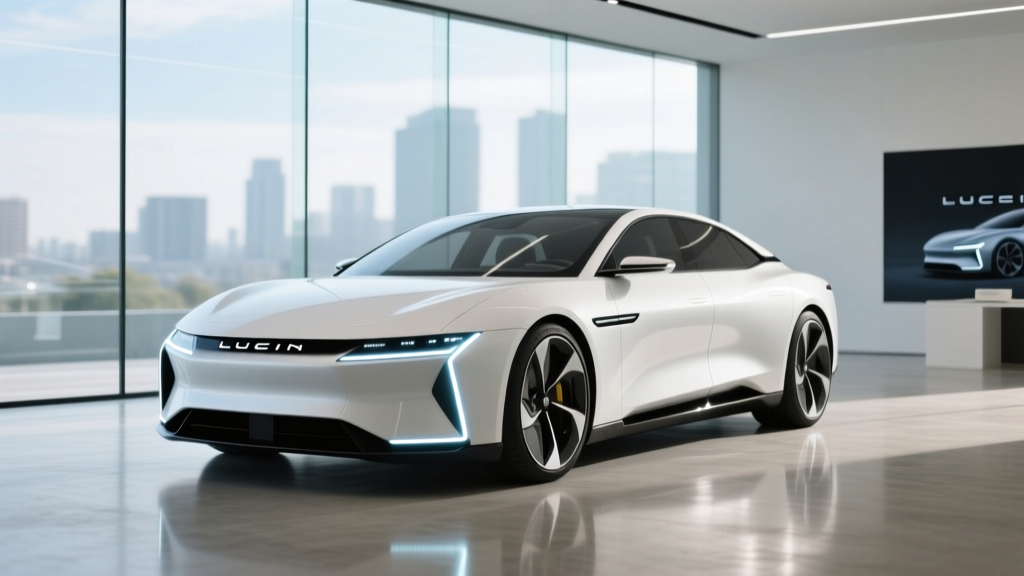
When former Tesla Model S chief engineer Peter Rawlinson became the Lucid Motors founder-CEO (technically co-founded by Bernard Tse and Sheaupyng Lin, with Rawlinson joining in 2013 and steering the company's vehicle architecture), he promised a luxury sedan that would embarrass legacy Germans on efficiency while out-ranging everything on the road. The Lucid Air is the rolling proof of that thesis — and in 2026, it remains the efficiency benchmark that Tesla, Mercedes, and BMW are still chasing.
This review covers the full 2026 Lucid Air lineup — Pure, Touring, Grand Touring, and Sapphire — with exact EPA figures, real-world range reconciliation, charging curves, and the uncomfortable tax-credit math every buyer needs to see before signing.
2026 Lucid Air at a Glance: Spec Table
| Trim | Drivetrain | Battery (usable kWh) | EPA Range | MPGe (combined) | 0-60 mph | Horsepower | Base MSRP |
|---|---|---|---|---|---|---|---|
| Air Pure | RWD | 88 kWh (NMC) | 419 mi | 146 MPGe | 5.0 s | 430 hp | $69,900 |
| Air Touring | AWD dual-motor | 112 kWh (NMC) | 406 mi | 131 MPGe | 3.4 s | 620 hp | $87,400 |
| Air Grand Touring | AWD dual-motor | 112 kWh (NMC) | 516 mi | 131 MPGe | 3.0 s | 819 hp | $125,600 |
| Air Sapphire | AWD tri-motor | 118 kWh (NMC) | 427 mi | 118 MPGe | 1.89 s | 1,234 hp | $249,000 |
All trims use nickel-manganese-cobalt (NMC) lithium-ion pouch cells supplied primarily by LG Energy Solution and Samsung SDI. Lucid does not currently offer an LFP variant — the energy-density demands of a 500+ mile sedan rule out the heavier iron-phosphate chemistry.
Real-World Range: What the EPA Sticker Doesn't Tell You
The Grand Touring's EPA 516 miles is the highest of any production sedan sold in the U.S. In mixed suburban/highway driving at 65-70 mph and 70°F, expect ~430-460 miles on a full charge. Sustained 80 mph Interstate travel drops this to ~370-390 miles. In 25°F winter conditions with cabin heat, plan for 320-350 miles — a ~35% reduction typical of NMC packs without aggressive heat-pump preconditioning.
The Pure RWD actually punches above its sticker in city driving, where its 4.1 mi/kWh efficiency routinely delivers 400+ real-world miles thanks to strong regenerative braking and low rolling-resistance tires.
Lucid's secret weapon is its miniaturized drive unit — roughly the size of a carry-on suitcase — and a 900V+ electrical architecture that slashes resistive losses. The result is an Air Grand Touring that uses about 24 kWh/100 mi on the combined cycle, beating the Tesla Model S Long Range (~28 kWh/100 mi) and the Mercedes EQS 450+ (~30 kWh/100 mi) by a significant margin.
Charging Speed: 900V Architecture in Practice
| Charging Level | Power | Speed (approx.) | Notes |
|---|---|---|---|
| Level 1 (120V) | ~1.4 kW | ~4 mi/hr | Emergency/top-up only |
| Level 2 (240V, 48A) | 11.5 kW | ~38 mi/hr | Full charge overnight (~11 hrs for 112 kWh) |
| Level 2 (240V, 80A) | 19.2 kW | ~63 mi/hr | Requires hardwired 100A circuit; ~6 hr full charge |
| DC Fast Charge (peak) | Up to 300 kW | 10-80% in ~20 min (Grand Touring) | Sustains ~250 kW to ~55% SoC, then tapers |
| DC Fast Charge (150 kW station) | 150 kW | 10-80% in ~35 min | Common Electrify America / EVgo rate |
Lucid uses the NACS (Tesla-style) connector as standard on 2026 models, giving native access to Tesla Superchargers — a major advantage over CCS-only sedans like the Mercedes EQS and BMW i7. The 900V pack architecture means the Air sustains high charge rates longer than 400V rivals, but like every EV, the charge curve tapers sharply above 80% SoC to protect the NMC cells. Plan DC fast-charging stops to 80%, not 100%, on road trips.
Home charging on a typical 48A Level 2 wallbox adds roughly 38 miles of range per hour — enough to refill the Pure overnight but a two-night affair for the Grand Touring if the pack is near empty. Buyers with 100A panel capacity can spec a 19.2 kW charger for substantially faster home replenishment, though expect $1,200-$2,500 in electrician and permit costs on top of the $600-$900 equipment cost.
Performance and Driving Dynamics
Even the base Pure hits 60 mph in 5.0 seconds — brisk by any sedan standard — but the Air's signature is how effortlessly it delivers that speed. The single rear motor's 430 hp is routed through a single-speed reduction gear with no shift shock, and the regenerative braking is strong enough for near one-pedal driving in city traffic.
Step up to the Touring and you gain a front motor for AWD traction plus 620 hp. The Grand Touring's 819 hp and 3.0-second 0-60 put it in Porsche Taycan Turbo territory, while the tri-motor Sapphire's 1.89-second sprint and 1,234 hp make it the quickest production sedan ever sold, eclipsing the Tesla Model S Plaid by a tenth.
Ride quality is the Air's other trump card. The available air suspension (standard on Grand Touring and Sapphire) delivers S-Class-like isolation over highway expansion joints while keeping body roll taut in corners. Steering is precise but numb — a common complaint among enthusiast reviewers — and the 21-inch wheel option noticeably degrades ride comfort and reduces range by roughly 5-7% versus the standard 19-inch Aero wheels.
Interior, Cargo, and Tech
The Air's cabin is a study in minimalist luxury. A curved 34-inch "Glass Canopy" display dominates the dash, supplemented by a lower retractable Pilot Panel touchscreen for climate and media. Materials are genuinely premium — Nappa leather, bridge-of-weave wool blends, and real wood or aluminum trim — but panel-gap consistency on early-build cars was a documented issue that Lucid has largely addressed by the 2026 model year.
Passenger space is class-leading: 42.2 inches of rear legroom beats the Model S (39.7 in), BMW i7 (40.1 in), and Mercedes EQS (39.8 in). The Air feels like a full-size luxury sedan from the back seat, with an available Executive Rear Seating package that adds recline, massage, and fold-out tables.
Cargo volume totals 32 cubic feet between the 26 cu-ft trunk (with a deep under-floor well) and a 6 cu-ft frunk. The trunk opening is wide and flat-floored, but the frunk is modest — useful for charging cables, not groceries.
Driver assistance is branded DreamDrive Pro and remains an SAE Level 2 system — meaning the driver must remain engaged with hands on the wheel and eyes on the road at all times. It bundles adaptive cruise, lane-centering, and automatic lane changes, but it is not "self-driving" and does not match Tesla's FSD Supervised or GM's Super Cruise in hands-free highway capability. Lucid has been cautious here, preferring sensor redundancy (lidar standard on Touring and above) over ambitious automation claims.
DreamDrive Pro is a Level 2 driver-assist system per SAE J3016. It requires continuous driver supervision. It does not make the Air autonomous, and the driver is legally responsible for the vehicle at all times.
Pricing, Trims, and the Federal Tax Credit Reality
| Trim | MSRP (incl. destination) | §30D Credit Eligible? | Effective Price (if eligible) |
|---|---|---|---|
| Air Pure | $69,900 | Yes — under $80K sedan cap | ~$62,400 (if buyer qualifies) |
| Air Touring | $87,400 | No — exceeds MSRP cap | $87,400 |
| Air Grand Touring | $125,600 | No — exceeds MSRP cap | $125,600 |
| Air Sapphire | $249,000 | No — exceeds MSRP cap | $249,000 |
Under current IRS §30D rules, only the Air Pure qualifies for the up-to-$7,500 federal EV tax credit, and only if the buyer meets all of the following:
- Adjusted gross income under $150,000 (single) / $225,000 (head of household) / $300,000 (joint) — per IRS.gov
- Vehicle MSRP at or below the $80,000 sedan cap
- Battery components and critical-minerals sourcing thresholds met (these tighten annually; verify current-year compliance with your tax professional)
The credit can now be transferred to the dealer at point of sale as an instant discount, which simplifies cash flow — but confirm eligibility with your CPA before signing, as battery-sourcing rules have disqualified several previously eligible models in recent years.
Leasing any Air trim may unlock a separate $7,500 commercial-credit pass-through from the lessor, which is how many Touring and Grand Touring buyers currently access incentive money. Lease terms and pass-through policies vary by dealership and lender.
Warranty and Long-Term Ownership
Lucid provides a baseline warranty competitive with Tesla but below the luxury-German standard:
- Basic vehicle: 4 years / 50,000 miles
- Battery and drive units: 8 years / 100,000 miles, with a capacity-retention threshold of 70% (industry-standard)
- Roadside assistance: 4 years / 50,000 miles
Long-term battery degradation data on the Air is still accumulating — the oldest customer cars are roughly three years old as of 2026. Early fleet data from Lucid's own testing suggests ~5-7% capacity loss at 100,000 miles for NMC packs charged predominantly on Level 2 with occasional DC fast charging. Heavy Supercharger-only users should expect closer to 8-10%. A full 112 kWh pack replacement outside warranty currently runs in the $20,000-$28,000 range based on industry NMC pricing — a figure to weigh if you plan to keep the car past 150,000 miles.
Insurance premiums on the Air remain elevated, particularly for the Sapphire and Grand Touring. Expect annual premiums of $3,500-$5,500 depending on state, driving record, and coverage level — roughly 30-50% higher than a comparable BMW 5 Series.
Pros, Cons, and Who Should Buy the Lucid Air
- Best-in-class efficiency (~4.1 mi/kWh on Pure)
- Highest EPA range of any production sedan (516 mi, Grand Touring)
- Class-leading rear-seat legroom (42.2 in)
- Native NACS — full Supercharger access
- 300 kW peak DC charging on 900V architecture
- Air suspension ride quality rivals S-Class
- Air Pure qualifies for §30D credit (if buyer eligible)
- Steering feel is numb for a performance sedan
- DreamDrive Pro lags FSD Supervised and Super Cruise in hands-free capability
- Only Pure trim qualifies for federal credit
- Limited service-center footprint outside major metros
- Infotainment lacks Apple CarPlay / Android Auto
- High insurance premiums across the lineup
- Resale value still unproven vs Mercedes/BMW
Best for: Tech-forward luxury buyers who commute 40-100 miles daily, take regular 300+ mile road trips, and prioritize range and efficiency over brand cachet. The Pure is the value pick; the Grand Touring is the ultimate long-distance cruiser.
Look elsewhere if: You need hands-free highway driving (GM Super Cruise or Tesla FSD), a full dealer-service network (BMW i7, Mercedes EQS), or a sub-$60K entry price (Tesla Model S, Polestar 4).
Frequently Asked Questions
What is the real-world range of the 2026 Lucid Air?
Expect ~430-460 miles mixed driving on the Grand Touring (EPA 516), ~370-390 at sustained highway speeds, and ~320-350 in freezing winter conditions. The Pure RWD delivers ~360-380 real-world highway miles against its 419 EPA rating.
How fast does the Lucid Air charge?
Up to 300 kW peak on DC fast chargers, achieving a 10-80% charge in roughly 20 minutes on the Grand Touring. Home Level 2 at 11.5 kW adds ~38 miles per hour; a 19.2 kW hardwired unit adds ~63 miles per hour.
Does the Lucid Air qualify for the federal EV tax credit?
Only the Air Pure ($69,900 MSRP) is eligible under the §30D sedan MSRP cap of $80,000, and only if the buyer's AGI falls below IRS thresholds and battery-sourcing rules are met. Touring, Grand Touring, and Sapphire trims exceed the cap. Consult IRS.gov or a tax professional before purchase.
Is the Lucid Air worth buying vs the Tesla Model S or BMW i7?
For range and efficiency, the Air wins decisively — it's 50-100 miles farther-reaching than either rival. For service network and hands-free driving, the Model S and i7 are stronger. For pure rear-seat luxury, the BMW i7 edges ahead. The Air is the engineering-led choice; the i7 is the brand-and-service choice.
Who founded Lucid Motors?
Lucid was co-founded in 2007 by Bernard Tse and Sheaupyng Lin as Atieva. Peter Rawlinson — former chief engineer of the Tesla Model S — joined as CTO in 2013, became CEO in 2019, and is widely credited as the Lucid Motors founder-figure behind the Air's vehicle architecture and efficiency-first philosophy.