Canadian EV shoppers searching for affordable electric vehicles have likely noticed a growing number of headlines about Chinese electric cars — brands like BYD, NIO, Xpeng, and Zeekr dominating global sales charts with competitive pricing and impressive specs. But if you're wondering whether you can actually buy one in Canada today, the answer requires unpacking a complex web of tariffs, trade policy, and market reality.
Quick Answer: Can You Buy Chinese Electric Cars in Canada in 2026?
No — not directly. As of 2026, Canada imposes a 100% surtax on all Chinese-made electric vehicles, effectively doubling their import price and eliminating the cost advantage these vehicles offer in other markets. This tariff, first enacted in October 2024 under the Customs Tariff and aligned with similar U.S. and EU measures, applies to battery electric vehicles (BEVs) manufactured in China regardless of brand. Brands like BYD, MG (SAIC), NIO, and Zeekr do not currently sell vehicles through Canadian dealerships. Canadian buyers looking for affordable EVs must instead consider vehicles assembled in North America, South Korea, or Europe — or wait for potential policy shifts.
Why Chinese EVs Are Blocked: The 100% Tariff Explained
In August 2024, the Canadian government announced a 100% surtax on Chinese-manufactured EVs, which took effect on October 1, 2024. This policy was coordinated with the United States (which imposed its own 100% tariff under Section 301) and the European Union (which applied countervailing duties ranging from 17% to 36.3% depending on the manufacturer). The stated rationale: protecting domestic auto manufacturing and responding to what Western governments describe as state-subsidized overcapacity flooding global markets.
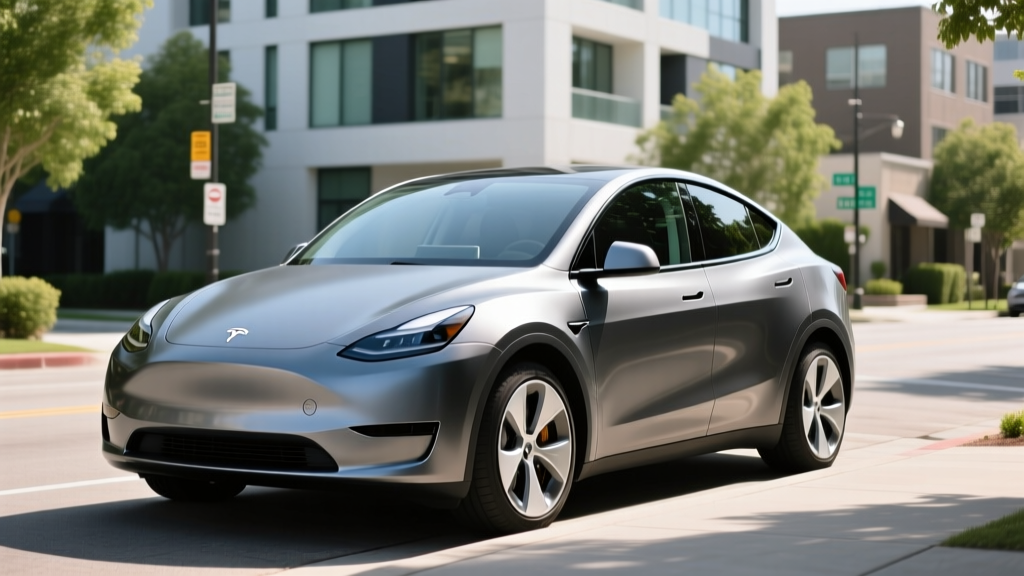
For Canadian consumers, the practical impact is stark. A BYD Atto 3 (known as the Yuan Plus in China) that retails for approximately $35,000 CAD in Australia or Europe would face an additional $35,000 in surtax upon import, pushing the landed price to roughly $70,000 CAD before dealer markup, freight, or taxes. At that price point, it competes unfavorably against the Tesla Model Y Long Range (~$63,990 CAD before incentives) or the Hyundai Ioniq 5 (~$55,500 CAD), both of which are readily available with established service networks.
The tariff applies to vehicles manufactured in China, not to Chinese brands. This distinction matters: if a Chinese automaker were to build a factory in Canada, Mexico, or another trade-partner nation, those vehicles could potentially avoid the surtax — though no Chinese EV manufacturer has announced a Canadian production facility as of early 2026.
Which Chinese EV Brands Could Enter Canada — If Tariffs Lifted?
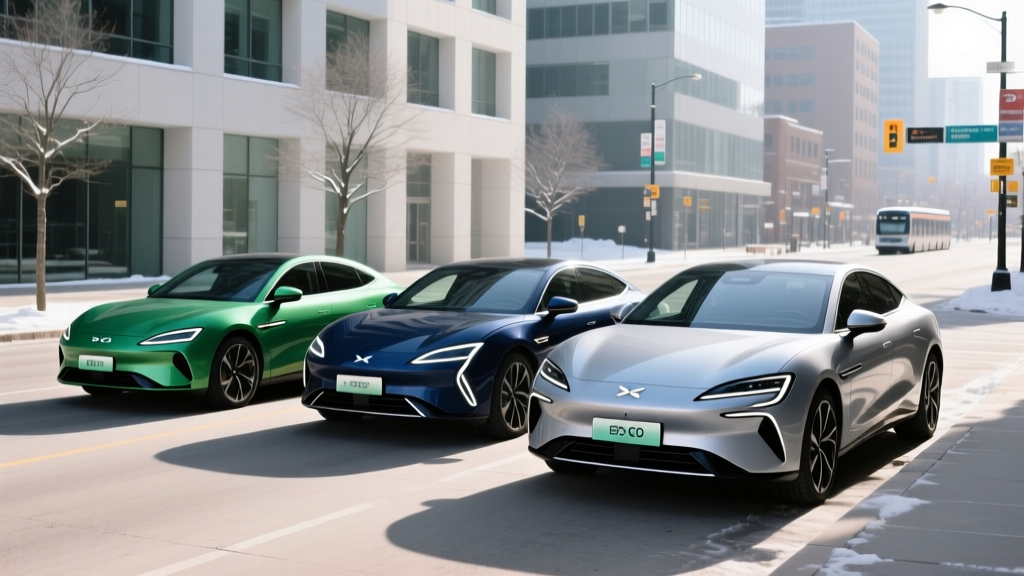
Several Chinese automakers have expressed interest in the North American market. Here's a snapshot of the most prominent players and what they offer globally:
| Brand | Key Global Models | Approx. Global Price (USD) | Battery (kWh) | Range (WLTP) | Peak DC Charge (kW) |
|---|---|---|---|---|---|
| BYD | Atto 3, Dolphin, Seal | $30,000–$45,000 | 60–82 (LFP Blade) | 340–570 km | 88–150 |
| MG (SAIC) | MG4, MG ZS EV | $28,000–$38,000 | 51–77 (NMC/LFP) | 350–520 km | 100–140 |
| NIO | ET5, EL6 | $42,000–$60,000 | 75–100 (NMC) | 450–600 km | 180–240 |
| Xpeng | G6, P7 | $35,000–$50,000 | 66–87 (NMC) | 430–570 km | 200–280 |
| Zeekr (Geely) | Zeekr X, 001 | $38,000–$55,000 | 66–100 (NMC) | 440–620 km | 150–200 |
Important note on range figures: The ranges listed above use the WLTP testing standard, which tends to produce higher numbers than the EPA cycle used in North America. As a rule of thumb, expect EPA-equivalent range to be roughly 10–15% lower than WLTP. A BYD Seal rated at 570 km WLTP would likely earn an EPA estimate closer to 300–310 miles — competitive, but not class-leading against vehicles like the Hyundai Ioniq 6 (360 miles EPA) or Tesla Model 3 Long Range (341 miles EPA).
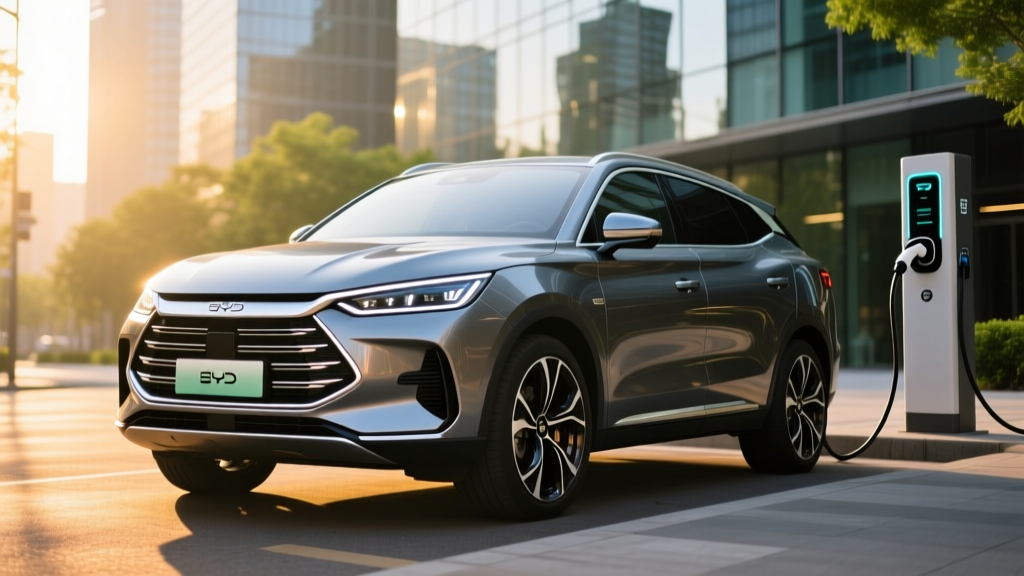
BYD's Blade Battery — a lithium iron phosphate (LFP) cell — deserves specific attention. LFP chemistry trades some energy density for superior thermal stability, longer cycle life (often 3,000+ cycles before significant degradation), and lower cost. In a Canadian context, LFP batteries tolerate frequent 100% charging better than NMC cells, which is useful for daily commuting. However, LFP cells lose more capacity in extreme cold — a critical consideration for Canadian winters where temperatures regularly drop below -20°C.
EV vs Gas in Canada: What Are You Actually Comparing?
Since Chinese EVs aren't available, Canadian buyers are realistically choosing between North American/Korean/European EVs, hybrids, or sticking with gasoline. Here's how the economics stack up for a typical Canadian driver covering 20,000 km/year:
| Cost Factor | EV (e.g., Tesla Model Y LR) | Hybrid (e.g., Toyota RAV4 Hybrid) | Gas (e.g., Toyota RAV4 AWD) |
|---|---|---|---|
| Base MSRP (CAD) | ~$63,990 | ~$39,500 | ~$35,000 |
| Federal iZEV Incentive | -$5,000 (if eligible) | $0 (HEV ineligible) | $0 |
| Provincial Incentive (BC example) | -$4,000 (income-dependent) | $0 | $0 |
| Effective Purchase Price | ~$54,990 | ~$39,500 | ~$35,000 |
| Annual Fuel/Energy Cost | ~$600–$900 (home charging, $0.10/kWh avg) | ~$1,800 (7.0 L/100km, $1.60/L) | ~$2,600 (9.0 L/100km, $1.60/L) |
| Annual Maintenance | ~$300–$500 | ~$600–$900 | ~$800–$1,200 |
| 5-Year Fuel + Maintenance | ~$4,500–$7,000 | ~$12,000–$13,500 | ~$17,000–$19,000 |
| Estimated Insurance (annual avg) | ~$2,200–$2,800 | ~$1,600–$2,000 | ~$1,500–$1,900 |
Key takeaway: Even without Chinese EV pricing, a mid-range EV like the Model Y can break even against a gas RAV4 within 5–7 years for a Canadian driver with home charging access, thanks to dramatically lower energy and maintenance costs. However, the upfront price gap of $15,000–$20,000 CAD remains a real barrier — and this is precisely why affordable Chinese EVs generated so much consumer interest before the tariff.
Real-World Canadian EV Ownership: What First-Time Buyers Must Know
If you're pivoting from the idea of a cheap Chinese import to a realistically available EV in Canada, here are the ownership factors that will shape your experience more than any spec sheet:
Home Charging Is Non-Negotiable for Most Canadians
Approximately 70–80% of EV charging happens at home. A Level 2 home charger (240V, typically 32–48 amps / 7.7–11.5 kW) adds roughly 40–60 km of range per hour of charging — more than enough to replenish a daily commute overnight. Installation costs in Canada range from $1,500 to $3,500 CAD for a straightforward setup (charger unit: $700–$1,200; electrician labor + permit: $800–$2,300). If your home's electrical panel needs upgrading from 100A to 200A service, add $2,000–$4,000.
Without home charging, Canadian EV ownership becomes significantly less convenient and more expensive. Public DC fast charging costs roughly $0.35–$0.55/kWh in most Canadian cities — two to four times the cost of residential electricity — and requires planning around station availability, especially in rural areas and during peak travel seasons.
Cold Weather Range Loss Is Real — Plan for 30–40% Reduction
Canadian winters are the great equalizer for EVs. At -20°C, most EVs lose 30–40% of their EPA-rated range due to battery chemistry limitations, cabin heating demands, and increased rolling resistance. A vehicle rated for 400 km in mild weather may deliver only 240–280 km in a deep Prairie freeze.
Vehicles equipped with a heat pump (standard on the Tesla Model Y, Hyundai Ioniq 5, and Kia EV6) recover some efficiency by scavenging ambient heat rather than relying solely on resistive heating. Preconditioning your battery and cabin while still plugged in at home is the single most effective strategy for preserving range in cold weather — it warms the battery to optimal operating temperature using grid power rather than battery power.
Canadian Incentives Can Shrink the Price Gap
The federal iZEV program offers up to $5,000 CAD for eligible new BEVs and long-range PHEVs with a base MSRP under $55,000 CAD (higher trims can push to $65,000–$70,000 depending on body style). Several provinces layer on additional incentives:
- British Columbia: Up to $4,000 (income-tested, CEV program)
- Quebec: Up to $7,000 (Roulez vert program — note: Quebec has announced gradual reduction timelines)
- Prince Edward Island: $5,000 (Universal EV rebate)
- Yukon: $5,000 (Good Energy Rebate)
These incentives are subject to change and may have income caps, vehicle price caps, or funding limits. Always verify current eligibility on official provincial and federal program pages before purchasing.
Common Misconceptions About Chinese EVs in Canada
| Myth | Fact |
|---|---|
| "I can import a BYD or NIO myself from China." | The 100% surtax applies to all Chinese-manufactured EVs imported into Canada, including personal imports. Combined with Transport Canada homologation requirements (CMVSS compliance), private import is economically impractical. |
| "Chinese EVs are cheap because they're low quality." | BYD, NIO, and Xpeng vehicles have scored well in Euro NCAP crash testing (BYD Atto 3: 5 stars, 2022). Build quality and software in 2025–2026 models are competitive globally. Low pricing reflects vertical integration, government subsidies, and scale — not poor engineering. |
| "The tariff will be removed soon." | As of early 2026, there is no announced timeline for tariff reduction. Canada's policy is coordinated with U.S. and EU trade strategy. Any change would likely require reciprocal trade concessions or a shift in domestic manufacturing policy. |
| "MG is a British brand, so it's exempt." | MG is owned by SAIC Motor, a Chinese state-owned enterprise. All MG vehicles are manufactured in China and are subject to the full 100% surtax. |
| "Polestar and Volvo are Chinese, so they're tariffed." | Polestar and Volvo are owned by Geely (China), but tariff applicability depends on where the vehicle is manufactured. Polestar 2 is built in China (tariffed). Volvo EX30 is built in China (tariffed). However, some Volvo/Polestar models destined for North America are shifting production to South Korea or other facilities to avoid tariffs. |
What Canadian Buyers Should Do Instead: A Decision Framework
Since Chinese EVs are effectively off the table in 2026, here's how to approach your purchase based on your priorities:
Choose Your Path
- If budget is your top priority (under $45,000 CAD): Look at the Nissan Leaf (from ~$39,990 CAD, 240–340 km range), Chevrolet Equinox EV (from ~$41,900 CAD, up to 513 km EPA), or a certified pre-owned Tesla Model 3. These qualify for the full $5,000 federal iZEV incentive.
- If range and road-trip capability matter most: The Hyundai Ioniq 5 (up to 488 km EPA, 800V architecture enabling 10–80% DC charge in ~18 minutes at 240 kW peak) or Tesla Model Y Long Range (525 km EPA, Supercharger network access) lead the segment.
- If you lack home charging access: Strongly consider a plug-in hybrid (PHEV) like the Toyota RAV4 Prime (68 km electric-only range, then operates as a hybrid) or a conventional hybrid. You'll get electric commuting without range anxiety or reliance on public charging infrastructure.
- If you want to wait for potential tariff changes: Monitor Department of Finance Canada announcements and trade negotiation outcomes. BYD has signaled interest in building a factory in Mexico, which could theoretically allow tariff-free Canadian imports under CUSMA rules — but no timeline exists, and U.S. trade pressure could complicate this route.
The Bottom Line: Affordable EVs in Canada Without Chinese Imports
The absence of Chinese EVs from the Canadian market is frustrating for price-conscious buyers. Brands like BYD offer genuinely compelling vehicles with proven LFP battery technology, competitive range, and aggressive pricing that would push the Canadian EV market toward affordability. But the 100% tariff is a policy reality with no imminent expiration date.
The good news: the Canadian EV market in 2026 has more sub-$50,000 options than ever before. The Chevrolet Equinox EV, Hyundai Kona Electric, and Nissan Leaf — combined with federal and provincial incentives — can bring effective purchase prices into the $35,000–$45,000 CAD range. For buyers who can install a Level 2 home charger and who drive under 300 km per day (covering the vast majority of Canadian commutes even with cold-weather range loss), these vehicles deliver the core EV ownership benefits: lower per-km energy costs, minimal maintenance, and quiet, responsive driving.
If you're set on the value proposition that Chinese EVs represent globally, your best strategy is patience — and keeping an eye on trade policy developments, potential CUSMA-compliant manufacturing plays, and the continued price compression in the North American EV market as competition intensifies.
Frequently Asked Questions
Can I buy a BYD vehicle in Canada in 2026?
No. BYD does not sell vehicles through Canadian dealerships, and importing one privately would trigger the 100% surtax on Chinese-manufactured EVs, effectively doubling the vehicle's cost. BYD has not announced plans for a Canadian market entry or a North American manufacturing facility.
Does the 100% tariff apply to all Chinese brands?
The tariff applies to all electric vehicles manufactured in China, regardless of the brand's country of origin. This means a Volvo (Swedish brand, Chinese-owned) built in China is tariffed, while one built in Belgium or South Korea is not. The determining factor is the country of manufacture, not the brand headquarters.
Will Chinese EVs ever be sold in Canada?
It's possible but uncertain. If a Chinese automaker builds a manufacturing plant in a CUSMA-partner country (Canada, U.S., or Mexico) and meets rules-of-origin requirements, those vehicles could enter Canada without the surtax. BYD has discussed a potential Mexican factory, but no construction has begun and political opposition (particularly from the U.S.) could complicate this path. No Chinese EV brand has announced Canadian production.
What is the cheapest EV available in Canada right now?
As of early 2026, the Nissan Leaf S starts at approximately $39,990 CAD before incentives, with 240 km of EPA-rated range. After the $5,000 federal iZEV credit and applicable provincial incentives, effective pricing can drop to approximately $31,000–$35,000 CAD depending on your province. The Chevrolet Equinox EV 2LT starts around $41,900 CAD with up to 513 km of range, making it a strong value pick for buyers who need more range.
How does cold weather affect EV range in Canada?
At temperatures around -20°C, expect 30–40% range reduction compared to EPA ratings. This is caused by increased battery internal resistance, energy used for cabin and battery heating, and higher rolling resistance from winter tires and road conditions. A heat pump (available on many modern EVs) reduces but does not eliminate this loss. Preconditioning while plugged in is the most effective mitigation strategy.
Do I qualify for the Canadian federal EV incentive?
The federal iZEV program provides $5,000 for new BEVs and long-range PHEVs. Eligibility requires: base MSRP under $55,000 CAD (for cars; higher caps apply to SUVs, trucks, and vans — up to $60,000 base / $70,000 as-equipped). The vehicle must be on Transport Canada's eligible vehicles list. Unlike the U.S. §30D credit, Canada's iZEV has no buyer income cap and no battery-sourcing requirements. The incentive is applied at point of sale by the dealer. Always confirm current program status and vehicle eligibility before purchasing.