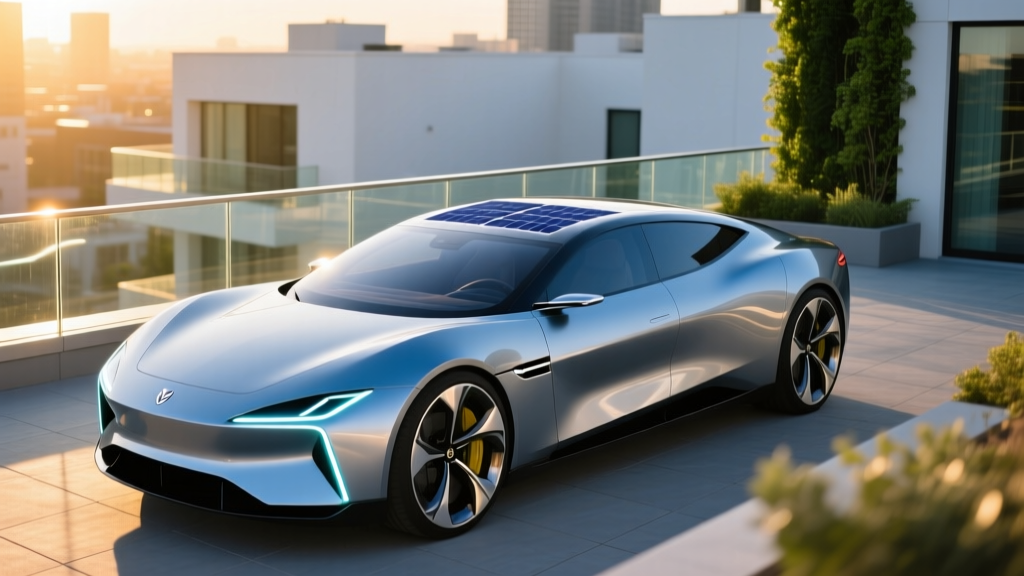
If you've been searching for Revero Fisker, you're likely encountering a tangled web of automotive history. The original Fisker Karma debuted in 2012, was reborn as the Karma Revero in 2017, evolved into the Revero GT, and was eventually succeeded by the Karma Gyesera. As of 2026, no new vehicle wears the "Fisker" badge in this lineage — Henrik Fisker departed the company that bears his name nearly a decade ago, and his subsequent venture, Fisker Inc. (maker of the Fisker Ocean), filed for bankruptcy in 2024. What remains is Karma Automotive, which continues to develop the range-extended electric sedan concept that the original Karma pioneered.
This review traces the Revero Fisker lineage, breaks down the exact specifications of the most recent production models, and explains where the platform stands today — including whether any version of this vehicle can still be purchased new and what the ownership reality looks like.
What Exactly Is the Fisker Revero?
The Fisker Karma was a plug-in hybrid (technically an Extended-Range Electric Vehicle, or EREV) designed by Henrik Fisker and produced from 2011 to 2012. After Fisker Automotive's bankruptcy, the company's assets were acquired by China's Wanxiang Group, which rebranded the vehicle as the Karma Revero starting in 2017. The Revero retained the original Karma's core architecture — a series-hybrid powertrain where a gasoline engine acts solely as a generator to charge the battery, never directly driving the wheels.
In 2020, Karma introduced the Revero GT with an updated BMW-sourced 1.5-liter three-cylinder range extender (replacing the original GM Ecotec 2.0L), improved battery chemistry, and revised styling. Production remained low-volume and hand-built at Karma's facility in Moreno Valley, California. By 2024, Karma announced the Gyesera and Kaveya as successors, effectively ending the Revero nameplate.
Revero GT Specifications at a Glance
| Specification | Value |
|---|---|
| Powertrain Type | Series-Hybrid EREV (range-extended EV) |
| Electric Motors | Dual rear-mounted (RWD) |
| Combined Horsepower | 536 hp |
| Combined Torque | 550 lb-ft |
| 0-60 mph | 4.5 seconds |
| Battery Capacity | 21 kWh usable (NMC lithium-ion) |
| EPA Electric-Only Range | 61 miles |
| EPA Total Range (electric + gas) | ~360 miles |
| EPA MPGe (electric mode) | 70 MPGe |
| MPG (charge-sustaining/gas mode) | 26 MPG combined |
| Range Extender Engine | BMW B38 1.5L turbocharged 3-cylinder |
| Fuel Tank Capacity | 10.6 gallons |
| DC Fast Charging | Not supported (Level 2 max) |
| Level 2 Charging Rate | 3.3 kW onboard charger |
| Level 2 Full Charge Time (0-100%) | ~6 hours |
| Cargo Volume (trunk) | 6.9 cu ft |
| Seating Capacity | 4 passengers |
| Base MSRP (final production year) | $135,000 |
| Battery Warranty | 8 years / 60,000 miles |
| Powertrain Warranty | 4 years / 50,000 miles |
Real-World Range: What the EPA Number Doesn't Tell You
Real-World Expectation: 45–55 miles in mixed driving; 35–42 miles in sustained highway use (70+ mph) or cold weather (below 40°F). The total system range with the range extender engaged is approximately 360 miles, though aggressive driving and hilly terrain can reduce the gasoline-mode range to under 300 miles.
The Revero GT's 21 kWh NMC battery delivers an EPA-rated 61 miles of pure electric driving. In practice, owners consistently report achieving 50–55 miles in moderate city and suburban driving where regenerative braking recovers energy effectively. Highway driving at sustained speeds above 70 mph pushes consumption higher, typically yielding 40–48 electric-only miles before the BMW three-cylinder range extender kicks in.
Cold weather is the Revero's particular weakness on electric range. The NMC chemistry loses roughly 20–30% of its usable capacity in temperatures below freezing, and the Revero GT lacks the sophisticated heat-pump thermal management found in modern BEVs like the Hyundai Ioniq 5 or Tesla Model 3. Expect 35–42 miles of electric range in winter conditions — still enough for many commutes, but a significant drop from the sticker figure.
Once the range extender activates, the Revero operates as a series hybrid: the gasoline engine generates electricity that feeds the motors. The transition is generally smooth but audible — the three-cylinder engine's drone becomes noticeable under heavy acceleration when operating in charge-sustaining mode. The 10.6-gallon fuel tank provides roughly 275 miles of additional range at 26 MPG combined.
Charging: Level 2 Only, and Slow by Modern Standards
| Charging Level | Power (kW) | Time (0-100%) | Miles of Range Added per Hour |
|---|---|---|---|
| Level 1 (120V household) | ~1.4 kW | ~15 hours | ~4 miles/hr |
| Level 2 (240V, 16A) | 3.3 kW | ~6 hours | ~10 miles/hr |
| DC Fast Charging | Not available — no DC fast-charge port | ||
This is where the Revero GT shows its age most clearly. The vehicle is equipped with a 3.3 kW onboard charger and a J1772 connector for Level 2 AC charging. There is no DC fast-charging capability — no CCS, no CHAdeMO, no NACS port. For a vehicle with a 21 kWh battery, the 3.3 kW charge rate means a full replenishment takes approximately six hours on a dedicated Level 2 home circuit.
For context, most modern PHEVs with similar or larger batteries support at least 7.2 kW Level 2 charging, and dedicated BEVs routinely accept 150–350 kW on DC fast chargers. The Revero's charging limitation means you cannot quickly top up on a road trip — you're entirely dependent on the gasoline range extender for long-distance travel. This isn't necessarily a dealbreaker for an EREV (the gas engine eliminates range anxiety), but it does mean that maximizing electric-only driving requires disciplined overnight home charging.
Home charging setup for the Revero GT is straightforward: a standard 240V NEMA 14-50 outlet or a hardwired Level 2 station (such as a ChargePoint Home Flex or Emporia Vue) delivers the full 3.3 kW. Electrical installation costs typically range from $500 to $1,500 depending on your panel capacity and wiring distance, according to typical electrician estimates. No panel upgrade is usually necessary for a 3.3 kW charger, as it draws only about 16 amps.
Performance and Driving Dynamics
The Revero GT's dual rear-mounted electric motors produce a combined 536 horsepower and 550 lb-ft of torque, delivering a 0-60 mph time of 4.5 seconds. That's genuinely quick for a four-door sedan weighing over 5,400 pounds. Electric torque delivery is immediate, and the car surges forward with authority from a stop — the kind of effortless acceleration that defines the EV driving experience.
However, the Revero GT's mass is always present. Cornering reveals substantial body roll, and the steering lacks the precision of lighter performance sedans. The adaptive dampers offer Sport and Touring modes, but neither fully masks the vehicle's heft. This is a grand tourer in the traditional sense — designed for highway cruising rather than canyon carving.
The regenerative braking system offers moderate one-pedal driving capability in its strongest setting, though it doesn't bring the car to a complete stop as many modern EVs do. You'll still use the friction brakes at low speeds. The brake pedal feel is reasonably linear by EREV standards, avoiding the grabby regen-to-friction handoff that plagues some hybrids.
Interior, Technology, and Practicality
The Revero GT's cabin is hand-trimmed with genuine wood, glass, and leather — a deliberate choice that gives it an artisanal quality mass-produced luxury sedans lack. The diamond-pattern quilted leather seats are comfortable on long drives, and the glass roof panel floods the cabin with light. However, the interior design language dates to the early 2010s, and the infotainment system reflects that origin.
The center stack features a touchscreen interface that controls climate, audio, and drive modes. It lacks wireless Apple CarPlay and Android Auto (wired only), and the navigation system feels generations behind what you'd find in a 2026 BMW i5 or Mercedes EQE. The digital instrument cluster provides basic power-flow visualization and range estimates but lacks the configurability of modern competitors.
Driver assistance technology is minimal by current standards: the Revero GT includes forward collision warning, lane departure warning, and a backup camera, but no adaptive cruise control, no lane-centering assist, and no automated parking. In SAE automation terms, this is a Level 0–1 vehicle — there is no hands-free or supervised autonomous driving capability.
Practicality is the Revero's most significant compromise. The trunk offers just 6.9 cubic feet of cargo space — smaller than a Mazda MX-5 Miata's. The rear seats accommodate two adults but with limited legroom (approximately 30 inches), making this strictly a two-plus-two grand tourer rather than a family sedan. There is no frunk (front trunk), as the space is occupied by the range-extender engine and power electronics.
Pricing, Tax Credits, and the Used Market
When the Karma Revero GT was in production, it carried a base MSRP of approximately $135,000, with well-optioned examples reaching $145,000 or more. This placed it in exotic territory — competing with the Porsche Panamera E-Hybrid, Tesla Model S Plaid, and BMW i7 on price, if not on technology.
Federal Tax Credit Eligibility: Under IRS §30D rules, the Revero GT faced significant hurdles. The $55,000 MSRP cap for sedans disqualified it entirely from the new-vehicle federal tax credit. Additionally, its battery sourcing and critical-mineral supply chain did not meet the requirements introduced in 2023. For buyers who purchased the Revero GT when it was available, no $7,500 federal credit applied.
On the used market (2026 pricing), Karma Revero GT examples typically trade between $60,000 and $90,000 depending on mileage, condition, and battery state of health. Under the IRS used clean vehicle credit, qualifying buyers (income below $75,000 single / $150,000 joint) purchasing a used Revero GT from a licensed dealer for under $25,000 could theoretically claim up to $4,000 or 30% of the sale price — but current market values far exceed the $25,000 used-vehicle MSRP cap, making this credit practically unavailable for this model.
| Item | Amount |
|---|---|
| Original Base MSRP | $135,000 |
| As-Tested (typical options) | $140,000–$145,000 |
| Federal New-Vehicle Tax Credit (§30D) | $0 (exceeds $55K sedan MSRP cap) |
| Used Market Range (2026) | $60,000–$90,000 |
| Used EV Tax Credit Eligibility | Not eligible (exceeds $25K cap) |
How the Revero Compares to Modern Alternatives
Pros
- Distinctive, head-turning design — nothing else looks like it
- 536 hp with instant electric torque
- 61 miles of electric-only range covers most commutes
- No range anxiety — gas range extender adds ~300 miles
- Hand-built, artisanal interior materials
- Collector/enthusiast appeal and rarity
Cons
- No DC fast charging — 3.3 kW Level 2 only
- 6.9 cu ft trunk — extremely limited cargo space
- Dated infotainment and no advanced driver assists
- 5,400+ lb curb weight hurts efficiency and handling
- High maintenance costs; limited parts availability
- Out of production — no new-vehicle warranty or support
- Never qualified for federal EV tax credits
If you're drawn to the Revero concept — a stylish sedan that drives electrically most days but can burn gasoline on road trips — several modern alternatives execute the idea more capably:
- BMW i5 (PHEV variant, where available): Offers a more refined plug-in hybrid experience with better tech, faster charging, and full BMW dealer support.
- Mercedes-AMG GT 63 S E Performance: A performance PHEV sedan with far more power, modern safety tech, and practical cargo space — at a comparable or higher price point.
- Porsche Panamera E-Hybrid: The closest spiritual competitor, blending electric commuting with grand-touring performance and a usable trunk.
- Karma Gyesera (announced): Karma's own successor to the Revero, with an updated powertrain, modern infotainment, and a claimed 250+ mile electric range. As of 2026, production timelines remain uncertain.
Who Is the Revero Fisker For?
The Revero Fisker lineage represents a fascinating chapter in EV history — an early attempt at the range-extended electric sedan that anticipated the EREV concept now championed by brands like Mazda (MX-30 R-EV, overseas markets) and the forthcoming Karma Gyesera. But as a purchase decision in 2026, the Revero GT is best approached as a collector's item rather than a daily driver. Its charging limitations, minimal cargo space, dated technology, and lack of manufacturer support make it a passion purchase, not a rational one.
Frequently Asked Questions
What is the real-world electric range of the Karma Revero GT?
The EPA rates the Revero GT at 61 miles of electric-only range. In real-world mixed driving, expect 50–55 miles. Highway driving at 70+ mph reduces this to roughly 40–48 miles, and cold weather (below 40°F) can drop it to 35–42 miles due to NMC battery chemistry limitations and the absence of a heat pump.
How fast does the Revero charge?
The Revero GT charges at a maximum of 3.3 kW on Level 2 (240V), taking approximately 6 hours for a full charge. It does not support DC fast charging. This is significantly slower than modern PHEVs and BEVs, which typically charge at 7.2–11.5 kW on Level 2 and 100–350 kW on DC fast chargers.
Does the Fisker Revero qualify for any federal tax credit?
No. The Revero GT's original MSRP of ~$135,000 far exceeds the IRS §30D sedan cap of $55,000. On the used market, current values of $60,000–$90,000 exceed the $25,000 cap for the used clean vehicle credit. No federal tax credit applies to this vehicle in any purchase scenario under current rules.
Is the Fisker Revero still being made?
No. The Karma Revero GT was the final iteration, and production has ceased. Karma Automotive has announced the Gyesera as its successor, but as of 2026, the Gyesera has not entered series production. Henrik Fisker himself has no involvement with Karma Automotive; his separate company, Fisker Inc., ceased operations in 2024.
Is it worth buying a used Karma Revero GT?
Only as a collector or enthusiast purchase. The Revero GT offers unique design, strong electric acceleration, and genuine rarity. However, its limited cargo space, slow charging, outdated technology, and uncertain long-term parts support make it impractical as a primary vehicle. Buyers seeking a usable plug-in hybrid sedan are better served by a Porsche Panamera E-Hybrid or BMW 5 Series PHEV.
What happens if the battery degrades?
The Revero GT's 21 kWh NMC battery is covered by an 8-year/60,000-mile warranty (from original in-service date). Given that most examples are now beyond the warranty period, battery replacement would be an out-of-pocket expense. NMC batteries typically retain 70–85% of original capacity after 8–10 years depending on charging habits and climate exposure. With a small 21 kWh pack, even modest degradation noticeably reduces the already-limited electric range. Prospective used buyers should request a battery state-of-health (SoH) report before purchasing.