Quick Verdict: The Real Cost to Charge a Tesla
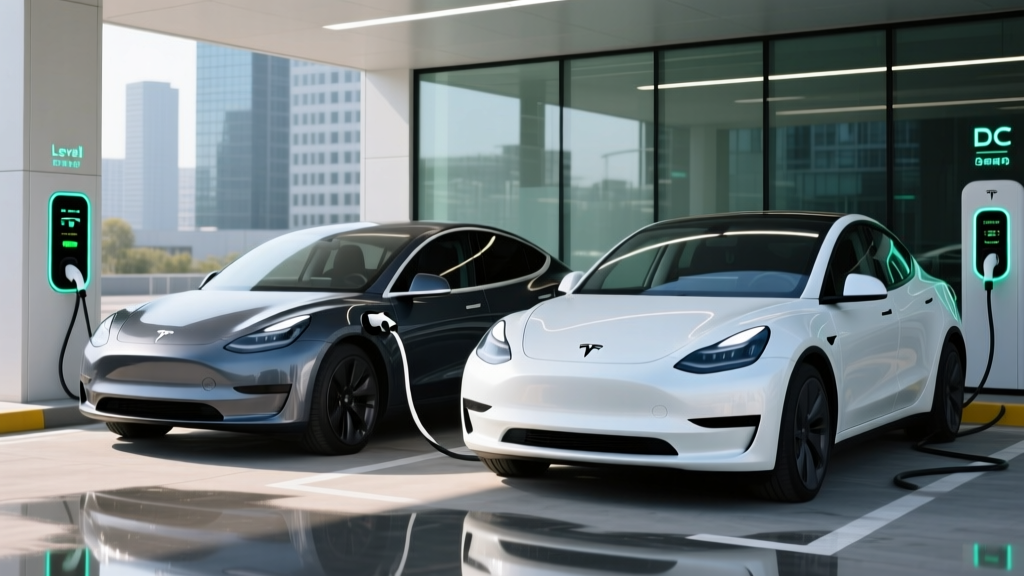
If you're asking how much does it cost to charge up a Tesla, the short answer depends entirely on where you plug in. Charging a Tesla Model 3 Long Range (75 kWh usable battery) from 0–100% at home on a national-average residential rate of $0.17/kWh costs roughly $12.75. Do the same at a Tesla Supercharger averaging $0.35/kWh and you're paying $26.25. At a third-party DC fast charger priced at $0.48/kWh, that number climbs to $36.00.
But cost-per-fill is only part of the picture. Most Tesla owners charge incrementally — topping up 20–30 kWh overnight at home, then grabbing a fast charge on road trips. This guide walks through every charging scenario for the 2026 Tesla Model 3 and Model Y, the two vehicles most buyers are researching, with exact kWh figures, real-world rates, and how those costs compare to gasoline.
2026 Tesla Model 3 & Model Y: Core Specs at a Glance
Before calculating cost, you need to know the energy capacity of the battery you're filling. Tesla does not publish official usable kWh figures, but independent teardowns and EPA filing data provide reliable estimates. Here's what you're working with for the 2026 model year.
| Spec | Model 3 Long Range AWD | Model 3 RWD | Model Y Long Range AWD |
|---|---|---|---|
| EPA Range | 363 mi | 272 mi | 320 mi |
| Battery (usable, est.) | 75 kWh (NMC) | 57.5 kWh (LFP) | 75 kWh (NMC) |
| Efficiency | 132 MPGe / 25 kWh/100mi | 132 MPGe / 25 kWh/100mi | 122 MPGe / 28 kWh/100mi |
| Max DC Fast Charge | 250 kW (peak) | 170 kW (peak) | 250 kW (peak) |
| 10–80% DC Fast Charge | ~25 min | ~30 min | ~27 min |
| Level 2 Home Charge (max) | 11.5 kW / ~44 mi/hr | 11.5 kW / ~44 mi/hr | 11.5 kW / ~40 mi/hr |
| 0–60 mph | 4.2 sec | 5.8 sec | 4.8 sec |
| Horsepower | 346 hp | 271 hp | 384 hp |
| Drivetrain | Dual-motor AWD | RWD | Dual-motor AWD |
| Cargo Volume | 23 cu ft (rear seats up) | 23 cu ft | 30 cu ft (rear seats up) / 72 cu ft (folded) |
| Base MSRP | $47,740 | $38,990 | $48,240 |
| Battery Warranty | 8 yr / 120,000 mi | 8 yr / 100,000 mi | 8 yr / 120,000 mi |
Sources: EPA fueleconomy.gov, Tesla spec sheets. Battery usable capacity estimated from independent teardown data (Munro & Associates, Recurrent Auto).
Charging Cost Breakdown: Home vs. Supercharger vs. Public DCFC
The single biggest variable in answering "how much does it cost to charge up a Tesla" is your electricity rate. Here's a scenario-based breakdown for a full 0–100% charge on a Model 3 Long Range (75 kWh usable) and a Model Y Long Range (75 kWh usable).
| Charging Location | Avg. Rate ($/kWh) | Cost for 75 kWh | Cost per Mile (363-mi range) | Notes |
|---|---|---|---|---|
| Home (national avg. residential) | $0.17 | $12.75 | $0.035 | Varies $0.10–$0.30 by state |
| Home (off-peak TOU rate) | $0.09 | $6.75 | $0.019 | Requires time-of-use plan |
| Tesla Supercharger V3/V4 | $0.35 | $26.25 | $0.072 | Varies $0.25–$0.50 by location |
| Electrify America / EVgo | $0.48 | $36.00 | $0.099 | Peak pricing can exceed $0.60 |
| Workplace (free / subsidized) | $0.00 | $0.00 | $0.00 | Check employer EV benefit |
Key insight: A Tesla owner who charges 80% at home on a time-of-use plan and 20% at Superchargers on road trips will see a blended rate around $0.14/kWh, or roughly $10.50 per full charge equivalent. That's the realistic annual ownership number — not the worst-case Supercharger scenario.
Real-World Range: What the EPA Sticker Doesn't Tell You
EPA sticker: 363 miles (Model 3 LR AWD) / 320 miles (Model Y LR AWD)
Real-world highway (70 mph, 72°F): ~300–320 miles (Model 3) / ~265–285 miles (Model Y)
Real-world highway (32°F, winter): ~240–270 miles (Model 3) / ~215–240 miles (Model Y)
City/regenerative driving: EPA or slightly above — regen recovers energy in stop-and-go traffic
Tesla's thermal management system is among the best in the industry, using a heat pump standard on all 2026 models to reduce winter range loss compared to older resistance-heated EVs. However, the physics of cold batteries and cabin heating still cost 20–30% of range in sub-freezing conditions. On pure highway driving at 75+ mph in summer, expect a 10–15% reduction from the EPA combined figure — the EPA test cycle includes city driving, which flatters EVs thanks to regenerative braking.
For road-trip planning, use 280 miles as a safe planning range for the Model 3 LR and 250 miles for the Model Y LR in moderate conditions. This keeps you from dipping below 10% State of Charge (SoC) between Supercharger stops.
Charging Speed Deep Dive: kW, Charge Curves, and the 80% Wall
Tesla's peak DC fast-charge rate of 250 kW on Long Range models sounds impressive, but peak is not sustained. Understanding the charge curve — how charging speed changes as the battery fills — is essential for realistic trip planning.
| State of Charge | Avg. Charge Rate | Miles Added in 5 min | Notes |
|---|---|---|---|
| 5–20% | ~220–250 kW | ~60–70 mi | Peak rate; battery must be preconditioned |
| 20–50% | ~175–200 kW | ~50–55 mi | Sustained high rate |
| 50–80% | ~100–140 kW | ~30–40 mi | Significant taper begins |
| 80–95% | ~40–60 kW | ~12–18 mi | Slow taper; avoid unless needed |
| 95–100% | ~10–20 kW | ~3–6 mi | Cell balancing; very slow |
Preconditioning matters. When you navigate to a Supercharger in the Tesla's built-in navigation, the car automatically warms the battery to optimal temperature before you arrive. Without preconditioning — for example, pulling into a non-Tesla charger via adapter on a cold morning — your peak rate may be 50–80 kW lower for the first 5–10 minutes.
Home Level 2 charging at 11.5 kW (48A on a 60A circuit) adds roughly 40–44 miles per hour. A full overnight charge from 20% to 90% takes about 5–6 hours — more than enough for daily driving. Most owners plug in every night and wake up to a full battery, making home charging the default experience.
Federal Tax Credit & Total Purchase Cost
The IRS §30D Clean Vehicle Credit can reduce your effective Tesla purchase price by up to $7,500 — but eligibility depends on multiple factors that change frequently.
- MSRP cap: Sedans (Model 3) must be under $55,000; SUVs/trucks (Model Y) under $80,000
- Buyer income cap: Modified AGI ≤ $150,000 (single) / $300,000 (married filing jointly)
- Battery sourcing: Required percentages of critical minerals and battery components must be sourced from the US or FTA partners — thresholds increase annually
- Point-of-sale transfer: You can transfer the credit to the dealer at purchase for an immediate price reduction (requires dealer registration)
- Assembly: Vehicle must undergo final assembly in North America — all US-market Teslas qualify (Fremont, CA & Austin, TX)
Always verify current-year rules at irs.gov and consult a tax professional. Battery sourcing thresholds tighten each year.
| Model / Trim | Base MSRP | As-Tested (typical config) | Est. §30D Credit | Effective Price |
|---|---|---|---|---|
| Model 3 RWD | $38,990 | $40,490 | $7,500* | ~$32,990 |
| Model 3 Long Range AWD | $47,740 | $50,240 | $7,500* | ~$42,740 |
| Model 3 Performance | $54,990 | $56,490 | $7,500* | ~$48,990 |
| Model Y Long Range AWD | $48,240 | $51,740 | $7,500* | ~$44,240 |
| Model Y Performance | $53,490 | $55,990 | $7,500* | ~$48,490 |
*$7,500 credit shown assumes full eligibility (income, sourcing, MSRP cap). Model 3 Performance at $54,990 is under the $55,000 sedan cap. Actual credit depends on battery-sourcing compliance in the purchase year. Confirm at purchase.
Cost to Charge vs. Gas: The Per-Mile Showdown
To put Tesla charging costs in perspective, compare them to a similarly sized gasoline vehicle. A 2026 Toyota Camry (combined 32 MPG) running on $3.40/gallon gas costs $0.106 per mile in fuel alone.
| Vehicle / Scenario | Energy Cost per Mile | Annual Cost (12,000 mi) |
|---|---|---|
| Tesla Model 3 LR — home charging (TOU avg. $0.12/kWh) | $0.030 | $360 |
| Tesla Model 3 LR — blended (80% home / 20% Supercharger) | $0.042 | $504 |
| Tesla Model Y LR — blended (80% home / 20% Supercharger) | $0.047 | $564 |
| Tesla Model 3 LR — 100% Supercharger ($0.35/kWh) | $0.088 | $1,056 |
| Gasoline midsize sedan (32 MPG, $3.40/gal) | $0.106 | $1,272 |
| Gasoline midsize SUV (25 MPG, $3.40/gal) | $0.136 | $1,632 |
Even in the worst-case scenario of exclusive Supercharger use, the Tesla Model 3 costs less per mile than a gas sedan. For the typical owner charging mostly at home, annual fuel savings run $770–$910 compared to a gas equivalent — and those savings compound over years of ownership.
Tech, Driver Assistance, and Ownership Experience
Tesla's software ecosystem remains a core differentiator. The 15.4-inch center touchscreen handles all vehicle controls, navigation, and entertainment. Over-the-air updates add features continuously — recent 2026 updates have improved route planning, battery preconditioning algorithms, and cabin climate efficiency.
Autopilot and FSD (Supervised): Tesla's Autopilot (standard) includes adaptive cruise control and lane centering. Full Self-Driving (Supervised), a $8,000 add-on or $99/month subscription, adds automated lane changes, traffic-light recognition, and city-street navigation. However, FSD remains an SAE Level 2 driver-assistance system. The driver must remain fully engaged, hands on the wheel, and eyes on the road at all times. It is not autonomous driving.
Tesla Autopilot and FSD (Supervised) are SAE Level 2 systems. They assist with steering, acceleration, and braking but require continuous driver supervision. They do NOT make the vehicle self-driving. You are legally and operationally responsible for the vehicle at all times. See NHTSA guidance on automated vehicle safety for SAE level definitions.
Notable tech features:
- Tesla Supercharger network: 65,000+ connectors globally, widely regarded as the most reliable DC fast-charging network
- NACS connector standard — now adopted by Ford, GM, Rivian, Hyundai, and others
- Sentry Mode (dashcam surveillance when parked), Dog Mode, and Camp Mode
- Phone-as-key with Bluetooth proximity unlock
- Heat pump standard on all trims for improved cold-weather efficiency
Drawbacks worth noting:
- No Apple CarPlay or Android Auto — Tesla uses its proprietary infotainment
- Minimalist interior means no physical buttons for climate, mirrors, or glovebox — all touchscreen
- Panel-gap consistency has improved but still draws complaints vs. legacy luxury brands
- Insurance costs run 15–25% higher than gas equivalents in many states (Tesla Insurance available in select states as an alternative)
- Model Y rear visibility is limited; rely on cameras and sensors
Pros and Cons at a Glance
- Lowest per-mile energy cost when charging at home
- Supercharger network reliability (99%+ uptime)
- Class-leading efficiency (kWh/100mi)
- Over-the-air updates add features post-purchase
- Strong resale value relative to non-Tesla EVs
- Heat pump standard for winter efficiency
- No Apple CarPlay / Android Auto
- Touchscreen-only controls frustrate some drivers
- FSD (Supervised) is expensive and still Level 2
- Insurance premiums above segment average
- Rear-seat comfort and headroom tighter than some rivals
- Supercharger pricing rising in high-demand metro areas
Who Should Buy a Tesla Model 3 or Model Y?
Choose the Model 3 if: You commute solo or as a couple, prioritize driving dynamics and efficiency, and want the lowest cost-per-mile EV available. The RWD trim at ~$32,990 after tax credit is one of the most affordable long-range EVs on the market.
Choose the Model Y if: You need cargo versatility (30 cu ft rear / 72 cu ft folded), rear-seat passenger comfort for family use, and slightly higher ground clearance. The Model Y is the best-selling vehicle in the US for good reason — it covers the crossover use case thoroughly.
Look elsewhere if: You want physical dashboard controls, need Apple CarPlay, require 400+ miles of range without stopping, or tow more than 3,500 lbs. Consider the Hyundai Ioniq 5, Chevrolet Equinox EV, or Ford Mustang Mach-E as strong alternatives with different trade-offs.
Frequently Asked Questions
How much does it cost to charge a Tesla at home per month?
For a driver covering 1,000 miles per month (12,000/year) in a Model 3 Long Range at 25 kWh/100mi, you'll use about 250 kWh monthly. At the national average residential rate of $0.17/kWh, that's $42.50/month. On a time-of-use plan with off-peak rates around $0.09/kWh, it drops to $22.50/month.
Is it cheaper to charge a Tesla at home or at a Supercharger?
Home charging is almost always cheaper. Residential electricity averages $0.17/kWh nationally, while Supercharger rates typically range from $0.25–$0.50/kWh. The exception is if your utility charges very high residential rates (above $0.30/kWh) and you have access to a cheaper public charger — but this is uncommon.
Does the Tesla Model 3 RWD with LFP battery charge differently?
Yes. The LFP (lithium iron phosphate) battery in the Model 3 RWD can and should be charged to 100% regularly — Tesla recommends this for LFP chemistry to maintain accurate state-of-charge readings. NMC batteries in Long Range models are best kept between 20–80% for daily use, charging to 100% only for road trips. LFP also has a slightly lower energy density but longer cycle life and no cobalt.
How much does a home Level 2 charger installation cost for a Tesla?
A Tesla Wall Connector ($420) installed on a new 60A/240V circuit typically costs $800–$2,000 total including electrician labor, permit, and materials. If your electrical panel needs an upgrade to 200A service, add $1,500–$3,500. The Wall Connector delivers up to 11.5 kW (48A), adding ~44 miles of range per hour — more than enough for overnight charging.
Do Teslas qualify for the $7,500 federal tax credit in 2026?
As of early 2026, the Model 3 and Model Y generally qualify for the full $7,500 §30D credit for eligible buyers, as they are assembled in the US (Fremont/Austin) and meet MSRP caps. However, battery-sourcing requirements tighten annually, and buyer income limits apply ($150K single / $300K joint). Always verify current eligibility at irs.gov before purchasing and consider consulting a tax professional.
What happens to charging cost if I use solar panels at home?
If your solar system covers your EV charging load, your marginal cost per kWh drops to near zero after the system payback period. Many solar-equipped Tesla owners report effective charging costs under $0.05/kWh when accounting for system amortization — making the per-mile cost under $0.013. This is the cheapest possible way to fuel any vehicle.