The Honest Answer: Pros and Cons of Electric Vehicles
Bottom line: Electric vehicles deliver lower per-mile energy costs (roughly $0.04–$0.06/mile at home vs. $0.12–$0.16/mile for gas), minimal scheduled maintenance, and instant torque — but they demand a higher upfront purchase price, reliable access to charging (ideally at home), and acceptance of real-world range that falls 10–30% below the EPA sticker in cold weather or sustained highway driving. If you can install a Level 2 home charger and drive under 250 miles a day, the pros outweigh the cons for most buyers. If you rely solely on public charging or frequently tow in sub-freezing temperatures, a hybrid may serve you better.
The decision to go electric isn't ideological — it's mathematical. Below, we break down every major advantage and drawback with exact figures, so you can run the numbers against your own driving pattern, local electricity rate, and budget.
The Real Pros: Where EVs Genuinely Win
Energy Cost Per Mile
The single most consistent advantage of an EV is fuel cost. The U.S. average residential electricity rate sits around $0.17/kWh in early 2026 (EIA data). An efficient EV like the Hyundai Ioniq 6 SE (140 MPGe combined, roughly 25 kWh/100 mi per fueleconomy.gov) costs about $0.043/mile to drive at home. Compare that to a 30 MPG gas sedan at $3.40/gallon: $0.113/mile. Over 15,000 annual miles, that's a $1,050 yearly savings on energy alone.
Even on public DC fast chargers — where rates run $0.30–$0.55/kWh — most EVs still undercut gasoline on a per-mile basis, though the margin narrows considerably.
Maintenance Reduction
BEVs eliminate oil changes, spark plugs, transmission fluid, exhaust systems, and timing belts. Brake pad life extends dramatically thanks to regenerative braking — many EV owners report original brake pads at 80,000+ miles. The primary recurring maintenance items are cabin air filters, wiper fluid, tire rotations, and windshield wipers. Consumer Reports estimates EV lifetime maintenance costs at roughly half those of comparable gas vehicles.
Performance and Drivability
Electric motors deliver peak torque from 0 RPM. A Tesla Model Y Long Range hits 0–60 mph in 4.8 seconds with 384 hp, while a similarly priced gas SUV typically runs 6.5–7.5 seconds. The low center of gravity (battery pack mounted under the floor) improves handling, and one-pedal driving via regen reduces brake-pedal fatigue in stop-and-go traffic.
Federal and State Incentives
The IRS §30D Clean Vehicle Credit offers up to $7,500 for qualifying new EVs, but eligibility is far from universal. For 2026, the credit requires:
- Vehicle MSRP under $55,000 (sedans/wagons) or $80,000 (SUVs/trucks/vans)
- Buyer AGI under $150,000 (single) or $300,000 (joint)
- Battery components and critical minerals meeting phased-in domestic sourcing thresholds
- Final assembly in North America
The credit can now be transferred to the dealer at point of sale, reducing your out-of-pocket cost directly. Always verify current-year eligibility on IRS.gov before purchasing — sourcing rules tighten annually.
The Real Cons: Limitations You Can't Ignore
Higher Upfront Purchase Price
Despite price cuts across the industry, the average new EV transaction price hovers around $52,000–$55,000, compared to roughly $47,000 for the overall new-vehicle average. Budget-friendly options exist — the Chevy Equinox EV starts near $33,000, and the Nissan Leaf around $29,000 — but the most affordable trims often carry smaller batteries and shorter range.
Charging Access and Time
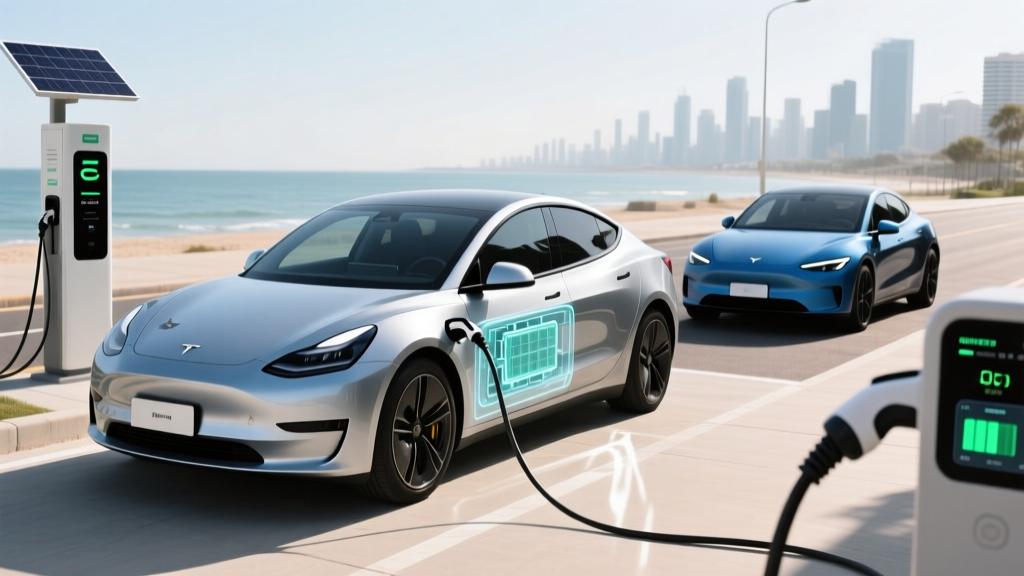
This is where EV ownership either clicks or breaks down. If you have a garage or driveway where a Level 2 (240V, 7–11 kW) charger can be installed, you'll start every morning with a full battery and rarely think about "fueling." Installation costs typically run $500–$2,000 depending on panel capacity and wiring distance.
If you live in an apartment without charging access, you'll depend on public infrastructure. A DC fast charge from 10–80% takes 18–35 minutes on modern 150–250 kW chargers — but real-world public charging involves detours to charger locations, occasional broken stalls, and peak rates of $0.40–$0.55/kWh that erode the cost advantage.
Real-World Range vs. EPA Sticker
The EPA range estimate assumes a mix of city and highway driving at moderate temperatures. In practice:
- Highway-only driving at 75 mph: expect 85–90% of EPA range
- Cold weather (below 30°F): expect 70–80% of EPA range due to battery resistance and cabin heating demands
- Cold + highway combined: plan for 60–70% of EPA range
A vehicle rated at 300 miles EPA may realistically deliver 200–210 miles on a 20°F winter highway trip. Vehicles equipped with a heat pump (standard on many 2025–2026 models from Hyundai, Kia, Tesla, and others) mitigate cold-weather losses by 5–10 percentage points compared to resistive heating.
Insurance Premiums
EV insurance costs 15–25% more on average than comparable gas vehicles, driven by higher repair costs (specialized body shops, battery replacement risk) and elevated vehicle values. A Model Y owner might pay $2,200–$2,800/year depending on location and driving record, vs. $1,700–$2,100 for a gas RAV4. Always get a quote before purchasing.
Battery Degradation and Long-Term Uncertainty
Modern lithium-ion EV batteries (NMC or LFP chemistry) typically retain 85–92% of original capacity after 100,000 miles based on aggregated fleet data. Federal law mandates an 8-year/100,000-mile battery warranty (10 years/150,000 miles in CARB states) with a capacity retention threshold — usually 70% of original capacity. Out-of-warranty replacement runs $8,000–$18,000 depending on pack size, though very few owners have needed one.
EV vs. Gas vs. Hybrid: The Numbers Side by Side
| Category | EV (home charging) | Hybrid (50 MPG) | Gas sedan (30 MPG) |
|---|---|---|---|
| Energy/fuel cost | $645 | $1,020 | $1,700 |
| Maintenance | $400 | $750 | $950 |
| Insurance (avg.) | $2,400 | $1,850 | $1,800 |
| Annual total | $3,445 | $3,620 | $4,450 |
| 5-year total | $17,225 | $18,100 | $22,250 |
The EV's higher insurance cost partially offsets its energy and maintenance savings. Over five years, the EV still wins on operating cost — but the gap narrows compared to what "gas savings alone" would suggest. Factor in the EV's typically higher purchase price, and the total-cost-of-ownership breakeven point against a gas car lands around year 4–6 depending on your local electricity rate, annual mileage, and whether you qualified for the $7,500 tax credit.
Common EV Misconceptions — Corrected with Data
| Myth | Fact |
|---|---|
| "EV batteries need replacing every few years." | Most modern packs retain 85%+ capacity at 100,000 miles. Warranty covers 8 years/100,000 mi minimum. |
| "EVs are worse for the environment because of electricity generation." | Even on the dirtiest U.S. grids, EVs produce fewer lifetime emissions than gas cars per Union of Concerned Scientists analysis. On clean grids, the advantage is 3–4x. |
| "You can't road-trip in an EV." | The DC fast-charging network (Tesla Supercharger, Electrify America, EVgo) covers major U.S. interstate corridors. Plan 20–30 min stops every 200–250 miles. |
| "EVs are slow." | A $40,000 EV routinely achieves 0–60 in under 5 seconds — sports-car territory from a decade ago. |
| "The tax credit gives everyone $7,500." | MSRP caps, income limits, and battery-sourcing rules disqualify many vehicles and buyers. Always check IRS.gov before assuming eligibility. |
First-Time EV Buyer Checklist: What You Need to Know
- Audit your daily driving. If 95% of your trips are under 60 miles round-trip, even a 200-mile-range EV covers you with a massive buffer. Range anxiety diminishes rapidly once you charge at home nightly.
- Confirm home charging feasibility. A licensed electrician can assess your panel. Most homes with a 200-amp panel and a garage near the breaker can support a 40-amp (9.6 kW) Level 2 circuit for $800–$1,500 installed. Older homes with 100-amp service may need a $2,000–$4,000 panel upgrade.
- Research your local public charging. Use PlugShare or the EV charger apps (ChargePoint, EVgo, Electrify America) to map DC fast chargers along your common routes. If you see sparse coverage, a PHEV or hybrid might be smarter.
- Get an insurance quote before buying. The 15–25% EV premium can erase fuel savings for low-mileage drivers.
- Understand charging speed reality. A "250 kW capable" vehicle only sustains peak speed for a portion of the session. The charge curve tapers sharply above 80% SoC. Real-world 10–80% times of 18–25 minutes are excellent; anything under 20 minutes is best-in-class.
- Check §30D eligibility. Confirm the specific VIN qualifies, that your AGI falls under the cap, and that the dealer can process the point-of-sale transfer.
Decision Framework: Should You Buy an EV, Hybrid, or Stick with Gas?
Choose a battery-electric vehicle (BEV) if:
- You can install Level 2 home charging
- Your daily driving is under 250 miles
- You want the lowest per-mile operating cost
- You qualify for the §30D tax credit or can absorb the higher upfront price
- You value instant torque and quiet operation
Choose a plug-in hybrid (PHEV) if:
- You want electric-only commuting (25–45 miles) but gas flexibility for road trips
- You can charge at home but lack reliable public charging for longer trips
- You frequently tow or drive in extreme cold where range loss matters
- You're not ready to commit to full electric but want to reduce fuel consumption
Choose a conventional hybrid (HEV) or gas vehicle if:
- You have zero home or workplace charging access
- Your budget is strictly under $28,000 and you need a new vehicle
- You regularly drive 400+ miles in rural areas with sparse charging infrastructure
- Your annual mileage is under 8,000 miles (the EV cost-premium payback stretches beyond 8 years)
Frequently Asked Questions
How long does it take to charge an EV at home?
On a Level 2 home charger (7–11 kW), expect to add roughly 25–40 miles of range per hour of charging. A full charge from 10% to 100% on a 75 kWh battery takes about 7–10 hours — easily accomplished overnight. Level 1 (120V standard outlet) adds only 3–5 miles per hour and is practical only for PHEVs or very low daily mileage.
Do EVs lose range in winter?
Yes. At temperatures below 30°F, expect 20–30% range reduction due to increased battery internal resistance and cabin heating energy. Vehicles with a heat pump recover roughly 5–10% of that loss. Preconditioning the battery and cabin while still plugged in at home significantly mitigates the impact.
What happens if the battery fails out of warranty?
Full battery replacement costs $8,000–$18,000 depending on pack size and chemistry. However, catastrophic failure is rare — most degradation is gradual capacity loss. Individual module replacement (where supported) can cost $2,000–$5,000. Third-party refurbishment options are expanding. The 8-year/100,000-mile federal warranty covers defects and excessive capacity loss (typically below 70% SoH).
Are EVs actually better for the environment?
Over their full lifecycle — including manufacturing and electricity generation — EVs produce fewer greenhouse gas emissions than comparable gas vehicles in every U.S. region, according to lifecycle analyses from Argonne National Laboratory. The advantage grows as the grid decarbonizes and as battery recycling scales. A new EV's manufacturing carbon "debt" is typically repaid within 1–3 years of average driving.
Can I tow with an EV?
Yes, but plan carefully. EVs like the Ford F-150 Lightning and Rivian R1T offer 7,700–11,000 lb towing capacity. However, towing cuts range roughly in half due to the massive energy demand of pulling a heavy trailer at highway speed. A truck rated for 320 miles EPA may deliver only 150–170 miles while towing. Plan charging stops accordingly.
Should I buy a used EV instead?
A used EV can be an excellent value — depreciation hits EVs hard in the first 2–3 years, so a lightly used model can save 25–40% off new pricing. However, the IRS §25E used-EV credit (up to $4,000 or 30% of sale price, whichever is lower) has its own income caps and vehicle-price limits ($25,000 max). Verify battery State of Health via the vehicle's diagnostic menu or a pre-purchase inspection before committing.