Quick Verdict: Is the Porsche Macan EV Worth It?
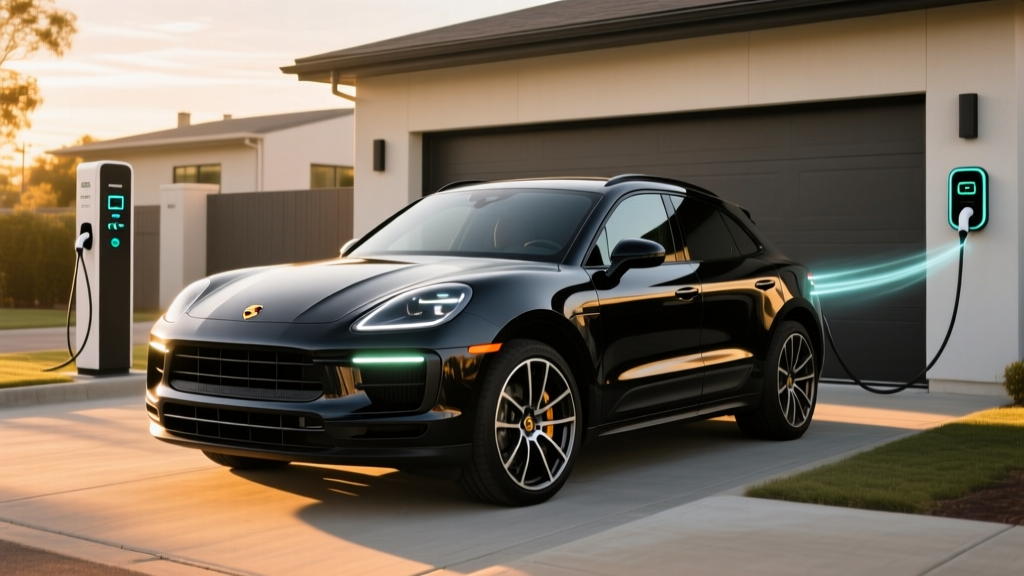
The 2026 Porsche Macan Electric delivers sports-car dynamics in a luxury SUV shell, with up to 308 miles of EPA range (Macan 4), a 100 kWh NMC battery, and class-leading 270 kW DC fast charging that adds 10–80% in roughly 21 minutes. Starting around $78,800, it costs roughly $15,000 more than a gas Macan but saves an estimated $1,200–$1,800 annually in fuel and maintenance for a typical driver. It's the right pick if you have Level 2 home charging access, prioritize driving engagement over cargo space, and can absorb the premium. It's the wrong pick if you regularly tow, live in a charging desert, or need the $7,500 federal tax credit (the Macan EV does not currently qualify due to MSRP caps and battery sourcing rules).
Range, Efficiency, and the Real-World Reality Check
Porsche offers two main trims for the 2026 model year in the U.S. market, both riding on the Volkswagen Group's PPE (Premium Platform Electric) architecture with an 800-volt electrical system:
| Specification | Macan (Base RWD) | Macan 4 (AWD) | Macan 4S (AWD) |
|---|---|---|---|
| EPA Range | ~308 mi | ~288 mi | ~280 mi |
| Battery (usable / gross) | 96 kWh / 100 kWh | 96 kWh / 100 kWh | 96 kWh / 100 kWh |
| Chemistry | NMC (Nickel Manganese Cobalt) | NMC | NMC |
| Horsepower | 335 hp | 402 hp | 509 hp |
| 0–60 mph | 5.4 sec | 4.9 sec | 4.1 sec |
| MPGe (combined) | ~89 MPGe | ~84 MPGe | ~82 MPGe |
| Max DC Charge Rate | 270 kW | 270 kW | 270 kW |
| 10–80% DC Fast Charge | ~21 min | ~21 min | ~21 min |
| Level 2 Charge Rate (AC) | 11 kW | 11 kW | 11 kW |
| Base MSRP | $78,800 | $84,900 | $99,300 |
| Battery Warranty | 8 yr / 100,000 mi | 8 yr / 100,000 mi | 8 yr / 100,000 mi |
Real-World Range vs. EPA Sticker
The EPA estimates are useful, but real-world conditions shift the numbers significantly:
- Highway driving (75 mph): Expect roughly 245–265 miles on the Macan 4 before needing a charger. Aerodynamic drag at sustained speed cuts efficiency by 10–15%.
- Cold weather (below 32°F): Range drops 15–25% depending on cabin heating demand. The Macan EV uses a heat pump (standard on most trims), which mitigates some loss, but plan for ~210–230 usable miles on the Macan 4 in freezing conditions.
- City/mixed driving (moderate temps): You'll likely match or slightly exceed the EPA figure, regenerative braking recaptures energy efficiently in stop-and-go traffic.
Source: fueleconomy.gov for official EPA figures.
Charging: 800V Architecture and the 270 kW Advantage
The Macan EV's 800-volt platform is its most significant engineering differentiator. Most competitors (Tesla Model Y, BMW iX, Audi Q8 e-tron) use 400V systems that peak at 150–200 kW. The Macan EV can accept up to 270 kW at a compatible DC fast charger, meaning shorter stops on road trips.
| Charging Level | Power (kW) | Miles Added per Hour | Typical Use Case |
|---|---|---|---|
| Level 1 (120V household) | ~1.4 kW | ~4–5 mi/hr | Emergency / overnight trickle |
| Level 2 (240V home/public) | Up to 11 kW | ~30–35 mi/hr | Daily home charging (~10 hrs for full) |
| DC Fast Charging | Up to 270 kW | ~500+ mi/hr (peak) | Road trips, 10–80% in ~21 min |
Charging curve reality: The 270 kW peak only holds between roughly 10–40% State of Charge (SoC). After that, the rate tapers to protect battery health — expect ~180 kW at 50% SoC and ~80 kW above 75%. This is normal physics for NMC lithium-ion cells, but it means the advertised "21-minute 10–80%" time assumes a charger capable of sustained high output (350 kW-rated stations from Electrify America or IONITY).
Connector note: The 2026 Macan EV uses the NACS (North American Charging Standard) port in the U.S. market, giving it native access to Tesla Superchargers alongside Electrify America, EVgo, and other networks via the standard connector. Porsche confirmed the NACS transition for the 2025+ model year.
Macan EV vs. Gas Macan: A Cost and Capability Comparison
Many cross-shoppers are deciding between the electric Macan and the gasoline Macan (which continues in the lineup). Here's a data-driven comparison for a typical ownership scenario: 15,000 miles/year, 5-year hold, home charging available.
| Factor | 2026 Macan 4 EV | 2026 Macan S (Gas) |
|---|---|---|
| Base MSRP | $84,900 | $68,500 |
| Federal Tax Credit (§30D) | $0 (exceeds MSRP cap) | $0 |
| Energy/Fuel Cost (5 yr) | ~$4,200 (at $0.14/kWh avg) | ~$12,750 (at $3.50/gal, 22 MPG combined) |
| Maintenance (5 yr est.) | ~$1,800 | ~$3,500 |
| Insurance (5 yr est.) | ~$14,500 | ~$11,000 |
| 5-Year Total Cost (est.) | ~$105,400 | ~$95,750 |
| 0–60 mph | 4.9 sec | 5.3 sec |
| Cargo Volume (rear seats up) | 18.0 cu ft | 17.6 cu ft |
| Towing Capacity | 4,409 lbs | 4,409 lbs |
Key takeaway: The EV saves roughly $10,000 in fuel and maintenance over 5 years but costs $16,400 more upfront. The net ownership cost gap is approximately $9,650 in favor of the gas Macan over a 5-year hold, assuming no state/local EV incentives. The EV wins on driving refinement, instant torque, and lower daily running costs; the gas Macan wins on purchase price and depreciation predictability.
Real-World Ownership Considerations
Home Charging Access: Non-Negotiable for Most Buyers
If you cannot install a Level 2 (240V) home charger, the Macan EV's ownership experience degrades significantly. Relying solely on public DC fast charging costs 2–3× more per mile ($0.35–$0.48/kWh at Electrify America vs. $0.14/kWh at home) and adds time to your routine. A Level 2 home installation typically costs $800–$2,500 depending on panel capacity and wiring distance. The Macan's 11 kW onboard charger means a full charge from empty takes roughly 9–10 hours on a 48-amp Level 2 circuit.
Climate Impact on Daily Use
If you live in the upper Midwest, New England, or mountain regions where winter temperatures routinely drop below 25°F, budget 20% less range in cold months. Preconditioning the battery (via the Porsche app while plugged in) mitigates fast-charge speed loss in cold weather — the car warms the cells to optimal temperature before you arrive at a DC station.
Driving Patterns That Favor the Macan EV
- Ideal: Daily commute under 60 miles, home charging, weekend trips under 250 miles, occasional road trips with planned DC stops.
- Workable: 100+ mile daily commute with reliable home and workplace charging.
- Poor fit: Frequent 400+ mile road trips through rural areas with sparse DC charging infrastructure, or regular towing over 3,000 lbs (towing cuts range 30–40%).
Federal Tax Credit and Incentive Reality
Under current IRS §30D rules, the Porsche Macan EV does not qualify for the $7,500 federal tax credit. Two factors disqualify it:
- MSRP cap: §30D limits SUV credits to vehicles under $80,000 MSRP. The Macan 4 starts at $84,900; the base RWD model may start just under the cap at $78,800, but battery sourcing rules present a second barrier.
- Critical mineral and battery component sourcing: The PPE platform's battery cells are manufactured outside the U.S./FTA-partner supply chain thresholds required for 2026 model-year vehicles.
- Buyer income cap: Even if the vehicle qualified, buyers must fall under $150,000 (single) / $300,000 (joint) modified AGI.
Always verify current eligibility on IRS.gov before purchasing, as sourcing rules tighten annually. Some states (California, Colorado, Massachusetts) offer additional rebates that may apply — check your state's energy office.
Common Misconceptions About the Macan EV
| Myth | Fact |
|---|---|
| "It's basically an Audi Q8 e-tron in a Porsche body." | Both use the PPE platform, but the Macan EV has unique suspension tuning, a lower ride height, Porsche-specific rear-axle steering, and different thermal management. The driving dynamics are distinctly Porsche. |
| "Electric Porsches depreciate terribly." | Early Taycan depreciation was steep (40–50% in 2 years), but the Macan EV enters a far larger market segment. Expect 35–45% depreciation over 3 years — better than the Taycan but still behind Tesla Model Y and BMW iX. |
| "I can charge to 100% at every DC fast charger in 21 minutes." | The 21-minute figure is 10–80% only. Charging from 80–100% takes an additional 25–30 minutes due to taper. Plan stops around 80% for efficiency. |
| "The battery will need expensive replacement within a few years." | Porsche warranties the battery for 8 years/100,000 miles against dropping below 70% capacity. NMC chemistry in a thermally managed 800V system typically shows 8–12% degradation over 100,000 miles based on industry data. |
| "It qualifies for the $7,500 federal tax credit." | It does not under current §30D rules. The MSRP cap and battery sourcing requirements exclude it. |
Decision Framework: Should You Buy the Macan EV?
Choose the Macan EV If:
- You have confirmed Level 2 home charging (or can install it for under $2,500).
- You value driving dynamics and want the most engaging EV in the luxury compact SUV segment.
- Your daily driving is under 80 miles and you road-trip fewer than 6 times per year.
- You can absorb the ~$85K–$100K purchase price without relying on the federal tax credit.
- You want NACS native access to Tesla Superchargers without an adapter.
Choose the Gas Macan (or a Competitor) If:
- You lack home or workplace charging access and your area has sparse DC infrastructure.
- You regularly drive 300+ miles between stops in rural regions.
- The $7,500 federal tax credit is a deciding factor in your EV purchase (consider the Tesla Model Y, Hyundai Ioniq 5, or Ford Mustang Mach-E instead).
- You need maximum cargo space — the BMW iX offers 35.5 cu ft behind the rear seats.
- You plan to tow over 3,500 lbs frequently (EV range drops 30–40% while towing).
Frequently Asked Questions
Does the Porsche Macan EV support one-pedal driving?
Not in the traditional sense. The Macan EV has strong regenerative braking (up to 240 kW of recuperation), but Porsche does not offer a full one-pedal mode that brings the car to a complete stop. You'll still use the brake pedal for final stops. This is a deliberate engineering choice — Porsche prioritizes brake feel consistency.
What's the actual cost to charge at home vs. gas?
At the U.S. average electricity rate of $0.14/kWh, fully charging the 96 kWh usable battery costs roughly $13.44, yielding about 280 miles. That's approximately $0.048 per mile. A gas Macan S at 22 MPG combined and $3.50/gallon costs $0.159 per mile — roughly 3.3× more per mile driven.
How does the Macan EV perform in safety testing?
As of early 2026, the Macan EV has not yet been fully rated by IIHS or NHTSA. The PPE platform's sibling, the Audi Q8 e-tron, earned an IIHS Top Safety Pick+ rating, which suggests strong structural performance. Check iihs.org for updated ratings as testing completes.
Can I use a Tesla Supercharger without an adapter?
Yes. The 2026 Macan EV ships with a native NACS port in the U.S. market, meaning it plugs directly into Tesla Superchargers (V3 and V4) without the CCS-to-NACS adapter that older EVs require.
What happens if the battery degrades past warranty?
Porsche's 8-year/100,000-mile battery warranty guarantees at least 70% capacity retention. If the battery falls below that threshold within the warranty period, Porsche covers repair or replacement. Out-of-warranty replacement costs are estimated at $18,000–$25,000 based on current PPE battery pricing, though costs are expected to decline as the supply chain matures.
Is Porsche's driver-assist system self-driving?
No. Porsche InnoDrive with Active Lane Keeping is a SAE Level 2 system — it handles adaptive cruise and lane centering on highways, but the driver must remain fully engaged with hands on the wheel and eyes on the road at all times. It is not autonomous. Only Level 4 services like Waymo operate without a human driver, and those are limited to specific geo-fenced urban areas.