The Cadillac Celestiq isn't just General Motors' most expensive electric vehicle — at roughly $340,000 to start, it's a hand-built, low-volume flagship designed to reposition Cadillac against Rolls-Royce and Bentley in the ultra-luxury EV space. But beneath the bespoke coachwork and 55-inch dashboard screen lies GM's Ultium platform, the same architecture underpinning far more accessible EVs. This review examines whether the Celestiq delivers substance commensurate with its six-figure price, with the exact range, charging, and ownership data that matter to any EV buyer — even one shopping in this stratosphere.
2026 Celestiq at a Glance: Core Specifications
| Specification | Figure |
|---|---|
| EPA Estimated Range | 300 miles (est.) |
| Battery Capacity (Usable) | ~111 kWh, NMC (Ultium) |
| Drivetrain | Dual-motor AWD |
| Horsepower | ~655 hp (est.) |
| Torque | ~646 lb-ft (est.) |
| 0–60 mph | ~3.8 seconds |
| Max DC Fast Charge Rate | ~200 kW |
| 10–80% DC Charge Time | ~30 minutes (est.) |
| Level 2 Home Charging | ~19.2 kW / ~30 mi/hr |
| EPA Efficiency (MPGe) | ~70 MPGe (est.) |
| Base MSRP | ~$340,000 |
| Federal §30D Tax Credit | Not eligible (exceeds MSRP cap) |
| Battery/Powertrain Warranty | 8 years / 100,000 miles |
Note: The Celestiq is a bespoke, low-production vehicle with limited independent EPA testing data published. Several figures above reflect GM's preliminary specifications and estimates based on the Ultium platform. Final EPA certification numbers may vary. Always confirm with Cadillac directly before purchase.
Range and Efficiency: What to Expect in the Real World
Real-World Highway (75 mph): ~240–260 miles
Cold Weather (below 30°F): ~200–230 miles
City / Moderate Driving: ~280–310 miles
The Celestiq's massive 111 kWh Ultium battery pack provides a substantial energy reserve, but the vehicle's considerable curb weight (estimated above 6,000 lbs), large frontal area, and luxury-sedan proportions work against highway efficiency. Expect roughly 70 MPGe combined, translating to about 48–50 kWh per 100 miles under mixed driving.
In real-world conditions, the story changes meaningfully. Highway driving at 75+ mph will reduce range to approximately 240–260 miles due to aerodynamic drag, which scales with the square of velocity. Cold weather compounds this: lithium-ion batteries lose efficiency in low temperatures, and cabin heating in a vehicle this large draws significant power. Without a heat pump (GM has not confirmed one for Celestiq), resistive heating can further erode range by 20–30% in sub-freezing conditions.
For Celestiq buyers, range anxiety is less about daily commuting — most owners will charge at home overnight and rarely deplete the pack below 50% — and more about long-distance touring. A New York-to-Miami drive will require at least three DC fast-charging stops. That's acceptable for the segment, but it's not the seamless experience a 400+ mile EV provides.
Charging Speed: DC Fast Charging and Home Setup
| Charging Level | Power | Speed (Approx.) | Use Case |
|---|---|---|---|
| Level 1 (120V) | ~1.4 kW | ~2–3 mi/hr | Emergency / trickle only |
| Level 2 (240V, 80A) | ~19.2 kW | ~30 mi/hr | Primary home charging |
| DC Fast Charge | Peak ~200 kW | 10–80% in ~30 min | Road trips |
The Celestiq uses the Ultium platform's native CCS1 connector for DC fast charging, though GM has announced a transition to NACS (Tesla-style) across its lineup. Celestiq owners will have access to Tesla Superchargers via adapter, expanding the available network significantly.
At a DC fast charger, the Celestiq peaks at roughly 200 kW. However — and this is critical for any EV buyer to understand — peak rate is not sustained rate. The charge curve tapers significantly above 80% State of Charge to protect battery health. A 10–80% session will take approximately 30 minutes under ideal thermal conditions. If you arrive at the charger with a cold battery (below 50°F), preconditioning is essential; without it, charge rates may be cut by 40–50% until the battery warms.
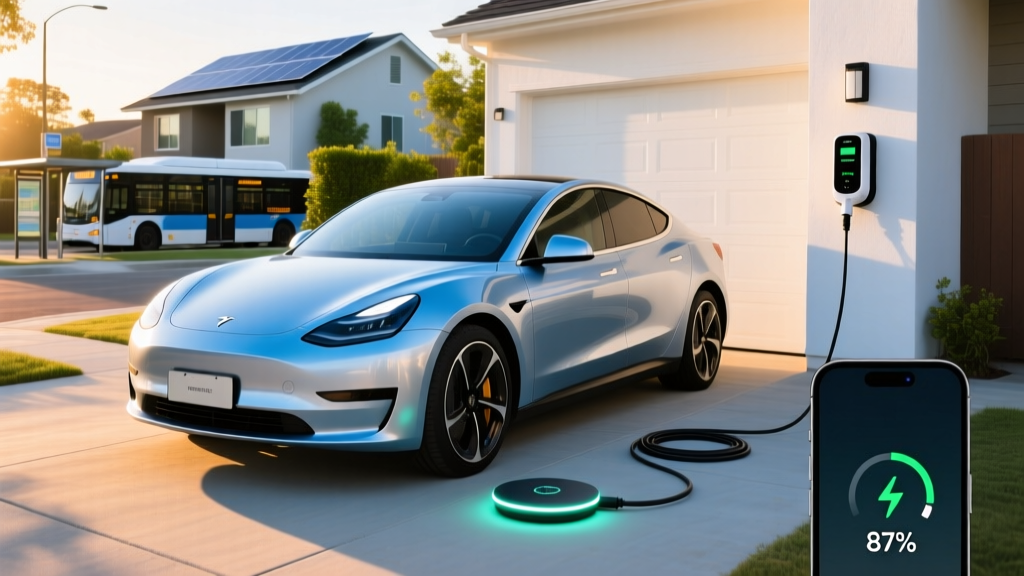
For home charging, the Celestiq supports up to 19.2 kW on a hardwired Level 2 station with an 80-amp circuit. This adds roughly 30 miles of range per hour, meaning a full 0–100% charge takes about 12–14 hours. Most Celestiq owners will install a dedicated home charger — likely in a climate-controlled garage — and wake to a full battery every morning. Expect home installation costs of $1,500–$4,000 depending on panel capacity and run length, though at this price point, Cadillac's concierge service typically handles installation logistics.
Performance: Powertrain, Acceleration, and Ride Quality
The Celestiq's dual-motor all-wheel-drive powertrain produces an estimated 655 horsepower and 646 lb-ft of torque, launching the 6,000+ lb sedan to 60 mph in approximately 3.8 seconds. That's genuinely quick for a vehicle of this size and weight, though it trails the Tesla Model S Plaid (1.99 seconds) and Lucid Air Sapphire (under 2 seconds) in outright acceleration.
But raw acceleration isn't the Celestiq's mission. GM has tuned this powertrain for effortless, silent thrust — the kind of surge that feels inexhaustible rather than violent. The adaptive air suspension and rear-wheel steering contribute to a ride that isolates occupants from road imperfections while maintaining composure through corners. Magnetic Ride Control 4.0 adjusts damping in milliseconds, and the available Active Road Noise Cancellation further insulates the cabin.
The Celestiq's steering is weighted for comfort rather than feedback, and the regenerative braking offers multiple modes including a one-pedal driving option. For a vehicle of this class, the driving dynamics prioritize serenity over sportiness — exactly what the target buyer expects.
Interior, Cargo, and Technology
The Celestiq's interior is where the $340,000 price tag begins to make sense — or at least becomes explicable. The dashboard is dominated by a 55-inch diagonal LED screen spanning the full width, with a secondary screen for the front passenger. Rear passengers get individual seat-mounted displays. The cabin materials include hand-stitched leather, real wood veneers, and machined aluminum, with each vehicle customized to the buyer's specification through Cadillac's bespoke program.
Practical space, however, is a compromise. The Celestiq is a four-seat sedan (not five), with individual rear bucket seats separated by a full-length console. Cargo volume is limited — the trunk offers approximately 14–16 cubic feet, with no frunk (front trunk) due to the Ultium platform's under-hood component packaging. This is a vehicle for two couples or a chauffeured principal, not for hauling gear.
Legroom is generous: front legroom exceeds 45 inches, and the rear seats offer approximately 40+ inches of legroom with reclining, heated, ventilated, and massaging functions. Headroom is adequate but not expansive due to the fastback roofline.
On the technology front, GM's Super Cruise hands-free driver-assistance system is standard, covering over 400,000 miles of compatible highways in the US and Canada. It's important to understand that Super Cruise is an SAE Level 2 system — the driver must remain attentive and eyes on the road (monitored by a driver-facing camera). This is not autonomous driving; it is an advanced cruise control and lane-centering system that allows hands-off operation under specific conditions.
Pricing, Trims, and Federal Tax Credit Eligibility
The Celestiq is not sold through traditional dealership inventory. Each vehicle is commissioned directly through Cadillac's Celestiq concierge program, with a base price of approximately $340,000. Options, bespoke materials, and custom paint can push the final price well above $400,000. Production is limited to a few hundred units per year, built at GM's Factory ZERO facility in Michigan.
| Item | Amount |
|---|---|
| Base MSRP | ~$340,000 |
| Federal §30D Tax Credit | $0 (not eligible) |
| Estimated Out-the-Door (before options) | ~$345,000–$355,000 |
| 5-Year Estimated Charging Cost (home, national avg) | ~$4,500–$5,500 |
Tax credit reality check: The Celestiq does not qualify for the federal §30D clean vehicle tax credit. The credit has an MSRP cap of $55,000 for sedans (and $80,000 for SUVs/pickups/vans). At $340,000, the Celestiq exceeds this cap by a factor of six. Additionally, buyer income caps ($150K single / $300K joint filers) would exclude many potential Celestiq purchasers regardless. State and local incentives vary — check your jurisdiction — but at this price, they're negligible relative to the purchase price.
Warranty and Long-Term Ownership
GM backs the Celestiq's Ultium battery pack and electric powertrain with an 8-year / 100,000-mile warranty, consistent with the rest of its EV lineup. The battery is guaranteed to retain a minimum capacity threshold (typically 70% of original capacity) over the warranty period. Bumper-to-bumper coverage is 4 years / 50,000 miles.
The NMC (nickel manganese cobalt) chemistry in the Ultium pack offers high energy density but is more susceptible to long-term degradation than LFP (lithium iron phosphate) chemistry. However, GM's battery management system includes a substantial buffer and active thermal management to mitigate degradation. At current degradation curves for Ultium-based vehicles, expect approximately 8–12% capacity loss over 100,000 miles under normal use patterns.
Ownership at this price includes concierge services: scheduled maintenance pickup and delivery, dedicated service advisors, and typically complimentary charging credits or home charger installation. Insurance costs will be substantial — expect $8,000–$15,000+ annually depending on coverage, location, and driving record.
How the Celestiq Compares: Key Rivals
| Spec | Cadillac Celestiq | Rolls-Royce Spectre | Lucid Air Grand Touring | Tesla Model S Plaid |
|---|---|---|---|---|
| Base Price | ~$340,000 | ~$420,000 | ~$138,000 | ~$108,000 |
| EPA Range | ~300 mi | 260 mi | 516 mi | 396 mi |
| Battery | ~111 kWh NMC | 102 kWh | 112 kWh | 100 kWh |
| 0–60 mph | ~3.8 sec | 4.4 sec | 3.0 sec | 1.99 sec |
| HP | ~655 | 577 | 819 | 1,020 |
| DC Fast Charge Peak | ~200 kW | ~195 kW | ~300 kW | ~250 kW |
| Seats | 4 | 4–5 | 5 | 5 |
| Federal Tax Credit | No | No | No (MSRP cap) | Partial eligibility |
The Celestiq occupies a narrow lane. The Rolls-Royce Spectre is its closest rival in prestige and price, offering similar bespoke luxury with slightly less range and power. The Lucid Air Grand Touring crushes both on range and efficiency at a fraction of the cost, but lacks the exclusivity and hand-built cachet. The Tesla Model S Plaid is a performance bargain but doesn't compete on luxury materials or exclusivity.
Pros and Cons
- Bespoke, hand-built exclusivity — fewer than 500 units/year
- Stunning 55-inch dashboard display and customizable interior
- Super Cruise hands-free driving on 400K+ miles of highways
- Quiet, refined ride quality with adaptive air suspension
- Strong 655 hp dual-motor AWD performance
- Concierge ownership experience with white-glove service
- $340,000+ price with no federal tax credit eligibility
- Range (~300 mi) trails Lucid Air and Tesla Model S significantly
- Only 4 seats; limited cargo space (~15 cu ft trunk, no frunk)
- DC charging peaks at ~200 kW — slower than Lucid and Tesla
- High insurance and maintenance costs expected
- Low production volume means long wait times and limited service centers
Who Should Buy the Cadillac Celestiq?
Choose the Celestiq if: You want a hand-built American ultra-luxury EV with exclusivity, bespoke customization, and a statement-making presence — and range/charging speed are secondary to prestige and craftsmanship. You primarily drive in urban or suburban settings with reliable home charging and take road trips infrequently enough that ~300 miles of range and 30-minute fast charges are acceptable.
Consider alternatives if: Maximum range is a priority (Lucid Air Grand Touring offers 516 miles at $138K). You need five seats or substantial cargo space. You want the fastest-accelerating EV available (Model S Plaid). You care about federal tax credit eligibility or long-term resale value predictability.
Frequently Asked Questions
What is the real-world range of the GM Celestiq?
The Celestiq's EPA-estimated range is approximately 300 miles. In real-world highway driving at 75 mph, expect 240–260 miles. In cold weather below 30°F, range may drop to 200–230 miles due to battery chemistry limitations and cabin heating demands. City driving at moderate speeds can yield 280–310 miles thanks to regenerative braking.
How fast does the Celestiq charge at home and on the road?
At a DC fast charger, the Celestiq peaks at approximately 200 kW, achieving a 10–80% charge in roughly 30 minutes under ideal thermal conditions. At home on a Level 2 (240V, 80A) charger, it accepts up to 19.2 kW, adding about 30 miles of range per hour. A full charge from empty takes approximately 12–14 hours.
Does the Celestiq qualify for the federal EV tax credit?
No. The IRS §30D tax credit has an MSRP cap of $55,000 for sedans. The Celestiq's ~$340,000 base price far exceeds this limit. Buyer income caps ($150K single / $300K joint) and battery critical-mineral sourcing rules further restrict eligibility. At this price point, no federal purchase incentive applies.
Is the Celestiq worth buying versus the Rolls-Royce Spectre or Lucid Air?
It depends on what you value. The Celestiq offers American exclusivity, bespoke customization, and Cadillac's technology suite at ~$340K. The Spectre (~$420K) has stronger brand cachet but less range (260 mi). The Lucid Air Grand Touring (~$138K) delivers 516 miles of range and faster charging at a fraction of the cost but lacks bespoke exclusivity. If prestige and customization matter most, the Celestiq holds its ground. If range and value matter, the Lucid is objectively superior.
What are the biggest drawbacks of the Celestiq?
The primary limitations are range (~300 mi, trailing key rivals), DC charging speed (~200 kW peak vs. 300 kW for Lucid), four-seat-only configuration, limited cargo space, and the absence of any federal tax credit. Insurance and service costs will be high, and low production volume means limited service center availability outside major metropolitan areas.
What battery chemistry does the Celestiq use?
The Celestiq uses GM's Ultium platform with NMC (nickel manganese cobalt) pouch cells. NMC offers high energy density, which is important for fitting ~111 kWh into the vehicle's footprint, but it is more susceptible to long-term degradation than LFP (lithium iron phosphate) chemistry. GM's 8-year / 100,000-mile battery warranty provides a capacity retention guarantee.