The 2026 Hyundai Ioniq 9: A Three-Row EV Built for Real Families
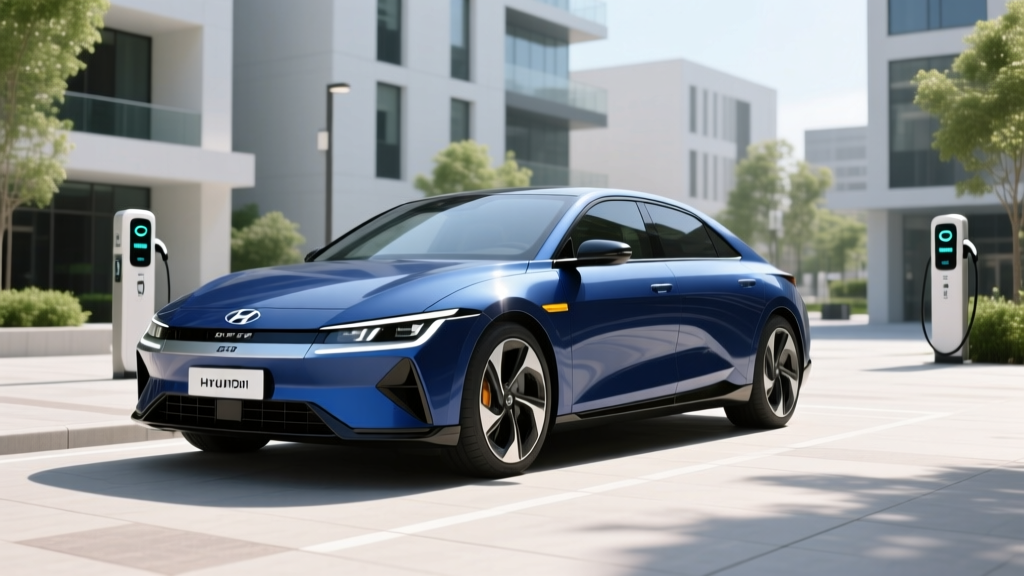
Hyundai's Ioniq 9 is the brand's largest electric vehicle to date—a three-row crossover targeting the same buyers considering the Kia EV9, Tesla Model X, and Rivian R1S. Built on the E-GMP platform, the Ioniq 9 brings 800V architecture, fast DC charging, and a usable cabin that doesn't punish third-row passengers. But the headline question for most shoppers is whether its powertrain, range, and pricing hold up against the competition. This review breaks down the 2026 Ioniq 9 hp output, charging performance, real-world range, and ownership economics with the exact numbers you need.
Hyundai Ioniq 9 Powertrain: Horsepower, Torque, and 0-60 Times
The 2026 Ioniq 9 comes in two primary powertrain configurations, and the horsepower spread between them is significant:
| Trim / Config | Drivetrain | Horsepower | Torque (lb-ft) | 0-60 mph |
|---|---|---|---|---|
| Long Range RWD | Rear-Wheel Drive | 215 hp | 258 | ~8.2 sec |
| Long Range AWD | Dual-Motor AWD | 379 hp | 446 | ~5.1 sec |
The dual-motor AWD variant is the performance-oriented choice, delivering 379 hp and a 5.1-second sprint to 60 mph—quick for a vehicle with a curb weight approaching 5,800 pounds. The single-motor RWD prioritizes efficiency, stretching range at the cost of acceleration that feels adequate but not brisk for highway merging with a full load of passengers and cargo.
Both configurations use Hyundai's E-GMP platform with an 800V electrical architecture, which is the key enabler for the Ioniq 9's standout DC fast-charging capability.
Battery, EPA Range, and Real-World Expectations
Every 2026 Ioniq 9 uses a 110.3 kWh battery pack (usable capacity approximately 105 kWh) with NMC (nickel-manganese-cobalt) chemistry. Hyundai chose NMC over LFP here to maximize energy density—critical for a three-row SUV where packaging space is at a premium.
| Configuration | EPA Range | Real-World Highway | Cold Weather (20°F) |
|---|---|---|---|
| Long Range RWD | 311 miles | ~265-280 miles | ~220-240 miles |
| Long Range AWD | 290 miles | ~245-260 miles | ~200-220 miles |
EPA estimates assume a mix of city and highway driving at moderate temperatures. Expect 10-15% range reduction on sustained 75+ mph highway trips and 20-30% loss in sub-freezing conditions without preconditioning. The Ioniq 9's standard heat pump helps mitigate cold-weather losses compared to EVs without one.
Efficiency for the RWD model lands at approximately 89 MPGe combined (roughly 34 kWh/100 miles), while the AWD drops to about 82 MPGe combined (~37 kWh/100 miles). For a vehicle this size, those figures are competitive with the Kia EV9 and notably better than the Tesla Model X.
Charging Speed: DC Fast, Level 2, and the 800V Advantage
The Ioniq 9's 800V architecture is its most practical differentiator at public chargers. Here's the full charging breakdown:
| Charging Level | Max Power | Charge Time | Miles Added/Hr |
|---|---|---|---|
| Level 1 (120V) | ~1.4 kW | ~75 hours (0-100%) | ~3-4 mi/hr |
| Level 2 (240V, 48A) | 10.9 kW | ~11 hours (0-100%) | ~30-33 mi/hr |
| DC Fast Charge (peak) | 240 kW | ~24 min (10-80%) | N/A |
Charging-curve reality check: The 240 kW peak only sustains between roughly 10-45% state of charge. After that, the curve tapers—dropping to ~150 kW by 60% and ~80 kW past 80%. The 10-80% time of approximately 24 minutes assumes a 350 kW-capable station (like Electrify America or EVgo) and battery preconditioning. On a 150 kW station, expect 10-80% in roughly 35-40 minutes.
The Ioniq 9 ships with a NACS (Tesla-style) charge port for the 2026 model year, granting native access to Tesla Supercharger stations—now the largest DC fast-charging network in the US. A CCS adapter is included for legacy networks.
For home charging, the onboard 10.9 kW Level 2 charger means a full overnight replenishment on a properly installed 240V/48A home station. Budget approximately $800-$1,500 for a quality Level 2 home charger (such as the ChargePoint Home Flex or Emporia Level 2) plus $500-$2,000 for professional electrical installation, depending on your panel capacity and run length.
Interior Space, Cargo, and Technology
The Ioniq 9's cabin is where Hyundai's packaging investment pays off. Key dimensions:
- First-row legroom: 41.7 inches
- Second-row legroom: 39.4 inches
- Third-row legroom: 31.5 inches (usable for children and short trips; tight for adults over 5'8")
- Cargo behind third row: 14.2 cu ft
- Cargo behind second row (third row folded): 42.8 cu ft
- Max cargo (all rear seats folded): 82.1 cu ft
- Front trunk (frunk): 1.6 cu ft (enough for a charging cable bag, not much more)
The dual 12.3-inch curved display setup runs Hyundai's latest infotainment OS with native navigation, over-the-air updates, and wireless Apple CarPlay/Android Auto. The center console features a "Universal Island" that slides rearward up to 5.5 inches, creating pass-through space between front seats.
Driver-assistance tech: The Ioniq 9 includes Hyundai's Highway Driving Assist 2 (HDA2) as standard equipment—a Level 2 system offering adaptive cruise with lane centering, lane-change assist, and curve speed reduction. It is not a hands-free system like GM's Super Cruise or Ford's BlueCruise. You must keep your hands on the wheel.
Notable drawbacks: The frunk is disappointingly small. The third row remains a compromise for adults on longer trips. And at nearly 5,800 lbs (AWD), tire wear and replacement costs will be higher than lighter EVs—budget for premium all-season or EV-specific tires every 30,000-40,000 miles.
Pricing, Trims, and Federal Tax Credit Eligibility
The 2026 Ioniq 9 lineup spans four trims with pricing that positions it between mainstream and luxury three-row EVs:
| Trim | Drivetrain | Base MSRP | Est. After §30D Credit* |
|---|---|---|---|
| SE Standard Range | RWD | $52,400 | $44,900 |
| SEL | RWD / AWD | $57,900 / $61,900 | $50,400 / $54,400 |
| Limited | AWD | $68,400 | $60,900 |
| Calligraphy | AWD | $73,900 | $66,400 |
*After-credit pricing assumes full $7,500 §30D eligibility. Point-of-sale transfer available at participating dealers.
- MSRP cap: Vehicle MSRP must not exceed $80,000 for SUVs/vans/pickups (all Ioniq 9 trims qualify)
- Buyer income cap: AGI ≤ $300,000 (joint), $225,000 (head of household), $150,000 (single)
- Battery sourcing: Critical minerals and battery components must meet phased-in domestic/free-trade-partner thresholds per IRS §30D rules—eligibility may be $3,750 or $7,500 depending on sourcing compliance
- Point-of-sale transfer: Eligible buyers can apply the credit as an immediate price reduction at participating dealerships
- Verification: Always confirm current eligibility on fueleconomy.gov and consult a tax professional
Hyundai assembles the Ioniq 9 at its Metaplant America facility in Georgia, which was specifically designed to satisfy domestic manufacturing requirements for the federal credit. However, battery-component and critical-mineral sourcing thresholds continue to tighten annually—confirm per-VIN eligibility before purchase.
Warranty and Long-Term Ownership
Hyundai backs the Ioniq 9 with one of the strongest warranty packages in the segment:
- Battery & drive unit: 10 years / 100,000 miles (capacity retention threshold: 70%)
- New vehicle limited: 5 years / 60,000 miles
- Roadside assistance: 5 years / unlimited miles
- Complimentary maintenance: 3 years / 36,000 miles
The 10-year battery warranty is a key ownership advantage over Tesla (8 years/120,000 miles at 70% retention) and matches Kia's coverage. Based on E-GMP platform degradation data from the Ioniq 5 and Ioniq 6, expect approximately 8-12% capacity loss over the first 100,000 miles under normal use—well within the warranty threshold.
How Does the Ioniq 9 Compare to Key Competitors?
| Spec | 2026 Ioniq 9 AWD | 2026 Kia EV9 AWD | 2026 Tesla Model X |
|---|---|---|---|
| Horsepower | 379 hp | 379 hp | 670 hp |
| EPA Range (AWD) | 290 mi | 280 mi | 320 mi |
| Battery (usable) | ~105 kWh NMC | ~99.8 kWh NMC | ~100 kWh |
| Peak DC Charge | 240 kW | 236 kW | 250 kW |
| 10-80% DC Time | ~24 min | ~25 min | ~27 min |
| Starting MSRP (AWD) | $61,900 | $63,900 | $81,630 |
| Federal Credit Eligible | Yes (up to $7,500) | Yes (up to $7,500) | Yes (up to $7,500) |
| 3rd-Row Legroom | 31.5 in | 32.0 in | 31.3 in |
The Ioniq 9 and Kia EV9 share the E-GMP platform and are nearly identical mechanically—the decision between them comes down to styling preference, dealer experience, and minor feature differences. The Tesla Model X offers more range and dramatically more power but at a $20,000+ premium and with a more polarizing interior. The Rivian R1S is another strong competitor with superior off-road capability but starts around $75,000.
Pros, Cons, and Who Should Buy the Ioniq 9
- 800V architecture enables class-leading 240 kW DC charging
- Strong federal tax credit eligibility (domestic assembly)
- 10-year/100,000-mile battery warranty
- NACS port standard—native Supercharger access
- Competitive pricing vs. Tesla Model X and Rivian R1S
- Standard heat pump for cold-weather efficiency
- Third-row legroom tight for adults on longer trips
- Frunk is nearly useless at 1.6 cu ft
- Heavy curb weight increases tire wear costs
- No hands-free driving option (unlike BlueCruise/Super Cruise)
- RWD base model's 215 hp feels underpowered for the vehicle's mass
- Families needing three rows who primarily use the third row for children or occasional carpools
- Home chargers who can take advantage of cheap overnight Level 2 replenishment
- Road trippers who value 24-minute DC fast stops and Supercharger network access
- Value-oriented buyers who want luxury-adjacent features without the Model X or R1S price tag
Frequently Asked Questions
What is the real-world range of the Hyundai Ioniq 9?
The EPA rates the RWD Ioniq 9 at 311 miles and the AWD at 290 miles. In real-world highway driving at 70-75 mph, expect approximately 265-280 miles (RWD) or 245-260 miles (AWD). In cold weather below freezing, range drops an additional 20-30% without preconditioning, landing around 200-240 miles for the AWD model.
How fast does the Ioniq 9 charge?
On a 350 kW DC fast charger, the Ioniq 9 peaks at 240 kW and charges from 10-80% in approximately 24 minutes. On a 150 kW charger, expect 35-40 minutes for the same session. At home on a 240V Level 2 charger (10.9 kW), a full charge takes roughly 11 hours—easily accomplished overnight.
How much does the Ioniq 9 cost after tax credits?
With full $7,500 federal §30D credit eligibility, the Ioniq 9 SEL AWD drops from $61,900 to approximately $54,400. The Limited AWD falls to about $60,900. Eligibility depends on buyer income (AGI caps apply), battery sourcing compliance, and the $80,000 MSRP cap for SUVs. Verify per-VIN eligibility at fueleconomy.gov.
Does the Ioniq 9 qualify for the federal EV tax credit?
Yes—all 2026 Ioniq 9 trims fall under the $80,000 MSRP cap for SUVs, and Hyundai's Georgia assembly plant satisfies domestic manufacturing requirements. However, the full $7,500 credit depends on battery-component and critical-mineral sourcing thresholds that tighten annually. Some VINs may qualify for $3,750 (partial) rather than the full $7,500. Confirm before purchasing.
Is the Hyundai Ioniq 9 worth buying over the Kia EV9?
The Ioniq 9 and EV9 share the same E-GMP platform, battery architecture, and similar powertrains. The Ioniq 9 offers a slightly larger battery (110.3 vs. 99.8 kWh usable), marginally more range, and a more premium interior design. The EV9 has a slightly roomier third row. Choose based on styling preference, dealer proximity, and which incentives your local dealer can stack.
How many horsepower does the Ioniq 9 have?
The 2026 Hyundai Ioniq 9 produces 215 hp in the single-motor RWD configuration and 379 hp in the dual-motor AWD configuration. The AWD model also delivers 446 lb-ft of torque and a 5.1-second 0-60 mph time.