The Short Answer: Is There a Porsche 911 Electric Car You Can Buy Today?
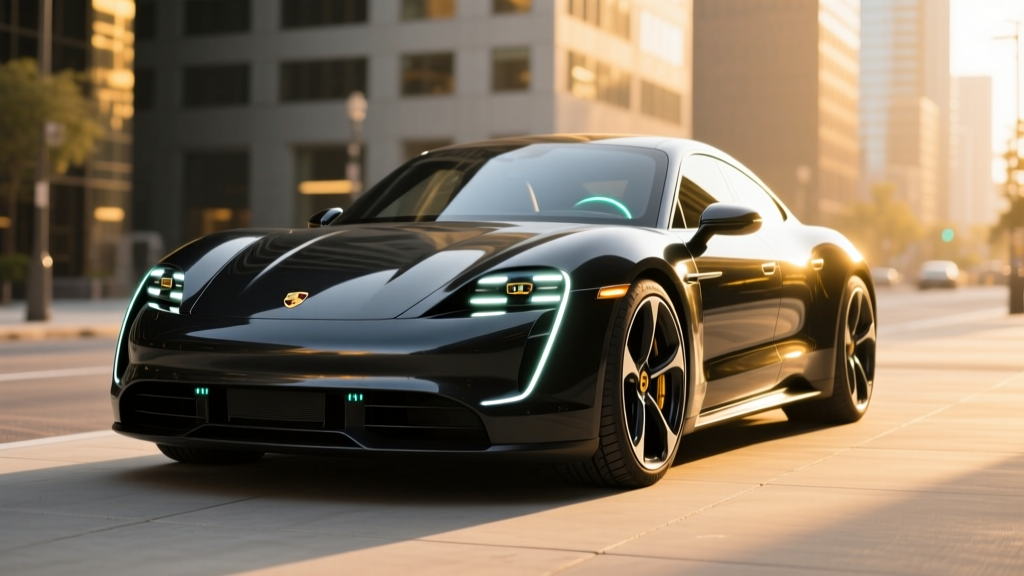
No — as of early 2026, Porsche has not yet released a fully electric 911. However, Porsche CEO Oliver Blume has confirmed that an all-electric 911 is in development, with the next-generation (992.2 and beyond) platform designed to accommodate battery-electric powertrains alongside hybrid variants. The current 992.2 Carrera lineup includes a T-Hybrid system, but it is not a plug-in. If you want a fully electric Porsche sports car today, the closest option is the Taycan lineup. The electric 911 is expected to arrive no earlier than the 2028–2029 model year, likely built on a heavily modified version of Porsche's upcoming SSP Sport electric platform.
What We Know About the Electric Porsche 911
Porsche has been deliberate in its electrification roadmap. The Macan EV launched for 2024, the electric Cayenne is slated for 2026, and the 911 remains the brand's most emotionally significant model — meaning Porsche will not rush it. Here is what has been confirmed or strongly indicated through official statements and industry reporting:
- Platform: The next 911 will likely use a bespoke evolution of the SSP Sport architecture, which supports 800V+ electrical systems (as proven in the Taycan and Macan EV).
- Hybrid bridge: The 2025–2026 992.2 Carrera GTS features a T-Hybrid powertrain with a 1.9 kWh battery and integrated electric motor — but this is a performance hybrid (HEV), not a plug-in. It cannot drive on electric power alone for meaningful distances.
- Timeline: Industry consensus places the fully electric 911 at 2028–2030, with a hybrid-only interim generation filling the gap.
- Design constraint: Porsche has stated the 911's rear-engine proportions and silhouette are non-negotiable, which creates unique packaging challenges for a large battery pack.
Expected Specs: Educated Estimates Based on Porsche's EV Tech
While final specs are unannounced, we can project reasonable figures based on the Macan EV, Taycan, and the SSP Sport platform's known capabilities. Treat these as preliminary estimates, not confirmed data.
| Specification | Estimated Electric 911 | Current Taycan 4S (Reference) | 2026 911 Carrera GTS T-Hybrid |
|---|---|---|---|
| Powertrain | Dual-motor AWD (likely) | Dual-motor AWD | T-Hybrid flat-six RWD/AWD |
| Battery (usable) | ~85–100 kWh (NMC) | 89 kWh (NMC) | 1.9 kWh (HEV buffer) |
| EPA Range (est.) | ~270–320 miles | 277 miles (EPA) | N/A (not a PHEV) |
| Peak DC Charge Rate | ~270–320 kW | 320 kW | N/A |
| 10–80% DC Fast Charge | ~16–20 minutes | ~18 minutes | N/A |
| 0–60 mph | ~2.5–3.0 seconds | 3.5 seconds | 2.9 seconds |
| Horsepower | ~550–700 hp | 590 hp | 532 hp |
| Voltage Architecture | 800V+ | 800V | 48V (mild hybrid) |
| Estimated Base MSRP | $140,000–$170,000+ | $106,395 | $164,900 |
Key caveat on range: The 911 is a sports car with a smaller, lighter footprint than the Taycan sedan. Porsche may prioritize weight savings and performance over maximum battery size, which could mean a smaller pack (~85 kWh usable) and a real-world highway range closer to 220–260 miles at 75 mph, especially in cold weather where NMC packs typically lose 15–30% capacity.
Electric 911 vs. Gas 911: What Changes for Owners
If you are a current 911 owner or prospect cross-shopping the eventual EV variant against today's Carrera lineup, the ownership calculus shifts in several concrete ways:
| Factor | Electric 911 (Projected) | 2026 911 Carrera (Gas) |
|---|---|---|
| Fuel / Energy Cost per Mile | ~$0.04–$0.06/mi (home L2 at $0.14/kWh) | ~$0.18–$0.22/mi (premium at $4.50/gal, 20 MPG) |
| Annual "Fuel" Cost (10k mi) | ~$400–$600 | ~$1,800–$2,200 |
| Maintenance (Annual Avg) | ~$300–$500 (no oil, plugs, or exhaust) | ~$800–$1,500 (oil, filters, brakes wear faster) |
| Brake Wear | Minimal (regen braking handles ~80% of decel) | Normal replacement cycle ($1,500–$2,500 per axle) |
| Insurance (Annual Est.) | ~$3,500–$5,000 (EV premium + sports car class) | ~$3,000–$4,500 |
| Federal Tax Credit (§30D) | Likely ineligible — MSRP cap for sedans/sports cars is $55,000; the 911 will far exceed this | Not eligible (ICE) |
| Weight | ~4,400–4,800 lbs (battery mass) | ~3,400–3,600 lbs |
| Driving Feel | Instant torque, silent, lower CG; heavier through corners | Flat-six sound, lighter, more analog feedback |
The weight problem: This is the single biggest engineering challenge for an electric 911. The current Carrera weighs roughly 3,500 lbs. Even with an optimized 85 kWh pack and lightweight construction, the EV version will likely add 800–1,200 lbs. Porsche's engineers will use torque vectoring, rear-wheel steering, and active suspension to mask the mass, but on a canyon road, physics is physics. If driving purity and low weight are your top priorities, the gas 911 will retain an advantage for at least the next generation.
Real-World Ownership Considerations
Buying a $150,000+ electric sports car involves practical realities that go well beyond the spec sheet.
Home Charging Access
You will want a Level 2 home charger (240V, 40–48 amps) delivering 9.6–11.5 kW. For an ~90 kWh battery, that means a full 10–100% charge in roughly 8–10 hours — ideal for overnight. Installation costs vary widely:
- If your panel has capacity (200A service, room for a 50A breaker): $800–$1,500 for a quality Level 2 unit (e.g., ChargePoint Home Flex, Wallbox Pulsar Plus) plus electrician labor.
- If you need a panel upgrade (100A → 200A): Add $1,500–$3,500 depending on your municipality and utility requirements.
Without home charging, owning an electric 911 becomes significantly less convenient. Public DC fast charging works, but relying on it exclusively adds time cost and exposes you to network reliability issues.
Climate Impact on Range
If you live in a region with harsh winters (sustained temps below 30°F), expect real-world range to drop by 15–30% compared to the EPA sticker. An estimated 300-mile EPA range could shrink to 210–255 miles on a cold January highway drive at 70+ mph. Porsche's 800V architecture and advanced thermal management (as seen in the Taycan) mitigate this better than most, but battery chemistry is governed by physics. Garage parking and preconditioning while plugged in help significantly.
Driving Patterns
The 911 is typically a weekend/enthusiast car, not a daily commuter. This actually favors EV ownership in some ways: you charge at home between drives, and most weekend trips fall within 200–250 miles. For longer road trips, Porsche's 800V architecture should enable 10–80% DC fast charges in under 20 minutes at compatible 350 kW stations (Electrify America, EVgo, Tesla Superchargers with NACS adapter — assuming Porsche adopts NACS by the time the electric 911 launches, as most automakers have committed to doing).
Cost Breakdown: 5-Year Ownership Projection
Below is a projected 5-year / 50,000-mile cost comparison. The electric 911 figures are estimates; the Carrera figures reflect current owner data.
| Cost Category | Electric 911 (Est. $155K) | 2026 Carrera ($120K) |
|---|---|---|
| Purchase Price | $155,000 | $120,000 |
| Federal Tax Credit | $0 (exceeds $55K MSRP cap) | $0 |
| Energy/Fuel (50k mi) | $2,500 | $10,000 |
| Maintenance (5 yr) | $2,000 | $6,000 |
| Insurance (5 yr) | $21,000 | $18,000 |
| Depreciation (Est. 5 yr) | ~$62,000 (40%) | ~$48,000 (40%) |
| Total 5-Year Cost | ~$242,500 | ~$202,000 |
Key takeaways: The electric 911 saves significantly on energy and maintenance (~$11,500 over 5 years) but costs more upfront, carries higher insurance premiums, and will likely depreciate more in absolute dollars due to the higher purchase price. Depreciation is the wildcard — early-adopter EVs in the luxury segment have shown steeper depreciation curves, though Porsche's brand cachet may cushion this. For reference, check fueleconomy.gov for official efficiency data when it becomes available.
Common Misconceptions, Corrected
| Myth | Fact |
|---|---|
| "The electric 911 is available now." | It is not. The current 992.2 Carrera GTS T-Hybrid is a conventional hybrid (HEV), not a plug-in or full EV. No fully electric 911 has been announced with a firm on-sale date. |
| "It will qualify for the $7,500 federal tax credit." | Almost certainly not. Under IRS §30D rules, the MSRP cap for vehicles classified as sedans or non-SUVs is $55,000. The electric 911 will cost well over $100,000. |
| "An electric 911 will handle exactly like a gas 911." | The instant torque, low center of gravity, and AWD traction will make it devastatingly quick. But the added battery weight (likely 800+ lbs more) changes cornering dynamics. Porsche will engineer around it, but the driving feel will be different — not necessarily worse, but different. |
| "I can charge it at any station." | Connector standards matter. If Porsche adopts NACS (Tesla's connector) by launch — as BMW, Ford, GM, Rivian, and others have — you will access the Supercharger network natively. If they retain CCS, your network options differ. Watch for Porsche's official connector announcement. |
| "The battery will need replacing in a few years." | Modern NMC packs with advanced thermal management (as Porsche uses) are designed to retain 70–80% capacity after 100,000+ miles. Porsche's EV battery warranty is currently 8 years / 100,000 miles on the Taycan. Full battery replacement, if ever needed, would likely cost $15,000–$25,000 — but most packs outlast the car. |
Decision Framework: Should You Wait or Buy Now?
Choose the Current Gas 911 (992.2 Carrera / GTS) If:
- You want a 911 now and have no interest in waiting 2–4 years for an unproven EV variant.
- Light weight and analog driving feel are your top priorities — the gas 911 is ~1,000 lbs lighter.
- You regularly drive long road trips through areas with sparse DC fast-charging infrastructure.
- The flat-six engine sound and mechanical engagement are core to why you buy a 911.
- You want proven long-term resale value with decades of 911 market data behind you.
Choose the Taycan (Porsche's Current EV) If:
- You want a fully electric Porsche today with proven 800V charging (10–80% in ~18 minutes at 320 kW).
- You need four doors and practical daily usability alongside sports-car performance.
- You have home Level 2 charging and mostly drive within 200 miles per day.
- The Taycan Turbo GT (1,019 hp, 0–60 in 2.2 sec) already exceeds your performance needs.
Wait for the Electric 911 If:
- The 911 silhouette and heritage are non-negotiable for you, but you want zero tailpipe emissions.
- You can comfortably wait until 2028–2030 for the model to launch and for early-production issues to surface.
- You already own a sports car for the interim and are planning your next-decade garage.
- You want the combination of 911 design, instant electric torque, and 800V fast charging in one package.
What First-Time EV Buyers Should Know Before Committing to a High-End Electric Sports Car
If the electric 911 will be your first EV, prepare for these ownership realities:
- Install Level 2 home charging before the car arrives. Budget $1,000–$4,000 depending on your electrical panel. A licensed electrician should assess your 240V capacity — do not skip this step.
- Understand kW vs. kWh. kW (kilowatts) measures charge speed — how fast energy flows into the car. kWh (kilowatt-hours) measures battery capacity — how much energy the car stores. A 90 kWh battery charged at 11 kW (Level 2) takes ~8 hours from empty. The same battery at 270 kW (DC fast) can go 10–80% in ~18 minutes.
- Plan for charging on road trips. Use apps like PlugShare or A Better Routeplanner to map DC fast chargers along your route. Not all chargers deliver their advertised peak rate — real-world 350 kW stations often deliver 150–250 kW depending on battery state of charge, temperature, and station load.
- Precondition the battery before fast charging. Porsche's navigation system will warm or cool the battery to optimal temperature as you approach a charger. This is critical for achieving peak charge speeds — a cold battery may charge at half the rated kW.
- Check insurance costs before buying. High-performance EVs carry premium insurance rates. Get quotes from your provider and at least two competitors before committing.
Frequently Asked Questions
Is the Porsche 911 hybrid the same as an electric 911?
No. The 2025–2026 911 Carrera GTS T-Hybrid uses a small 1.9 kWh battery and electric motor integrated with the flat-six engine. It is a conventional hybrid (HEV) designed to boost performance and slightly improve efficiency. It cannot plug in, cannot drive on electric power alone for more than a fraction of a mile, and is fundamentally different from a battery-electric vehicle (BEV).
When will the fully electric Porsche 911 be available?
Porsche has not announced an official release date. Based on the brand's electrification timeline and statements from CEO Oliver Blume, the earliest realistic window is the 2028–2030 model year. Porsche is expected to continue offering hybrid and potentially ICE variants alongside the EV during a transition period.
Will the electric 911 use the same platform as the Taycan?
Unlikely in its current form. Porsche is developing the SSP Sport platform (a VW Group architecture) for future electric sports cars. The 911 will likely use a heavily customized version optimized for the car's unique rear-biased weight distribution and compact dimensions. The Taycan uses the older J1 platform.
How much will the electric Porsche 911 cost?
No official pricing exists. Based on the current 911 Carrera starting at ~$120,000 and the Carrera GTS T-Hybrid at ~$165,000, a fully electric 911 will likely start between $140,000 and $170,000, with higher-performance variants (Turbo, GT3-equivalent) pushing well past $200,000. It will not qualify for the federal §30D tax credit due to the MSRP cap.
Will the electric 911 sound like a gas 911?
No. Electric motors are inherently quiet. Porsche has used synthetic sound profiles in the Taycan (Porsche Electric Sport Sound) and will likely develop a signature audio identity for the electric 911. Whether this satisfies enthusiasts accustomed to the flat-six exhaust note is subjective and will be a major point of discussion when the car launches.
Should I buy a Taycan now or wait for the electric 911?
These are different vehicles for different purposes. The Taycan is a four-door performance sedan/GT with proven EV technology available today. The electric 911 is 2–4 years away, will be a two-door sports car, and will carry a significant price premium. If you need a Porsche EV now, the Taycan (especially the refreshed 2025+ models with improved range and 320 kW charging) is an excellent choice. If the 911 is your dream car and you can wait, holding off is reasonable — but expect to pay a steep early-adopter premium.