Quick Verdict: The Mach-E GT That Balances Thrills and Daily Drivability
The 2024 Ford Mustang Mach-E GT occupies a specific niche in the electric performance SUV segment: it delivers genuine sports-car acceleration without sacrificing the practicality that crossover buyers demand. With 480 horsepower, a 280-mile EPA range estimate, and access to Tesla's Supercharger network via Ford's native NACS port, the GT variant proves that Ford's electric Mustang experiment has matured beyond its launch-year growing pains. But at a starting MSRP near $59,995, the question isn't whether it's fast — it's whether the real-world ownership experience justifies the premium over rivals like the Tesla Model Y Performance and Hyundai Ioniq 5 N.
After examining EPA data, charging benchmarks, and ownership economics, the Mach-E GT earns its place as a compelling daily-driver performance EV — particularly for buyers who value build quality, BlueCruise hands-free driving, and a more traditional dealership service network. Here's everything you need to know before signing the paperwork.
Range and Efficiency: EPA Numbers vs. Reality
Real-World Expectation: 230–260 miles in mixed highway driving; 190–220 miles in freezing temperatures or sustained 80+ mph travel
EPA Efficiency: 84 MPGe combined / 40 kWh per 100 miles
The 2024 Mach-E GT pairs dual electric motors with Ford's 91 kWh usable battery pack (NMC lithium-ion chemistry) to achieve an EPA-estimated 280 miles of combined range. That figure drops to 260 miles if you opt for the GT Performance Upgrade package, which adds stickier summer tires and a sportier suspension tune at the cost of some rolling efficiency.
In real-world highway testing at 70–75 mph in moderate temperatures, expect roughly 240–255 miles before the battery buffer warning prompts a charging stop. Cold weather is the equalizer for all EVs, and the Mach-E GT is no exception: sub-freezing temperatures can reduce usable range by 20–30%, bringing effective winter range down to approximately 190–220 miles depending on cabin heating demands. The heat pump Ford includes on the GT helps mitigate this, but physics still wins in deep cold.
Efficiency lands at 40 kWh per 100 miles (combined), which is thirstier than the lighter Select and Premium trims but competitive for a 4,900-pound performance AWD crossover. For context, the Tesla Model Y Performance consumes roughly 30 kWh/100mi, while the Hyundai Ioniq 5 N runs closer to 44 kWh/100mi — the Mach-E GT sits squarely between them.
Battery, Charging Speed, and the NACS Advantage
| Charging Level | Power / Rate | Speed | Notes |
|---|---|---|---|
| Level 1 (120V) | ~1.4 kW | ~3 miles/hour | Emergency/trickle only |
| Level 2 (240V home) | 10.5 kW (48A) | ~28 miles/hour | Full charge in ~9 hours |
| DC Fast Charge | Peak 150 kW | 10–80% in ~36 min | Tapers significantly above 80% |
The Mach-E GT's 91 kWh NMC (nickel manganese cobalt) battery pack prioritizes energy density and performance over the extended cycle life of LFP chemistry. NMC delivers more range in a lighter package, but it also means Ford recommends daily charging to 90% rather than 100% for long-term battery health — reserving full charges for road trips.
On DC fast charging, the GT peaks at 150 kW. That's respectable but not class-leading; the Hyundai Ioniq 5 hits 240 kW, and the Tesla Model Y can sustain up to 250 kW on V3 Superchargers. In practice, the Mach-E GT holds near its peak rate from roughly 10–50% state of charge, then tapers progressively. A 10–80% session takes approximately 36 minutes at a capable 150+ kW station. Plan for 45–50 minutes if the charger is shared or operating at reduced output.
The most significant charging story for the 2024 model year is Ford's adoption of the NACS (North American Charging Standard) connector. The 2024 Mach-E GT ships with a native NACS charge port, granting direct access to Tesla's Supercharger network — over 17,000 stalls in North America — without an adapter. This dramatically improves road-trip charging reliability compared to CCS-only competitors reliant on Electrify America or EVgo networks.
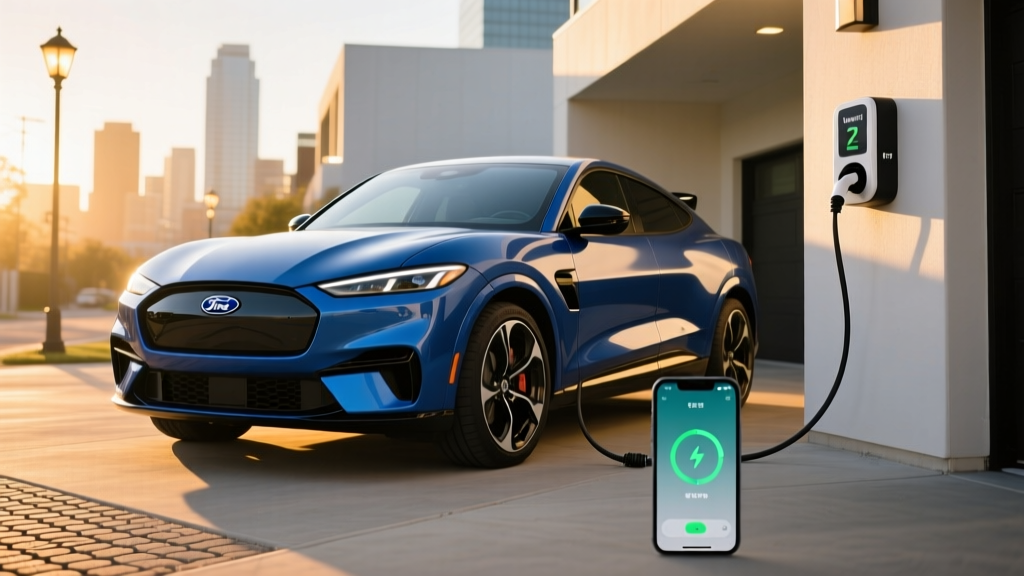
For home charging, the onboard 10.5 kW charger (48 amps) adds roughly 28 miles of range per hour on a Level 2 wall connector. A full 0–100% charge takes about 9 hours, making overnight replenishment practical for virtually any daily commute. Installation of a 60-amp dedicated circuit typically runs $800–$2,000 depending on panel proximity and local permit requirements — budget accordingly.
Performance: 480 Horsepower, 3.3-Second Sprints
| Spec | GT | GT w/ Performance Upgrade |
|---|---|---|
| Horsepower | 480 hp | 480 hp |
| Torque | 600 lb-ft | 700 lb-ft |
| 0–60 mph | 3.8 seconds | 3.3 seconds |
| Drivetrain | AWD (dual motor) | AWD (dual motor) |
| Top Speed | 130 mph | 150 mph |
| Drive Modes | Whisper, Engage, Unbridled | + Unbridled Extend |
The GT's dual-motor all-wheel-drive powertrain produces 480 horsepower across the board. The standard GT delivers 600 lb-ft of torque and a 3.8-second 0–60 mph time — already faster than a base Porsche Macan. The Performance Upgrade package bumps torque to 700 lb-ft and drops the sprint to 3.3 seconds, placing the Mach-E GT in genuine sports-car territory at a fraction of exotic-car pricing.
The Performance Upgrade also adds a MagneRide adaptive suspension, Brembo front brakes with larger rotors, Pirelli P Zero summer tires, and the Unbridled Extend drive mode — designed for track sessions with sustained power delivery and enhanced cooling management. Whether that package is worth the $5,000 premium depends entirely on whether you'll exploit it. For street-only drivers, the standard GT's 3.8-second sprint and comfortable adaptive dampers deliver 90% of the thrill.
Regenerative braking offers multiple levels of aggressiveness, and the one-pedal driving mode is well-calibrated — strong enough to handle most stops without touching the brake pedal, but progressive rather than abrupt. The brake pedal feel under blended regen-to-friction braking is among the better implementations in the EV segment, though it still has a slightly wooden initial bite compared to a pure hydraulic setup.
Interior, Cargo, and Technology
The Mach-E GT cabin is a clear step up from Ford's mainstream offerings. Heated and ventilated ActiveX (synthetic leather) sport seats with GT badging are standard, along with a heated steering wheel, ambient lighting, and a panoramic fixed glass roof. Rear legroom measures 38.9 inches — generous for the class — and front headroom benefits from the flat EV floor.
Cargo capacity lands at 29.7 cubic feet behind the rear seats and 59.7 cubic feet with the rear row folded. The front trunk (frunk) adds 4.7 cubic feet of drainable storage — useful for wet gear or charging cables. These numbers trail the Tesla Model Y (30.2/74.1 cu ft) but exceed the Hyundai Ioniq 5 (27.2/59.3 cu ft) in rear cargo space.
The centerpiece is Ford's SYNC 4A system displayed on a 15.5-inch portrait touchscreen. Wireless Apple CarPlay and Android Auto are standard. The interface is responsive, though the climate controls buried in the touchscreen remain a common complaint — there are no physical knobs for temperature or fan speed. A 10.2-inch digital instrument cluster behind the wheel handles speed, range, and navigation prompts cleanly.
On the driver-assistance front, the Mach-E GT includes Ford Co-Pilot360 2.0 as standard: adaptive cruise control with stop-and-go, lane centering, evasive steering assist, and blind-spot monitoring. The available BlueCruise system enables hands-free driving on over 130,000 miles of pre-mapped divided highways — this is an SAE Level 2 system, meaning the driver must remain attentive and a cabin camera monitors eye gaze. BlueCruise is genuinely useful on long interstate stretches but is not autonomous driving; you remain responsible for the vehicle at all times.
Pricing, Trims, and Federal Tax Credit Eligibility
| Trim | Base MSRP | Est. After §30D Credit |
|---|---|---|
| GT (AWD, Extended Range) | $59,995 | $52,495* |
| GT w/ Performance Upgrade | $64,995 | $57,495* |
*Tax credit estimates assume full eligibility. Individual results vary based on IRS §30D requirements.
The 2024 Mustang Mach-E GT starts at $59,995 including destination. The Performance Upgrade package adds $5,000, and common options like BlueCruise (included for a trial period, then subscription-based at roughly $75/month or $800/year) and the panoramic roof can push a well-equipped GT past $67,000 before incentives.
Federal tax credit eligibility under IRS §30D is a moving target that depends on three primary factors:
- MSRP Cap: The Mach-E qualifies as an SUV under IRS vehicle classification, raising the MSRP cap to $80,000 (vs. $55,000 for sedans). The GT clears this threshold.
- Buyer Income Cap: Modified adjusted gross income must not exceed $300,000 (joint filers), $225,000 (head of household), or $150,000 (single filers).
- Battery Sourcing: The full $7,500 credit requires meeting both critical-mineral and battery-component sourcing requirements, which shift annually. Ford has confirmed that certain 2024 Mach-E builds qualify for the full credit, but eligibility can vary by production batch and battery supplier. Always verify the specific VIN on the fueleconomy.gov tax credit lookup before purchasing.
As of 2024, the point-of-sale transfer option allows buyers to apply the credit as an immediate price reduction at the dealership rather than waiting for a tax refund — a significant cash-flow advantage. Consult a tax professional to confirm your personal eligibility.
Warranty and Long-Term Ownership
| Coverage | Term |
|---|---|
| Battery (high-voltage) | 8 years / 100,000 miles |
| Electric Powertrain Components | 8 years / 100,000 miles |
| Bumper-to-Bumper | 3 years / 36,000 miles |
| Powertrain (general) | 5 years / 60,000 miles |
| Battery Capacity Threshold | 70% retention over warranty term |
Ford backs the Mach-E GT's high-voltage battery and electric drive components for 8 years or 100,000 miles, whichever comes first. The warranty covers defects and capacity loss below 70% of original capacity — meaning if your 91 kWh pack degrades below roughly 63.7 kWh usable within the warranty window, Ford will repair or replace it. This is industry-standard and matches most competitors.
Real-world NMC battery degradation data from early Mach-E owners (2021–2022 models) suggests approximately 5–8% capacity loss over the first 50,000 miles, with the curve flattening thereafter. These figures are encouraging, though the 2024 GT's higher-output tuning and heavier usage patterns could affect long-term results. Routine practices — avoiding repeated DC fast charging, not storing at 100% SoC, and preconditioning in cold weather — help preserve battery health over the ownership lifecycle.
Pros, Cons, and Who Should Buy the Mach-E GT
- 3.3-second 0–60 with Performance Upgrade is supercar-adjacent
- Native NACS port grants direct Tesla Supercharger access
- BlueCruise hands-free highway driving is well-implemented
- Spacious rear seat and usable frunk add daily practicality
- Quiet, composed ride quality in Whisper and Engage modes
- Strong dealer network for service and warranty claims
- 150 kW peak DC charging trails Hyundai/Kia/Tesla competitors
- Touchscreen-only climate controls frustrate some drivers
- Real-world range falls noticeably short of EPA estimate at highway speeds
- Performance Upgrade package is a $5,000 add for track features most won't use
- No third-row option; families needing 6+ seats must look elsewhere
- Insurance premiums run 15–25% higher than non-GT trims
- Choose the Mach-E GT if: You want a fast, comfortable AWD performance EV with Supercharger access, value a traditional dealership experience, and commute under 200 miles round-trip with home charging available.
- Look at the Tesla Model Y Performance if: Maximum range (303 EPA mi), faster 250 kW charging, and the lowest cost-per-mile of charging are your top priorities — and you're comfortable with Tesla's service model.
- Look at the Hyundai Ioniq 5 N if: Track-day driving and 240 kW DC charging speed matter more than cargo space or rear-seat comfort.
- Step down to the Mach-E Premium AWD if: You don't need 480 hp and want to save ~$10,000 while gaining ~20 miles of range.
Frequently Asked Questions
What is the real-world range of the 2024 Ford Mustang Mach-E GT?
The EPA estimates 280 miles combined. In real-world mixed driving at moderate temperatures, expect 240–260 miles. Sustained highway speeds above 75 mph or freezing temperatures can reduce that to 190–230 miles. Plan road-trip charging stops at roughly 200-mile intervals for a comfortable buffer.
How fast does the Mach-E GT charge at home and on the road?
At home on a Level 2 (240V, 48A) charger, the GT adds about 28 miles of range per hour, fully recharging overnight in roughly 9 hours. On DC fast chargers, it peaks at 150 kW and charges from 10–80% in approximately 36 minutes under ideal conditions.
Does the 2024 Mach-E GT qualify for the $7,500 federal EV tax credit?
It can, but eligibility depends on your income, the vehicle's MSRP (it clears the $80,000 SUV cap), and the battery sourcing of the specific unit you purchase. Not all 2024 Mach-E builds qualify for the full credit. Verify the exact VIN on fueleconomy.gov and consult a tax professional. The point-of-sale transfer option lets you apply the credit as an upfront discount at the dealer.
Is the Mach-E GT worth buying over the Tesla Model Y Performance?
It depends on priorities. The Model Y Performance offers more range (303 mi EPA), faster charging (250 kW), and a lower starting price. The Mach-E GT counters with superior ride comfort, a more intuitive service network, BlueCruise, and a more traditional ownership experience. Test-drive both before deciding.
What are the biggest drawbacks of the Mach-E GT?
DC charging speed is the primary limitation — 150 kW peak means longer road-trip stops than competitors. The touchscreen-only climate controls are a usability concern, and the $5,000 Performance Upgrade is hard to justify for street-only drivers. Insurance costs also run higher than average for the segment.
How does the Mach-E GT handle cold weather?
Cold weather reduces range by 20–30% due to battery chemistry and cabin heating demands. The Mach-E GT includes a heat pump that improves efficiency compared to resistive heating, but expect 190–220 miles of real-world range in sub-freezing conditions. Preconditioning the battery while plugged in — using the FordPass app — mitigates charging-speed loss and range reduction.
Can the Mach-E GT tow?
Yes. With the available Class II trailer hitch, the Mach-E GT is rated to tow up to 3,500 pounds — sufficient for a small camper, utility trailer, or pair of jet skis. Note that towing significantly reduces range; expect a 30–50% reduction depending on trailer weight and aerodynamics.
Sources: EPA fuel economy data via fueleconomy.gov, Ford Motor Company official specifications, IRS §30D clean vehicle credit guidelines via irs.gov.